

by NOVA

Aug 05, 2026
Buyers say solar power inverter when they mean grid-tied hardware, a hybrid with batteries, an off-grid cabin converter, or a mobile DC-AC unit in a vehicle bay. Procurement teams that quote before classifying the language inherit scope creep, wrong-category SKUs, and rework on the jobsite. This guide maps the umbrella term into B2B buckets, separates hybrid from off-grid wording, and shows where MOES listing titles fit—without turning search phrases into model promises.
Summary image for B2B readers; commercial terms remain in the RFQ.
Important: A search phrase such as solar power inverter is not a model number. Pause quoting when load lists, grid-connection intent, or AC output requirements are missing—classification precedes SKU selection. — IEA PVPS — PV system documentation practices
Search boxes reward short phrases. Project emails inherit those phrases unchanged. Installers on industry forums repeatedly note that “solar inverter” arrives without load lists, AC output context, or clarity on grid connection—then suppliers are asked to “pick one.” Classification is the first engineering step, even when no engineer is in the thread.
Treat every inbound phrase as a label, not a specification. Labels route the RFQ; datasheets answer whether a listed SKU fits.
A practical B2B taxonomy separates four buckets before power classes or brands enter the conversation:
| Bucket | Buyer-language signals | First RFQ fields to open |
|---|---|---|
| Grid-interactive | “Grid-tied,” “on-grid,” “export” | Grid code context, export limits, meter scheme |
| Hybrid with storage | “Hybrid,” “battery inverter,” “backup” | Battery voltage, charge paths, transfer behavior |
| Off-grid conversion | “Off-grid,” “cabin,” “remote” | Source type, daily load envelope, backup generator |
| Mobile DC-AC | “RV,” “car,” “12V to 220V” | Input voltage, outlet form, surge loads |
Planning context aligns with IEA PVPS system documentation practices and IRENA education on PV system components; standards organizations such as IEC frame safety vocabulary without substituting for product certification records.
Hybrid language usually implies storage and grid interaction in one enclosure; off-grid language usually implies standalone supply without export assumptions. Buyers conflate them because both can include batteries. Your RFQ should force two clarifications: grid connection intent and storage interface.
Deeper hybrid scoping lives in the hybrid solar inverter sizing guide; off-grid selection factors sit in the off-grid solar inverter selection guide. This terminology article does not replace those sizing workflows—it precedes them.
Pure sine wave is a waveform label, not a system architecture. It appears when buyers name motor loads, compressors, or sensitive electronics.
Modified sine wave may appear in cost-driven mobile contexts. Classification should record waveform as an RFQ field, then defer to supplier datasheets.
Compare waveform procurement language in the pure sine wave versus modified sine wave dealer comparison; small-system load documentation patterns appear in the 2kW solar inverter planning guide.
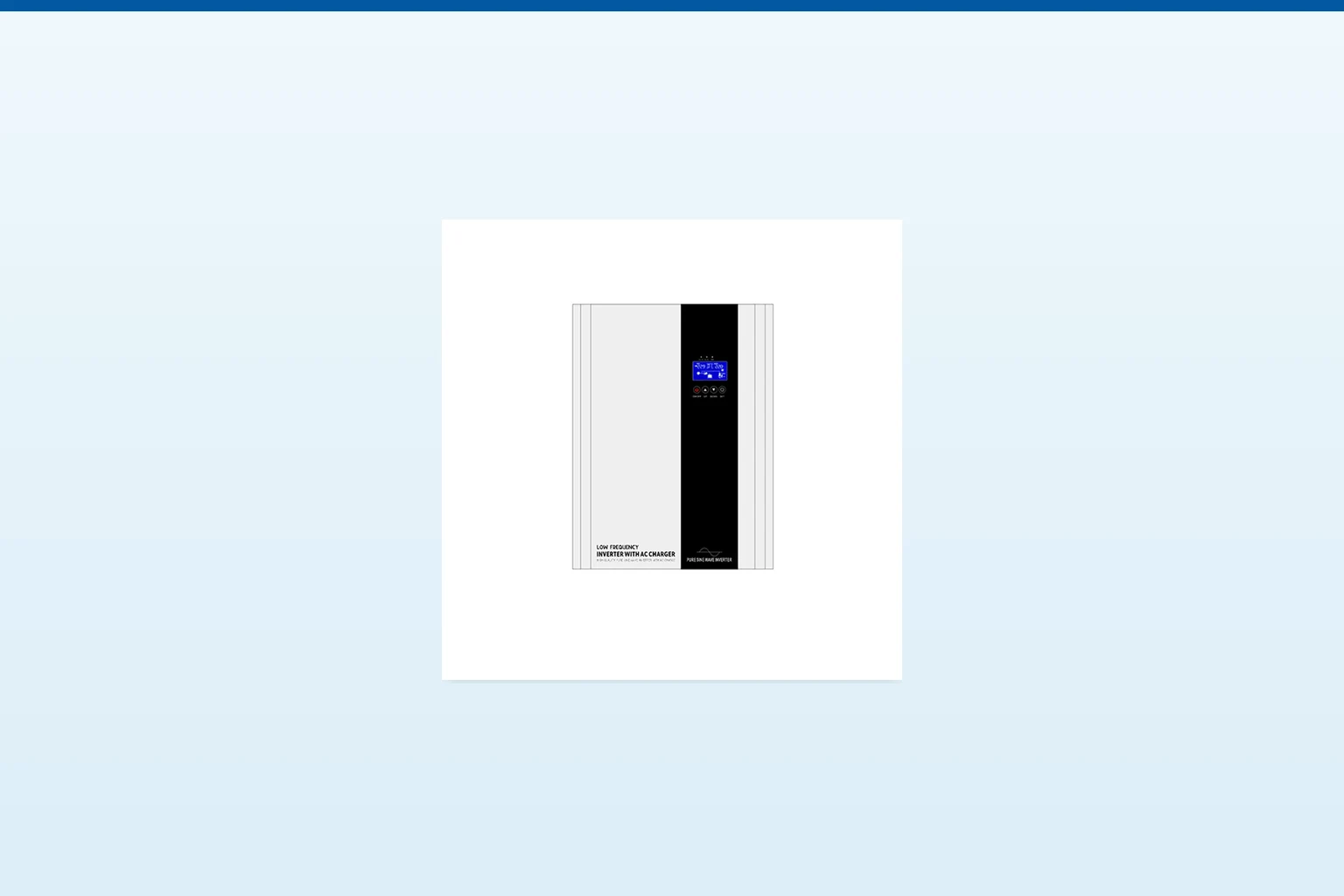
Catalog image for architecture context; bucket labels must be confirmed before SKU shortlisting.
Catalog titles sometimes stack several labels in one string—exactly the terminology problem this guide addresses. One verified example:
| Exact listing title element | Terminology bucket it signals |
|---|---|
| Low Frequency | Topology / transformer class (confirm via datasheet) |
| Pure Sine Wave | Waveform label |
| Hybrid Solar Inverter | Storage-and-inverter combined role |
| Off-Grid Inverter / Charger | Off-grid conversion with charging path |
The Low Frequency Pure Sine Wave Hybrid Solar Inverter Off-Grid Inverter / Charger listing is evidence of how catalog language stacks labels; it is not automatic proof of project fit.
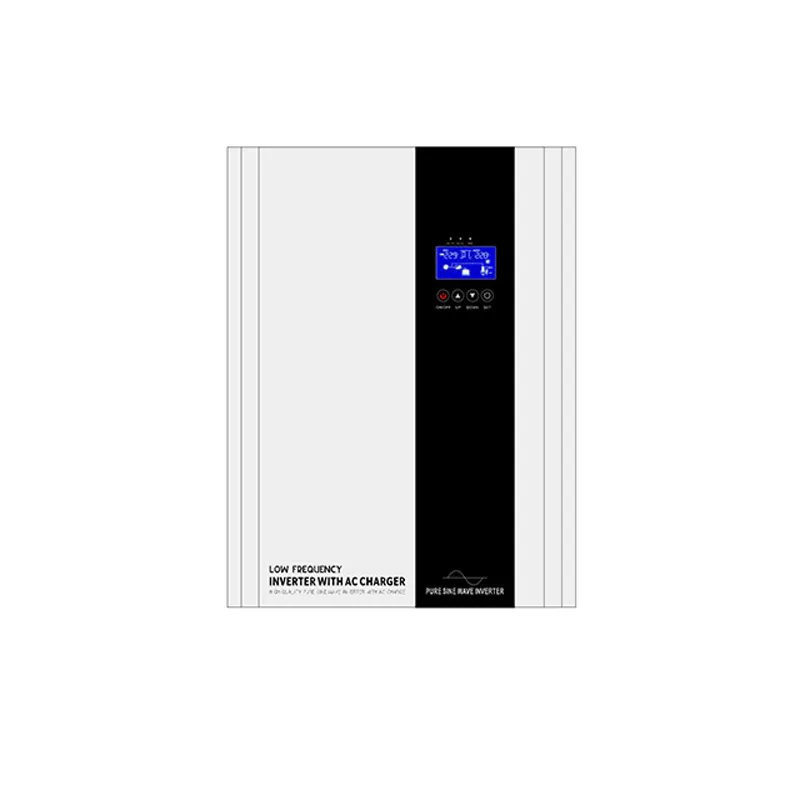
Product image from the MOES catalog; classification precedes model confirmation.
A separate listing title—MOES WiFi Smart Hybrid Solar Inverter 4.2KW 6.2KW Off-Grid 48V Charger Inverter with AC/DC Control Single Output Inverter—shows how hybrid and off-grid words can co-exist with power classes. Treat power numbers as RFQ fields to verify, not as implied compatibility with a buyer’s site.
Stop when the buyer treats a search phrase as a model number, when load lists are missing, when grid connection intent is unknown, or when certification scope is assumed from marketing images. Continuing produces a SKU guess, not a quote.
Industry forum observation: teams that pause for a one-page load and source record avoid the most common reorder—wrong AC output or wrong battery voltage class.
Send classified packages through Contact Us with range context on the solar inverter pillar, hybrid inverter category, and off-grid inverter category.
No. It is an umbrella phrase; classify into grid-interactive, hybrid, off-grid, or mobile DC-AC buckets before SKU discussion.
Often conflated. Hybrid usually implies storage and grid interaction; off-grid implies standalone supply—confirm with load and source documentation.
When buyers name motor loads, medical-adjacent equipment, or audio gear; waveform becomes a RFQ field, not a search synonym.
No. Titles help classify language; fit requires datasheets, installation context, and supplier confirmation.
Missing load lists, unknown AC output requirements, unstated battery interface, or buyers treating search terms as model numbers.
Through Contact Us with links to the solar inverter pillar and the relevant sub-category page.


OTHER SMART DEVICES
Jun 13,2026
OTHER SMART DEVICES
Jun 12,2026
TUYA SMART HOME PRODUCTS
Jun 12,2026
 +86 137 3639 3028