

by NOVA

Aug 21, 2026
Types of solar inverters are best sorted by three axes—architecture (string, microinverter, optimizer), grid role (grid-tie, hybrid, off-grid), and AC waveform (pure sine versus modified sine)—before any brand shortlist. This guide walks procurement and installer buyers through those axes, then points to the live MOES Solar Inverter hubs that match each decision.
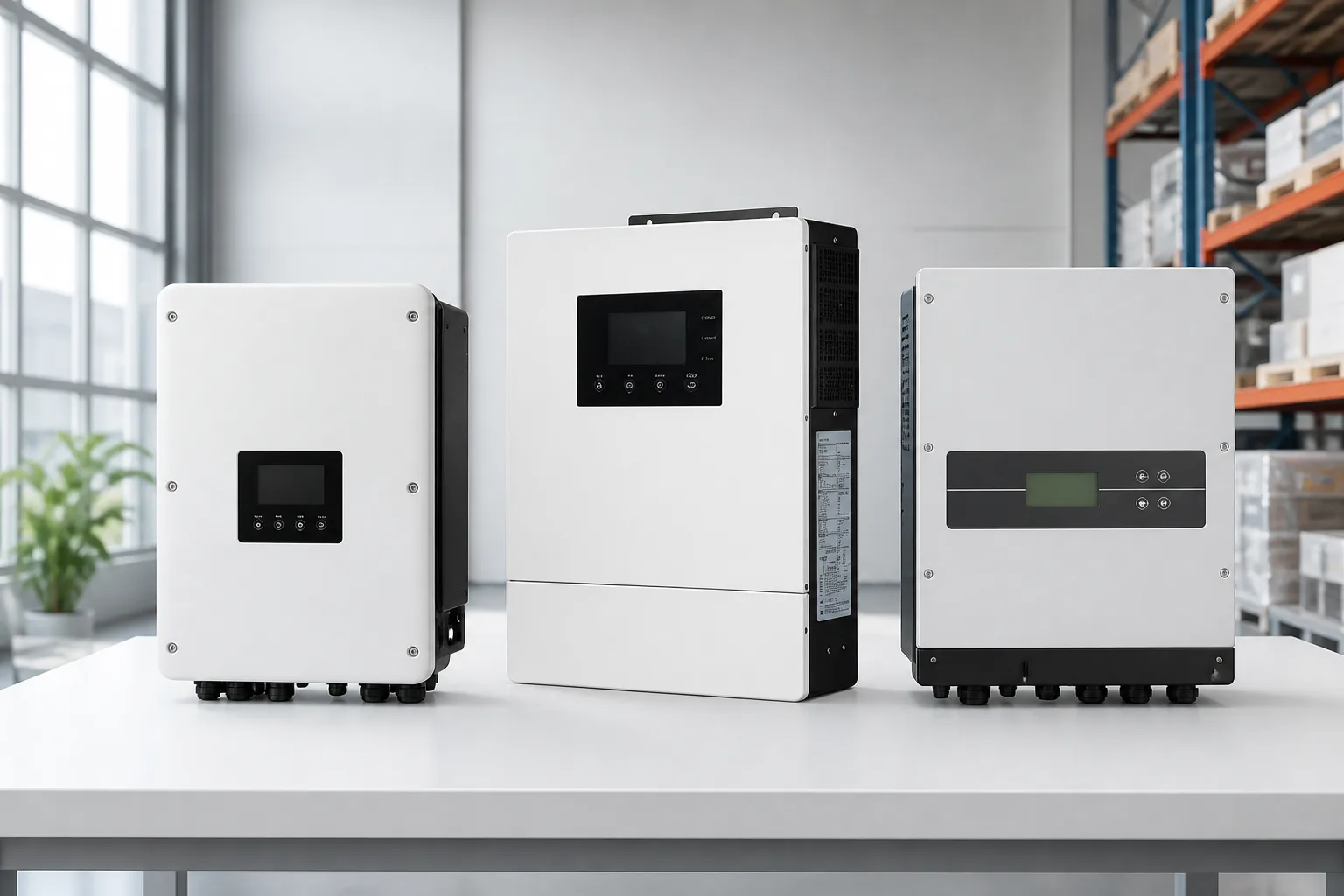
Buyers should classify an inverter by how it wires the array, how it talks to the utility and batteries, and what kind of AC wave it produces. Architecture answers shade and monitoring questions. Grid role answers storage and export questions.
Waveform answers whether sensitive electronics will run cleanly. A solar inverter’s core job is converting photovoltaic direct current into alternating current that loads or a utility connection can use.
Treating “types” as a single marketing label usually collapses those three decisions into one word and creates RFQ churn later. Procurement teams can keep a one-page intake that forces the three axes onto every quote request.
When sales, engineering, and purchasing share that frame, SKU debates stay attached to site constraints instead of brochure adjectives.
String architectures send a series string of modules into one centralized inverter, which is cost-effective on simple, mostly unshaded arrays. If one module is shaded or faulted, production on that string can fall, so distributors quoting a flat carport or single-plane roof often start here.
Microinverters convert DC to AC at each panel, so one shaded module does not drag the neighbors the same way a basic string can. That isolation usually costs more and puts more electronics on the roof, which matters for service access on steep commercial roofs.
Power optimizers sit between those options: they condition DC at the module, then a central string inverter still finishes the AC conversion. Use them when shade or multi-orientation layouts need module-level control without a full microinverter fleet.
Central inverters appear mainly on utility or community-scale plants where many modules feed one large conversion block. Most distributor catalogs for homes, RVs, and light commercial kits still orbit string, micro, and optimizer choices rather than utility central plants.
| Architecture | Typical fit | Main trade-off |
|---|---|---|
| String inverter | Simple, low-shade arrays | String-level impact when one module underperforms |
| Microinverter | Complex or shaded roofs | Higher hardware count and rooftop service work |
| Power optimizer + string | Partial shade with central conversion preferred | Extra module hardware plus a central inverter |
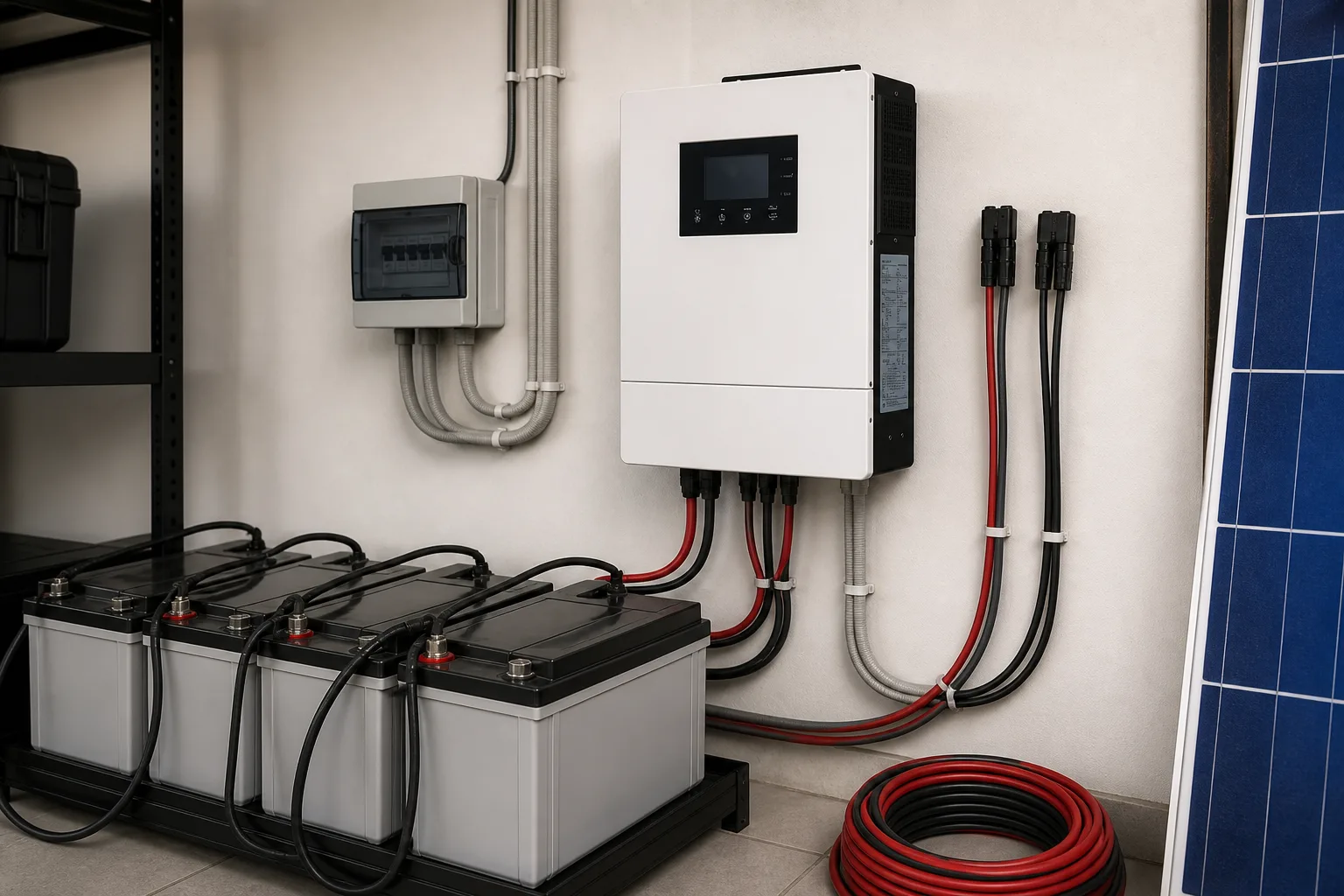
Grid-tie inverters synchronize with the utility and are designed to shut down when that utility supply is lost, which protects line workers and meets anti-islanding expectations. They are the wrong shortlist when the project promise is backup power during outages.
Hybrid inverters coordinate photovoltaic input, battery storage, and utility interfaces so a site can raise self-consumption and, on capable models, support backup paths. Off-grid or stand-alone inverters power local loads without depending on utility synchronization for normal operation, which fits cabins, RV lines, and remote kits.
Some off-grid packages still accept AC input from a generator or utility for charging and pass-through without exporting power. That “grid assist” behavior is useful, but it is not the same purchasing decision as a grid-interactive hybrid that can parallel or export under an interconnection plan.
From the field: In real RFQs, “hybrid” and “off-grid” are loose marketing words. Ask whether the unit can export or only take grid/generator assist, then read the datasheet—do not let the label finish the engineering decision.
| Grid role | What the buyer is really buying | Confirm before PO |
|---|---|---|
| Grid-tie | Utility-synchronous conversion | Outage behavior (usually shutdown) |
| Hybrid | PV + storage + grid coordination | Export versus grid-assist limits, battery voltage class |
| Off-grid / stand-alone | Local AC independence from utility sync | Battery sizing, surge, and waveform class |
MOES groups these buying paths under the Solar Inverter hub, with live Hybrid Inverter and Off Grid Inverter children for the next click.
Pure sine wave output targets clean AC similar to utility power, which matters for motors, laptops, medical-adjacent electronics, and many OEM appliance loads. Modified sine wave is a separate, stepped waveform class that can be acceptable for simpler resistive loads when cost dominates.
On MOES, pure sine and modified sine are explicit catalog families under the off-grid pathway, so waveform is not an afterthought SKU note. When an RV manufacturer or cabin kit buyer lists electronics-heavy loads, open the Pure Sine Wave Inverter path before debating enclosure color or WiFi extras.
Waveform mistakes show up late as buzzing transformers, unhappy switch-mode supplies, or warranty tickets that no discount heals. Capturing the load list early—compressors, pumps, IT gear, lighting drivers—keeps pure sine and modified sine from becoming a last-minute upsell argument.
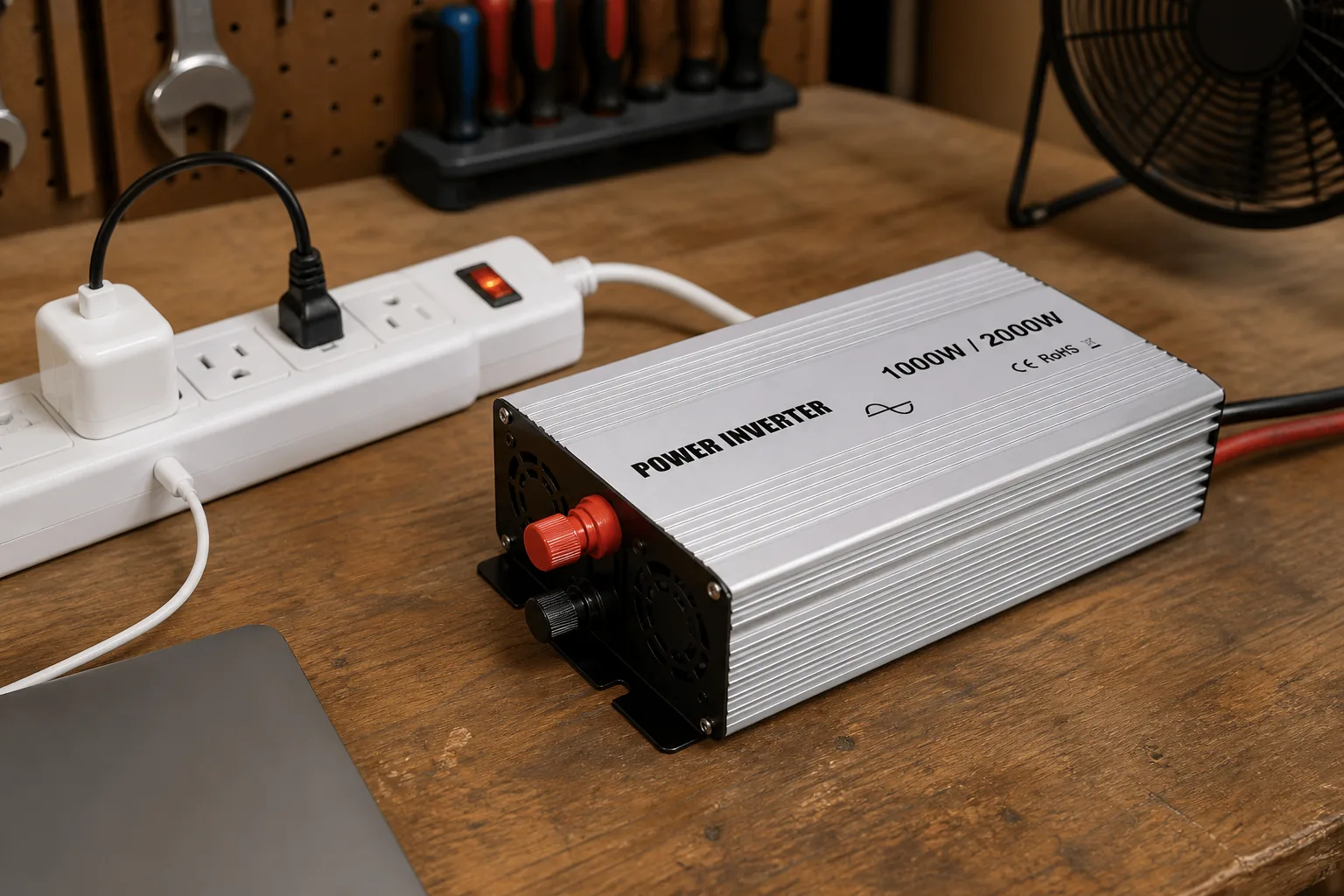
Start with the site’s grid story: must the system export, only accept grid assist, or stay fully stand-alone? That single answer removes half of the catalog noise before anyone opens a datasheet PDF.
Next lock architecture to the array: unshaded single plane favors string economics; multi-plane or shade-prone roofs push microinverter or optimizer discussions. Then lock waveform to the load list so pure sine versus modified sine is decided before price wars begin.
Only after those three locks should the buyer open a brand family, compare MPPT windows, battery voltage, monitoring, and enclosure ratings. Skipping the sequence is how teams buy a “hybrid” box that cannot do the export or backup behavior the sales deck promised.
Write the shortlist as a matrix, not a paragraph: site role, architecture, waveform, battery voltage, monitoring need, and service access. That matrix travels cleanly from distributor AE to EPC engineer and reduces “almost right” samples that burn weeks.
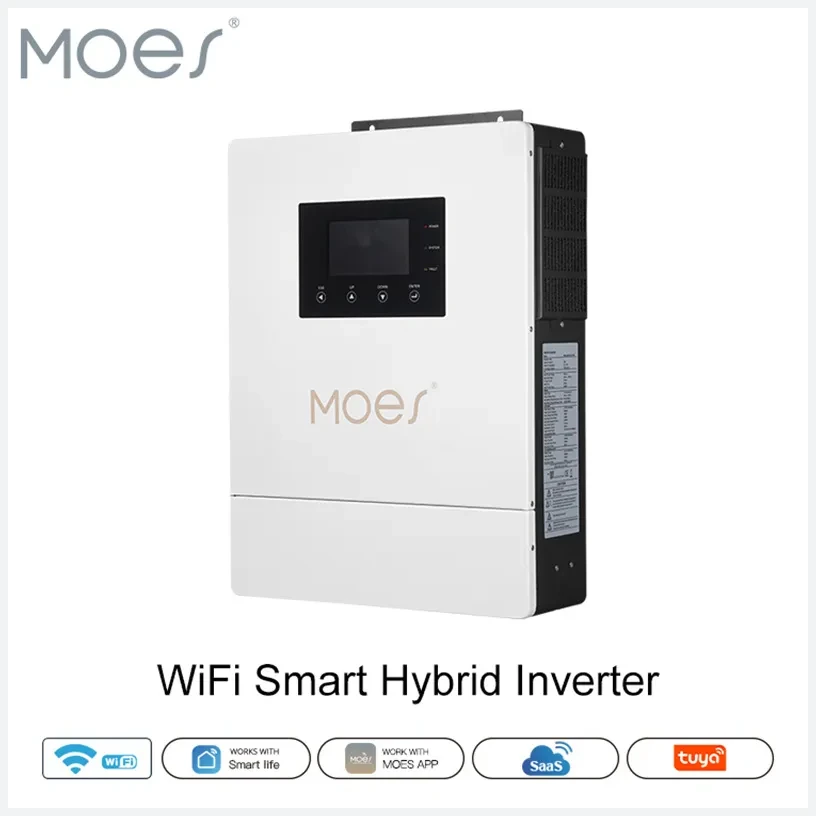
When the classification points to a storage-ready hybrid class, MOES’s live hybrid pathway is the practical next shortlist rather than a generic RFQ form. Start with the hybrid inverter category, then open the MOES WiFi Smart Hybrid Solar Inverter product page when that hybrid family fits the project.
That SKU’s published page states a 4.2 kW / 6.2 kW power range, 48 V DC operation, single-phase 176–253 V AC, dual-frequency 50 or 60 cycle support, MPPT voltage window 60–450 V, built-in MPPT charger ratings of 80 A / 100 A, pure sine wave output, LCD controls, and WiFi monitoring. Use those figures as page-scoped starting points for sampling, not as proof for every hybrid listing on the site.
If the project is a portable or RV pure-sine need instead, stay on the off-grid and pure-sine pathways rather than forcing a battery-hybrid chassis into the BOM. The live pure-sine family pages publish DC voltage options and AC output ranges that help OEM teams align vehicle or cabin electrical designs before tooling talk.
For model confirmation, labeling, or OEM packaging questions after the shortlist, use Contact Us. Keep the three-axis notes in the message so applications engineering answers the actual project, not a generic catalog browse.
Most useful maps combine architecture (string, microinverter, optimizer), grid role (grid-tie, hybrid, off-grid), and waveform (pure sine versus modified sine). Buyers who only memorize brand names still miss shade, export, and load-compatibility failures.
A string inverter converts a whole series string in one box; a microinverter converts at each panel. Micros limit cross-panel shade impact and usually cost more, while strings stay simpler on clean roofs.
A hybrid class coordinates photovoltaic input with battery storage and utility interfaces so a site can raise self-use and support backup paths on capable models. Always verify export versus assist behavior in the datasheet.
Off-grid or stand-alone designs focus on local AC without depending on utility sync for normal operation. Hybrid marketing often implies storage plus grid coordination, but labels vary—confirm grid-out capability explicitly.
Not always. Some sites pair storage later through AC-coupled batteries or redesign the power stage. If day-one storage integration is the plan, a hybrid-class unit with a matching battery voltage is usually the cleaner BOM.
Choose pure sine when loads include motors, electronics, or other gear that expects clean utility-like AC. Modified sine can remain a cost option for simpler loads, which is why MOES lists both families.
Start at the Solar Inverter hub, then branch into hybrid, off-grid, or pure-sine children that match the three-axis decision already made.


OTHER SMART DEVICES
Jun 13,2026
OTHER SMART DEVICES
Jun 12,2026
TUYA SMART HOME PRODUCTS
Jun 12,2026
 +86 137 3639 3028