

by NOVA

Sep 09, 2026
The disadvantages of hybrid inverter systems that matter for B2B quotes are RFQ gates: higher hybrid inverter cost and complexity, battery-bank dependency, grid-code and anti-islanding constraints, commissioning burden, and a concentrated single-point failure domain. Distributors get a selection checklist, clear “when not to quote hybrid” rules, and only then a scoped MOES SKU example.
Deep hybrid sizing stays on the hybrid solar inverter buyers guide. Architecture poles stay on the on-grid vs off-grid B2B comparison. Browse stock under Hybrid Inverter, Off Grid Inverter, and Solar Inverter.
For distributors and EPC teams, advantages and disadvantages of hybrid inverter language only helps when the downside side becomes fields you can put on a quote.
A hybrid solar inverter—often sold as an all-in-one inverter-charger—combines PV harvest, battery charging, grid interaction, and backup or island behavior when the model supports it. That packaging is the product pitch. It is also where the trade-offs live.
Channels get burned when sales language stops at “hybrid equals flexible.” Community threads show buyers struggling because hybrid feature sets vary widely: export versus zero-export, closed-loop BMS versus open voltage settings, whole-home backup versus a critical-load panel only.
If those modes are not locked before SKU talk, the quote is already wrong.
Treat disadvantages as decision filters:
Hybrid is not “bad.” Hybrid is expensive convenience with concentrated risk—and channel quotes should say so up front.
Hybrid quotes usually cost more than a simple grid-tied string inverter path because you are buying battery readiness, smarter source management, and more install labor—not only a higher sticker on the carton.
Price the full stack: inverter, battery bank when backup is in scope, communication cabling, monitoring, critical-load panel work, and commissioning hours. Consumer blogs often stop at “higher upfront cost.” Channel buyers need the labor line.
Complexity shows up as configuration, not just copper.
Hybrid units expose battery type, charge limits, grid charge windows, transfer behavior, and sometimes protocol selection. Getting those wrong rarely produces a dramatic day-one failure. It produces callbacks months later when autonomy is half of what the salesperson promised.
If the project is a reliable-grid bill-offset job with no backup need, the hybrid premium is often the wrong spend. Quote a clean on-grid architecture instead and keep hybrid inventory for sites that actually need storage interaction.
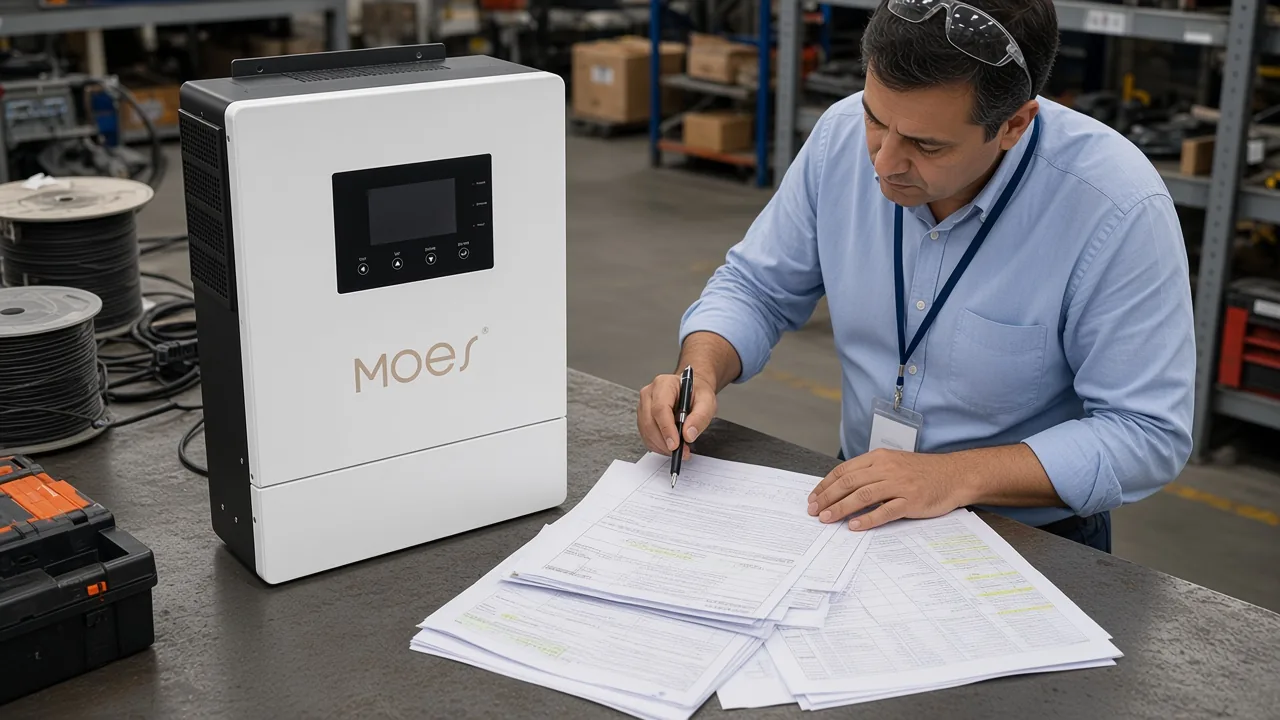
Backup is a battery problem wearing an inverter label.
If the customer wants power when the utility is down, the hybrid inverter is only as useful as the battery bank / BMS stack behind it. That means chemistry, usable capacity, charge and discharge limits, and a replacement capital conversation years later. Education sources routinely remind buyers that batteries—not panels—are the recurring capital item in hybrid ownership.
Compatibility is communication as much as voltage.
Forum language is blunt: “compatible battery” often means matching CAN or RS485 protocols and firmware, not only 48 V nominal. Closed-loop BMS links can improve charge control when they work. When they break or are mis-set, the inverter may keep running on generic voltage curves while the pack quietly takes damage.
RFQ habits for battery dependency:
Do not invent a global replacement year for every brand. Put the lifecycle question on the RFQ and let autonomy days drive bank size.
Hybrid interaction with the public grid still carries interconnection work, so anti-islanding and export rules belong on the quote before SKU talk.
When a hybrid inverter sits on the utility, it inherits the same safety idea as other grid-tied gear.
Anti-islanding—loss-of-mains disconnect—keeps the inverter from energizing a dead feeder.
U.S. Department of Energy resilience basics are clear that ordinary grid-tied solar is designed to switch off when utility power cuts out. Runtime through an outage needs storage and a suitable inverter path.
IEEE 1547 interconnection education points channels to the DER interconnection family many utilities and AHJs reference. Local rules still win. Your quote should not imply that “hybrid” is a shortcut around listing, export limits, or inspection.
Practical channel gates:
If the customer only wants surplus export on a reliable grid and no backup, a classic on-grid / off-grid inverter decision may be cleaner than forcing a hybrid label. Deep pole comparison belongs on the on-grid versus off-grid package; here the rule is simple: hybrid quotes still carry grid-code fields.
Tip: Panels alone do not keep a building powered during outages. DOE resilience guidance treats storage plus a suitable inverter configuration as the resilience path — source: https://www.energy.gov/cmei/systems/solar-and-resilience-basics
Commissioning is where hybrid disadvantages become warranty tickets for the channel.
A hybrid inverter concentrates MPPT, battery management, grid synchronization, and transfer switching. That is efficient when the unit is healthy. It is also a single point of failure.
If the inverter is down, solar harvest and battery conversion can both stop even though panels and packs are physically fine. Independent BESS coupling discussions make the same resiliency point about DC-coupled single-inverter designs. Reddit installers say it plainly—if the all-in-one fails, the whole unit is down.
Commissioning burden is the quieter twin of that risk.
Technical write-ups on hybrid failures repeatedly flag wrong battery-type profiles, unverified BMS communication, and skipped anti-islanding checks.
Those are not optional installer habits. They are acceptance tests. Put commissioning parameters on paper before the purchase order.
Ask for these items before PO:
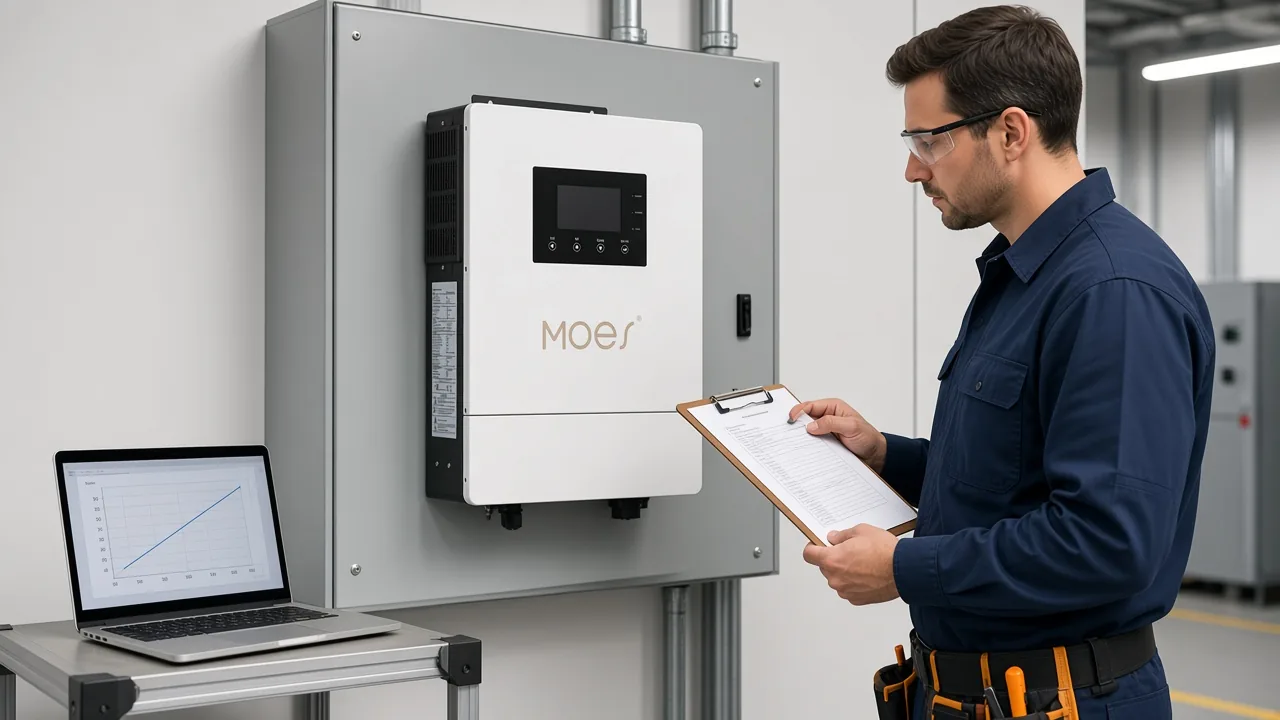
Knowing when not to quote hybrid protects margin more than another brochure.
Do not lead with hybrid when:
When the downside does not block a hybrid quote:
That is the entire “advantages” counterweight allowed here. Full sizing depth remains on the hybrid buyers guide; this package only clears the trade-off gate.
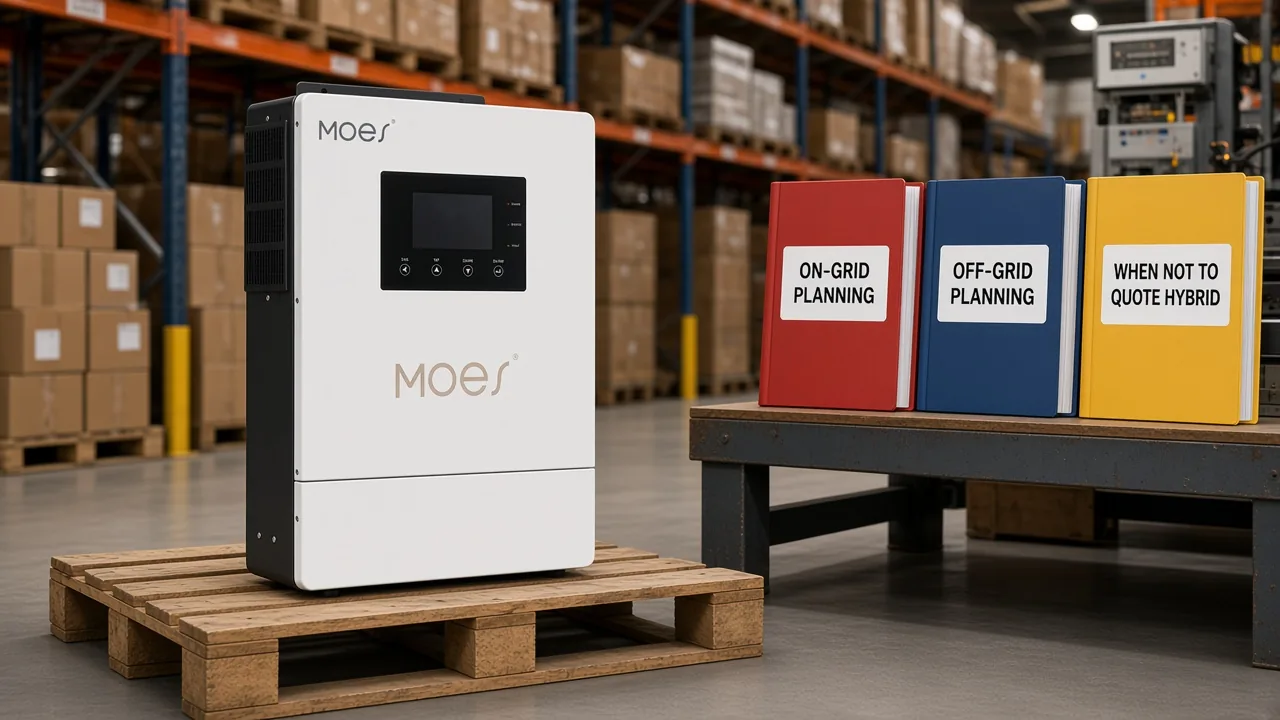
Use the tables below as quote attachments. They turn disadvantages into fields—not slogans.
| Hybrid downside | What breaks on a bad quote | RFQ impact |
|---|---|---|
| Higher cost / complexity | Underbid labor; surprise change orders | Price commissioning hours and monitoring, not carton only |
| Battery dependency | “Backup” without usable kWh or chemistry | Require bank size, chemistry, and DoD assumptions |
| BMS / protocol mismatch | Silent pack stress; callbacks | Lock open-loop versus closed-loop and protocol names |
| Grid-code / anti-islanding | Failed inspection; unsafe energizing | Export mode, interconnection owner, and evidence pack |
| Single-point failure | Whole site dark while waiting on RMA | Spare, lead-time, and monitoring alerts |
| Feature-set variance | Wrong SKU class sold as “hybrid” | Lock backup limits, export, and transfer claims per datasheet |
| RFQ field | Why it matters | Evidence to request |
|---|---|---|
| Grid reliability + outage runtime goal | Decides hybrid versus on-grid versus off-grid | Site notes and critical-load list |
| Export policy (full / limited / zero) | Drives interconnection and settings | Utility or AHJ path summary |
| Battery chemistry + usable kWh | Dominates BOM and lifecycle | Battery datasheet and autonomy days |
| BMS mode (closed-loop protocol or open-loop voltages) | Prevents silent mischarge | Protocol list and parameter sheet |
| Critical-load panel versus whole-home claim | Stops overselling backup | Single-line or panel schedule |
| Commissioning acceptance tests | Catches config faults early | Checklist with BMS and transfer tests |
| Monitoring owner + alert routing | Makes SPOF visible early | App or portal account ownership |
| Spare / RMA posture | Limits downtime from concentrated failure | Lead-time note in quote |
Important: A hybrid inverter that consolidates MPPT, battery management, and grid transfer into one enclosure can take solar and storage offline together when that enclosure fails—plan monitoring and spares before you sell convenience.
Only after the RFQ gates above clear should a channel point to a concrete SKU.
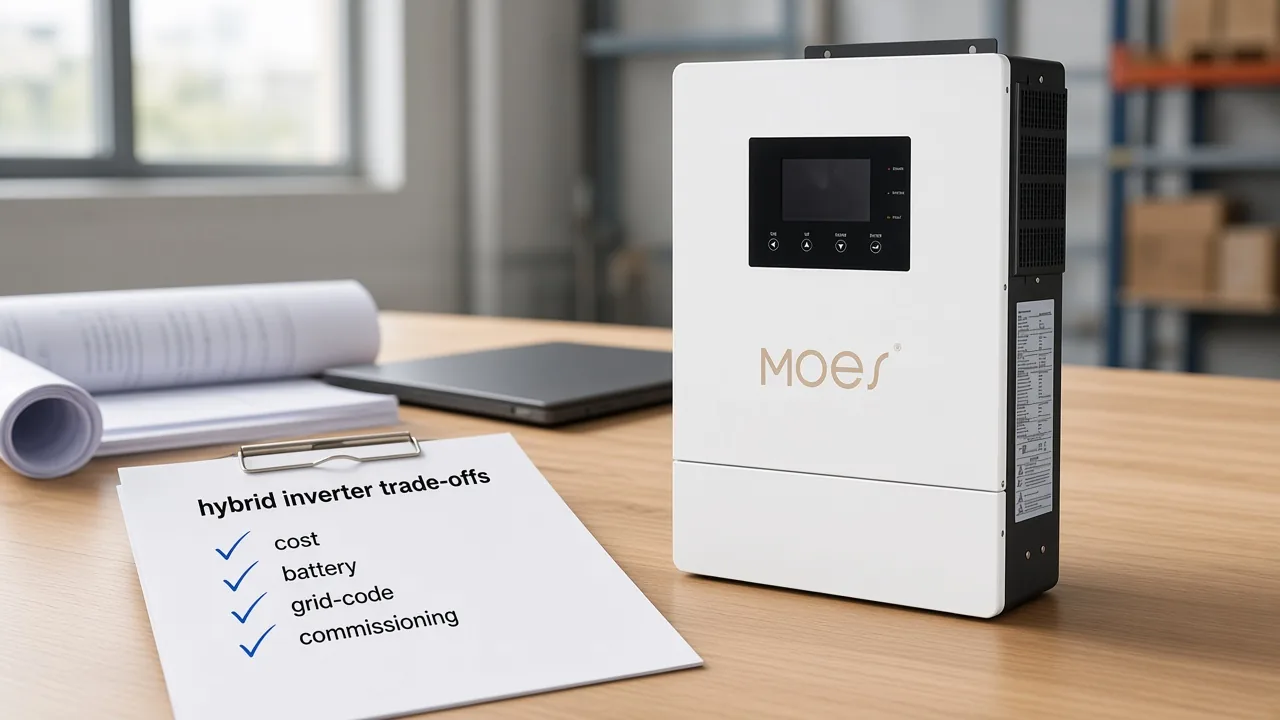
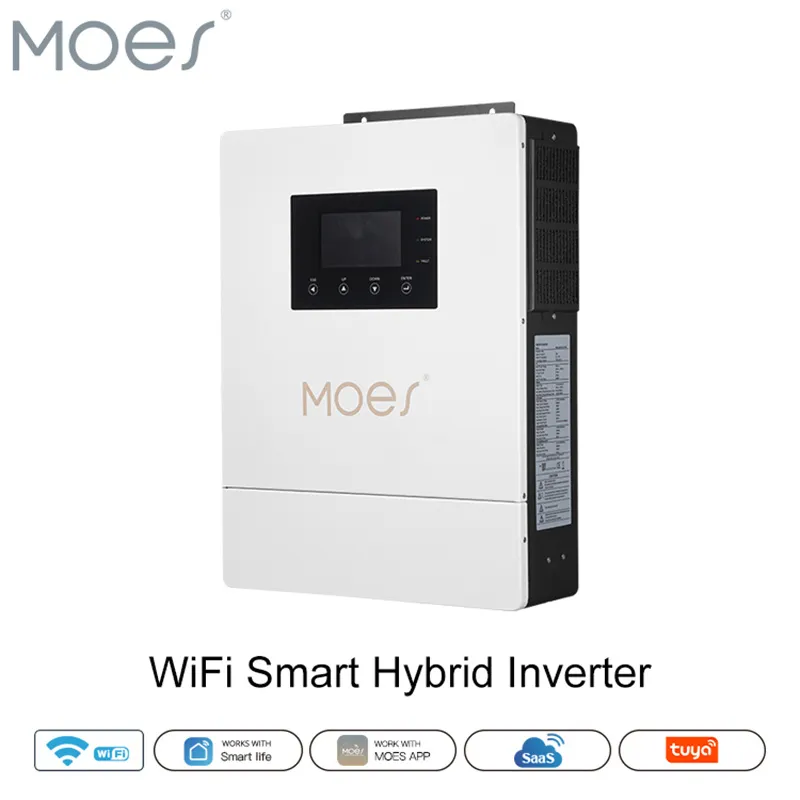
The MOES WiFi Smart Hybrid Solar Inverter 4.2–6.2 kW 48V is a first-party example of a multifunctional inverter/charger path on moessolar.com.
Public page ratings for this model include DC operating voltage 48 V, AC single-phase 176–253 V, dual-frequency 50 Hz / 60 Hz operation, and power range 4.2 kW / 6.2 kW.
Built-in MPPT on this SKU page is shown as 80 A / 100 A across an MPPT window of 60 V–450 V, with pure sine wave output, multi-protection features, and WiFi monitoring listed alongside. The listing also states operation without a battery as a product capability. The same product page frames the unit as a multifunctional inverter that also carries an integrated MPPT charge controller role next to the battery charger function.
Use these numbers only for this SKU. Do not invent transfer times, market listings, or export marks that are not on the page. For project fit questions after the checklist is complete, use Contact MOES.
Higher landed cost and install complexity, battery lifecycle dependency, BMS and protocol commissioning risk, interconnection and anti-islanding paperwork, and a concentrated single-point failure domain when one enclosure handles PV, storage, and grid transfer.
No. Cost is the obvious line item. Silent misconfiguration, battery compatibility, failed interconnection assumptions, and whole-system downtime after an inverter fault often hurt channel margin more than the carton premium.
Not always for basic powered operation—some models, including the MOES example above, state they can operate without a battery. Backup runtime and self-consumption still need a sized storage bank. Do not sell “backup” on a batteryless quote.
Refuse or redirect when the site only needs simple grid-tied export, when rip-and-replace of a healthy string inverter is the only path to add storage, when no commissioning capacity exists, or when a true off-grid generator-centric design is the real architecture.
Grid-interactive hybrids still need a clear export mode and an interconnection evidence path. Anti-islanding expectations exist so inverters do not energize a dead utility feeder. Confirm utility and AHJ rules; do not treat “hybrid” as an exemption.
A parameter sheet, BMS communication check when closed-loop is specified, transfer or island test notes where permitted, monitoring ownership, and a spare or RMA posture for concentrated failure.
Yes, relative to modular stacks: if the all-in-one inverter fails, solar conversion and battery inverter functions can both stop until that unit is repaired or replaced. Price monitoring and spares accordingly.
The MOES WiFi Smart Hybrid Solar Inverter 4.2 kW / 6.2 kW 48 V off-grid charger inverter on moessolar.com, using only the live page ratings listed in the product section above.


OTHER SMART DEVICES
Jun 13,2026
OTHER SMART DEVICES
Jun 12,2026
TUYA SMART HOME PRODUCTS
Jun 12,2026
 +86 137 3639 3028