

by NOVA

Sep 12, 2026
Test an outdoor light sensor by covering the photocell until the lamp changes, then uncovering it and waiting through the delay before anyone calls the unit failed. That cover-and-wait pair is how to test outdoor light sensor behavior on a real dusk-to-dawn path. Write the result before a return names the wrong part.
A photocell is the small eye that turns a lamp path on at dusk and off at dawn. A motion head does a different job, and so does a wall switch. This ticket is about the eye, and about the switch only after the eye has had a fair test.
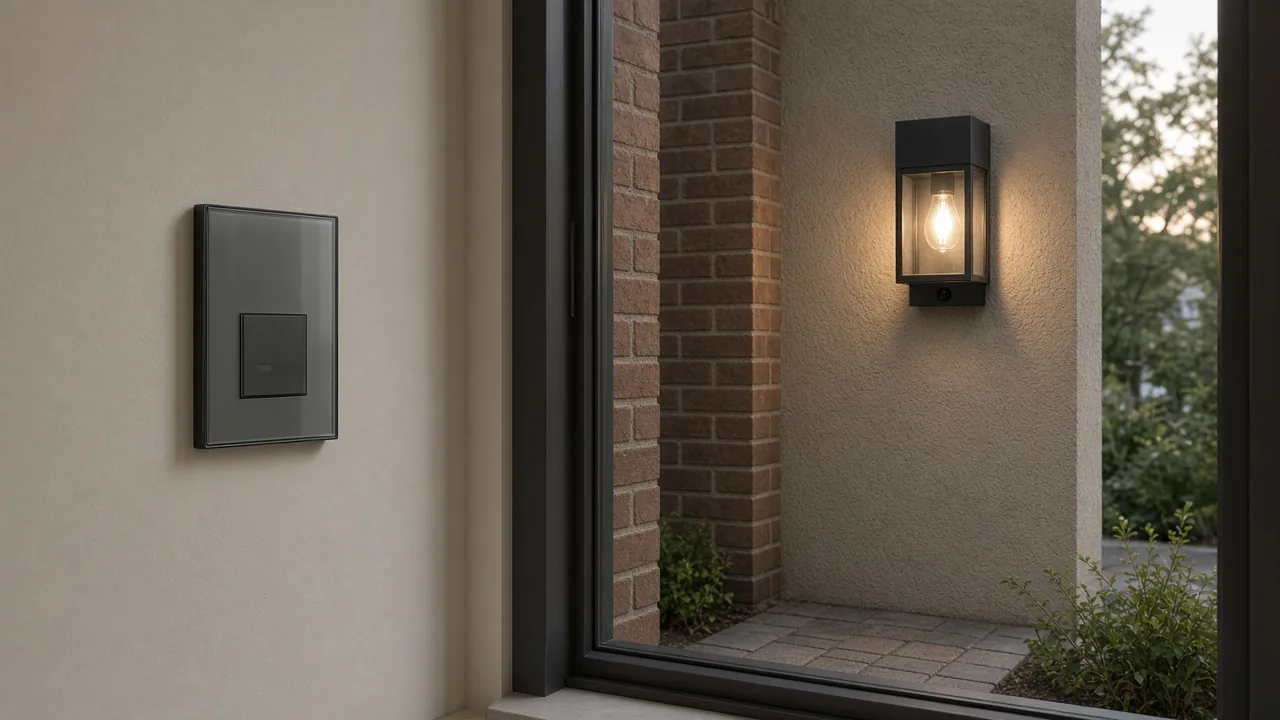
A dusk-to-dawn sensor reacts to light level. A motion head reacts to movement, and it usually stays quiet in daylight until someone forces a test mode. Covering the little window does not walk a driveway.
The pages that rank for this query often mix those two jobs. A daylight cloth test answers a photocell sensor. Walking the path answers a motion fixture.
If the fitting has both, the cloth only shows whether the light-level lockout will allow the lamp. It does not set range, time, or aim.
Dealers lose hours when a motion install note is pasted onto a dusk-to-dawn complaint. The buyer then asks for a new sensor head, and the field still has a shaded eye or a switch that never opened. Name the device in the first line of the ticket: dusk to dawn light sensor, motion head, or both.
| Symptom on the ticket | Check first | Next action |
|---|---|---|
| Lamp on at noon | Cover, wait, uncover, wait | If the lamp still moves, look at shade and dirt |
| Lamp dark at night | Switch position, then the lamp itself | If the lamp cannot light, stop blaming the eye |
| Paddle ignored day and night | Shared circuit notes | Split the switch from the photocell before a part order |
| Strobe or chatter at dusk | Whether the lamp can shine on the eye | Shade the eye from its own light |
Stay-on, never-on, and flicker are different tickets. Write which one you have, and write the wall switch position at the same time. A paddle that was off all night cannot explain a noon lamp, and a paddle that never opens the night path can make a healthy eye look stubborn.
Note where the eye faces, whether anything shades it at noon, and whether the complaint started after a lamp change, a paint job, or a new awning. Those notes cost less than a wrong box on a truck.
If the fitting is wet, cracked, or showing bare copper, stop. Lockout and a dead-circuit check belong on the ticket when a qualified person will open the box. This page does not describe how to probe live terminals.
Use a cloth or several layers of tape that actually block the window, not a loose hand shade. Cover, wait, uncover, and wait again. The lamp should move one way under the cover and the other way in daylight.
A U.S. Department of Energy site-lighting specification asks a photocell-plus-time-switch system for a 15 to 30 second delay so headlights, lightning, or a cloud do not chatter the lamps, and it treats a turn-on/turn-off ratio of 5:1 as the ceiling for that system.
Porch lanterns are not that parking spec, but the idea is the same: a fast hand shade often ends before the relay decides. Treat a short pause as part of the test, not as a failed part.
UL 773A covers nonindustrial photoelectric switches for lighting control up to 20 A and 347 V on 50 Hz or 60 Hz systems, and it excludes locking-type devices used for area or roadway lighting.
UL 773 covers plug-in locking photocontrols rated 480 V ac or less for outdoor area lighting, and it excludes non-plug-in, nonlocking photoelectric switches.
Those two names tell a twist-lock area control apart from a button eye on a porch lantern. They are class labels. Copying either name onto a MOES line would invent a listing the catalog does not show.
From the field: A homeowner covered a photo-eye with a hat and could not trigger the flood lights — a reply said covering the eye can take a minute or two before the circuit closes (dusk-to-dawn cover thread).
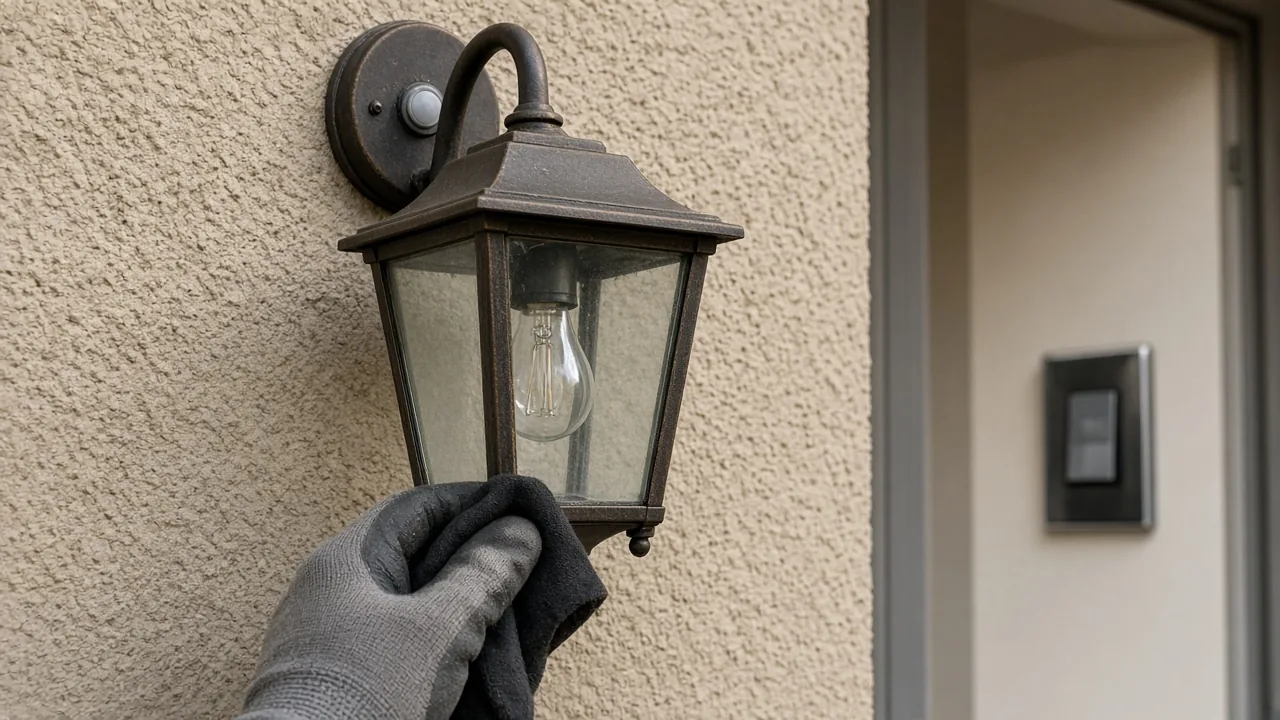
If the cover turns the lamp off and daylight turns it back on, the eye still answers. Look at where it faces. A deep eave, a tree, or the lamp’s own glow can hold it in night mode.
Clean the window before anyone orders a replacement module.
Dirt is a common fake failure. A grimy or sun-bleached lens reads dark while the yard is bright. Wipe it, then run the cover pair again before anyone talks about a new eye.
Shining a flashlight at the window in a dark complaint is the reverse check. A living eye should open the path and drop the lamp after its delay.
If the lamp stays on with the eye covered and with the eye in full daylight, the control is not tracking light. Failed-closed, a jumper, or a path around the eye are the next notes. That is a replacement conversation, after the lamp and the switch have been written down.
| Cover result | What it means | Do not do next |
|---|---|---|
| Lamp follows cover and uncover | Eye still tracks light | Skip the sensor return as dead |
| Lamp stays on both ways | Control is not tracking light | More shading will not improve the test |
| Lamp stays off both ways | Eye is not the only suspect | Skip neither the lamp nor the switch |
| Lamp strobes when it comes on | Eye may see its own lamp | Aim the fixture away from the window |
A dark lamp at night can be a dead bulb, an open switch, or an eye that never closes. Start with the lamp. If the fixture can light when the sensor is taken out of the path, the eye is the remaining suspect.
If it still stays dark, a new photocell will not help.
Channel notes should say whether the wall switch was on during the night complaint. Support hears “sensor dead” when the paddle was off. That is a wasted part, not a failed eye.
Also write whether a shared photocell sits upstream of several fixtures. One dark lamp on a lit circuit is a lamp or socket. Every lamp dark together is the control or the feed.
Mixing those two stories is how a single porch bulb becomes a site-wide sensor claim.
Some circuits put a photocell and a wall switch on the same lamps. If the lamps stay on day and night no matter where the paddle sits, the switch is not opening the circuit. One field thread described exterior LED fixtures doing exactly that, and a reply pointed at LED load that an older photocell relay was not built to switch.
Ask whether the photocell says it is for LED before the order names a new eye or a new paddle.
A wall switch is still on and off for the path it feeds. It does not measure daylight. When the written test says the buyer needs a controllable indoor paddle, and the eye is a separate part, the category path is the smart switch range.
Polarity and reversed line/load show up in field notes as a sensor that never had a chance. Qualified installers record which conductor fed the eye and which conductor fed the lamp. This page will not turn that into a wiring recipe.
The useful split is simpler. If jumping the sensor path lights the lamp, the lamp and the feed are alive, and the eye or its connections are the remaining suspect.
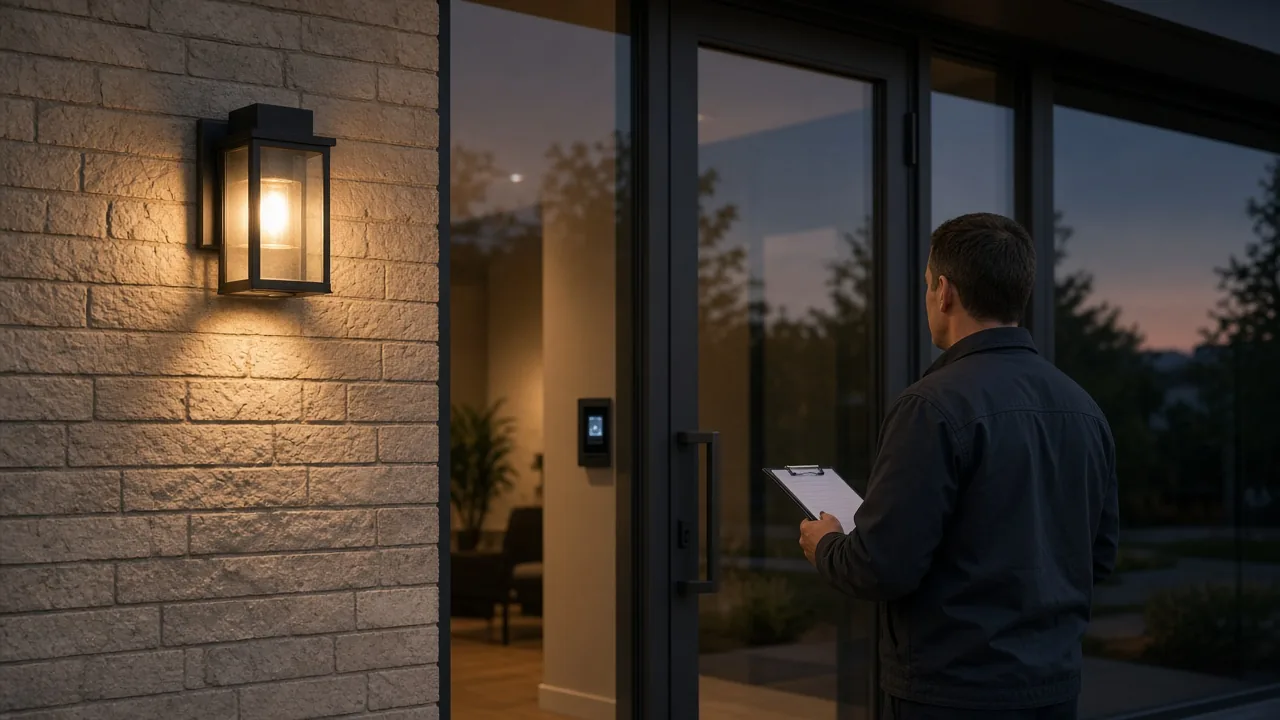
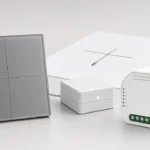
MOES does not list a live outdoor photocell. After the catalog check, the fitting first-party part for a wall-control finding is the MOES Tuya WiFi Star Feather Series US Switch. It is a touch wall switch with app, voice, and panel control.
It will not turn a fixture on at dusk by itself. Call the part a wall switch: it is not a photocell.
The live US page for the MOES Tuya WiFi Star Feather Series US Switch lists model WS-SF-US1/2/3/4, 90-250V AC at 50/60Hz, 10A per gang with a 10A total, Wi-Fi on 2.412-2.484GHz, and maximum RF transmit power under +10dBm.
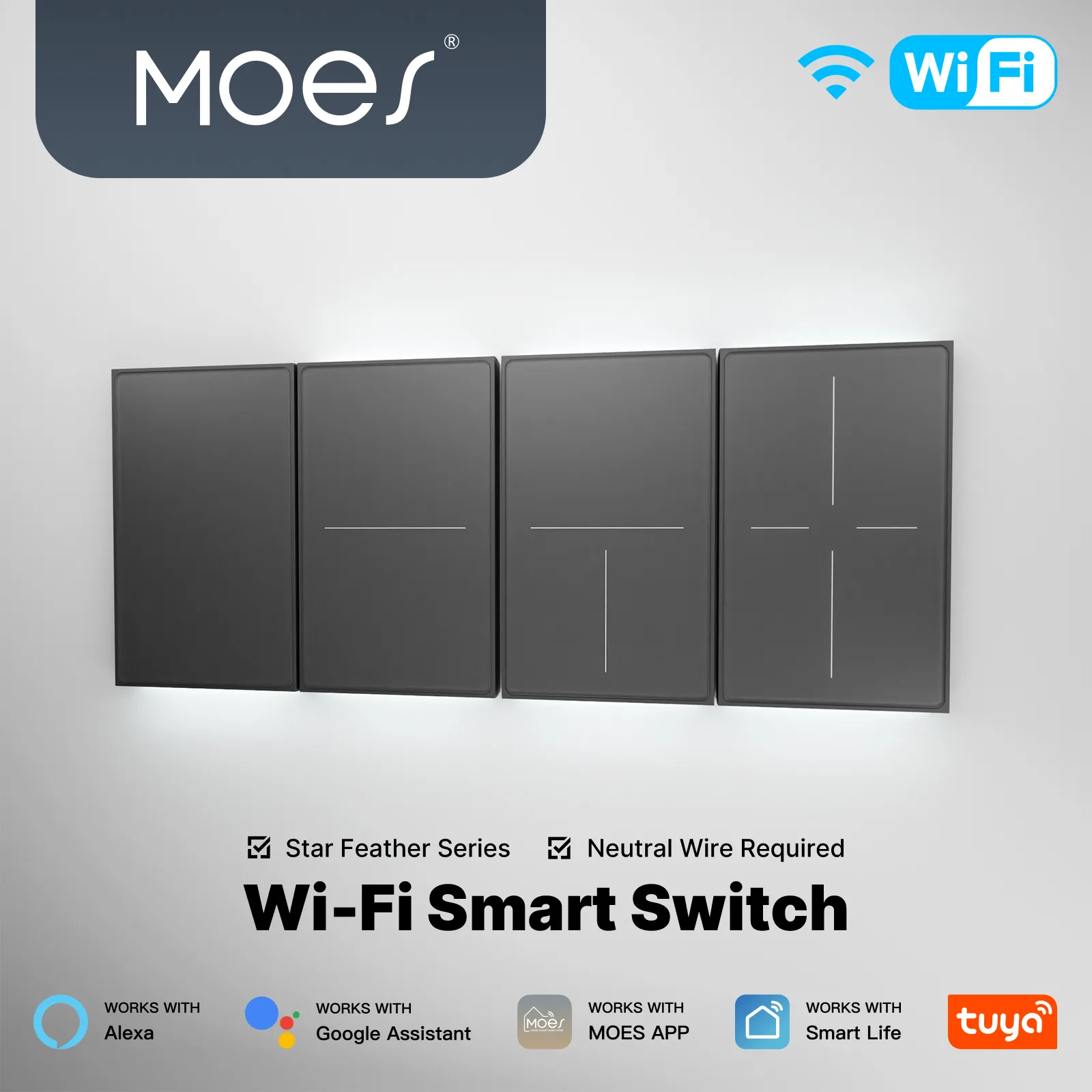
Use that page only when the written test says the eye still tracks light, or the switch never had an off path, and the buyer asked for a wall control. Lighting modes and scene modes on that series are an app choice on the switch, not a dusk sensor. An EU format exists as a sibling page; do not copy the US current table onto it.
False day and false night are still eye problems. Quoting a smart paddle does not fix a shaded window. If noon shade holds the lamp on, move or shield the eye.
If the lamp’s own light chatters the circuit, aim the fixture away from the window. Star Feather belongs on the ticket after those checks, when the missing piece is indoor control.
Cover the window until the delay passes, then uncover it and wait again. If the lamp never moves either way, and the lamp itself can still light, the eye is the failed part. If the lamp follows the cloth, the eye is alive and the ticket is shade, dirt, or aiming.
A power cycle at the wall switch or breaker is the reset most dusk-to-dawn eyes actually have. Write that you restored power and ran the cover pair again. Do not copy a motion-fixture test dial onto a photocell that has no such dial.
Yes, when both sit on the same lamps and the paddle cannot open the night path. Record switch position by day and by night before anyone orders either part. LED loads can also leave an older photocell stuck on even when the paddle is sound.
A hand or a hat often leaks light, and the relay may still be waiting. Use an opaque cover and give the delay time to finish. A miss on a quick shade is not proof the eye is dead.
Symptom, switch position, cover result both ways, lamp result with the sensor out of the path, and a stop note if the fitting is wet or open. That packet is what keeps a channel return from naming the wrong SKU.
Yes. A filmed or sun-bleached window reads dark in daylight, so the lamp stays on. Clean it and repeat the cover pair before a replacement request.
Some older photocell relays were built for heavier lamp loads. An LED fixture can sit below that load, so the control never opens. Ask for an LED marking on the photocell before the order swaps the wall switch by habit.


OTHER SMART DEVICES
Jun 13,2026
OTHER SMART DEVICES
Jun 12,2026
TUYA SMART HOME PRODUCTS
Jun 12,2026
 +86 137 3639 3028