

by NOVA

Sep 13, 2026
A nest protect sensor type search is asking what a combination smoke and carbon monoxide alarm senses, not which hallway device turns the lights on.
The public battery user guide describes Nest Protect as a residential smoke and carbon monoxide alarm, and it names a photoelectric smoke sensor for slow, smoldering fires. Later write-ups still file the newer unit as photoelectric, with a manufacturer-named optical improvement, so the class to mark is smoke plus carbon monoxide.
That split is the useful next step. Name the smoke method, name carbon monoxide only when the combination is specified, and keep motion, leak, photocell, and temperature on their own lines before anyone compares SKUs.
Buyers usually paste a brand into the line and expect one sensor name back. The readable public record does not collapse to one sensor.
Nest Protect is a combination alarm class. The battery user guide says it is designed to detect smoke and carbon monoxide in a home, and it names a photoelectric smoke sensor for slow, smoldering fires. That is the class a channel file should open with.
A later explainer says the first generation uses a basic photoelectric sensor, and the second generation is still photoelectric only, with a manufacturer-named split-spectrum improvement aimed at fires that ionization sensors are often associated with. Generation talk can stop there. Part numbers and chamber chemistry do not belong on a channel quote.
People also shorten the same object to a smart smoke and carbon monoxide detector. The housing may be smart. The detection jobs are still smoke particles and carbon monoxide, and those jobs stay named even when one product does both.
The rest of the Tuya smart home products range sits in comfort and control classes. That is why this brand query has to be sorted before it gets mixed with a lighting, leak, or heating SKU.
Smoke alarms on the authority pages fall into two basic types: ionization and photoelectric. A dual-sensor smoke alarm is the third filing, and it means the unit contains both of those smoke methods.
An ionization smoke alarm is the class those pages describe as more responsive to flaming fires. A photoelectric smoke sensor is the class they describe as more responsive to smoldering fires. A 2007 NIST technical note reported the same split in residential fire tests: ionization somewhat better on flaming fires, photoelectric often considerably faster on smoldering fires.
Neither sentence makes one class “the” smoke sensor. It tells a buyer that “smoke” is an incomplete line. The quote should say ionization, photoelectric, or dual-sensor, because the fire the project worries about changes which method the file is asking for.
A photoelectric smoke and carbon monoxide detector is a different sentence again. Photoelectric describes the smoke method, and carbon monoxide is a second sensor. Writing both words in one breath is fine only if the line item names both jobs.
A carbon monoxide alarm watches for CO. It does not watch for smoke particles, and a smoke sensor does not cover CO unless the combination is specified.
NFPA’s carbon monoxide safety page treats that gas alarm as its own class: choose one with a recognized testing-laboratory label, and follow the alarm’s own instructions. A buyer who wants a carbon monoxide sensor for home coverage needs that gas class named, even if the same email also asks about smoke.
Combination units exist. The Consumer Product Safety Commission booklet notes that a smoke alarm may carry extra sensors, sometimes a heat detector or a carbon monoxide detector. That extra sensor is still its own job, and the word photoelectric does not imply it.
On a quote, the clean line is two fields even when one housing does both: smoke method in one field, and carbon monoxide, yes or no, in the other. If the buyer only wrote a brand name, ask which of those two jobs the building file is trying to cover, and leave placement to the listed alarm’s own instructions.
This page is a class note for channel paperwork. Placement for a specific house stays with the listed alarm’s own instructions, and a comfort gadget does not take the place of a listed smoke or carbon monoxide alarm.
The brand query collects extra words because the same product family is also discussed for a path light, occupancy, humidity, and ambient light. Those words describe other classes.
A photocell, in the CPSC smoke-alarm booklet, is the light receptor inside a photoelectric chamber. Smoke between the beam and that receptor is what the chamber is watching. An outdoor lighting photocell is a different product, and it does not share that chamber job.
A motion sensor is an occupancy input for lighting or automation. Community users have tried to borrow the alarm’s path light for that job. A 2016 SmartThings thread records the reply that the path-light motion cue is internal and is not exposed for automations, so the hallway still needs its own motion sensor.
From the field: A community reply said the path-light motion sensor is not exposed for automations, so the hallway still needs its own motion sensor — SmartThings Community.
A water leak sensor watches for water where it should not be. Keep it off the smoke and CO line; this page leaves leak-project worksheets to their own articles. A temperature controller watches or sets room temperature for heating comfort, so it belongs on a heating line.
| Class | What the line is asking for | What gets misread |
|---|---|---|
| Photoelectric smoke sensor | Smoke particles that scatter light in a chamber | A lighting photocell or a CO reading |
| Ionization smoke alarm | A smoke method associated with flaming fires | A carbon monoxide method |
| Dual-sensor smoke alarm | Both ionization and photoelectric smoke methods in one unit | A smoke-plus-CO combination |
| Carbon monoxide alarm | CO as its own gas class | Coverage implied by the word smoke |
| Motion sensor | Occupancy for lighting or automation | A path-light mention on an alarm |
| Water leak sensor | Water where it should not be | A life-safety detector class |
| Temperature controller | Heating comfort control | A smoke or CO substitute |
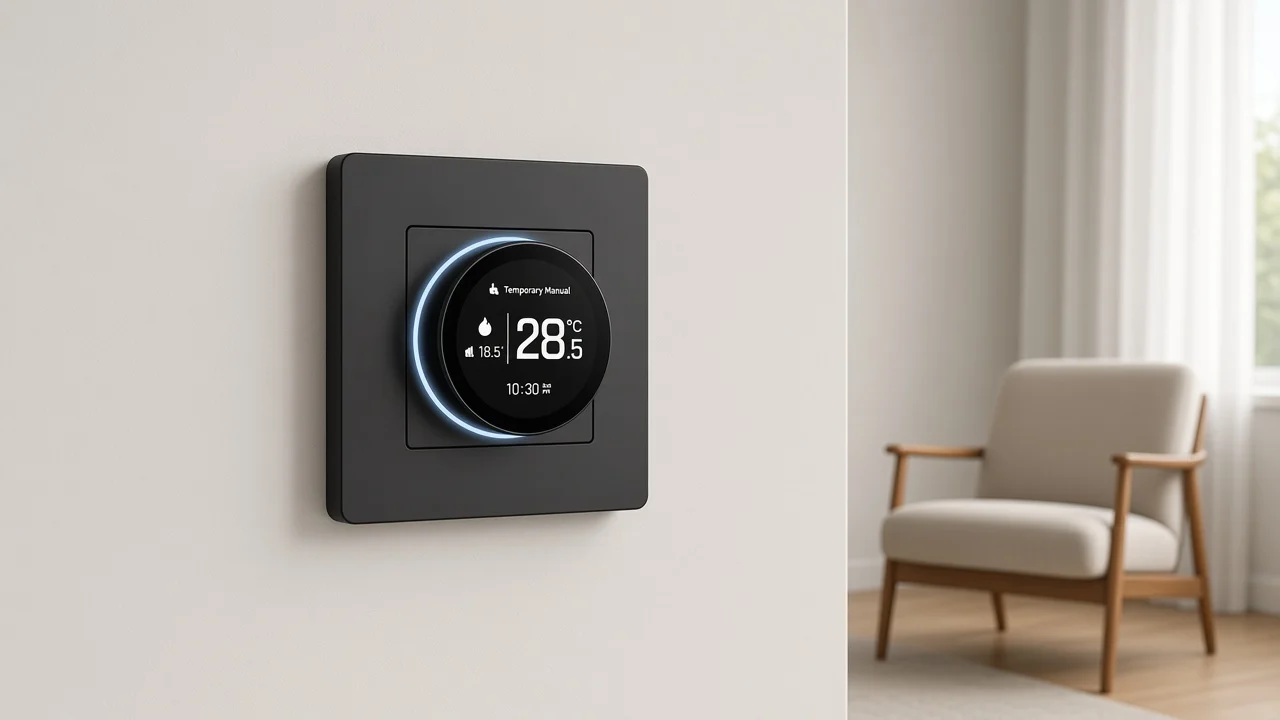
The comparison starts after the class is written. A brand name, a protocol name, or a smart-home category name is not the class.
Use a short sheet that a coordinator can paste into the RFQ without turning it into an installation script.
| Field | What to write | Why the quote changes |
|---|---|---|
| Detection job | Smoke, carbon monoxide, or both named separately | One brand name hides which job is open |
| Smoke method | Ionization, photoelectric, or dual-sensor | Flaming and smoldering concerns do not share a method |
| CO on the same housing | Yes or no, as its own field | A smoke method does not imply CO |
| Path light or occupancy mention | Convenience only, unless a separate motion line exists | Path light is not an automation motion input |
| Photocell word | Chamber receptor, or a lighting photocell, pick one | The same word sits in two different products |
| Other class on the email | Motion, leak, or temperature on its own line | Comfort classes do not fill a life-safety line |
| Manufacture-date age | Record the replacement age the listed alarm’s own page requires | Authority education treats age as a real field |
The United States Fire Administration says smoke alarms need to be replaced 10 years from the manufacture date. That age is a documentation field on a life-safety line, and a heating controller does not fill that replacement field.
If the email mixes a life-safety brand with a comfort SKU, split the email. The life-safety line stays with a listed smoke or carbon monoxide alarm class. The comfort line can move to a control product that actually matches that narrower job.
A live catalog check on the MOES site found no published smoke-alarm SKU. A plug-in carbon monoxide display is published, and it is left off this page on purpose. This classification note must not present MOES hardware as a Nest equivalent or as a stand-in for a listed life-safety alarm.
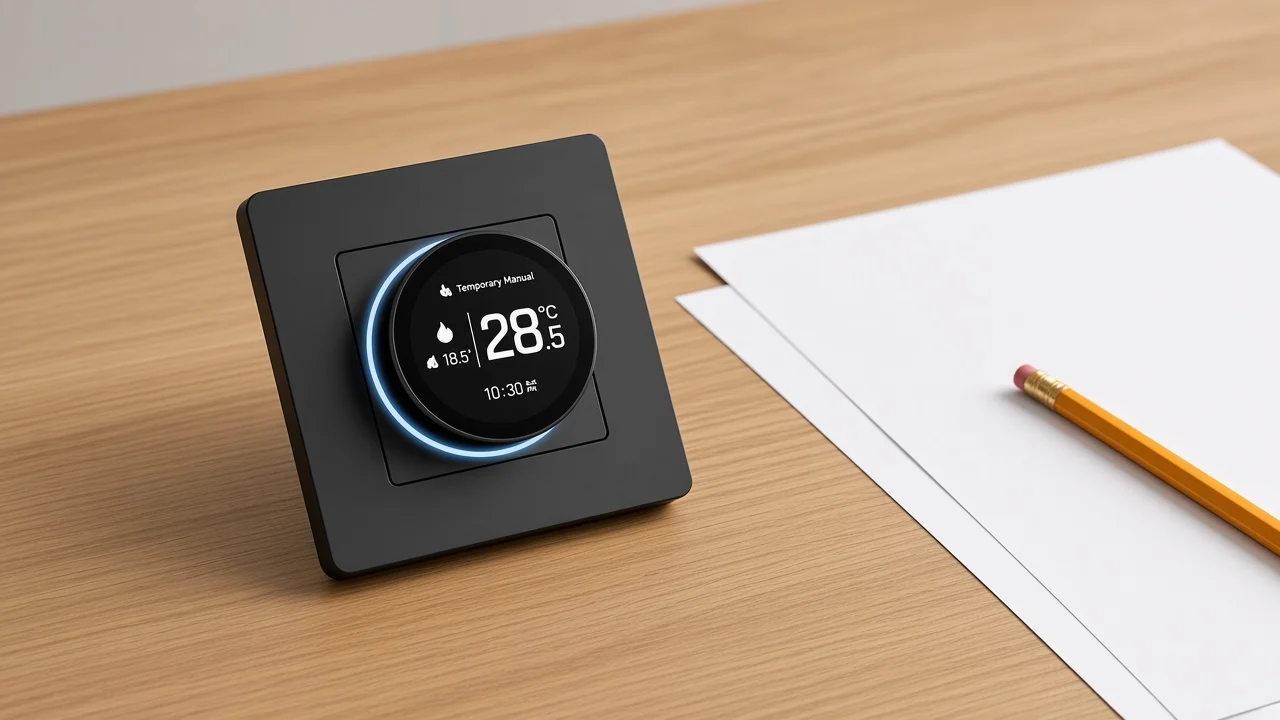
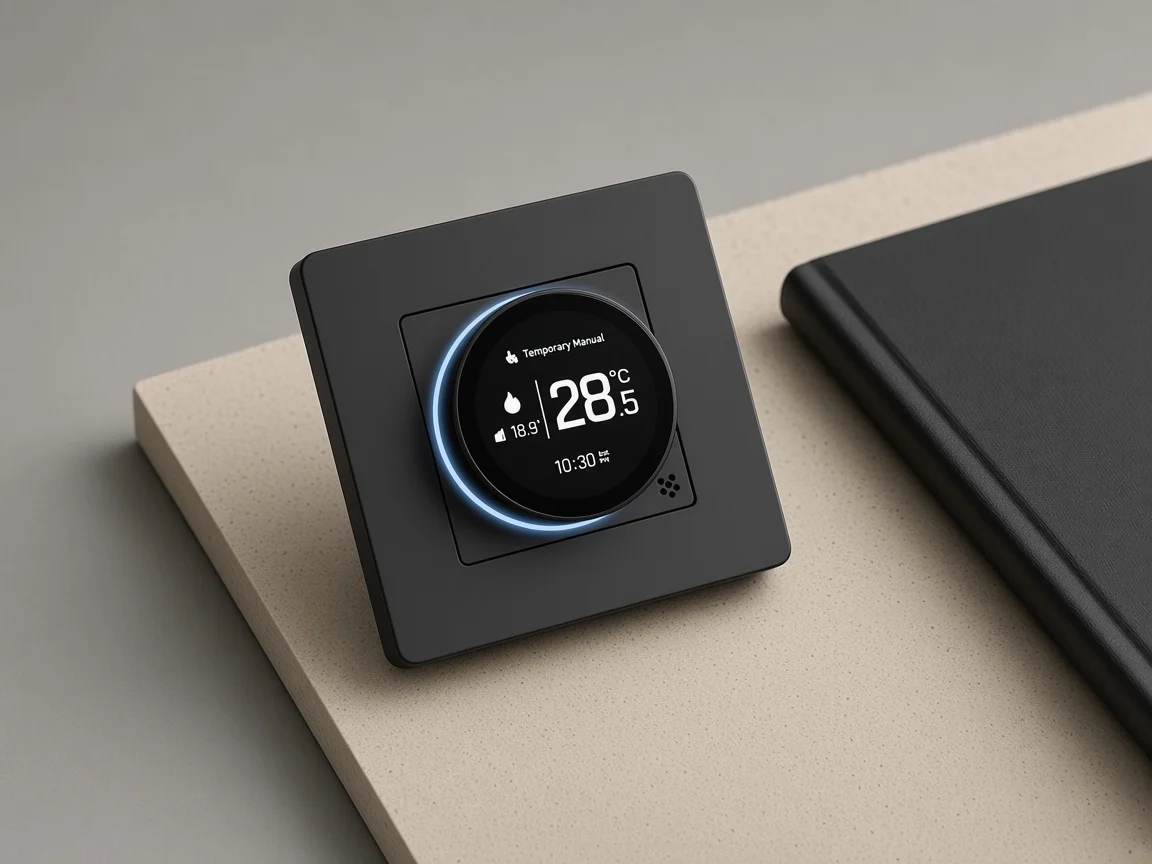
When the written job is comfort heating control, the adjacent live page is the Star Ring Smart Knob Thermostat. The visible product title calls it a ZigBee knob thermostat for water-boiler and electric-heating control. The technical table lists the sensor as NTC3950, 10K, with accuracy of ±1°C and a set range of 5-35°C.
Open that page only as a heating controller. It is not a smoke or carbon monoxide detector, and only after the RFQ has already said the open job is heating comfort.
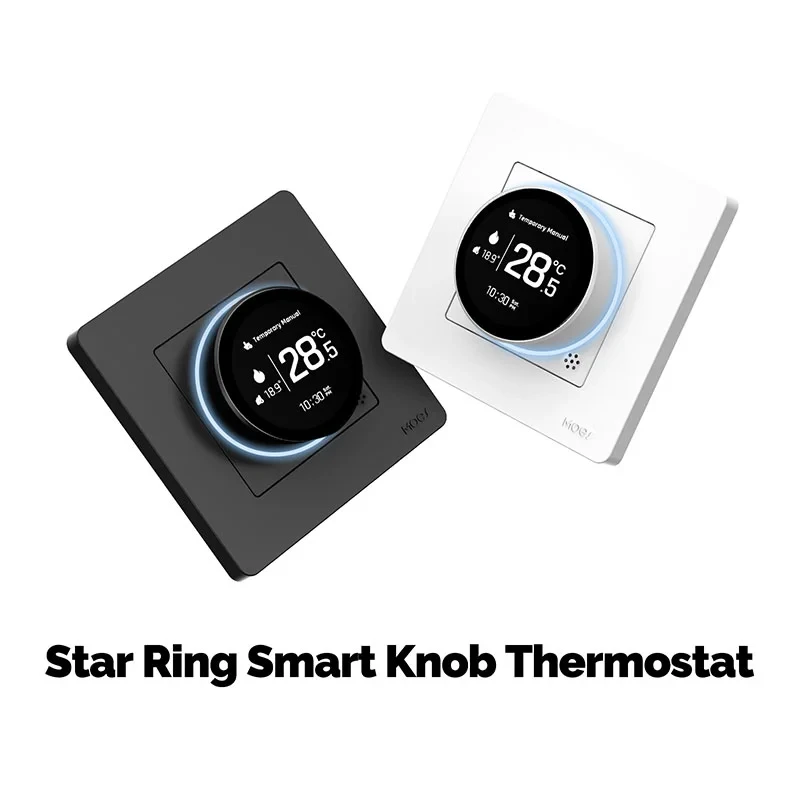
Hand the next reader the class name. If the heating line is the one that stays, the product page is the next read, and the team can talk through that heating job once the life-safety line has been filed elsewhere.
The battery user guide names a photoelectric smoke sensor for slow, smoldering fires. A later explainer says both generations stay in the photoelectric family, and the newer unit adds a manufacturer-named optical improvement rather than an ionization chamber. Keep ionization as a separate smoke class unless the line item actually specifies it.
Photoelectric describes how the chamber sees smoke particles, and carbon monoxide is a separate sensor. A buyer who wants both has to say both, which is what a photoelectric smoke and carbon monoxide detector line should do in plain fields.
Not on the evidence in the community thread. The path-light motion cue was described as internal to the alarm, so a lighting scene still needed its own motion sensor. File path light as a convenience note, and open a motion line if occupancy is the real job.
A thermostat sets heating temperature, while a smoke and carbon monoxide alarm is a life-safety class. They can appear in the same building file, and they should stay off the same comparison row.
Write the smoke method and write carbon monoxide as its own field, even if one housing does both. “Smart detector” is not enough, because it does not say whether CO is included or which smoke method is in the chamber.
Fire-service education notes that ionization smoke alarms may be more prone to cooking nuisance alarms than photoelectric ones. Name the smoke method and keep kitchen context on the line. A leak sensor or a thermostat still sits in a different class.
NFPA’s home fire-safety page says to keep smoke alarms at least 10 feet from the stove, and it describes photoelectric alarms as the better type near kitchens and bathrooms when nuisance alarms are the concern. Treat that as an education note to keep next to the smoke-method field, not as a placement ruling for a specific building.


OTHER SMART DEVICES
Jun 13,2026
OTHER SMART DEVICES
Jun 12,2026
TUYA SMART HOME PRODUCTS
Jun 12,2026
 +86 137 3639 3028