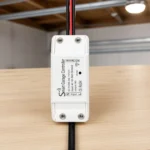


by NOVA

Aug 10, 2026
An RF433 transmitter and receiver request is not yet a usable purchase specification. It says something about the carrier band, but it does not identify the code format, modulation, receiver output, antenna arrangement or the conditions that the finished link must pass.
For a distributor, installer or OEM buyer, the safer starting point is the signal you need to receive or reproduce—not a generic “433 MHz module” label. A frequency match is necessary, but it is not enough: the transmitter and receiver also need compatible protocols for a link to work as the RF module selection overview explains.
Write down what happens at the transmitter and what the receiver must do with it. Is the requested item a bare RF data link, a handheld remote and receiver board, or a controller that learns existing remote commands? Those are different purchasing jobs.
Then separate these questions:
This distinction matters because common 433 MHz tutorials describe specific module pairs and interfaces, not a single universal pinout or voltage rule. When a supplier proposes a module, attach that supplier’s current datasheet to the quote rather than copying a generic web diagram. This worked example explicitly tells readers to check the module pinout and datasheet.
| RFQ field | What to ask for | Why the buyer needs it |
|---|---|---|
| Target use | Remote control, sensor message, relay command, or code-learning controller | Establishes what the receiver must output or act on. |
| Carrier and market | Carrier requested and intended destination market | Keeps band selection separate from regional approval evidence. |
| Modulation and interface | Modulation, data/output type, host interface and current datasheet | Prevents a quote from hiding an incompatible electrical or signal interface. |
| Code/protocol | Fixed-code, learning, packet format or other documented method | A shared carrier does not prove that commands can be decoded. |
| Receiver design | Receiver part/model, architecture if disclosed, and antenna connection | Makes alternatives and substitutions reviewable. |
| Antenna/system layout | Antenna type, connector or wire requirement, enclosure and installation context | Antenna and installed environment affect the system result. |
| Evidence package | Datasheet revision, test method, sample quantity, radio/compliance documents applicable to the market | Gives the buyer material to compare and verify. |
Do not ask a supplier to promise a universal distance. Ask for the model’s stated test conditions, then test the sample in the intended enclosure and installation environment. Likewise, do not describe a receiver as “better” merely because it is called superheterodyne or super-regenerative. Those are receiver approaches discussed in technical guides; the decision should still be backed by the supplier’s documents and the agreed sample test.
A functional demonstration should prove the exact job you are buying. It should not stop at “the receiver detected something.” One practical acceptance sequence is:
For a data-link design, define the framing or integrity rule used to decide that a command is valid. A documented example implementation uses preamble and checksum handling for a basic one-way RF link; that is an example, not a substitute for your own protocol requirement in this archived module project.
An RF link can fail procurement even when the frequency and command appear correct. The quotation still needs the model-specific power requirements, pinout or host interface, antenna arrangement and current documentation. If the project will be sold into a particular market, ask for the applicable radio/compliance evidence for that exact model and market. Do not infer approval from the phrase “433 MHz,” an image, or another supplier’s certificate.
This is also why a generic module range, sensitivity or data-rate figure does not belong in an RFQ unless it identifies the exact model, conditions and document revision. Where that evidence is absent, make it a supplier response item and a sample-test criterion.
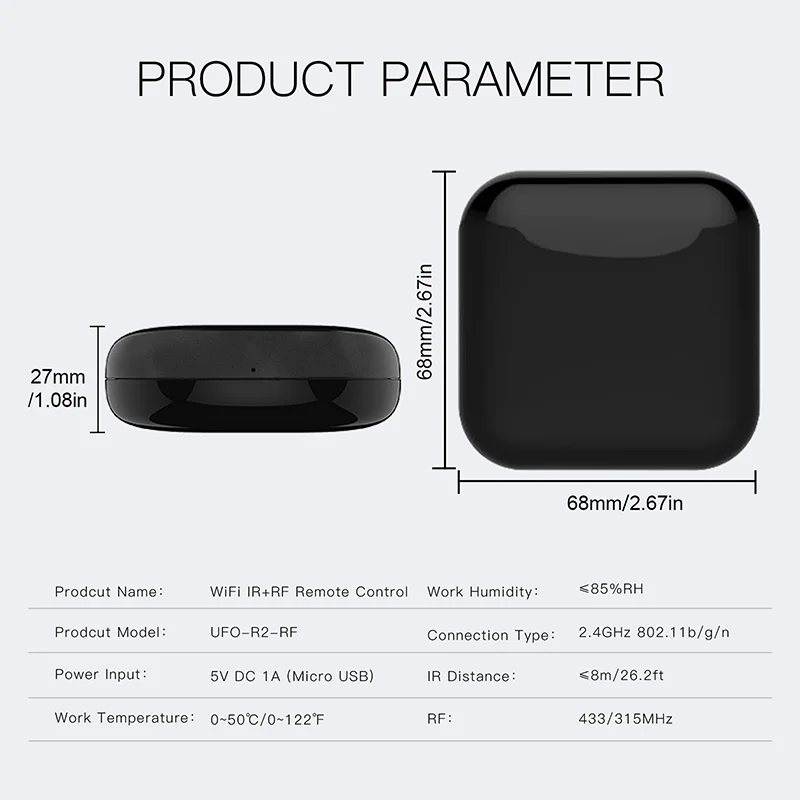
If the job is to consolidate compatible RF and IR appliance controls rather than source a bare transmitter/receiver module, review the MOES WiFi RF IR Universal Remote Controller. Its product page lists RF 433/315 MHz and describes RF/IR remote-control use. The same page should be checked alongside the actual target remote or appliance before ordering, because a frequency listing does not prove support for every device or protocol.
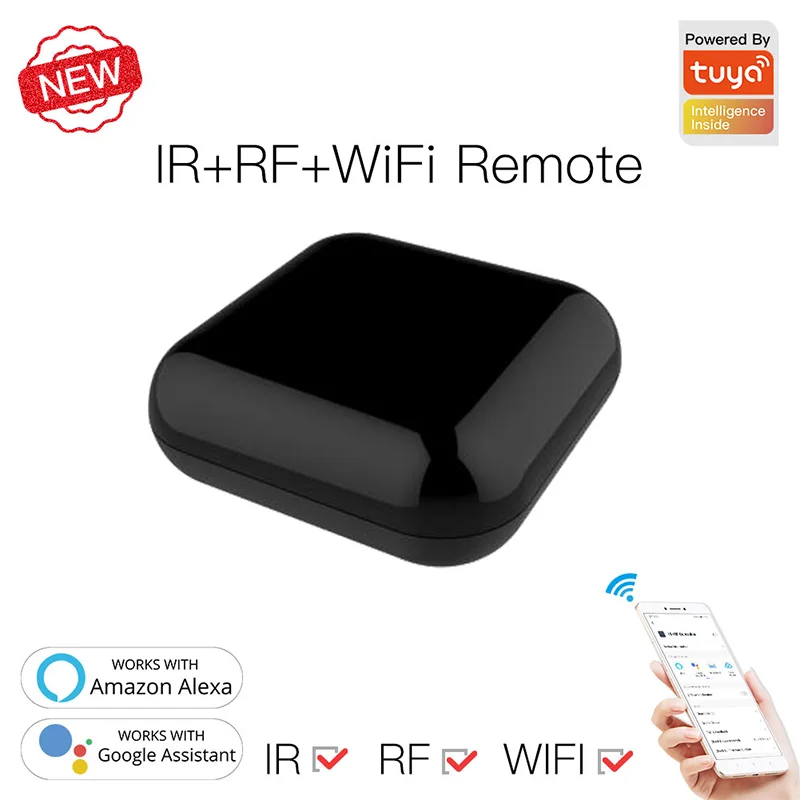
For broader product planning, see MOES Tuya smart home products. If the question is specifically about selecting a remote-control hub, the related guide on qualifying an IR remote control hub is the more relevant next read.
Before approving an RF433 transmitter and receiver order, you should have a named pair (or an explicit supported-device list), the current datasheet, a defined signal/protocol requirement, installation assumptions, and a sample result that uses the same acceptance record for any substitute. That is a more useful purchasing outcome than a catalogue promise based only on frequency.


OTHER SMART DEVICES
Jun 13,2026
OTHER SMART DEVICES
Jun 12,2026
TUYA SMART HOME PRODUCTS
Jun 12,2026
 +86 137 3639 3028