

by NOVA

Aug 22, 2026
what is a power inverter used for in B2B procurement is the question of which direct-current (DC) source must become usable alternating-current (AC) power, and for which equipment or grid role. Dealers and project buyers use that answer to separate portable gadget converters from continuous-duty solar inverter lines before any wattage or price discussion begins. The sections below map grid-tied, off-grid, and hybrid roles to load and waveform inputs, then show which documents belong in an RFQ package.
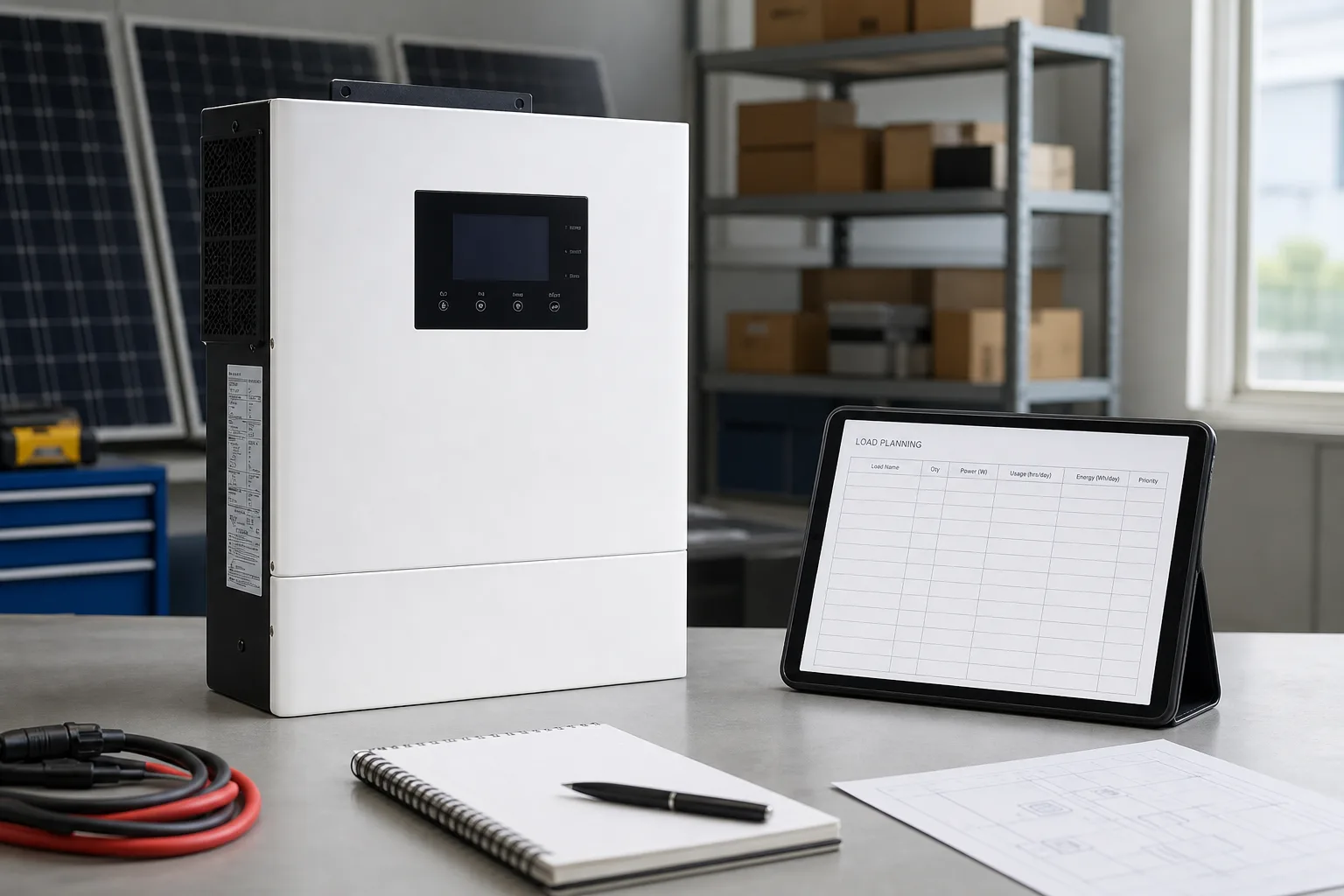
At procurement level, a power inverter is used to convert DC electricity into AC electricity so standard appliances, industrial controls, or a utility interconnection point can operate. Battery banks, photovoltaic (PV) strings, and some DC bus supplies all sit upstream; the inverter is the AC interface. If the buyer cannot name the upstream DC source and the downstream AC load class, any SKU quote is still a guess.
Distributors should record three fields on the first call: DC input type (battery voltage class or PV string), expected AC load list, and whether the site must interact with the public grid. Those three inputs tell you whether the conversation belongs to a grid-tie inverter, an off-grid stand-alone unit, a hybrid solar inverter, or a portable DC-to-AC gadget that is outside continuous solar infrastructure.
Portable units that plug into a vehicle outlet solve short mobile jobs. They are not interchangeable with cabinet hybrid or off-grid hardware that must run 24/7 with solar and storage. Keeping that boundary visible early prevents category errors in distributor CRM lines.
Projects that must stay synchronized with utility power rely on grid-tied inverters to align PV-derived DC with grid voltage, frequency, and phase so energy can serve local loads or export under project rules. They expect a live grid reference and are built to disconnect when that reference disappears, which is why they are not a stand-alone backup source by themselves.
Remote cabins, telecom sites, and other islanded designs place the inverter at the center of the AC network. Off-grid hardware draws DC from a battery bank charged by PV, a generator, or both, and generates its own AC waveform reference. Anti-islanding rules that apply on grid-connected hardware do not define this architecture because there is no utility to back-feed.
Hybrid lines enter the quote when solar production, battery storage, and grid interaction must be coordinated in one cabinet—for example self-consumption with limited backup or peak shaving. The RFQ should name which of those jobs is in scope because hybrid firmware and port counts differ by model family.
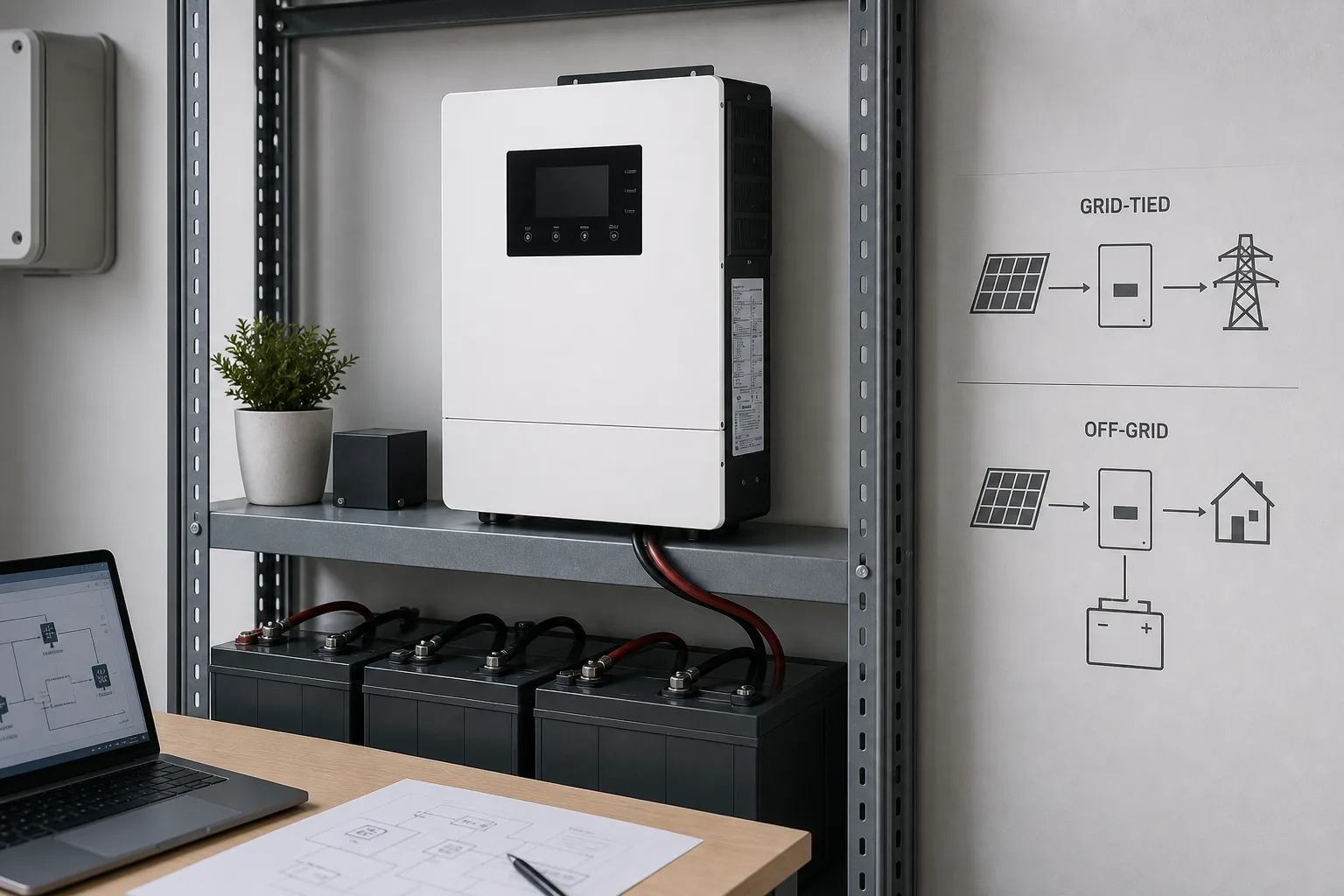
| Architecture role | Primary use | Quote must clarify |
|---|---|---|
| Grid-tie | Convert PV DC to grid-synchronized AC | Utility interconnection rules and whether storage is present |
| Off-grid | Create standalone AC for remote or islanded sites | Battery voltage class, surge loads, and charging source |
| Hybrid | Manage solar, battery, and grid energy flows | Backup depth, export limits, and transfer expectations |
Important: Grid-tie inverters are designed to shut down when utility supply is lost so line crews are not exposed to unexpected energization—a behavior described in public solar inverter references and grid-interconnection primers (solar inverter overview).
Load profile tells the inverter what it is used for on the AC side: resistive heat, motor start surges, variable-speed drives, medical or office electronics, or mixed branch circuits. Each class changes waveform requirements and surge headroom more than a single nameplate wattage does.
A pure sine wave inverter is used when the load list includes compressors, pumps, variable-speed motors, or sensitive chargers that expect utility-like AC. Modified sine hardware may suffice for simple resistive loads, but motor hum, excess heat, or fault codes often appear when inductive or electronic loads dominate.
Channel buyers should collect a one-line description per load, running watts, and surge multiple where applicable. That table belongs beside architecture answers so the shortlist reflects real use, not a generic “3000 W inverter” label copied from a competitor sheet.
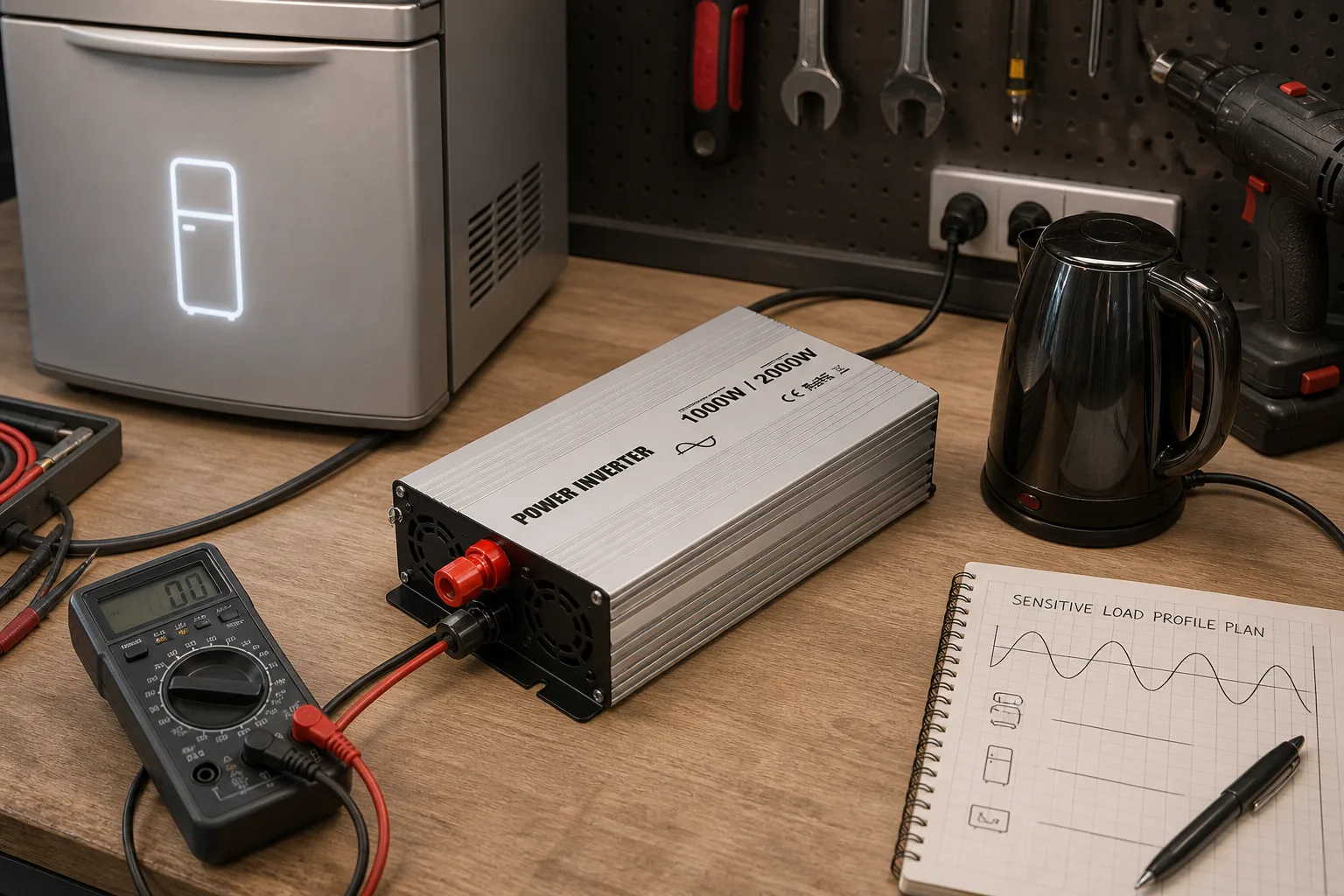
Documentation turns “what is it used for” into auditable specifications. At minimum, request AC output waveform class, continuous and surge power ratings at the stated battery or PV voltage, input voltage range, and whether grid interaction or generator pass-through is required.
For grid-connected projects in North America, buyers often ask whether interconnection equipment is listed to UL 1741 expectations as referenced in U.S. balance-of-system guidance. That request is about the target market’s paperwork, not a blanket claim that every catalog SKU carries every mark.
Also request installation environment class, communication ports needed for monitoring, and whether the unit includes battery charging or expects an external charge controller. Missing any one of those fields can force a re-quote after the warehouse picks the wrong family.
| RFQ field | Why it matters for inverter use |
|---|---|
| DC input source and voltage | Defines whether PV MPPT stages, battery classes, or both are in play |
| AC load table with surge | Sets waveform choice and inverter sizing headroom |
| Grid interaction mode | Separates grid-tie, off-grid, and hybrid firmware paths |
| Target market compliance packet | Matches listing marks to the buyer’s jurisdiction |
A generic power inverter assumes a relatively stable DC input—often a battery at a narrow voltage window. A solar inverter is used when the input is a PV array whose voltage and current move with irradiance and temperature, so the hardware must track the maximum power point (MPPT) while still delivering clean AC.
That is why procurement teams treat “power inverter” and “solar inverter” as related but not identical labels. If the RFQ includes PV strings, the shortlist should move to solar-rated input stages even when the AC side looks similar to a battery-only job.
Hybrid solar inverter models may add battery management and grid ports on the same platform, but MPPT behavior remains the distinguishing solar function. Buyers who only need a battery-fed cabin inverter without PV can sometimes narrow to off-grid stand-alone hardware, yet they should still confirm whether future PV expansion is planned.
After architecture, load, and documentation fields are complete, distributors can open the MOES solar inverter category to compare hybrid and off-grid families that match the recorded use case. The live category groups hybrid charger-inverter hardware alongside pure sine and modified sine off-grid lines rather than mixing them with unrelated smart-home SKUs.
When the worksheet shows off-grid backup with batteries and PV, hybrid or low-frequency charger-inverter models on the category page are the logical next review step. When the job is a compact RV or mobile DC-to-AC conversion with documented resistive loads, a pure sine wave inverter SKU from the same category may fit without hybrid grid logic.
Do not route a documented grid-tie-only export project to off-grid catalog lines unless the buyer explicitly accepts stand-alone hardware and understands export limitations. Likewise, smart-home switch assortments are a different procurement path even when the brand name matches.
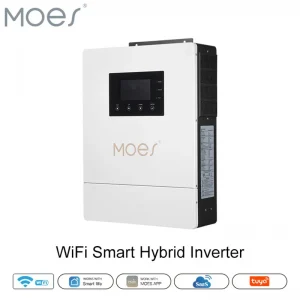
Named examples on the live site include WiFi-enabled hybrid off-grid inverter listings in roughly 4.2 kW and 6.2 kW nameplate contexts on the product title—useful only when your load table already supports that power class and 48 V battery architecture. Treat those figures as page-scoped naming, not universal performance guarantees.
It is used to convert PV or battery DC into AC that serves project loads or, on grid-tied designs, synchronizes with utility power. The quote should state that AC job explicitly before wattage, price, or brand comparisons begin.
A power inverter can run from a steady battery bus, while a solar inverter is used when PV variability requires MPPT input stages and solar-specific protections. Many hybrid models combine both battery and PV paths, but the solar function remains the distinguishing requirement.
Some hybrid families advertise multiple modes, but grid-tie export and true stand-alone island operation impose different firmware and safety behaviors. Buyers should match the SKU to the primary mode in the RFQ instead of assuming one part number covers every architecture label.
Yes when the load list includes motors, compressors, variable-speed drives, or sensitive chargers that expect utility-like AC. Modified sine hardware may work for simple resistive loads, but mixed commercial load lists usually justify pure sine wave inverter selection.
Collect DC source type, battery or string voltage class, each AC load with running and surge watts, required backup duration, and whether grid interaction is allowed. That bundle answers what the inverter is used for more reliably than a single kilowatt rating.
Move after architecture and load tables are complete and the project is confirmed to be solar or battery-backed AC conversion—not a smart-home retrofit. At that point the MOES solar inverter category is the appropriate first-party path to compare hybrid and off-grid SKUs against the documented use case.


OTHER SMART DEVICES
Jun 13,2026
OTHER SMART DEVICES
Jun 12,2026
TUYA SMART HOME PRODUCTS
Jun 12,2026
 +86 137 3639 3028