

by NOVA

Aug 09, 2026
A 12 volt solar inverter phrase can start a buyer conversation, but it does not identify a product, a system design, or an approved application. Before a distributor asks for an offer, the team should turn that phrase into a record of the source, load, operating context, requested documents, and the person who confirms the project.
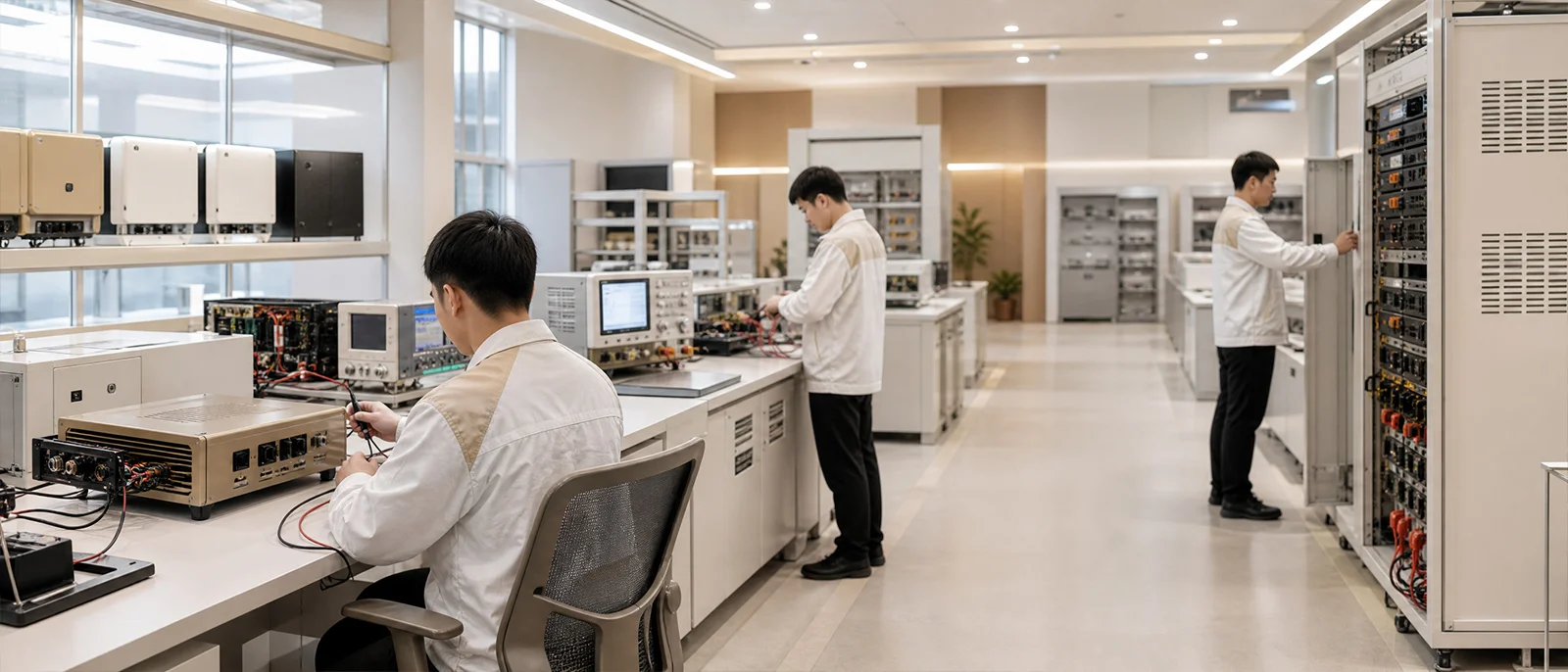
First-party MOES media used to illustrate technical review activity. It does not represent a specified inverter model or project result.
Important: A DC voltage phrase cannot confirm SKU availability, output, wiring, protection, certification, or installation fit. Those points need current offered-model documents and project review. IEA PVPS
A buyer may use the phrase “12 volt solar inverter” as shorthand for a project idea. It does not say what the DC source is, what the load must do, where the equipment will operate, or which documents the buyer needs.
That distinction matters because a quote cannot responsibly fill in missing details. The first task is to capture the buyer’s actual questions and clearly label what remains unknown.
The MOES solar inverter category is a starting point for category navigation. It does not prove that a 12-volt model is listed, available, or appropriate for a request.
Ask for inputs in groups so the supplier and project team can see the context without treating a keyword as a specification.
| Input group | Buyer should describe | Do not assume |
|---|---|---|
| DC source context | The stated source arrangement and the source details available | A battery type, operating range, or product match |
| Load context | Equipment to be considered, behavior, and known priorities | A power level, output, or runtime |
| Operating context | Location, environment questions, and whether the use case is still open | Vehicle, backup, grid, or off-grid fit |
| Evidence request | Manuals, labels, approvals, datasheets, or market-language needs | That documents apply to every offered model |
| Review ownership | Who validates technical and commercial follow-up | That a supplier can approve the project |

First-party MOES media for a documentation-review context. Image presence does not establish a particular product configuration.
The buyer’s wording belongs in the RFQ exactly as received. Beside it, list the evidence that must be requested for the exact offered model. This approach preserves the question without converting it into an unverified product claim.
The same boundary applies to any description of source, output, or installation. A distributor can record the intended use and ask for clarification, while a qualified reviewer checks the current model information and project conditions.
For broader application discovery, see what buyers should confirm before a solar inverter RFQ. For terminology that helps separate buyer language from scope, see the solar power inverter terminology guide.
Send one controlled RFQ record rather than a short voltage phrase. The table below identifies useful input fields without turning them into technical conclusions.
| RFQ input | Buyer should provide | Send with quote |
|---|---|---|
| Buyer wording | The original 12-volt request and the outcome the buyer wants to discuss | Yes |
| Source and load notes | Known source details, load list, and unknowns | Yes |
| Operating context | Site or application description, including unresolved conditions | Yes |
| Document request | Current datasheet, manual, label, approval, or market information needed | Yes |
| Confirmation owner | Person who can confirm project and commercial decisions | Yes |
General standards vocabulary can help buyers frame document requests, but it does not approve an offered product or project. International Electrotechnical Commission
After the RFQ inputs are documented, the MOES solar inverter category can be referenced for a category-level conversation. This is the product recommendation in this guide because it directs a buyer to the relevant product area without asserting that the keyword maps to a verified SKU.

First-party MOES media used to illustrate engineering review. Confirm the offered model and project requirements before selection.
A named model is deliberately not recommended here. It would be inappropriate to turn an incomplete RFQ into a claim about 12-volt availability, output, or fit.
Pause the request when the source, load, operating context, document request, or review owner is missing. The goal is not to delay the discussion; it is to stop unmarked assumptions from being quoted as facts.
When the record is ready, send it through Contact Us or the OEM/ODM inquiry route with:
This process creates a comparable inquiry without making an unsupported promise about a specific inverter.
It establishes only the buyer’s wording. It does not establish a listed SKU, power, output, system design, or application fit.
Collect source context, load notes, operating context, requested documents, commercial context, unresolved items, and the person responsible for confirmation.
No. Availability and product details must be checked against current information for the exact offered model.
Include the original buyer wording, source and load notes, operating context, document requests, known quantity or sample context, and the review owner.
Pause when a key input is missing or an assumption has not been marked. Request clarification before treating the item as a technical or commercial fact.
The buyer’s project team should name the person responsible for technical and commercial confirmation. Supplier information supports that review but does not replace it.


OTHER SMART DEVICES
Jun 13,2026
OTHER SMART DEVICES
Jun 12,2026
TUYA SMART HOME PRODUCTS
Jun 12,2026
 +86 137 3639 3028