

by NOVA

Aug 29, 2026
To install smart switch northern virginia jobs without rework, freeze jurisdiction, permit or HOA status, housing-stock wiring clues, box survey data, and network notes on one signed sheet before anyone removes a wall plate. This page is for electricians, integrator coordinators, and distributors quoting Northern Virginia (NoVA) work – not a DIY wire-landing tutorial and not guidance about the Samsung Smart Switch phone app.
You will get regional fields that local service blogs rarely publish as a channel checklist, plus the copper and protocol rows that still decide SKU fit for smart switch installation. When the sheet passes, browse the smart switch pillar for hardware shortlists.
Regional paperwork should lock approvals and site constraints before a screwdriver touches a strap screw. Northern Virginia search results are full of homeowner how-tos and electrician service pages; crews still lose days when the quote ignored county permit questions, HOA appearance rules, or an older box with no neutral.
A Northern Virginia project input sheet adds columns that generic install checklists skip: county or city, AHJ contact, permit record status, HOA or ARB approval, housing era clues, utility or ISP constraints, and who signs off. Distributors can attach the same sheet to sample orders so warehouse picks match what the wall and the jurisdiction will accept.
Write the county or independent city first, then whether the planned scope is a like-for-like device swap or new wiring. Fairfax County’s residential electrical permit library states that a residential electrical permit is required for new residential service, new electrical equipment and/or fixtures, replacement of electrical equipment or fixtures, and electric-vehicle charging circuits and outlets – confirm whether your exact scope triggers a PLUS record with Land Development Services or the local AHJ.
Fairfax also publishes that it enforces the Virginia Uniform Statewide Building Code (USBC) and points to National Electrical Code (NEC) editions on its codes page. Record the code edition the project team is working under as a documentation field; do not treat a blog summary as the adopted text.
| Field | What to write | Why it matters |
|---|---|---|
| County / city | Fairfax, Loudoun, Arlington, Prince William, Alexandria, etc. | AHJ rules and portals differ |
| Scope class | Like-for-like swap vs new circuit / new neutral / panel work | Changes permit likelihood |
| Permit status | Not required / applied / issued / unknown – confirmed by | Blocks premature install |
| Responsible party | Licensed contractor name or owner-permit note | Matches LDS guidance favoring licensed pullers |
| Code edition note | USBC / NEC edition the team cites | Keeps reviews consistent |
Contractor education in the region often separates simple switch replacements from work that adds circuits or alters wiring paths. Keep that distinction on the sheet, then verify with the AHJ instead of copying a blog’s yes/no answer into the contract.
Note the building era and neighborhood pattern before you assume every box has a neutral. Local installers describe Northern Virginia stock that ranges from new construction in places like Ashburn to mid-century colonials in Falls Church and older fabric in Arlington and Alexandria – patterns that often change whether a grounded conductor is waiting in the switch box.
Add a soft clue row: estimated decade, aluminum wiring era risk if the home dates to periods local electricians flag for Springfield, Burke, or Annandale-style stock, and whether prior renovations already opened walls. These clues do not replace a meter check; they stop optimistic SKU picks on the first phone call.
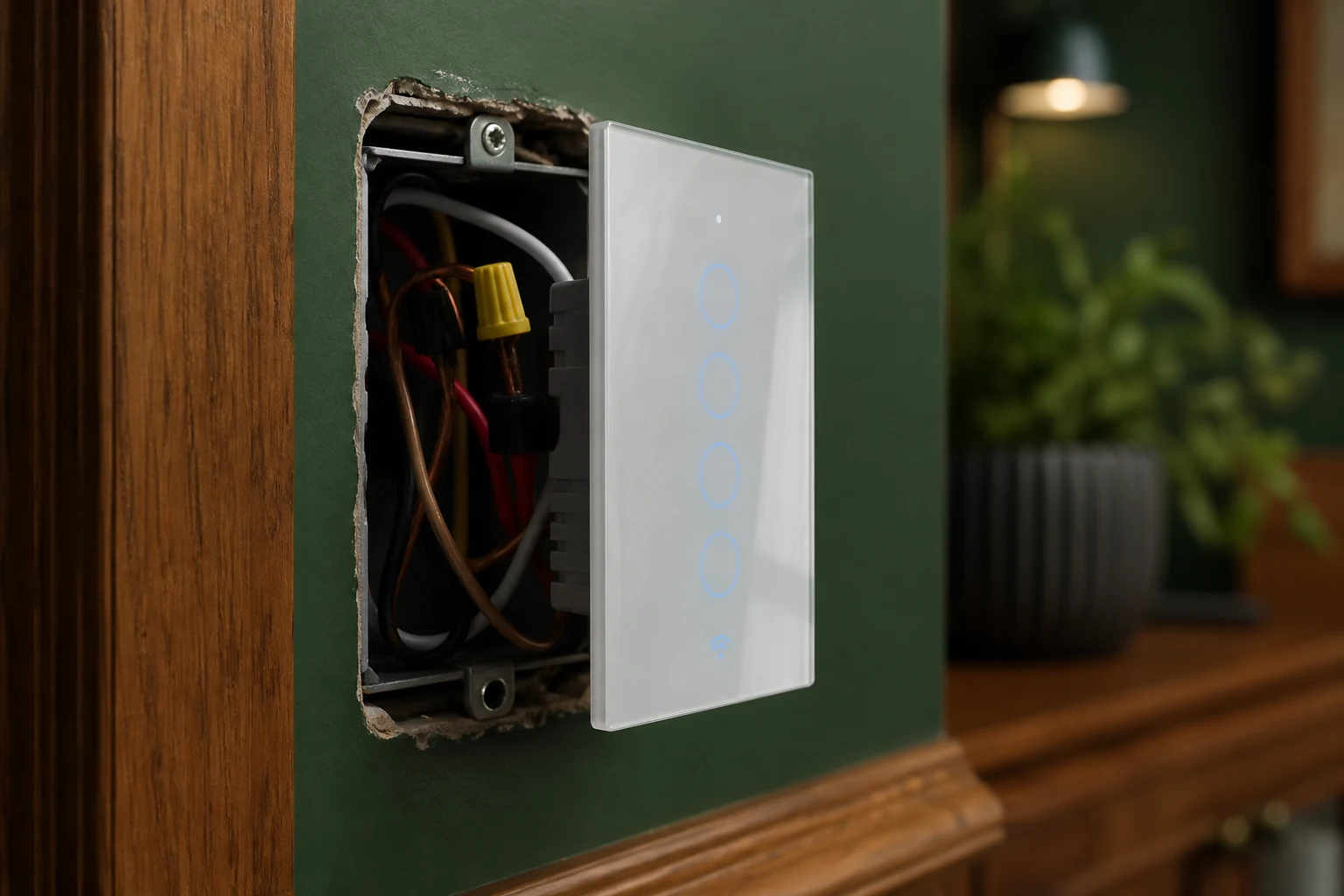
Photograph each junction box with the plate off, then label neutral conductor status, line versus load, travelers, box depth, and gang count. Educational summaries of NEC Article 404 explain why many lighting switch locations in habitable spaces are expected to provide a grounded conductor for electronic controls, with listed exceptions – confirm the adopted edition and AHJ practice for the address. For a standards-body overview of the National Electrical Code, see the NFPA NEC standards page.
Most Wi-Fi or Zigbee wall switches need that neutral so the radio stays powered when the lamp is off. Look for a white or gray bundle joined in the back of the box; never treat a white conductor on a brass screw as proof of a neutral without a proper test.
From the field: Home Assistant installers note that no-neutral designs pull a small current through the lamp to keep the radio alive, and mismatched LED loads often need a bypass or a different architecture when flicker appears. (source)
Multi-way halls and stair landings need every control location listed, plus which box is the primary host candidate when only one end has a neutral. Cap and label unused travelers when the chosen brand diagram says only one communication path is used.
Record whether the property sits in an HOA or condo association and whether any exterior-visible controls, porch lighting, or facade-adjacent devices need architectural review. Fairfax-area association handbooks commonly require prior ARB approval for permanent exterior lighting changes and point owners to county outdoor-lighting expectations – treat that pattern as a documentation prompt, not as another community’s verbatim rule.
Interior-only plate swaps often stay off the architectural radar, but crews should still write “HOA N/A – interior only” so purchasing does not invent a hold. When approval is required, archive the application ID and written decision beside the electrical permit row.
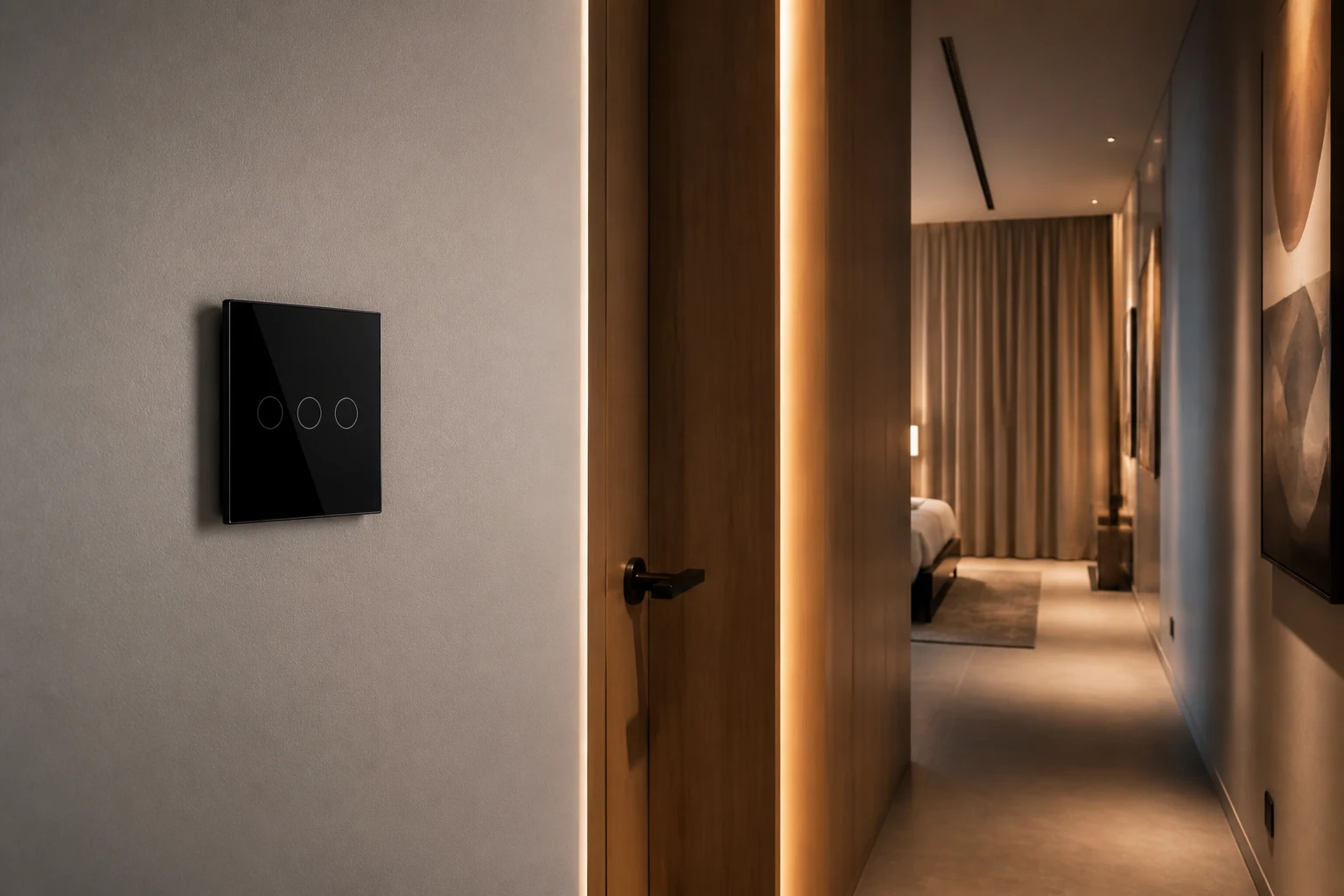
Capture the wireless path the building will actually support. Wi-Fi rows need SSID band notes and a signal check at the switch location; Zigbee or other hub paths need gateway model, mount location, and who owns commissioning after copper work.
Utility or ISP constraints belong beside radio notes when the home uses mesh extenders, VLAN rules, or a property-managed network. Metal cover plates can blunt range on wall devices, so plate material stays on the sheet when pairing has failed on similar jobs.
| Documentation column | Wi-Fi plan | Hub-based plan |
|---|---|---|
| Hub / gateway | Usually none | Gateway model and mount |
| Radio notes | 2.4 GHz SSID and signal check | Mesh or coordinator notes |
| Commissioning owner | App account holder | Hub admin + electrician handoff |
| Cover plate | Metal / non-metal | Same |
Freeze the sheet before purchase orders move. The table below is the minimum set that keeps Northern Virginia smart switch installation work from oscillating between the warehouse, the HOA, and the wall.
| Input | What “done” looks like |
|---|---|
| County / city + AHJ | Named; portal or contact recorded |
| Permit / inspection | Status confirmed for this scope |
| HOA / ARB | Approved / N/A interior / pending with ID |
| Housing-stock clue | Era / aluminum risk / prior remodel note |
| Per-box neutral | Present / absent / verify-on-open |
| Line / load / ground | Labeled on photo or tag |
| Multi-way map | Control count + primary host candidate |
| Load class | Lamp type, dimming yes/no, rough wattage class |
| Protocol path | Wi-Fi / Zigbee / other + commissioning owner |
| Format + gang | US/EU + 1-n matched to plate |
| Sign-off | Crew lead + client date |
Hand the same sheet to estimating, purchasing, and the lead installer. When any regional or copper row is blank, treat the job as not ready to buy devices.
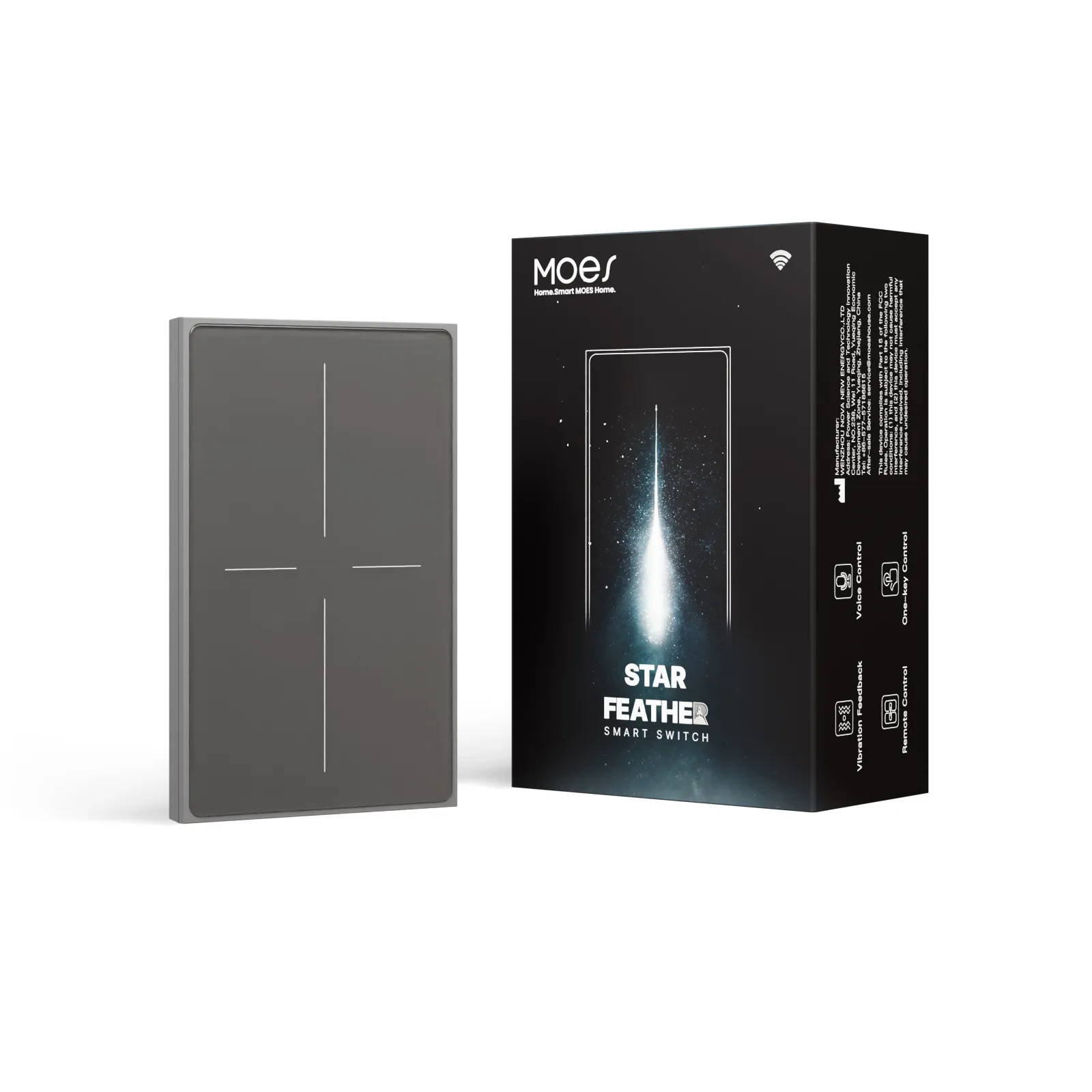
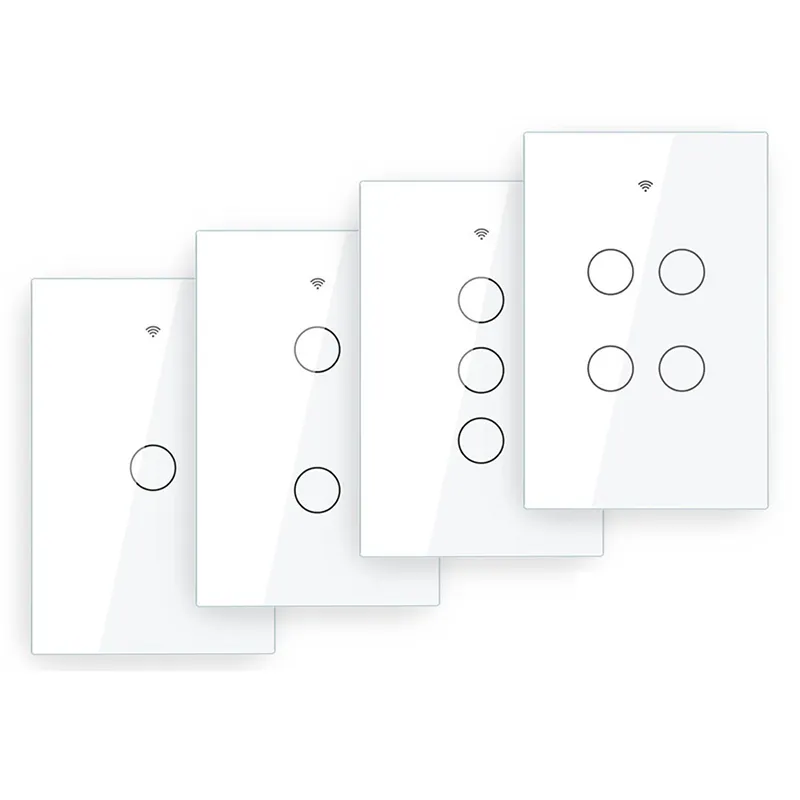
Choose the MOES Tuya WiFi Star Feather Series US Switch when the signed sheet already shows a US-format box, a neutral-wire path, a Wi-Fi plan without a conflicting hub mandate, and load current inside the page ratings below. The US label on the product page is form-factor language for distributors – it is not a claim that MOES is licensed as a Virginia electrical contractor or that the device is approved for every AHJ condition.
Live product data for WS-SF-US variants lists 90-250 V AC at 50/60 Hz, 10 A per gang with 10 A total, and Wi-Fi in the 2.412-2.484 GHz band. Quote those figures only when the signed SKU is Star Feather US.
| Star Feather US parameter | Documented value (WS-SF-US line) |
|---|---|
| Voltage | 90-250 V AC, 50/60 Hz |
| Current | 10 A/gang; total 10 A |
| Wireless | Wi-Fi 2.412-2.484 GHz |
| Wiring gate | Neutral required on collection-scoped US Star Feather SKUs |
Important: On Star Feather collection listings, Light Mode and Scene Mode cannot run at the same time – record which mode the client expects before programming. (source: MOES Star Feather US product page)
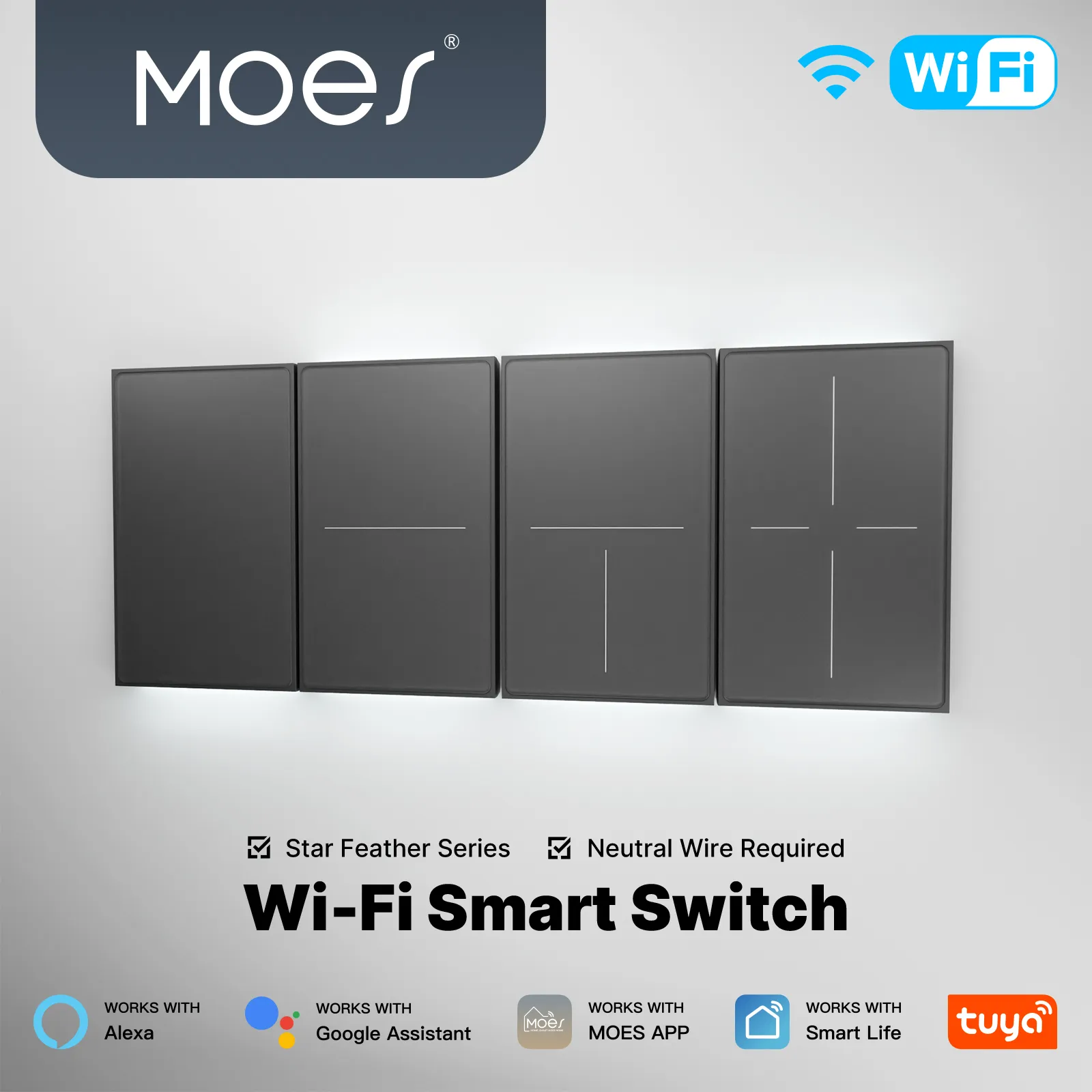
When gang count, neutral status, or protocol fails the sheet, browse other families on the smart switch category or the generic install smart switch project inputs checklist for non-regional copper columns. Distributors can request samples through Contact Us once the Northern Virginia input sheet is signed.
It depends on jurisdiction and scope. Fairfax County’s residential electrical permit library lists permits for new or replacement electrical equipment and fixtures among other scopes – confirm your exact work with the local AHJ instead of assuming a blog’s like-for-like answer covers every county.
Write present, absent, or verify-on-open for every box, then meter before you trust wire color. Educational NEC summaries highlight why many lighting switch locations expect a grounded conductor for electronic controls; AHJ practice still governs the address.
Only when the box survey shows a usable neutral or the team documents a rewire or alternate architecture. Local installers often report missing neutrals in older NoVA stock, so housing-era clues belong on the sheet before SKU selection.
Association name, whether exterior-visible work needs ARB approval, application ID, and written decision – or an explicit interior-only N/A note. Permanent exterior lighting changes commonly trigger architectural review in association communities.
Protocol (Wi-Fi, Zigbee, or other), hub ownership, SSID or mesh notes, cover-plate material, and who completes app commissioning after the copper lands.
When neutral, US format, Wi-Fi path, and load current already match the WS-SF-US page ratings. Skip it for documented no-neutral boxes, non-Wi-Fi mandates, or loads above the page total.
No. This article covers wall smart-switch project inputs for Northern Virginia install and procurement teams, not phone data migration software.
No. US on MOES product pages describes form factor for distributors and installers. Licensing, permits, and inspections remain with the project’s contractors and AHJ.


OTHER SMART DEVICES
Jun 13,2026
OTHER SMART DEVICES
Jun 12,2026
TUYA SMART HOME PRODUCTS
Jun 12,2026
 +86 137 3639 3028