

by NOVA

Sep 12, 2026
Ask how long does smart switch take to install and the honest answer is that the clock follows the blank rows rather than a factory minute. Single versus 3-way, a circuit neutral already in the can or not, box fill, load type, Wi-Fi or hub pairing, multi-gang crowding, and an inspector visit each move the day. A channel quote that skips those rows is guessing.
This page is the duration-driver sheet distributors and installers should freeze before a labor number leaves the desk. It is a smart light switch planning tool for wall jobs; phone-backup timers and wiring reprints belong on other desks. After the rows are filled, the smart switch pillar is the catalog path for US and EU wall families.
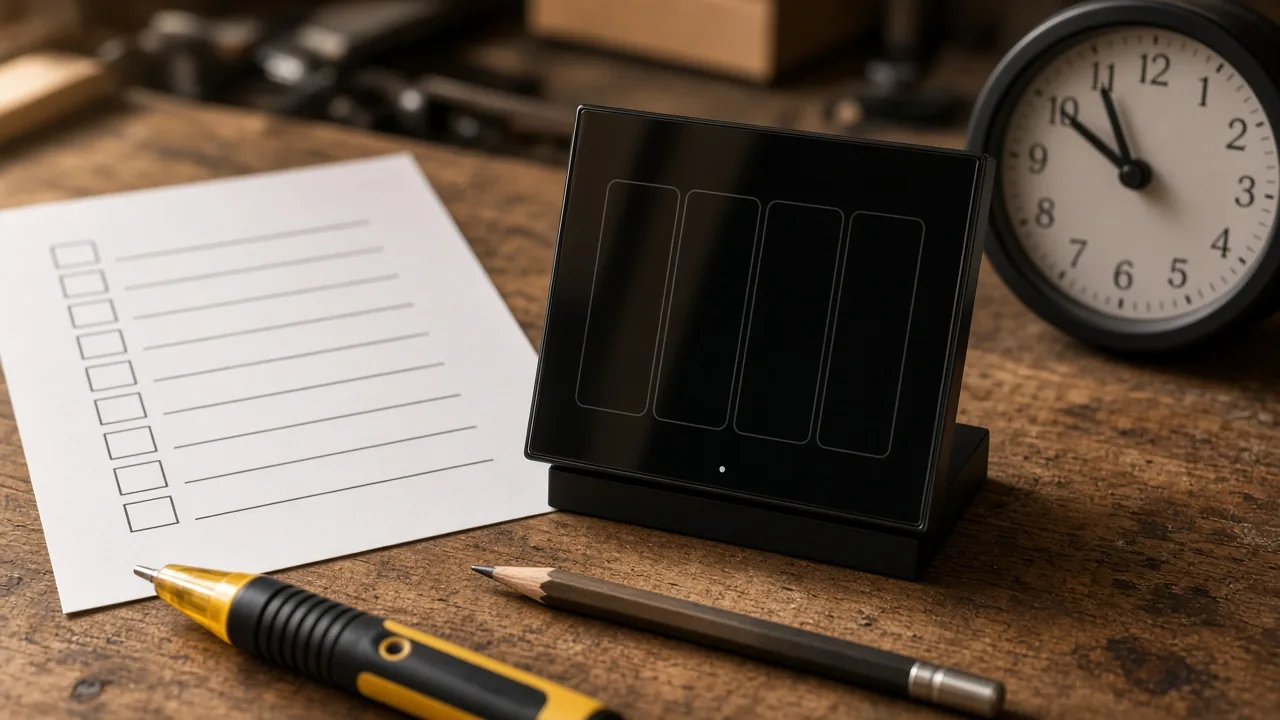
No single minute count is a MOES labor card. Published clocks disagree because they timed different houses: a lone rocker with the return path already in the box, a first three-location hallway, a crowded multi-gang opening, or a new cable pull through finished plaster.
Treat every outside minute band as a planning example from that source, then overwrite it with the site. The buyer who wants “half an hour per opening” still needs topology, neutral, box depth, lamp class, and who binds the radio after cutover. If any of those rows is empty, the quote is a placeholder.
A useful sheet names three clocks and refuses to add them into one slogan. Wrench time is hands in the box. Pairing time is the app or hub bind after the face already switches the lamp.
Calendar time is the inspector, the drywall patch, or the return trip when the first visit only discovered a missing conductor.
Search results for this phrase mostly time a phone backup app: install in seconds, then a transfer that stretches with photos and a cable versus wireless. That software copies contacts and pictures between handsets. It does not land line, load, or ground in a switch box.
If the inquiry is Galaxy backup, a desktop restore, or “why is the transfer stuck,” stop and route it away from lighting SKUs. Wall crews should not inherit a gigabyte estimate, and phone-support queues should not inherit a breaker photo.
Keep one clarifying question on the intake form: wall lighting control, or phone migration? Only the first path continues on this sheet. The rest of the page assumes a wall smart switch whose duration still has to be built from site inputs.
A single opening with two travelers absent is a different band from a 3-way switch pair or a multi-gang box that already holds three devices. The first band is identification. The second is moving to another location, or folding a deeper body into a shared yoke without crushing conductors.
Other people’s clocks illustrate the spread. A MOES opening stays outside those clocks until the sheet is filled.
A consumer how-to put a straightforward single-pole swap with a neutral already in the box at 30-45 minutes. The same walkthrough added 10-15 minutes when line versus load still had to be identified. That walkthrough put a first 3-way job at 60-90 minutes.
A 2026 three-way planning page put replacement of a failed 3-way switch at 30-60 minutes. That page called a typical 3-way job 1-3 hours. The complex new-location case on that page was marked as 1 day.
Community talk is shorter when the box is already friendly, and it still splits. One commenter who had swapped many similar devices wrote that a simple replacement took about 15 minutes. Another comment on that thread said two garage switches took about 20 minutes.
| Band | What the sheet must already say | What usually lengthens the visit |
|---|---|---|
| Lone single-pole | Two insulated conductors plus ground, no travelers | Finding which black is always-hot |
| 3-way or 4-way | Traveler count, common screw photo, companion location | Second box, wrong companion, re-landing travelers |
| Multi-gang | Devices sharing the yoke and the pigtail count | Folding extra depth, re-making splices |
| New location | Cable route, box cut-in, patch owner | Fishing walls, plaster, a second trade |
From the field: The delay people actually argued about on a smart-style swap thread was a junction box too tight for the new body, after the paddle swap itself had felt short. (source)
Photograph both ends of a multi-location run before anyone disconnects. Jacket color is only a hint. A red conductor can be a traveler, a switched leg, or a second hot, and mislabeling it is how a “quick swap” becomes a second visit.
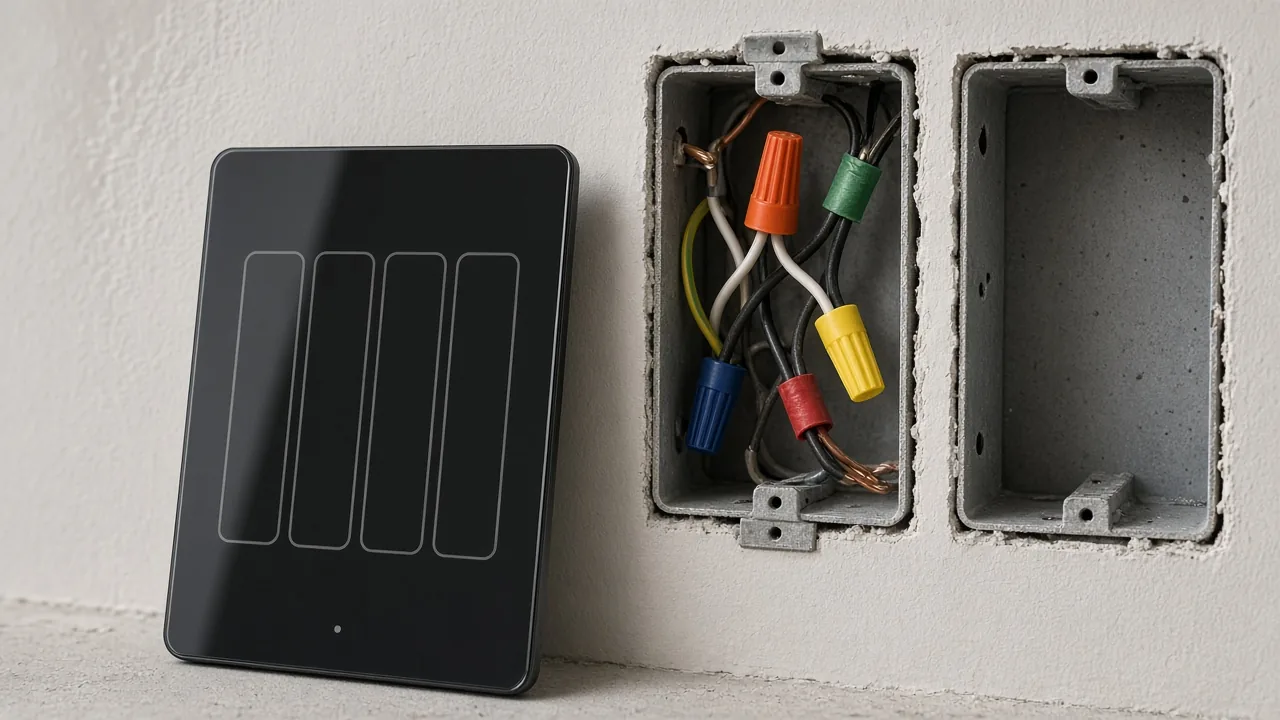
A missing circuit neutral, or a box that cannot take the new yoke, ends the swap band. Those finds are job changes: a cable pull, a deeper can, or a different datasheet. Price them on their own line instead of tucking them into the truck notes.
Most Wi-Fi wall electronics want a matched neutral wire so the radio can stay alive while the lamp is off. White is not proof. On older switch loops the white conductor may be re-identified as a hot.
Write “present in this cable,” “only at the fixture,” or “absent,” and name the bundle in the photo.
Box fill is the volume count that decides whether conductors and the device still have free space after the new yoke goes in. A license-renewal restatement of the table used for that count gives 14 AWG a larger cubic-inch allowance than people remember from a bare conductor chart, and 12 AWG a slightly larger one still.
Grounds are not counted one by one. Internal clamps, when they exist, take one allowance based on the largest conductor in the can.
Equipment that projects more than 48 mm rearward needs a box at least that deep plus 6 mm. A glass multi-zone body often sits deeper than the thin rocker it replaces. If the marked volume is already tight, plan an extension ring or a deeper box before the plate screws refuse to seat.
Do not borrow a white from a neighboring cable in the same can to “wake” the radio. That shortcut trips breakers or leaves the device half-alive, and it burns the rest of the day’s openings.
If the matched return is missing, stop this sheet and escalate a pull or a listed path that the datasheet actually names. This page does not choose a no-neutral catalog.
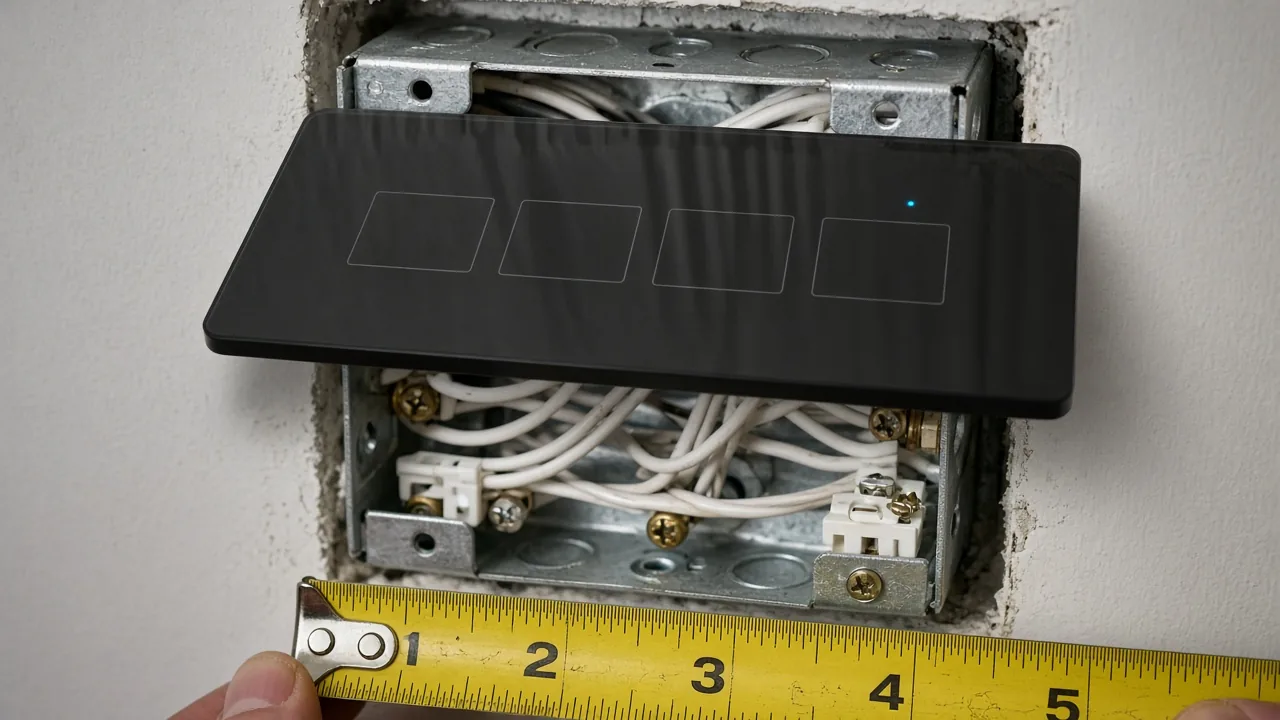
Load type still consumes time after the conductors look right. An on/off wall control and a dimmer are different devices. A fan, a low-watt LED bank, or a mixed lamp set can sit outside the current ceiling or the minimum load the electronics expect, and the callback looks like a “slow install” when it was a mismatch.
Write the lamp or driver class, an approximate watt or amp note, and whether the face is on/off only. Park dimming and occupancy sensors on their own sheets when those jobs arrive. A duration row that says “smart switch” without a load class will be repriced the moment the fixture ghosts or buzzes.
Wi-Fi pairing is a second clock. An electrician-forum commenter called three programmable switches a job that can finish in 1 hour. Another commenter warned that explaining the new control to the customer can add 30 minutes to 1 hour.
A home-automation commenter said a familiar swap takes less than 10 minutes each. A different commenter on that thread used 15 minutes per switch once the app hookup was included.
Those four comments are why the quote must say whether pairing is inside the minutes. Direct Wi-Fi needs an SSID the device can join, usually the band the datasheet names, plus the password owner.
Hub or bridge jobs need the hub model and which account may add devices. A phone parked only on a faster band often fails discovery even when the wall face already works.
The authority having jurisdiction is a third clock. A permit, a rough inspection, or a final look can sit on a different day from the wrench work. Local adoption of the box and disconnect rules decides that visit.
The sheet should name who pulls the permit and whether the quote includes waiting. Skip inventing a national inspection duration.
Prove the wall face before anyone opens an app. Restore power, press the control, and confirm the fixture responds. Binding a mislabeled feeder early manufactures “offline” tickets that were copper mistakes.
Name who restores the breaker, who presses the face, and who may bind afterward.
Integrator practice on larger jobs is the same instinct in another trade: label both ends and store the path notes so the next person is not discovering the house again. Keep the SSID owner and the as-built photo with this duration sheet, even when the cable is line-voltage NM rather than a data home-run.
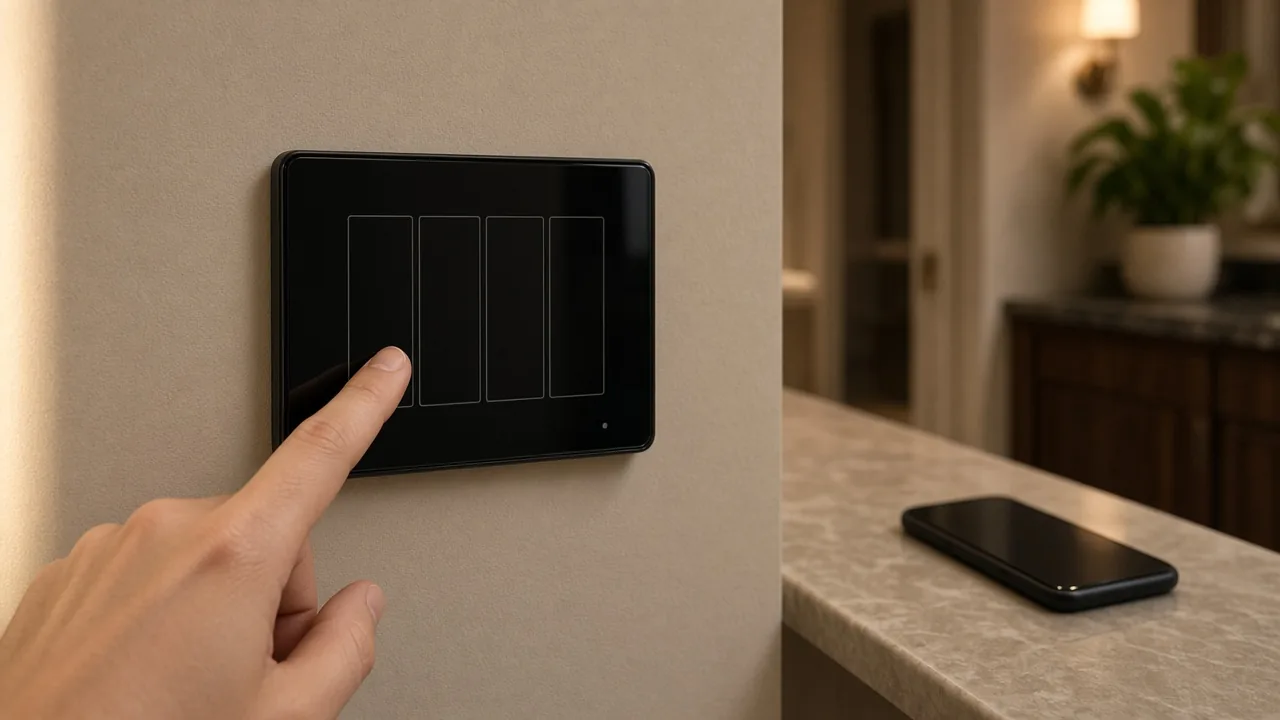
Send one signed row set with the quote. If a row is blank, the labor number stays blank too. Planning examples from how-to pages and forums stay in a side column labeled as other people’s clocks.
| Row | Write this | Empty row means |
|---|---|---|
| Topology | Single-pole, 3-way, 4-way, or new location | The minute band is fiction |
| Gang count | Devices sharing the box, pigtails, plate style | Depth surprises at cutover |
| Neutral wire | Present in this cable / fixture-only / absent, with photo | Radio wake-up is unpriced |
| Box fill | Marked volume, clamp yes/no, extension already planned | Flush seat is a hope |
| Load type | LED, fan, mixed, on/off versus dim | Callback priced as labor |
| Pairing path | wifi smart switch direct, or hub model, plus account owner | App time hidden inside copper time |
| Multi-gang notes | Which gang is this face, neighbors left in place | Shared splices rewritten on site |
| AHJ | Permit yes/no, who waits, inspection day | Calendar time missing from the quote |
| Quote split | Wrench / pairing / return visit, each named | One blended number nobody can defend |
An r/smarthome commenter asked whether a per-switch price still held if the neutral was missing. Ask that before the warehouse ships glass. An AskElectricians thread added that daisy-chained pigtails in a double or triple box intimidate a first visit even when the circuit is simple.
The person who signs the sheet should be the person who can stop the truck. A sales alias that fills “standard house, half an hour” without photos is how the channel eats the overrun.
The Tuya WiFi Star Feather Series US Switch is a wall family for this sheet only after load and radio rows already match the live page. It is a tuya smart switch with app, voice-assistant, and touch control. Lighting modes and scene modes can be switched with one tap in the app.
The page does not publish a labor minute, a 3-way companion rule, or a neutral sentence, so those rows stay on the job form.
The live Star Feather US page lists 90-250V AC at 50/60Hz. Max current on that page is 10A per gang and 10A total. The radio band on that page is 2.412-2.484GHz.
Model family on that page is WS-SF-US1/2/3/4. If the load note exceeds that current ceiling, or the site needs a hub-only radio, pick another datasheet before anyone adds pairing minutes to the quote.
Star Feather does not turn a blank duration sheet into a timed job. It is the SKU you attach when the checklist is already signed and the opening is a US Wi-Fi wall control inside those ratings.

It takes as long as the rows that are still blank. Planning examples from a consumer how-to and a three-way cost page run from a short single-pole swap to a first 3-way that fills an afternoon, and a complex new location that fills a day. None of those bands is a MOES labor promise.
The faces can match while the boxes do not. One opening already has a circuit neutral and spare volume. The next is a 3-way switch with travelers, a multi-gang splice, or a yoke that will not seat.
Those finds change the visit even when the part number is identical.
There is no universal adder to paste onto a single-pole guess. Use the sourced bands as illustrations, then write the actual topology, companion location, and gang count.
A second box or a new cable route is a different job. Treat it as its own line.
Yes. A missing neutral wire turns many Wi-Fi swaps into a cable decision or a different datasheet. Price that as its own line.
This page does not pick a no-neutral catalog for you.
Only if the quote says so. Forum comments split device time from app hookup and from the conversation that teaches the occupant the new face. Name whether Wi-Fi pairing and that handoff sit inside the labor figure.
Yes. A permit or inspection can sit on another day after the wall face already switches the lamp. Write who pulls the permit and whether waiting is in the quote.
Do not invent a national inspection duration.
That figure comes from pages about installing a phone backup app. A wall smart switch still needs a dead circuit, labeled conductors, a box that can take the yoke, and a radio path. Seconds do not cover that work.


OTHER SMART DEVICES
Jun 13,2026
OTHER SMART DEVICES
Jun 12,2026
TUYA SMART HOME PRODUCTS
Jun 12,2026
 +86 137 3639 3028