

by NOVA

Oct 18, 2026
Carbon monoxide sensors alarm when carbon monoxide is in the air. A buyer who types that phrase is asking for a carbon monoxide alarm, which is a life-safety class of its own.
The live page for that class on this catalog is a plug-in display. It watches carbon monoxide, temperature, and humidity. The same page never names a radio.
The sections below name the gas, copy the printed display, and keep smoke and natural gas on their own lines. A quote can then repeat only what the listing shows.
A carbon monoxide sensor is there to notice carbon monoxide and raise an alarm. The National Fire Protection Association describes that gas as odorless and colorless, created when fuels such as gasoline, wood, coal, natural gas, propane, oil, and methane burn incompletely.
In a home, the usual sources are fuel-burning heaters and cooking equipment. A vehicle or a generator running in an attached garage can raise the same gas. People nearby may feel nothing until symptoms start, because the gas has no smell to warn them.
A carbon monoxide alarm is the device that makes the warning audible. Wikipedia notes that Underwriters Laboratories uses “alarm” for a single-station unit that sounds and meets the household carbon monoxide alarm standard, and “detector” for certain system devices.
Channel emails still mix the two words. For a quote, the hazard name matters more than which of those two nouns the buyer typed.
Important: The US Environmental Protection Agency treats a household carbon monoxide alarm as an emergency warning, and an alert from a low-cost air-pollution monitor is a different job. — source: EPA low-cost monitor page.
That split shows up in real inboxes. Someone asks for a “smart air sensor” after a furnace service call.
The useful reply asks whether the line is carbon monoxide. Comfort readings and particle readings stay on other lines.
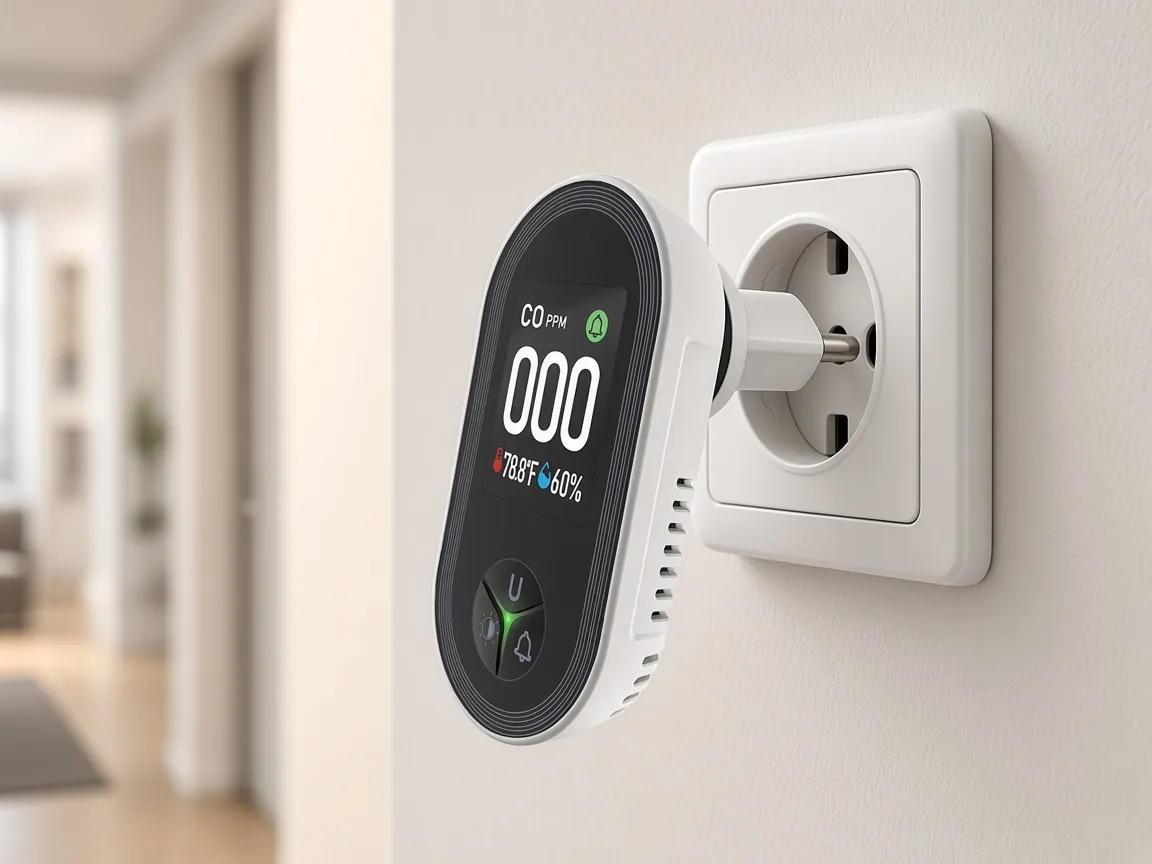
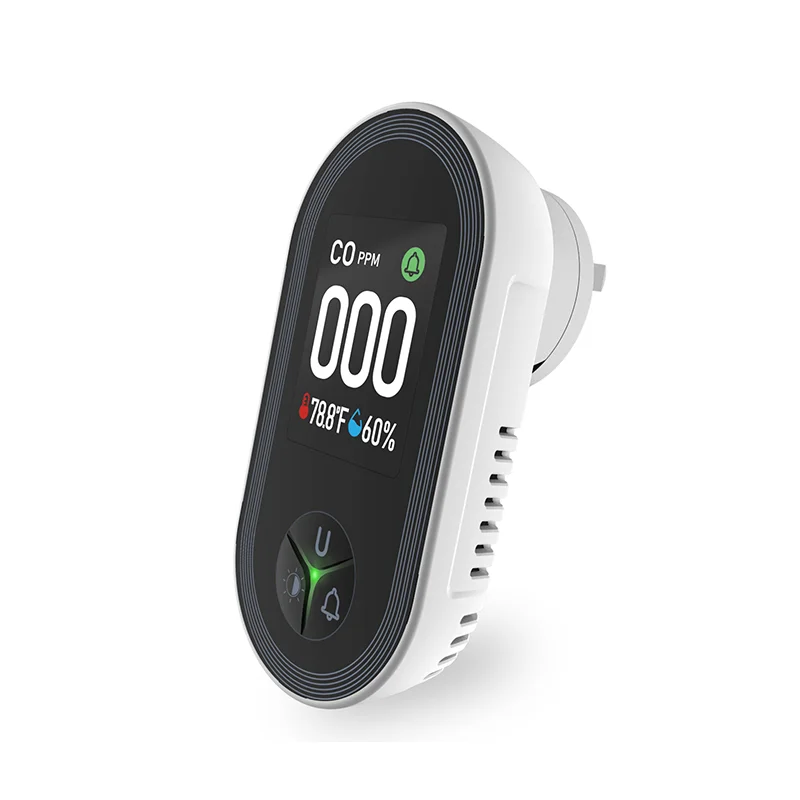
On the published listing, MOES names the carbon monoxide detector as model S02-CO-EU. The title calls it a plug-in 3-in-1 display with a temperature and humidity sensor. The description adds real-time CO detection, flashing and audible alarms, and plug-and-play power with no extra wiring.
Those sentences are enough to file the product. The table under them is the number set a quote should copy.
| Printed item | What the live page states |
|---|---|
| Model | S02-CO-EU |
| Carbon monoxide range | 0~999 PPM (±10%) |
| Sound alarm threshold | Initial default 51 PPM |
| Temperature | -10°C to 50°C (±1.5°C), also printed in Fahrenheit |
| Humidity | 0% to 95% RH (±5%) |
| Input | 100-220V 50/60Hz, replaceable plug |
| Screen | 2.0 inch IPS, 320 by 240 |
| Shell | Flame retardant ABS plastic |
| Alarm | Yes |
| Size with plug | 105 mm by 55 mm by 52 mm |
The initial default sound threshold is 51 PPM, and the detection range is 0 to 999 PPM. Both figures belong to this listing. They are the figures a channel sheet can repeat.
No line on that page names Wi-Fi. No line names Zigbee. Battery life, a decibel figure, and an interconnect count are absent as well.
A note can say the radio is unprinted. Filling the blank with a protocol from a neighboring sensor would invent a feature.
The input line says the unit takes mains power and that the plug is replaceable. That is a plug fact. A battery-backup sentence would need words the page never prints, so the quote leaves backup power off the line until a manual says otherwise.
Smoke is a particle from fire. Carbon monoxide can rise from a poor flue or a faulty heater while a smoke alarm stays quiet. That is why the two classes stay in separate sentences even when a retail roundup sells them as a pair.
UL Solutions describes the carbon monoxide alarm signal as a four-tone pattern: four spaced tones, then a silent gap. A smoke alarm uses a three-tone pattern, including on a combination unit when the smoke sensor is the one that tripped.
Hearing the pattern tells a resident which sensor spoke. It also tells a buyer that a combination housing still has two jobs.
The catalog article on the smoke class already records the boundary for this site. Smart Home Smoke Detector: A B2B Clarification states that no live safety product here is a smoke detector, and that the plug-in carbon monoxide page is the CO listing.
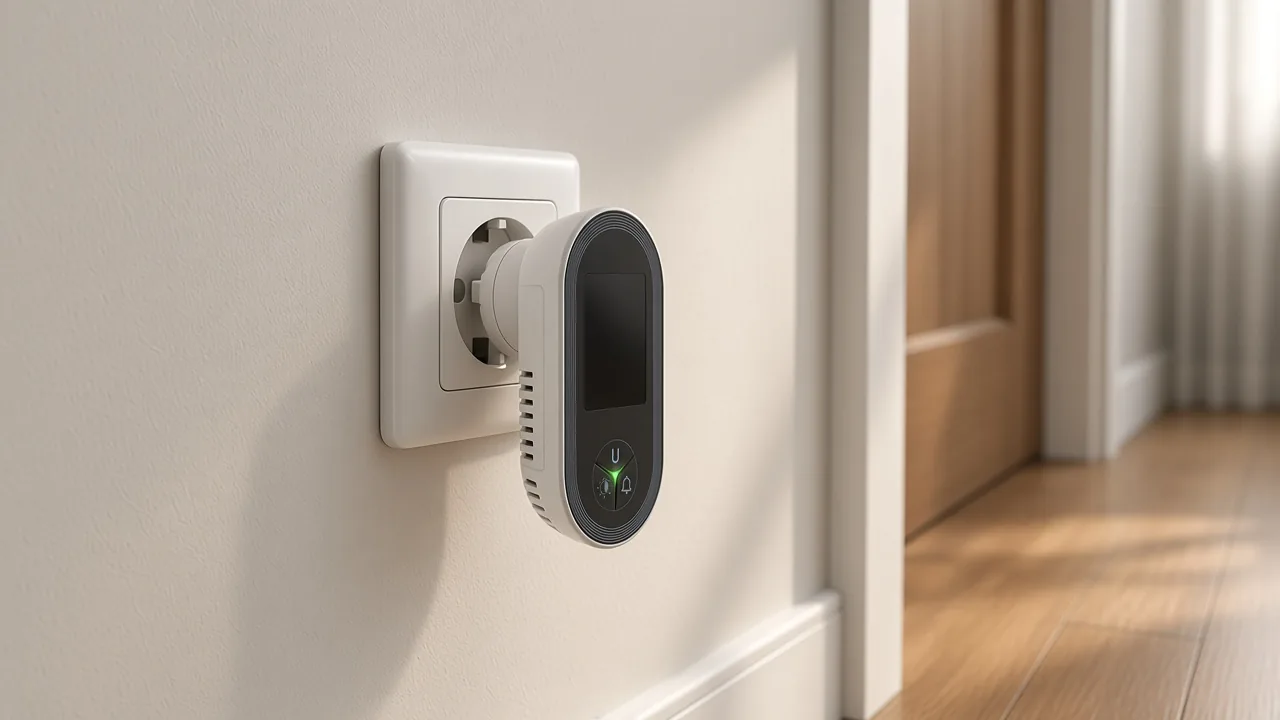
A buyer who attaches a photo of a round white sensor and writes “smoke” still needs the hazard named back. If the hazard is carbon monoxide, the reply uses S02-CO-EU. The smoke article stays the place for the smoke-class question.
Natural gas on the neighboring listing is a combustible-gas job. The live page is the MOES Safety Alarm System Gas Leak Smart Sensor, model ZSS-QY-GL. It senses natural gas, sounds and flashes when that gas reaches the alarm value, and can signal other hardware through a gateway, such as a window opener or an exhaust fan.
The page prints Zigbee 3.0. Its alarm point is written as a share of the lower explosive limit for natural gas.
That fuel-gas sentence stays on the gas page. The smoke chamber stays on the smoke class.
Send gas enquiries to What Is a Zigbee Gas Sensor. Keep the CO display on the CO line. A project that needs both hazards needs two lines, because the sensors are looking for different gases.
Hubitat users talk about this boundary from the hub side. One participant wrote that a practical path is ordinary interconnected detectors plus a listener, rather than expecting every life-safety head to be a radio product.
That comment is about integration taste. It adds nothing to the radio line of S02-CO-EU.
NIST explains that these detectors measure carbon monoxide in parts per million and sound when enough gas has been present long enough to matter. In that public account, about 70 ppm over a few hours will trigger an alarm, and concentrations above 400 ppm do so after a few minutes. The point of the timing is notice before nausea, headache, or loss of consciousness.
The same NIST article says the most common method is an electrochemical sensor. Carbon monoxide enters a gas-permeable compartment, a reaction changes the current through an electrolyte, and the size of that change is the concentration.
Metal-oxide sensors instead change resistance when the gas meets a chip. A third method uses a gel that changes color while a light sensor watches the gel.
S02-CO-EU does not name which of those cells it uses. The quote can describe the class. It should leave the word electrochemical off this model until the page or the manual says so.
What the page does print is the 51 PPM initial default and the 0 to 999 PPM range. Those stay the model figures. NIST’s 70 ppm and 400 ppm examples stay labeled as NIST’s class timing.
The Consumer Product Safety Commission says a test button checks whether the circuitry is operating, not whether the sensing cell is accurate. Alarms also have a replacement age that comes from the product literature. This listing prints neither a test procedure nor a replacement year, so both stay in the manual column.
If the alarm sounds, CPSC’s instruction is blunt. Move outside to fresh air, call the fire department or emergency number from there, count the people who were inside, and wait for responders before going back in. Looking for the source while still in the house is the step they tell people to skip.
NFPA places CO alarms in a central spot outside each sleeping area and on every level of the home. It also says to follow the manufacturer’s instructions for placement and mounting height, to choose an alarm that carries a recognized testing-laboratory label, and to test at least once a month.
The Environmental Protection Agency adds a practical version of the same idea. Each floor needs its own detector. If there is only one, put it near the sleeping areas.
CPSC allows installation in a plug-in receptacle or high on the wall. It steers people away from kitchens, from spots above fuel-burning appliances, and from places furniture or drapes can cover.
A plug-in carbon monoxide detector can sit only where a socket exists. The room survey should mark which bedrooms have a socket in the hallway outside, and which rooms offer a socket only beside a heater.
Socket height becomes the mounting constraint. The product page prints no height diagram, so the manual remains the height source.
CDC describes a digital readout as a useful extra on some detectors, because it can show a concentration as well as sound. S02-CO-EU is that kind of display: the listing is built around a screen. CDC’s general replacement interval is a public-health line, not a year printed on this page, so the quote does not borrow it.
When the buyer confirms carbon monoxide, the handoff is the plug-in detector. When the buyer confirms smoke, the smoke-class article already linked is the right page. When the buyer confirms natural gas, the gas-leak sensor is the right page.
The other smart devices collection is the catalog shelf those listings share. Each hazard still keeps its own line on the quote.
| Enquiry the buyer wrote | Live page that matches | What the page is for |
|---|---|---|
| Carbon monoxide sensor or CO alarm | S02-CO-EU plug-in display | Carbon monoxide, plus temperature and humidity on a screen |
| Smoke detector | Smoke-class article, no smoke SKU | Smoke particles, kept off the CO line |
| Gas leak or natural gas | ZSS-QY-GL | Natural gas, with Zigbee printed on that page |
The MOES carbon monoxide detector is the product link for the CO line. Copy the model, the 51 PPM default, the range, the mains input, and the screen. Leave radio, loudness, battery life, and interconnect count blank unless a later document prints them.
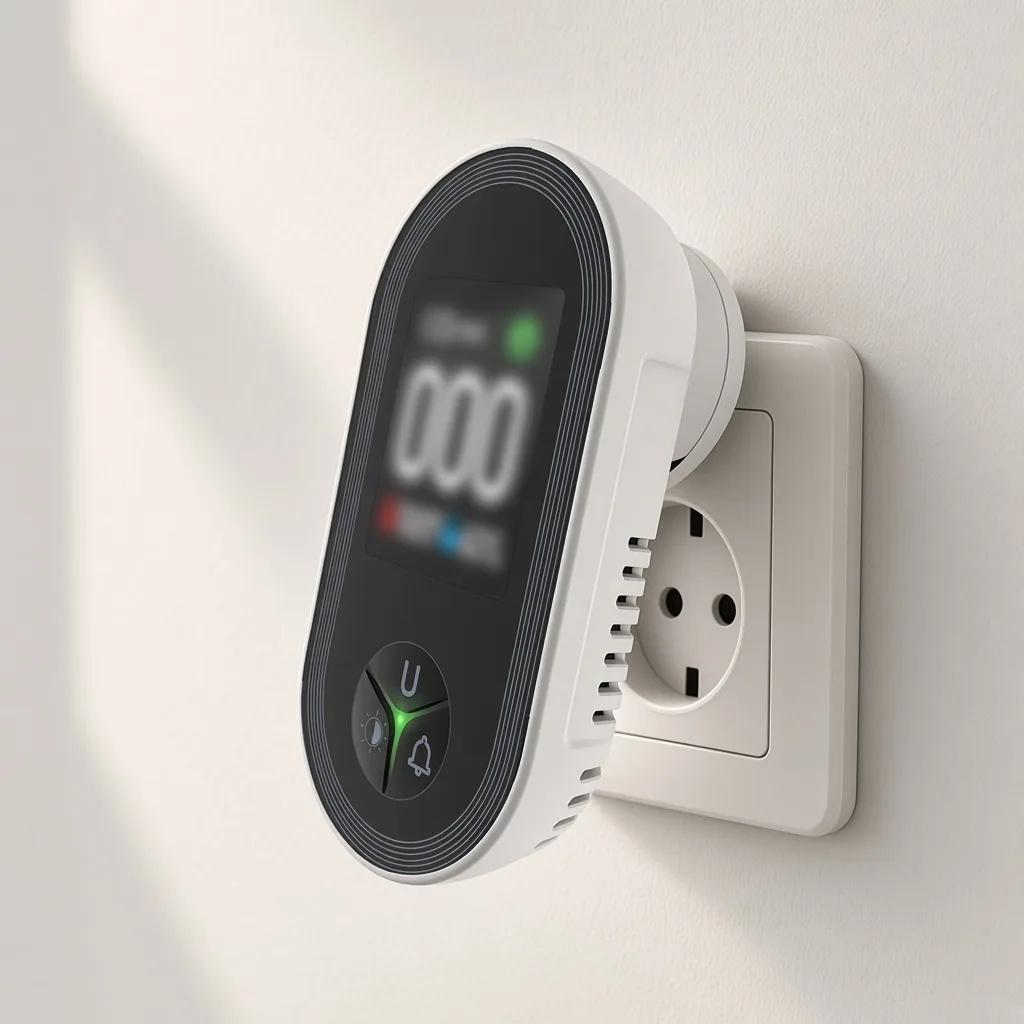
The screen on that photo is the same class of display the listing describes: a CO reading with temperature and humidity beside it. The scene is a room view. The catalog frame below is the product photo itself.
These answers cover the questions that still arrive after the class split is clear.
They detect carbon monoxide, the odorless gas from incomplete burning. On this catalog the matching page is S02-CO-EU, which also shows temperature and humidity. Smoke particles and natural gas are other sensors.
NIST describes an electrochemical sensor as the common method: the gas changes an electrical current, and the detector reads that change as a concentration. Metal-oxide and color-gel methods exist too. S02-CO-EU does not name its cell, so the listing is quoted from the printed range and the 51 PPM default.
Fuel-burning equipment that is poorly vented, a blocked flue, or an engine running in an attached garage can raise CO. NIST’s class examples put an alarm around 70 ppm after a few hours and above 400 ppm after a few minutes. This model’s printed initial default is 51 PPM.
A carbon monoxide detector watches carbon monoxide from incomplete combustion. Carbon dioxide is a different gas, and a CO2 monitor is a different instrument.
Wikipedia marks the same split. S02-CO-EU is the carbon monoxide display. A carbon dioxide instrument is a separate purchase.
CDC lists headache and dizziness among the common signs, along with weakness, upset stomach, vomiting, chest pain, and confusion. The pattern is often called flu-like, and people who are asleep can be hurt before they notice it. The alarm is there because the gas itself has no odor.
CPSC says the test button checks the circuitry, not the accuracy of the sensor. Replacement age belongs in the product literature. This listing does not print either step, so a quote leaves them with the manual.
CPSC says to get outside to fresh air, call emergency services from there, and stay out until responders say it is safe to return. Finding the appliance while still inside is the wrong first move. After the building is cleared, a qualified person can look at the fuel-burning equipment.


OTHER SMART DEVICES
Jun 13,2026
OTHER SMART DEVICES
Jun 12,2026
TUYA SMART HOME PRODUCTS
Jun 12,2026
 +86 137 3639 3028