

by NOVA

Oct 16, 2026
A smart home smoke detector is a smoke alarm that sounds on smoke and may also send that event over Wi-Fi or Zigbee. The sound in the room is the safety action. A phone message is an extra path beside that sounder.
On this catalog the class and the shelf are different. A product search for smoke on this catalog returned no live smoke page.
The pages that do exist cover natural gas, carbon monoxide, and a pipe valve. Each one keeps the name printed on it.
The sensor taxonomy sits in Types Of Smart Home Sensors: A B2B Classification Guide. Nest Protect sensor types sit in How Channel Buyers Classify a Nest Protect Sensor Type.
This page does not restyle either article. It only settles the smoke-alarm name against the live shelf.
A smoke alarm senses smoke, usually as a sign of fire, and it warns people who are in the building. Wikipedia describes that sensing job first and treats a loud local warning as the normal residential action. The radio, if a model has one, comes after that job.
A smart smoke alarm is the same sensing job with a network hop added. The hop can be Wi-Fi on some market models and Zigbee on others.
Nothing in that sentence creates a smoke SKU here. Channel staff still read the page they are about to quote.
Placement follows the building, not the app. Public guidance puts alarms inside sleeping rooms, outside sleeping areas, and on every level, including a basement.
Hardwired units are an electrician’s job. Battery units still need a test on the manufacturer’s schedule.
USFA says a smoke alarm needs replacement 10 years from the manufacture date. That interval is public safety education, not a battery claim for any MOES model.
The date stamped on the unit is the date the quote should mention.
A photoelectric smoke alarm and an ionization smoke alarm listen for different kinds of fire, so the quote should name the family instead of one generic sensor. USFA says the two families detect different types of fires, and it also points buyers toward a dual-sensor unit when the building’s risk is unknown.
Smoldering furniture and a fast flame do not look the same to these sensors. Photoelectric designs are generally discussed for larger smoke from a slow fire. Ionization designs are generally discussed for the fine particles of an open flame.
This page stops there. Sensitivity percentages, obscuration ratings, and lab curves are not on a live MOES page, so they stay out of the quote.
Cooking steam and shower steam are a placement problem, not a reason to disable the alarm. The public note is to use the hush control, clear the air, and move the unit if the manufacturer allows it. Pulling a battery during dinner leaves the room unprotected for the rest of the night.
When a buyer writes “photoelectric only,” ask which family the local fire authority expects, then ask whether the enquiry is actually smoke. A gas leak sensor does not become photoelectric because it is round and white.
An interconnected smoke alarm is a set of local sounders that all ring when one of them sees smoke. That link can be a wire between hardwired heads or a wireless link between heads.
USFA states the outcome in plain language: when one sounds, they all sound. It publishes no head count that belongs on this catalog.
A phone alert is a different hop. Someone off site can learn that an alarm already sounded. The people asleep in the building still depend on the sounder in the hallway.
If the router, the hub, or the account is down, the local alarm is what remains.
From the field: On a Hubitat thread about a Zigbee smoke alarm, installers said they would rather keep ordinary detectors and add a listener so the hub hears the alarm that is already there — https://community.hubitat.com/t/zigbee-smoke-alarm-for-us/128005
That comment is a buying objection, not a test of a MOES device. It matches the empty smoke search: there is no smoke head here to join to a hub. A listener story also belongs to other brands’ hardware, so it stays a market pattern rather than a line item.
Vacant rentals make the phone path look essential. The owner is far away and wants a push message. The same owner still needs a sounder that works when the phone is in a pocket or the app login has expired.
Quote the local alarm first, then say whether any radio is printed on the page you are actually selling.
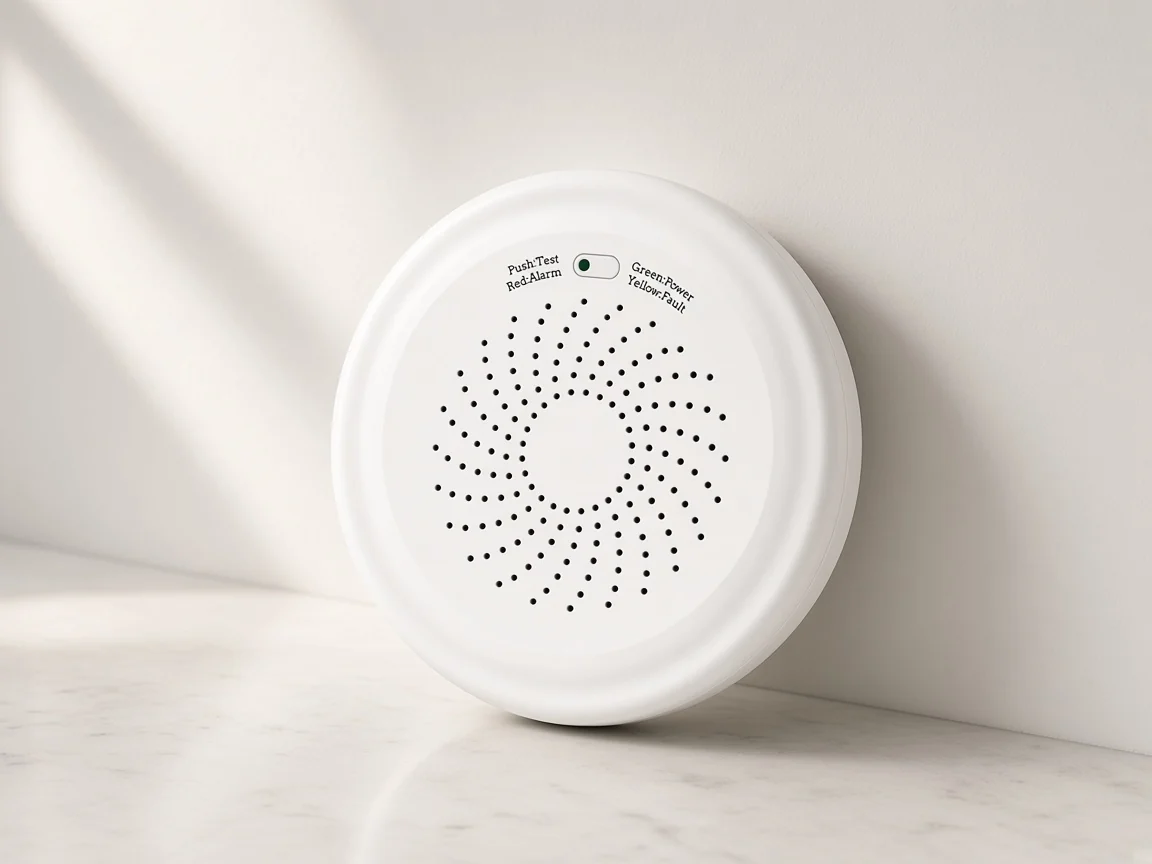
Read the gas page by the hazard it names. The live gas page is the MOES Safety Alarm System Gas Leak Smart Sensor, model ZSS-QY-GL, and it senses natural gas over Zigbee 3.0. The page describes an audible and visual alarm and gateway linkage to other hardware such as a window opener or an exhaust fan.
Those words are a combustible-gas story. They are not a smoke story.
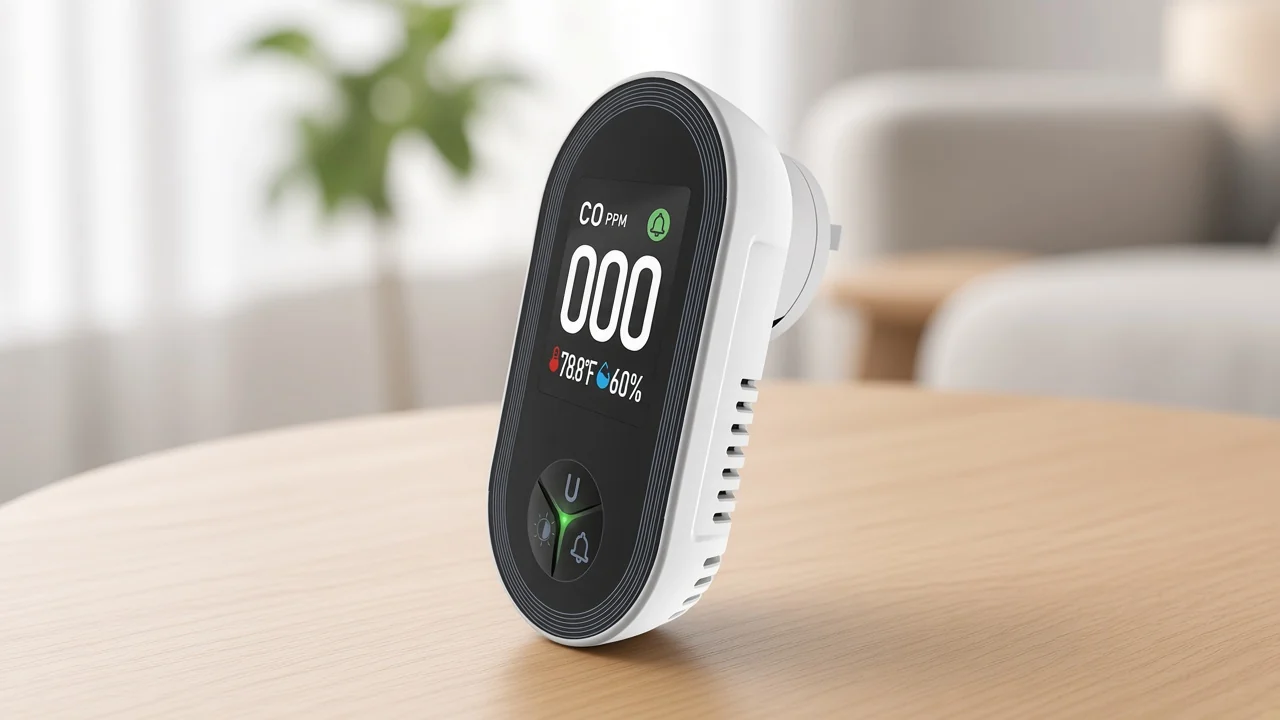
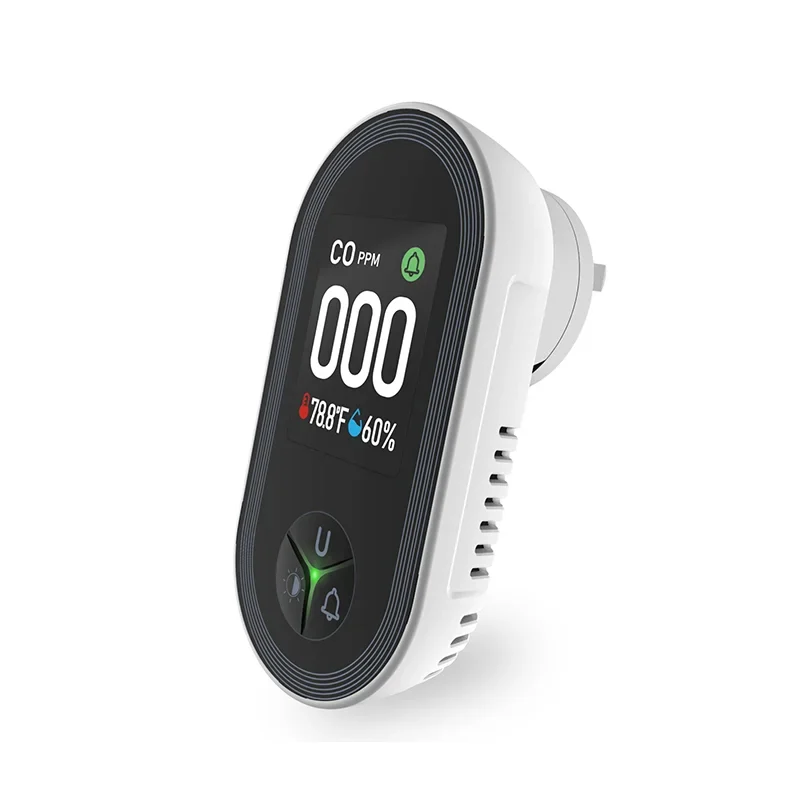
Carbon monoxide is the hazard on the plug-in page. The live carbon monoxide detector is model S02-CO-EU, and the page text does not call it a smoke detector.
It monitors carbon monoxide, temperature, and humidity, and it plugs in. No Wi-Fi line and no Zigbee line appear in that product text, so a quote should not add one.
The shutoff valve, model WV-QY-WH, is a Wi-Fi or Zigbee actuator for a water or gas pipe. The page offers a Wi-Fi version that talks to the app directly and a Zigbee version that needs a gateway.
It also describes shutting the valve when a water sensor reports a leak. Water sensing itself is explained in Clarify Probe Sensing and Alert Path Before You Quote and in How a Water Sensor Turns a Wet Path into an Alert.
| Live page | Model on the page | Hazard it names | Radio the page prints | What it is not |
|---|---|---|---|---|
| Gas leak smart sensor | ZSS-QY-GL | Natural gas | Zigbee 3.0 | A smoke alarm |
| Carbon monoxide detector | S02-CO-EU | Carbon monoxide, plus temperature and humidity | None printed | A smoke alarm |
| Water and gas shutoff valve | WV-QY-WH | Pipe flow for water or gas | Wi-Fi version or Zigbee version | A smoke sensor |
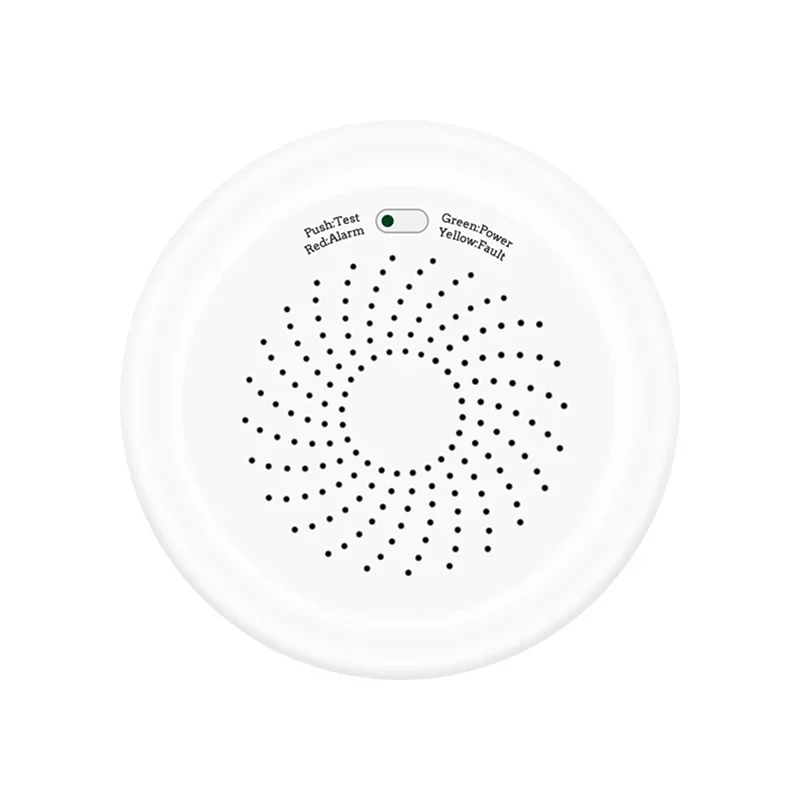
The round white gas sensor is easy to misread in a photo. The face says test, alarm, power, and fault. It does not say smoke.
If a customer sends that photo and writes “smoke detector,” answer with the model and the hazard, then ask whether they meant natural gas.
Carbon monoxide can be present without a fire in the room. A faulty heater or a poor flue can raise CO while a smoke alarm stays quiet. That is why the CO page and a smoke class stay in separate sentences even when a market roundup sells them as a combo.
Start with the hazard word in the email, not the word “smart.” Smoke, natural gas, carbon monoxide, and a leaking pipe are four jobs. A single adjective in front of “detector” does not merge them.
Then ask where the warning has to be heard. People in the building need a sounder near the sleeping rooms. People off site need a message path, and only if the page they are buying actually prints a radio.
A Zigbee gas sensor can join a gateway. That fact does not move across to the CO plug-in unit.
| Enquiry phrase | Ask next | Page you may cite | Page you leave alone |
|---|---|---|---|
| Smart smoke, ceiling, bedrooms | Sensing family and whether a local code names it | None for smoke | Gas, CO, and valve pages |
| Gas smell, kitchen, Zigbee | Confirm natural gas, not smoke | Gas leak sensor ZSS-QY-GL | CO plug-in and the valve, unless a valve is a separate line |
| CO display, plug-in | Confirm carbon monoxide only | S02-CO-EU | Any smoke claim |
| Shut the pipe if water is on the floor | Confirm valve size and Wi-Fi versus Zigbee | WV-QY-WH, plus the water-sensor article | Smoke class |
The other smart devices category is the shelf these three pages share. The broader Tuya smart home products hub is the keyword parent. Neither hub adds a smoke head that the product search missed.
A coordinator who pastes “smart home smoke detector” into a line item should replace that phrase with the model that is actually on the PDF. If the model is missing, the line item is a research request, not a ship set.
No live safety product on this site fits a smoke-detector enquiry as a smoke detector. The closest honest handoff depends on the hazard the buyer can confirm.
When the buyer confirms carbon monoxide, send the MOES carbon monoxide detector. The page is a plug-in monitor with a display. It is the right link for CO, and it is the wrong link for smoke.
When the buyer confirms natural gas and a Zigbee gateway, send the MOES gas leak smart sensor. Quote model ZSS-QY-GL and the Zigbee 3.0 line that the page prints. Leave smoke, photoelectric, and ionization out of that sentence.
When the buyer wants a pipe to close, send the MOES water and gas shutoff valve. Say whether the project uses the Wi-Fi version or the Zigbee version. The page’s leak story is tied to water sensors, so a smoke event is not a reason to promise that the valve will move.
If the buyer still needs a smoke head after those three checks, the answer is that this catalog does not list one. Offer to confirm the hazard again, or to point them back to the sensor taxonomy while they source a smoke alarm elsewhere. That is a cleaner quote than a renamed gas sensor.
No. Model ZSS-QY-GL is written as a natural-gas alarm with Zigbee 3.0. Smoke is a different sensing job, and the gas page does not claim it.
The S02-CO-EU page describes carbon monoxide, temperature, and humidity. It does not describe smoke, and it does not print a wireless protocol.
The WV-QY-WH page describes valve control and a link to water sensors. It does not describe a microphone or a smoke input. Treat a smoke event as outside that page.
No. A smoke alarm’s local sounder is the warning people in the building hear. Wi-Fi or Zigbee, when a model has either one, is an extra path for a phone or a hub.
The owner still needs a sounder that works in the building. An app message helps someone who is away, and it fails when the network or the login fails. Forum users who want remote notice often keep ordinary alarms and add a listener.
Say that this catalog has no live smoke page. Then name the hazard the buyer can confirm, and cite ZSS-QY-GL, S02-CO-EU, or WV-QY-WH only for that hazard.


OTHER SMART DEVICES
Jun 13,2026
OTHER SMART DEVICES
Jun 12,2026
TUYA SMART HOME PRODUCTS
Jun 12,2026
 +86 137 3639 3028