


by NOVA

Sep 19, 2026
Buyers should compare modified sine wave power inverter vs pure sine wave by the AC shape the load will see, then by which devices on the list can live with steps. A modified sine wave inverter stacks flat voltage levels. A pure sine wave inverter follows a smooth curve closer to wall power.
Watts come later. So do battery voltage and outlet voltage. Those lines do not tell you whether a compressor will hum.
The practical order is short. Name the waveform.
Sort the loads. Ask for a published distortion figure.
Only then open a catalog row.
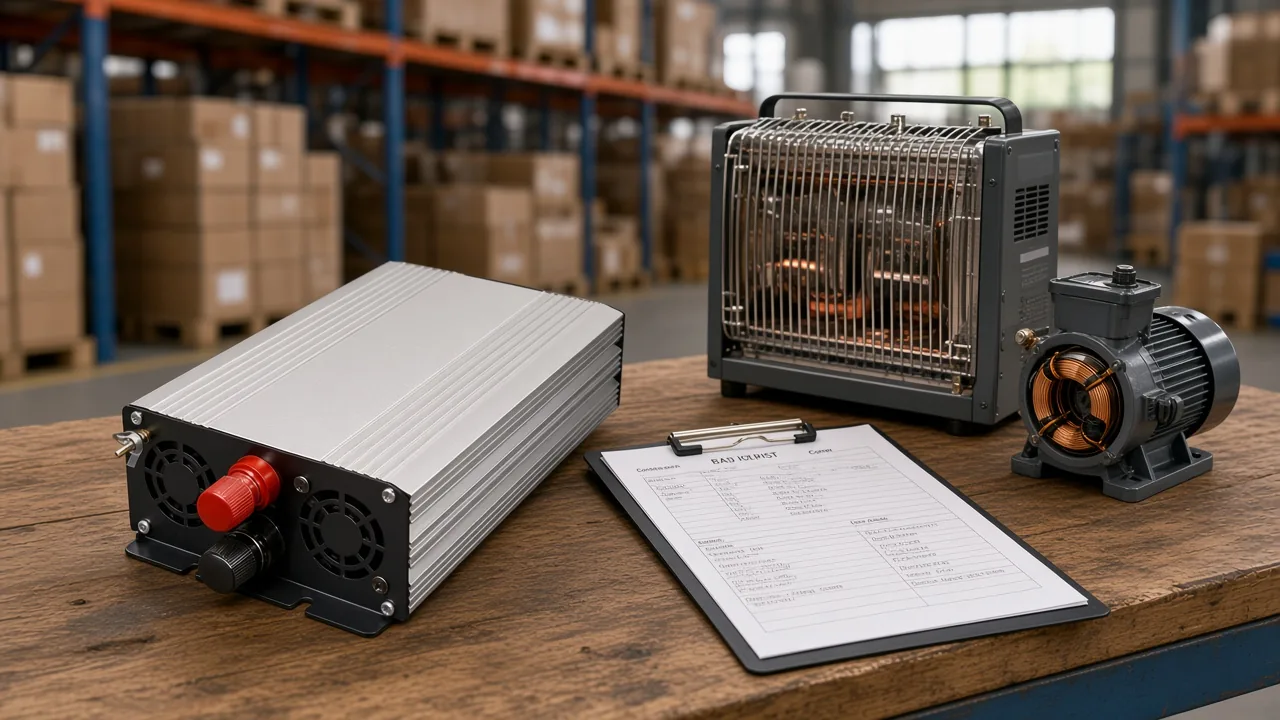
Compare the shape of the AC voltage before you compare nameplate watts. Modified sine, sometimes called a modified square or quasi-square wave, repeats a simple pattern: zero, a positive peak, zero, a negative peak, zero again. Pure sine is the smoother trace that household appliances were designed around.
That difference is electrical, not a slogan. A resistor turns either shape into heat.
A motor winding and a transformer expect the voltage to rise and fall, not to jump. If the quote argues about watts while the waveform box is blank, the argument is early.
Channel teams already have a definition page for what a pure sine wave power inverter is, and a separate page for what a power inverter is used for. This comparison stays on the choice between the two shapes. Sizing still belongs on the power inverter sizing checklist.
A useful picture for a new buyer is a kitchen circuit. The kettle does not care how pretty the voltage curve is.
The fridge compressor does. Putting both on one modified quote, because the watt sum looks fine, is how returns start.
Resistive loads are the clean yes. Incandescent lamps and simple heaters turn current into heat.
The steps in the wave do not give them a timing problem. Many switched-mode power supply front ends also cope, because they rectify AC into DC before the rest of the device runs.
Laptops and phone chargers often sit in that group, which is why a short outage story can sound fine.
Tolerance is not the same as a free pass for every box with a plug. A device that looks electronic may still hide a small transformer, a triac dimmer, or a clock that watches the zero crossing.
Those parts want the smooth slope. If the datasheet is silent, treat the load as unknown rather than as a heater.
| Load class | Typical examples | On modified sine | What the buyer should write |
|---|---|---|---|
| Resistive load | Heaters, incandescent lamps | Usually acceptable | “Resistive only” |
| Switched-mode power supply | Many chargers and computers | Often runs | Name the supply type if known |
| Universal motor | Some drills and vacuums | Often runs, speed control may not | Note any triac speed control |
| Induction motor | Fridge, pump, fan | Poor default | Move to pure sine unless the maker says otherwise |
| Audio and timing circuits | Amplifiers, some clocks | Buzz, hum, or drift | Pure sine |
| Medical devices | Therapy and monitoring gear | Do not guess | Maker’s power note, or refuse |
The modified catalog page on MOES says the same thing in plainer words: lights and heaters fit; some motors may run with noise; sensitive electronics are a poor fit. That sentence is a class warning, not a test report on a named fridge.
Induction motors are the usual failure. The magnetic field inside the motor is supposed to rotate smoothly.
Steps in the voltage add currents that heat the windings instead of making torque. Most AC motors are described as running on modified sine with an efficiency reduction of about 20%.
They may also get loud.
Audio gear complains in a way the buyer can hear. Transformer hum and a buzz in speakers show up even when the device still “works.” A channel that ships modified sine into a retail display or a small studio will hear about it before the wattage is ever questioned.
Medical and life-support devices are a stop, not a debate. A forum can contain one person whose CPAP ran for an evening.
That story does not authorize a distributor to quote modified sine into a clinic list. Ask for the device maker’s power note.
Without that note, the waveform on the quote becomes pure sine, or the quote waits.
From the field: On a Physics Forums thread about an AC pump, one reply warned of motor overheating while another said an induction motor ought to tolerate the stepped wave. One desk cannot average those replies into a yes.
Dimmers and fan-speed circuits fail more quietly when they watch for a sloping zero crossing.
Flicker shows up when a flat step hits that circuit. If the load list says “speed controlled” or “dimmed,” pure sine is the safer class even when the motor itself is small.
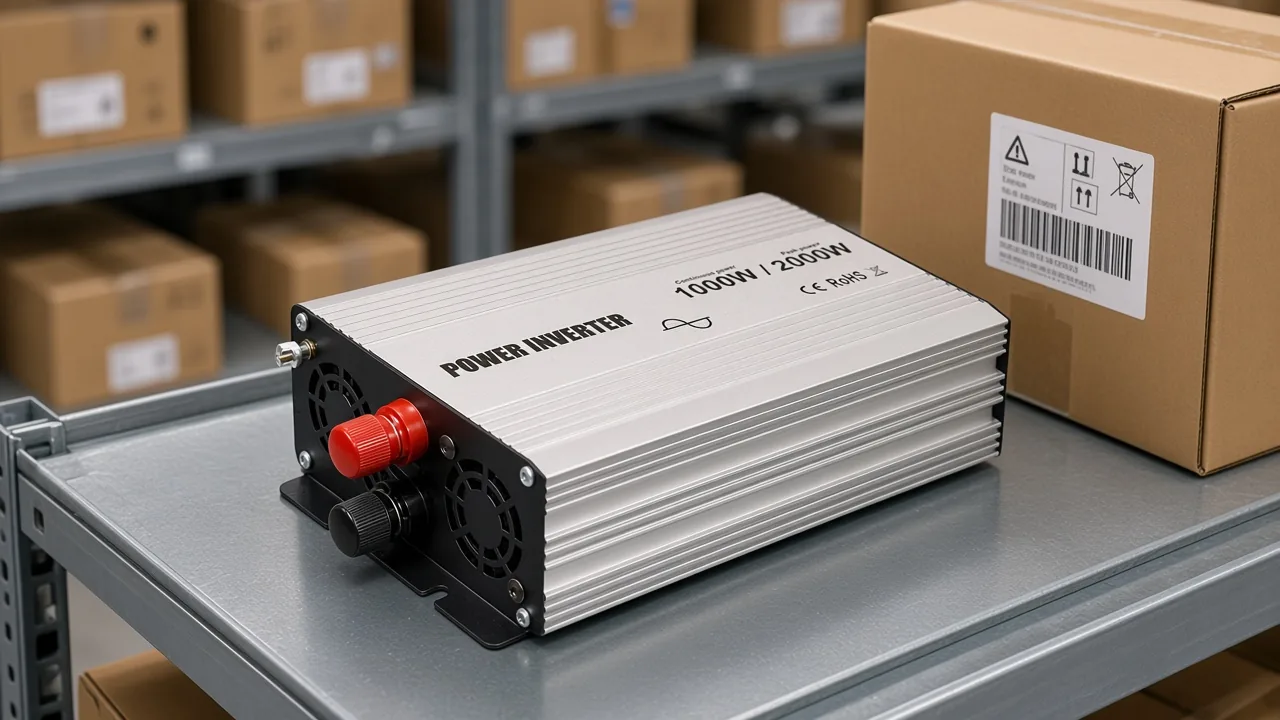
Buyers use total harmonic distortion to describe how far a wave sits from a pure sine. It belongs on the quote as a published figure with a stated test note, not as a word the brochure implies. Commercial power grids are described as needing less than 3% THD at the customer’s connection, while IEEE 519 is described as recommending less than 5% THD for systems connecting to a power grid.
Those two figures describe utility power, not a battery inverter’s nameplate. Pasting them onto a modified listing as if the product met them would be false.
The lowest THD given for a three-step modified sine wave is 30% when the pulses are 130 degrees wide. A 2006 analysis describes pure sine inverters as producing THD in the range of 3%.
That analysis puts the minimum THD of a three-level modified wave at 23.8%.
Read those last two lines as published calculations, not as MOES test results. Neither live MOES page prints a THD percent. The honest quote field is therefore: “THD: not stated on the page; please send the datasheet figure and the load used to measure it.” A blank is better than a borrowed 3%.
One academic motor study made the same point from the other direction. The pure-sine inverter in that test published THD under a stated cap.
The modified unit published none. For a buyer, the missing line is already information.
It means the channel cannot claim cleanliness it has not been shown.
Refuse the modified quote when the load list is mixed, unsigned, or includes motors, medical gear, or audio that nobody has cleared. A cheaper unit is not a favor if the return lands on a burnt compressor or a buzzing showroom.
The refuse rule is a desk rule. It does not need a new lab.
| Situation on the incoming list | Modified sine | Pure sine |
|---|---|---|
| Heaters and incandescent lamps only, buyer accepts the stepped wave | Can quote the modified class | Optional |
| Chargers only, buyer accepts possible extra heat | Can quote if the supplies are known SMPS | Safer default |
| Any induction motor, pump, or compressor | Refuse unless the maker clears it | Quote |
| Medical, audio, or dimmed controls | Refuse | Quote |
| Load list blank or “various appliances” | Refuse | Wait for the list |
| Buyer wants one SKU to cover both search phrases | Refuse the blend | Separate rows |
Dealer teams who need the paperwork version of this split, including how catalog titles stay on separate lines, can use the dealer waveform comparison. That page is about title collision. This page is about loads.
Cost is real and still not a number we will invent. Modified hardware is the inexpensive consumer default because the power stage can switch at line frequency.
Pure sine needs faster switching and filtering, so the build costs more. Historical dollar-per-watt sheets from 2006 are not today’s channel price.
Ask purchasing for the current sheet. Do not let a blog’s old price band decide the waveform.
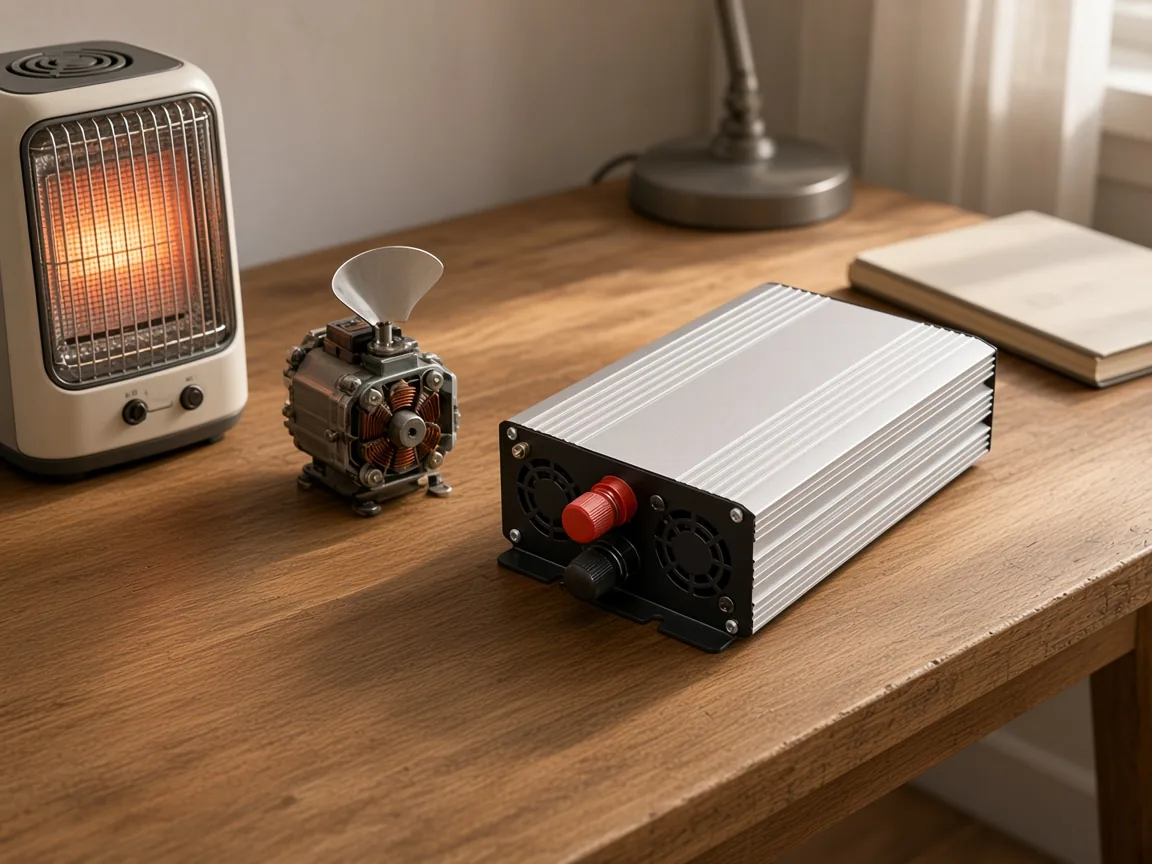
When the quote needs the smooth wave, use the live pure sine wave power inverter listing and the pure sine wave inverter category behind it. The pure sine listing’s parameter block shows 12V/24V/48Vdc, 110V/120V/220V/240Vac, 50Hz/60Hz, and 300W to 6000W.
The other side of the catalog is also live. The modified sine wave inverter page is the modified class, not a second name for the pure sine unit. The modified listing’s parameter block shows the same 12V/24V/48Vdc, 110V/120V/220V/240Vac, 50Hz/60Hz, and 300W to 6000W lines.
Those ranges are family spans printed on each page. They are not a promise that every watt point, every voltage, and every surge is available on one box.
The pages do not print efficiency percents or surge watts. Leave those cells blank until a datasheet arrives.
“High-efficiency” in a title is a label, not a measured percent.
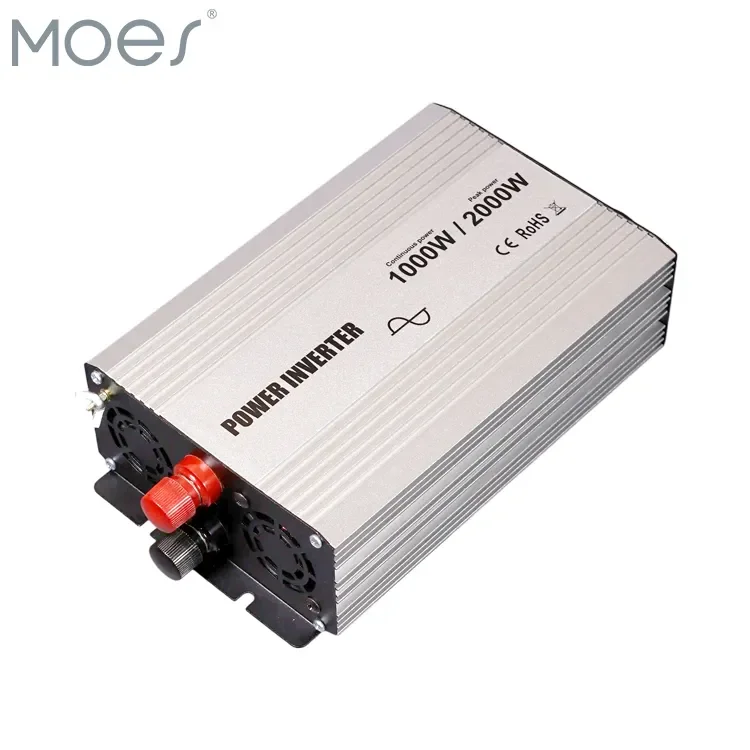
Match the row to the waveform the buyer signed. If they signed pure sine, the modified page stays a reference for the other class, not a substitute.
If they signed modified sine and the list is heaters only, the modified page is the row to price. If they signed nothing, neither row should ship.
A coordinator who wants the architecture conversation, on-grid versus off-grid or hybrid versus stand-alone, should leave this page. Waveform class is settled first.
Bus voltage and continuous watts are the next sheet. Keep bus voltage on the next sheet.
Do not plan induction motors, compressors, audio systems, dimmers, or medical devices on modified sine unless that device’s maker has cleared the waveform in writing. Heaters and simple lamps are the loads that usually stay.
Resistive heaters, incandescent lamps, and many charger bricks that rectify first. Confirm anything with a motor, a clock, or a speed control before it joins that list.
Sometimes it will start, and often it will hum and run hot. Fridge compressors are induction motors.
Treat them as a pure sine load unless the appliance maker says otherwise. A one-hour emergency story is not a stocking policy.
They are a cost-first choice for a short list of resistive loads when the buyer has accepted the stepped wave. They are a weak default for a whole household or a clinic.
Some electronics only rectify the input and keep working. Others, especially those with a line transformer or a capacitive dropper, can overheat or misbehave.
Damage is not guaranteed, and survival is not guaranteed either. The quote should name the supply type instead of hoping.
No. That recommendation is about systems connecting to a power grid.
An inverter nameplate needs its own published figure. If the page has none, write “not stated” and ask for the datasheet.
No. A laptop brick often runs because it is a switched-mode supply.
The fridge, the pump, and the audio rack on the same list are still unanswered. One friendly charger does not clear the rest of the cart.




OTHER SMART DEVICES
Jun 13,2026
OTHER SMART DEVICES
Jun 12,2026
TUYA SMART HOME PRODUCTS
Jun 12,2026
 +86 137 3639 3028



