

by NOVA

Jul 30, 2026
Smart valve retrofits succeed or fail at the pipeline survey, long before any hardware ships. Facility teams that photograph every valve, measure every clearance, and name every responder can choose confidently between the two verified MOES paths — replacing a valve outright or mounting an automatic shut-off controller on the one already installed. Teams that skip the survey discover seized spindles and missing WLAN coverage on installation day. This RFQ guide keeps the work in the right order.
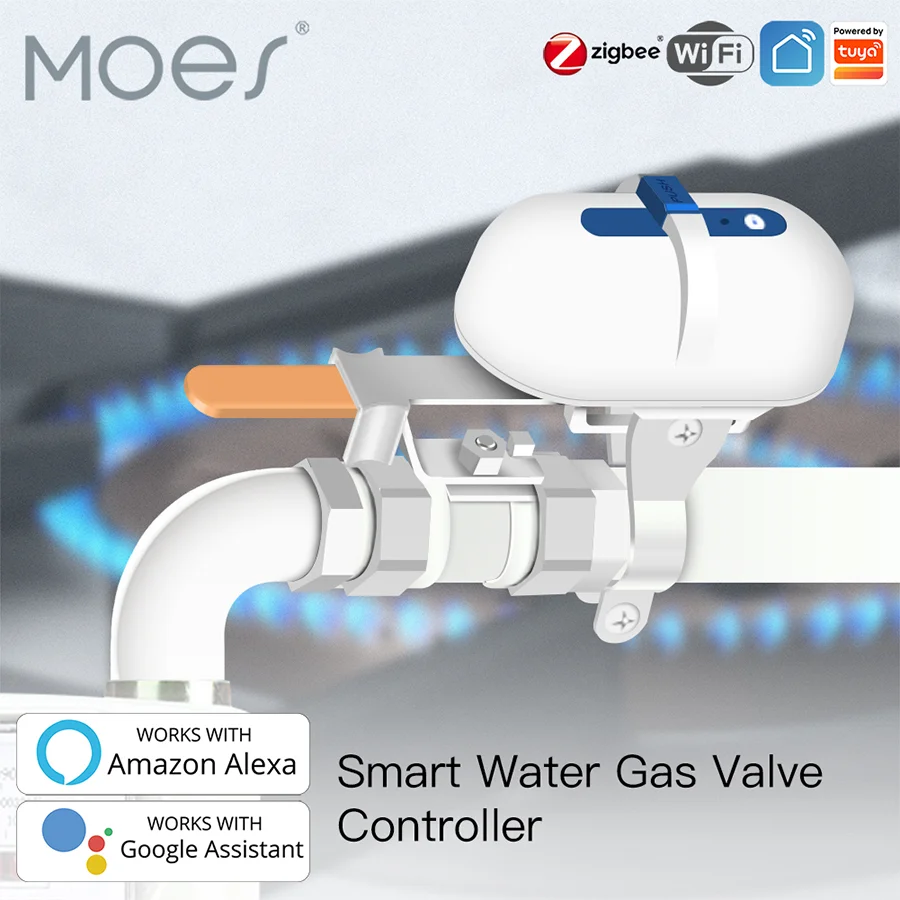
MOES catalog image of the shut-off controller family; torque and pipe fit are datasheet items per valve.
A valve that closes automatically converts leak detection from information into prevention. For facility teams, that changes the risk arithmetic on night shifts, vacant units, and holiday periods — the exact windows when a burst pipe or an open gas line does its worst damage unattended.
Treating the device as building infrastructure also changes who owns it. Gadgets belong to occupants; valves belong to the maintenance plan, with test schedules, spare parts, and a written response chain that survives staff turnover.
Survey each valve before choosing hardware. The decisive facts are mechanical, and none of them appear in product photos.
| Survey item | Why it decides the path | Evidence format |
|---|---|---|
| Valve type, size, and age | Seized or corroded valves resist retrofit controllers | Photo with measurement |
| Clearance around the valve | Controller bodies need mounting space | Photo with ruler |
| Pipe material and condition | Replacement work depends on it | Survey note |
| Supply criticality | Shutting this line affects which services | Facility register |
| WLAN signal at the valve | WiFi devices need coverage where they sit | Signal reading |
Two outcomes emerge per valve: the pipeline can be opened for a replacement, or it cannot and the existing valve must be operated externally. Writing that verdict valve-by-valve is the core of the RFQ.
The verified catalog offers one listing per path. The MOES WiFi smart water valve carries a title stating home automation valve control for gas or water — a valve unit for planned plumbing work. The MOES WiFi pipeline auto shut-off valve controller states automatic shut-off control on water and gas pipelines — the retrofit device that operates an existing valve.
Title wording ends there, deliberately. Torque figures, supported pipe sizes, pressure ratings, and behaviour on power or network loss are datasheet items, and a facility quote that guesses them invites a stuck valve at the worst moment. Request the documents in writing per model.
| Retrofit path | Verified listing (title wording) | When it fits |
|---|---|---|
| Replace the valve | WiFi Smart Water Valve, valve control for gas or water | Planned plumbing work, new risers |
| Keep the valve, add control | WiFi Water Gas Pipeline Auto Shut OFF Valve Controller | Lines that cannot be opened |
Actuation only helps when something triggers it. The chain runs: detection point, automation rule in the Tuya-based app layer, valve action, then human follow-up. Each link needs an owner, and the commissioning account belongs to the facility, not to an installer’s personal phone.

Replacement-path image from the MOES catalog; choose per valve verdict, not per product photo.
Network design carries the same weight here as in any WiFi deployment — Wi-Fi Alliance ecosystem devices need surveyed coverage at plant-room and riser positions where signal is usually weakest. Buildings running coordinator-led device fleets should reconcile the two networks through the Zigbee gateway buyer’s guide, and the wider automation program through the Tuya smart home planning guide.
For facility retrofits, the bounded recommendation is the MOES WiFi pipeline auto shut-off valve controller listing. Most buildings cannot open critical pipelines on a project schedule, and this listing’s title names exactly that constraint’s solution: automatic shut-off control mounted onto the pipeline already in place.
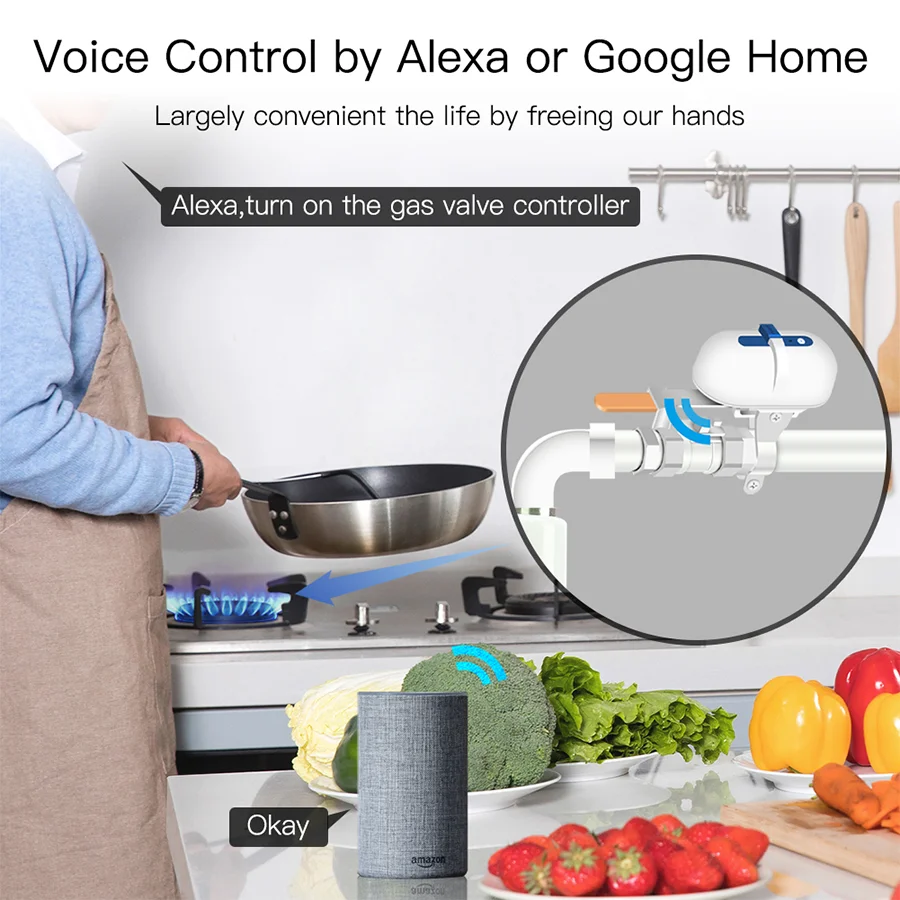
Product image from the MOES catalog; confirm torque, valve compatibility, and fail behaviour per datasheet.
The smart water valve stays the deliberate alternate for planned plumbing work — new risers, renovations, or replacement cycles where opening the line is already scheduled. Quoting both paths per the survey verdict, rather than defaulting to one, is what separates an engineered RFQ from a shopping list.
Pause when valve photos show corrosion or seized spindles nobody has exercised, when clearance measurements are missing, or when the response chain has no named owner for nights and weekends. Each gap turns an automatic system into a decorative one.
Regulated lines deserve their own stop sign. Gas installations and fire mains carry certification and sign-off requirements in most markets, and a smart-home SKU must not be quoted into those roles without written confirmation that the market and the application allow it. Acceptance-test discipline for phased buildings can borrow from the hotel panel RFQ checklist.
Send the package through Contact Us or the OEM/ODM channel, and consolidate the program within the other smart devices range.
The smart water valve listing is a valve unit installed into the line; the pipeline auto shut-off controller listing operates the existing valve externally. The survey verdict per valve decides which to quote.
Both listing titles name gas and water pipeline control. Local rules for gas installations still govern what may be fitted, so confirm compliance per market in the RFQ.
Yes, when the points share the supply branch that the valve isolates. The automation rule lists which alerts trigger which valve, and that mapping belongs in the RFQ.
Valve type, size, age, clearance around it, pipe material, supply criticality, and a recent photo — plus a WLAN reading at the position.
The facility team, through a commissioning account in the building’s name, a written escalation list, and a scheduled valve exercise test that keeps hardware moving.
Quantities per phase, spares, samples, target market and labeling, packaging, manual language, delivery schedule, and any OEM or ODM branding scope.


OTHER SMART DEVICES
Jun 13,2026
OTHER SMART DEVICES
Jun 12,2026
TUYA SMART HOME PRODUCTS
Jun 12,2026
 +86 137 3639 3028