


by NOVA

Oct 09, 2026
Buyers who type solar inverter charge controller into a search bar or an RFQ usually mean one combined product reading: an inverter that also charges a battery, with the controller function sitting inside that enclosure. They are not asking for a third mystery device between “inverter” and “controller.” This page locks that reading, shows when a separate charge-controller box is still required, and lists the RFQ fields that stop a quote from landing on the wrong SKU.
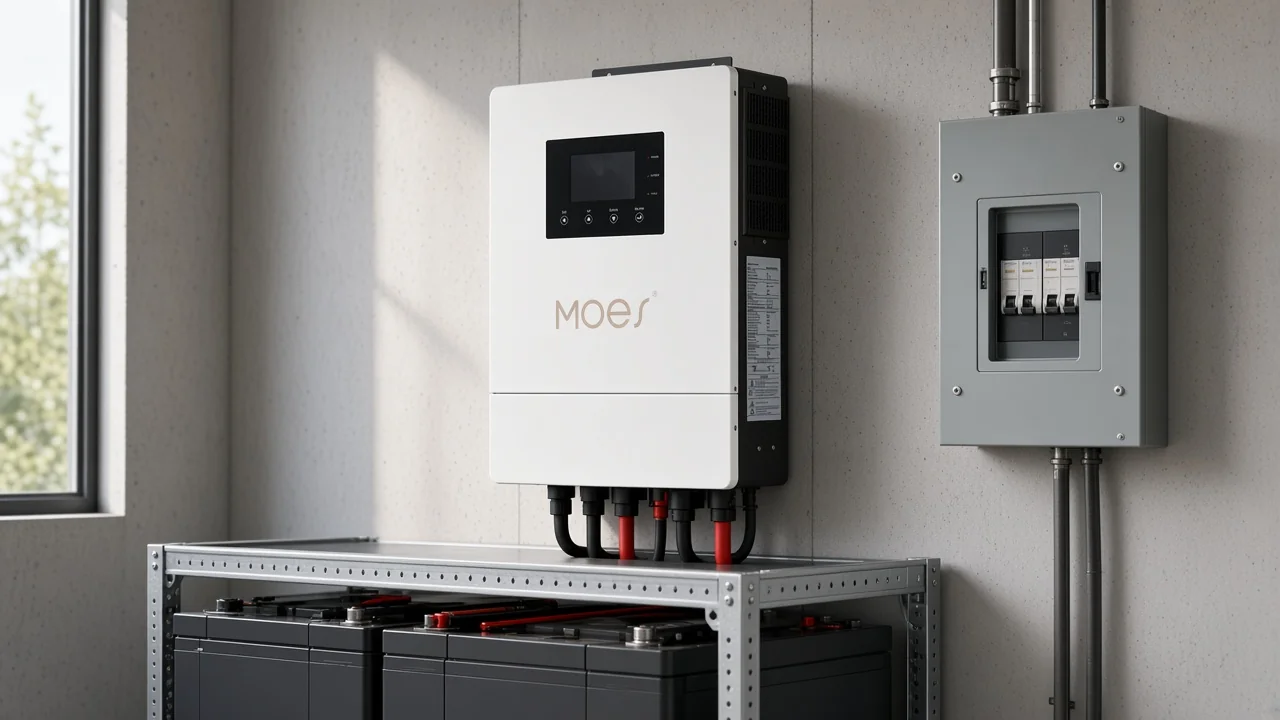
Most channel RFQs that use this phrase are pointing at a combined inverter/charger listing, not at a standalone solar charge controller alone.
Shops already title that class as a power inverter with a solar controller: one cabinet that converts DC to AC and also manages charging into a battery bank. Industry guides describe the same package as a hybrid or all-in-one that carries MPPT (or other) charge control, inversion, and often an AC charger plus transfer switch behaviour in one enclosure. A battery-based PV design still needs charging control and inversion somewhere; the phrase debate is only about packaging.
If the customer instead wants a head-to-head “which box” matrix, use the live comparison on solar inverter vs charge controller once and keep this page on the listing reading.
Combined listings put the charging stage inside the inverter enclosure; a separate reading keeps a dedicated controller SKU on the wall beside an inverter.
| Reading | What the BOM shows | What the RFQ is really buying |
|---|---|---|
| Combined listing | One hybrid / inverter-charger enclosure | AC output plus PV (and often AC) charging printed on that inverter page |
| Separate controller box | Standalone MPPT or PWM controller + a distinct inverter | Independent charge control, then inversion from the battery bus |
On a combined page, look for language such as multifunctional inverter/charger, solar charger, or built-in MPPT solar charging. On a separate reading, the controller page stops at regulating array current into the battery; it does not replace the inverter’s AC job.
From the field: Buyers still ask whether the controller inside an all-in-one is “just a marketing gimmick,” because they do not want to fry a battery bank by skipping a box that was actually required — source: r/OffGrid hybrid + controller thread. The honest answer is page-specific: read what the inverter listing prints for solar charging, then compare that envelope to the array.
A standalone solar charge controller typically charges from PV only. Many all-in-one packages also add an AC charging path from grid or generator—another reason the combined phrase shows up in shopping results.
Lock four fields before anyone opens a price sheet: PV input window if printed, battery voltage, charge current if printed, and whether the controller is a separate box.
| RFQ field | What to write down | Why it changes the SKU |
|---|---|---|
| Separate box? | Yes / No / Unknown | Routes the quote to a controller page or a hybrid inverter page |
| Battery voltage | Nominal DC voltage the bank uses | Both combined and separate listings are ordered to one system voltage |
| PV input window if printed | Max PV voltage / MPPT range as printed on the candidate page | Array string design must fit the printed ceiling and floor |
| Charge current if printed | Max charging current shown on that page | Stops assuming amps that never appear on the live table |
| Cold-site array Voc | Open-circuit voltage at the coldest expected temperature | Module plate Voc is an STC figure; the site value is what the input stage sees |
Module education references still put a typical 36-cell module near about 21 V open-circuit under standard test conditions. That figure belongs in the RFQ as context for string math, not as a MOES product rating.
Do not invent MPPT efficiency percentages or charge-current amps when the live page leaves them blank. If the hybrid table prints power and AC/DC voltage but no charge current, the RFQ must ask for the printed charge current on the variant sheet before the quote is firm.
Choose the combined reading when one enclosure can carry the printed PV charging story and the AC output the site needs.
That path fits cabin and light commercial off-grid solar system briefs that want a single wall unit, one configuration interface, and a BOM that does not add a second charging enclosure. It also fits RFQs that already say “inverter charger,” “hybrid with solar charger,” or “all-in-one,” and that do not demand a separately serviceable controller SKU.
The combined path still fails if the array needs a PV window or charge current the candidate listing never prints, or if the buyer explicitly requires modular replacement of the charging stage alone. In those cases, stop forcing a hybrid SKU and move to the separate-box reading.
Keep a standalone MPPT charge controller—or another solar charge controller class—on the BOM when the array, service plan, or expansion path outgrows what a combined listing can honestly cover.
Practitioners split the charging stage when a hybrid’s solar input is too small for the planned array, when string voltage cannot reach a hybrid’s minimum tracking window, or when a failed MPPT inside an all-in-one would take down charging and inversion together. External controllers also show up when a project wants a second PV charge path after an all-in-one solar input is already maxed.
PWM versus MPPT is a controller-class choice on the separate path, not a second comparison article—if the RFQ only said “solar inverter charge controller,” confirm whether they meant a hybrid listing before you open a PWM charge controller sheet.
Read the product story for solar charger or MPPT language first, then read the technical table for what is actually printed.
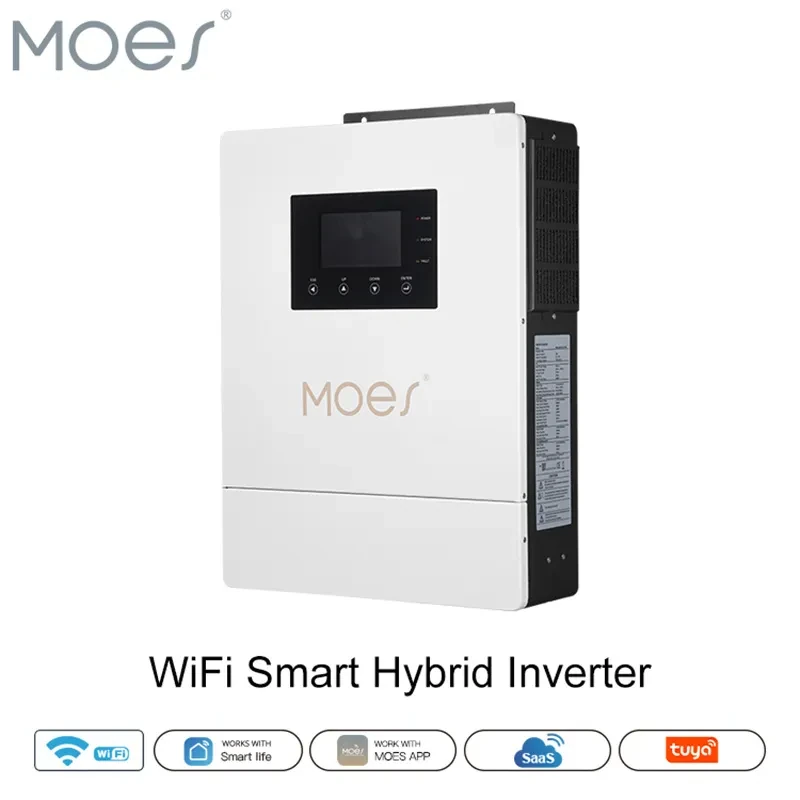
On the live MOES WiFi Smart Hybrid Solar Inverter page, the description states a multifunctional inverter/charger that combines an inverter, a solar charger, and a battery charger. The technical table on that page prints 48V DC operation, single-phase AC 176-253V, 50Hz/60Hz, and a 4.2KW/6.2KW power range. It does not print a charge-current amp or PV window in the table reviewed for this article, so those values stay on the RFQ as questions rather than assumed numbers.
On the live low-frequency hybrid inverter/charger page, the copy states integrated MPPT solar charging, surge capacity up to 300% peak power, and transfer in under 10ms, with a wider DC voltage set of 12/24/48/96V, AC 170-275V, and a 1KW-12KW power range. Use those page-scoped figures only for that listing.
If the page never says solar charger or MPPT, do not treat it as a combined “solar inverter charge controller” reading.
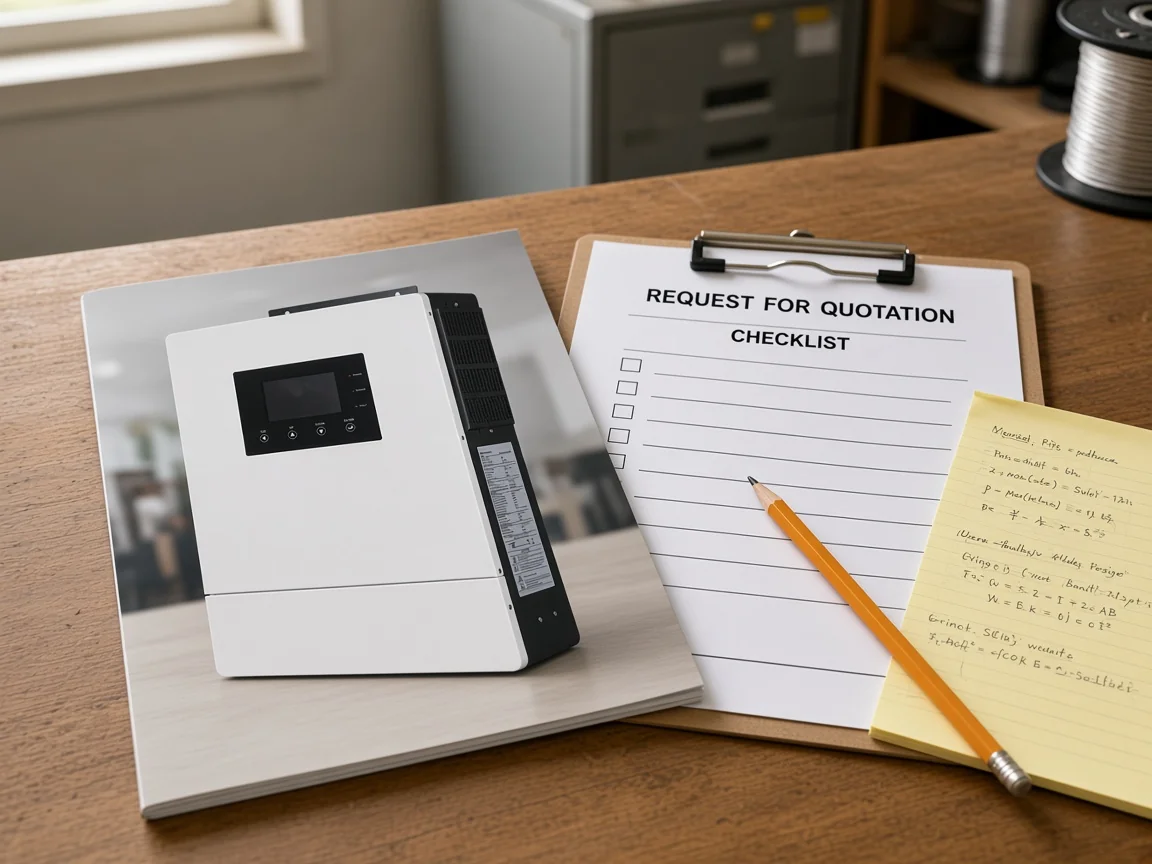
Match combined-listing RFQs to hybrid inverter pages that print solar charging inside the enclosure; match separate-box RFQs to standalone controller pages under the charge-controller pillar.
For a combined reading, start with the MOES WiFi Smart Hybrid Solar Inverter.
It is the clearest live match for the phrase because it states inverter, solar charger, and battery charger in one product story, with the 48V / 176-253V / 4.2KW-6.2KW table above.
Pure sine wave output is the AC waveform quality buyers should still confirm on the exact variant sheet. Send the locked RFQ fields with the enquiry so the reply does not invent a charge current the table does not show.
The separate-box reading uses a controller listing instead of forcing another hybrid SKU.
When the RFQ answers “separate box = yes,” open the MPPT Solar Charge Controller PV Regulator instead.
That listing prints system voltage 12/24/36/48V or 48V/96V DC auto, maximum charging current 30-150A, and maximum PV input 180V or 280V. Pair it with the inverter the AC side actually needs; the controller page is not an AC inverter substitute.
Browse the wider set from the solar charge controller pillar or the solar inverter pillar after the reading is locked. For hybrid noun background only, see what is a hybrid inverter.
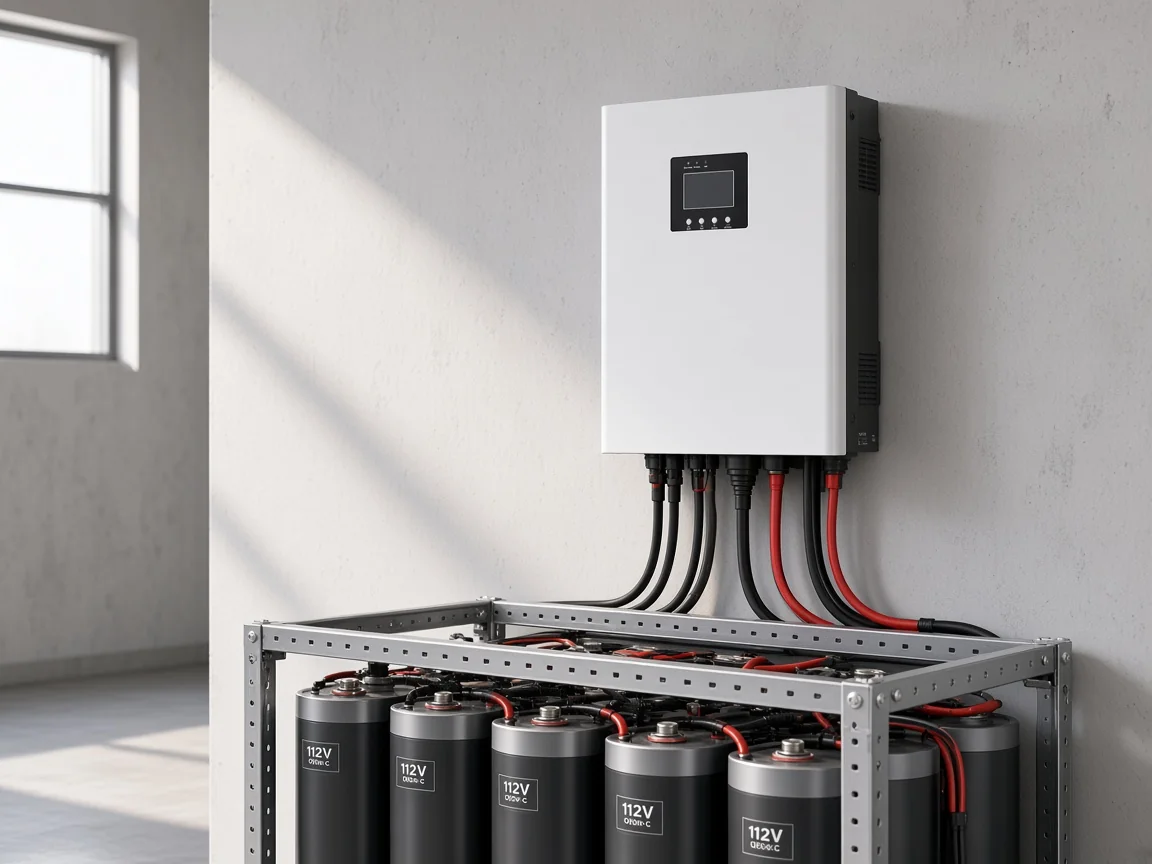
A battery-based PV design needs charging control and inversion somewhere. That control may live inside a hybrid inverter listing or in a separate controller box—the RFQ must say which.
It is the combined listing reading: one enclosure that handles PV charging into the battery and DC-to-AC output, often with an AC charger path as well.
Only if the array, charge current, or service plan exceeds what that listing prints. If the printed solar-charging story covers the site, a second controller is optional rather than automatic.
Separate-box yes/no, battery voltage, PV window if printed, and charge current if printed. Cold-site array Voc belongs beside the PV window question.
No. A controller regulates charging into the battery; it does not create the AC waveform loads need. For the two-device matrix, use the live vs page linked above.
Standalone MPPT pages that print multi-stage charging describe absorption and float stages that taper or hold the battery rather than pushing a continuous bulk current forever. Always read the stage names on the exact controller listing.
When the all-in-one solar input is maxed, when string voltage needs a different tracker window, or when the site wants a redundant charging path that can be serviced on its own.
PWM is a standalone controller class with its own PV ceiling on the live PWM page. Confirm the buyer meant a separate controller before you quote PWM instead of a hybrid listing or an MPPT controller.




OTHER SMART DEVICES
Jun 13,2026
OTHER SMART DEVICES
Jun 12,2026
TUYA SMART HOME PRODUCTS
Jun 12,2026
 +86 137 3639 3028



