


by NOVA

Oct 09, 2026
A power inverter with transfer switch is a buyer name for AC source changeover that may sit inside an inverter-charger or in a separate automatic transfer switch beside a plain inverter.
The phrase stacks two jobs. One job makes AC from a battery. The other job decides which live AC source feeds the load.
What a power inverter is stays on the device class. What a power inverter does stays on the DC-to-AC path. This page only splits internal transfer from a separate ATS.
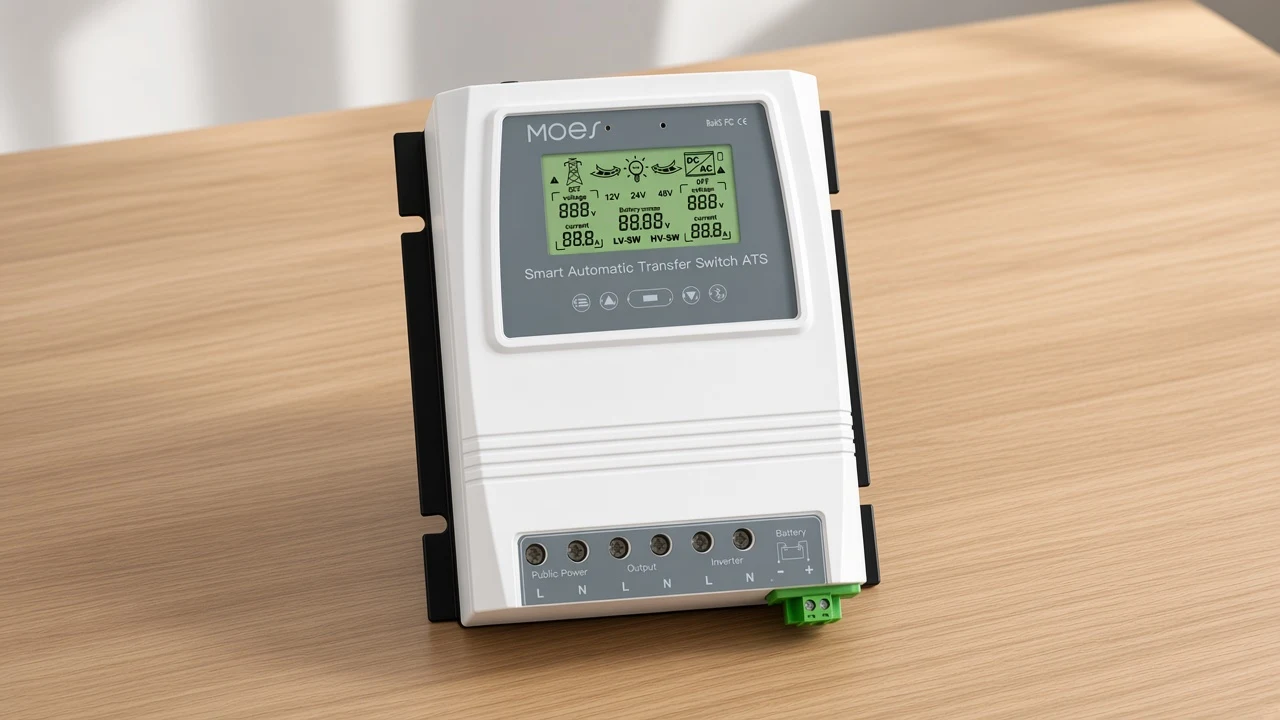
A dealer paste that says only “2000W inverter with transfer switch” can still mean either box. One is an inverter-charger that prints the switch on its own page. The other is a dual-power ATS next to a pure sine wave inverter that never prints a switch at all.
Types of power inverters already sorts waveform, battery voltage, and inverter-charger duty. Transfer amperage and source names are the fields that page does not own.
The same words can mean an inverter-charger that prints the switch or a separate ATS beside a plain inverter.
On DIY Solar Forum, one RV buyer planned an 1800 watt unit for a single outlet circuit and only then noticed some inverters already include a switch. Another reply preferred an external switch when the whole shore power feed has to move together.
Those are two purchases. One chassis can print the changeover. A second chassis can sit between utility AC, the inverter, and the load.
A quote that only repeats the buyer phrase has not chosen either shape. Open the title that matches the shape. Do not invent a transfer rating from the wattage badge.
The switch selects which live AC source feeds the load; it does not make AC from the battery.
Wikipedia describes a transfer switch as equipment that moves a load between two sources. An automatic unit acts when it senses that a source has been lost or restored.
Open transition breaks the first source before it makes the second, so the load sees a brief interruption. That interruption is why a transfer switch is not a UPS.
Code public-input text uses the same core idea: a transfer switch, automatic or not, transfers load conductor connections from one power source to another. Hosted standard wording calls an automatic transfer switch self-acting equipment for that same transfer.
When a channel writes “with transfer switch,” the useful next line is which two AC sources take turns. Utility or generator AC is one side. Inverter AC is the other.
Battery DC still needs an inverter before it can be that second source.
Open the inverter-charger page only when that page itself names the automatic transfer switch.
The live MOES low-frequency inverter-charger page prints four modes: mains priority, battery priority, energy saving, and unattended. Its application text says the automatic transfer switch moves among solar, grid, and generator sources with less than 10ms switching time.
The same page prints surge capacity up to 300% peak power, and a table of 12/24/48/96V DC, single-phase 170-275V AC, 50Hz/60Hz, and 1KW-12KW.
That is the internal shape. The switch language sits on the inverter-charger page. A buyer who already said “the switch is inside the inverter” should be pointed there, not to a second ATS SKU by habit.
Mains-priority mode is the label that tells a coordinator the unit can prefer utility AC when that source is present. The bare word inverter does not carry that preference.
The dual-power ATS page names utility, inverter, battery, and load as separate connections.
From the field: Forum buyers often split one outlet circuit from a whole shore feed. A separate ATS is the shape they reach for when the changeover has to sit at the feed, not only inside one inverter chassis. Source: Built in ATS or separate?.
The Automatic Transfer Switch (ATS) collection lists the dual-power switch and does not list a power inverter. The live product page for that switch says the controller sits between an off-grid power system and the public utility supply. It connects separately to utility power, the inverter, the battery, and the load.
Printed name lines include 11KW and 50A. The parameter table prints 8kW when utility power is 100-120V, and 16kW when utility power is 220-240V.
Input and output are listed as AC 100-120V or AC 220-240V. Application text and schema print ≤10ms.
The same page says the unit can move to grid power on a low-battery trip and return to inverter power after the bank recovers.
Those figures belong to the separate ATS page. They are not a free transfer rating for every inverter title on the site.
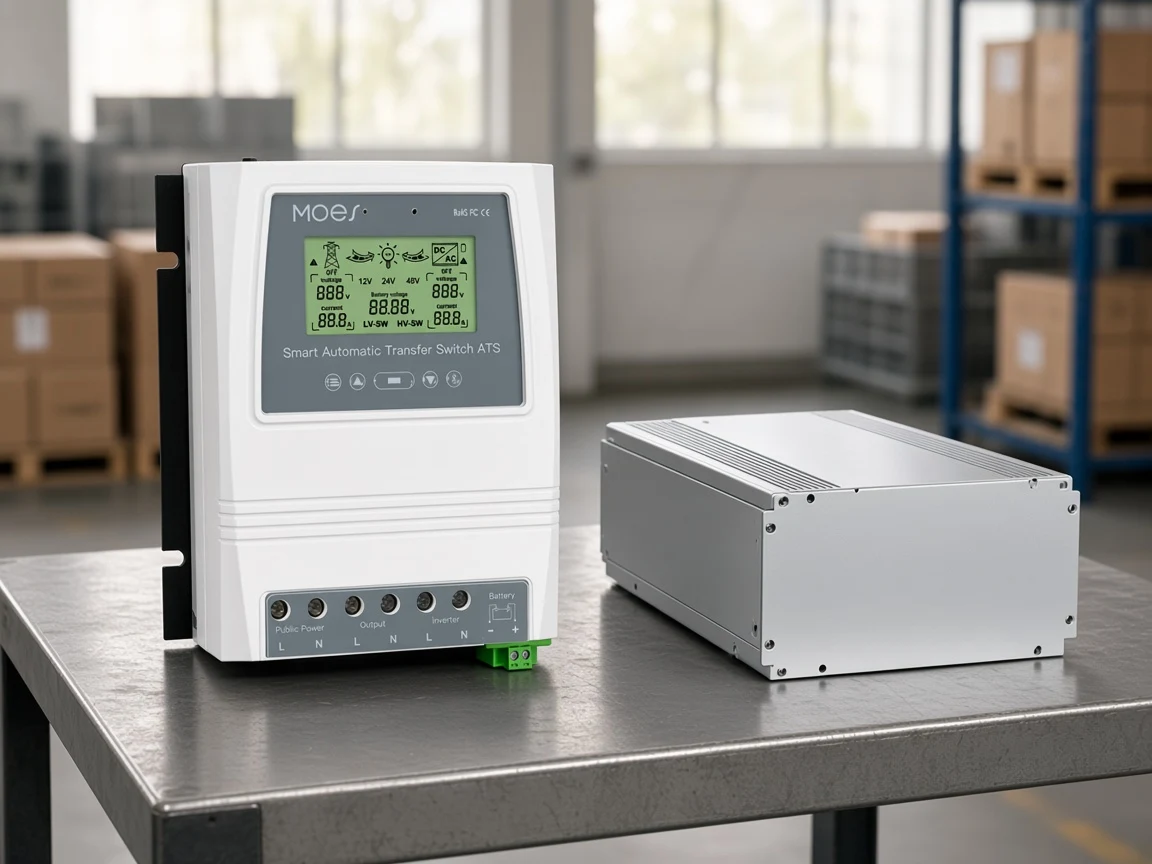
A 2000W title still leaves transfer amperage blank if the inverter page never prints a switch.
The live pure sine wave power inverter page prints 1000W and 2000W in the title. Its table prints DC operating voltage 12V/24V/48Vdc, output voltage 110V/120V/220V/240Vac, operating frequency 50Hz/60Hz, and a power range of 300W to 6000W.
The fetched description and table do not print a transfer switch, a transfer amperage, or a transfer-time figure.
Continuous and surge still matter for the inverter box. They do not invent a transfer ampere line. If the buyer wants a separate ATS beside that pure sine wave unit, the transfer amperage has to come from the ATS page that prints it.
| Buyer shape | Where the switch is printed | What the wattage line covers |
|---|---|---|
| Internal | Inverter-charger page names automatic transfer switch | Inverter continuous and surge on that page |
| Separate ATS | Dual-power ATS page names utility, inverter, battery, load | Inverter watts stay on the inverter page; transfer rating stays on the ATS page |
| Plain inverter only | No transfer line on the pure sine wave page | Continuous and frequency only; transfer fields stay blank |
Those four fields stop a dealer paste from shipping the wrong box.
Write which sources are switched: utility or generator AC against inverter AC. Write whether the ATS is internal. Write continuous power for the inverter, and surge only where the chosen page prints it.
Write transfer amperage only where a name or table prints it.
A whole shore power feed often wants its own switch. One outlet circuit can be handled either by an integrated switch or by a small external switch. The quote has to say which boundary the buyer meant.
| Quote field | Internal shape | Separate ATS shape |
|---|---|---|
| Sources switched | Solar, grid, and generator as printed on the inverter-charger page | Utility, inverter, battery, and load as printed on the ATS page |
| Switch location | Internal | Separate dual-power ATS |
| Inverter continuous / surge | 1KW-12KW table; surge up to 300% peak where printed | Pure sine wave table 300W-6000W, or the inverter page the buyer named |
| Transfer rating / time | Less than 10ms on the inverter-charger page | 50A in the name; ≤10ms on the ATS page; 8kW or 16kW by utility voltage |
Do not fill listing marks or competitor relay ratings into any of those cells.
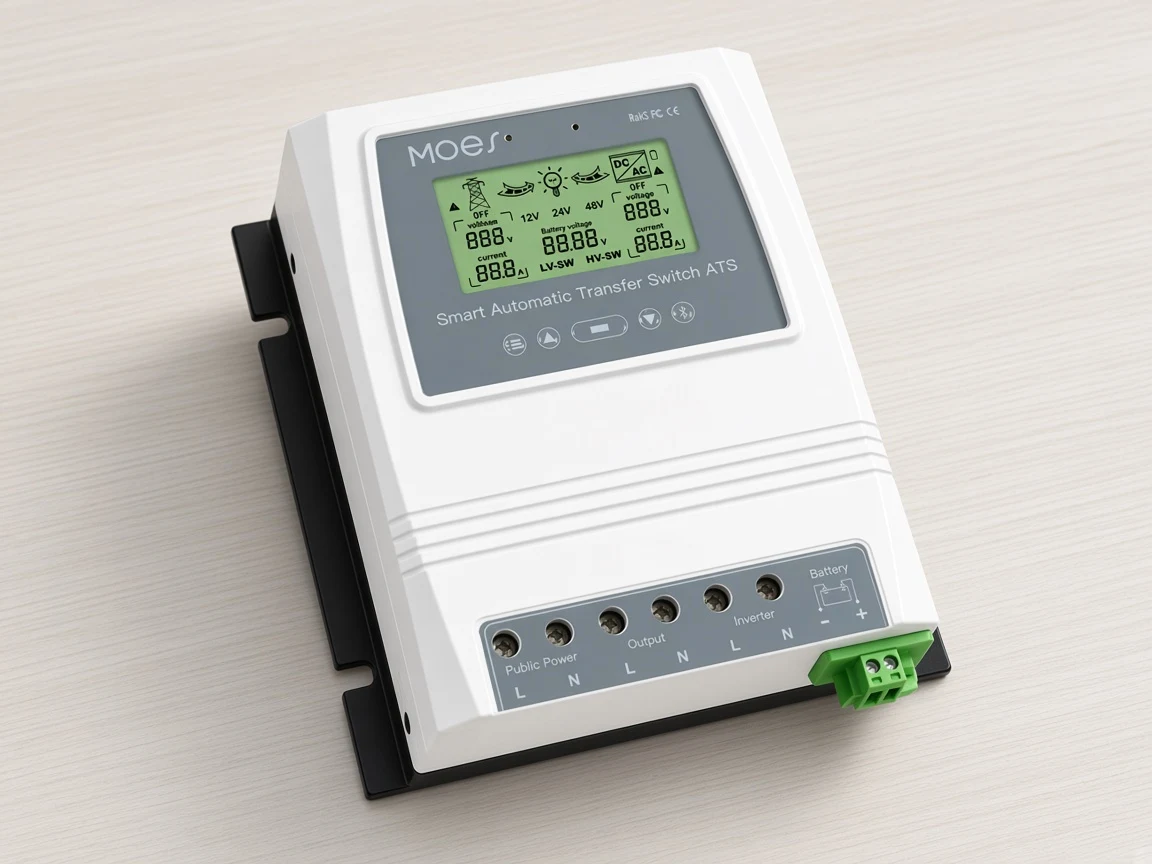
Match the buyer’s internal-versus-separate answer to the live page that prints that answer.
Open the dual power automatic transfer switch when the request needs a separate changeover between utility AC and an inverter. The listing photo and the printed name lines on that page belong to that separate box.
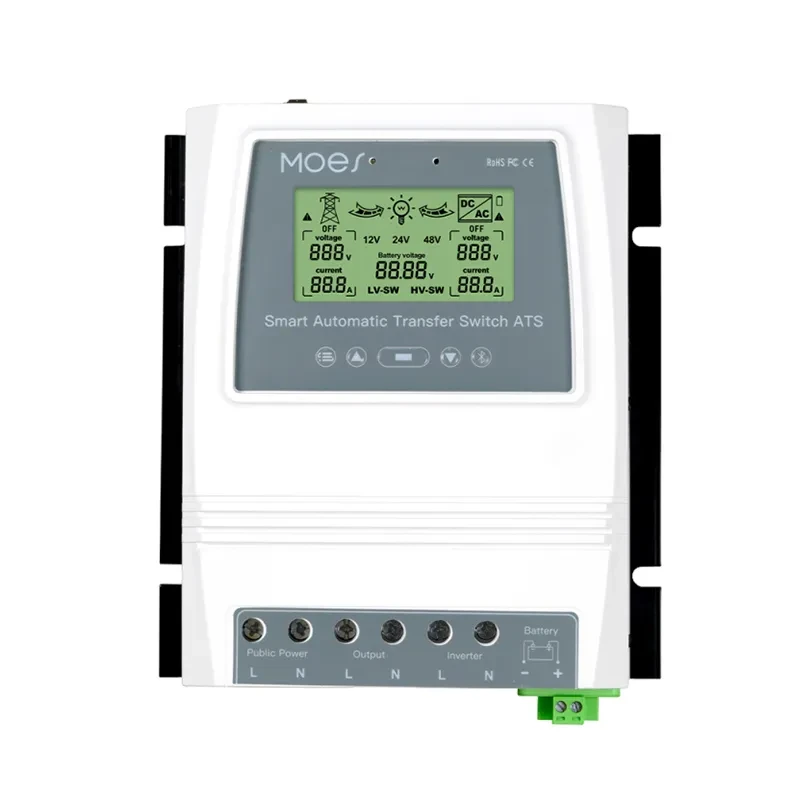
Open the low-frequency inverter-charger when the buyer already said the switch is inside the inverter and that page’s automatic transfer switch line is the one they meant.
Leave the pure sine wave inverter page for DC-to-AC class and wattage. Leave the ATS collection for the separate switch family. Do not send both URLs as if they were the same SKU.
No. The live pure sine wave power inverter page prints wattage and electrical ranges and does not print a transfer switch. Only pages that name an automatic transfer switch, or a separate ATS SKU, cover changeover.
Utility power, the inverter, the battery, and the load. The collection page lists that dual-power switch under Automatic Transfer Switch and does not list a power inverter there.
Because continuous watts describe the inverter output class. Transfer amperage has to be printed on the page that owns the switch. A blank transfer line stays blank until that page exists.
No. Selecting a source moves the load between live AC feeds. Making AC from a battery is the inverter’s conversion job.
Wikipedia treats the transfer switch as a selector, not as a UPS or an inverter.
When the changeover has to sit on the incoming AC feed for many loads, not only on one outlet circuit. Forum buyers use that split when an external ATS is easier to place at the feed than inside one inverter chassis.
It tells them the inverter-charger can prefer utility AC when that source is present. The bare word inverter only says the unit can make AC from a DC source.
Open the inverter-charger page that prints the automatic transfer switch among solar, grid, and generator sources. Open the dual-power ATS page instead when the buyer wants a separate box beside a plain inverter.




OTHER SMART DEVICES
Jun 13,2026
OTHER SMART DEVICES
Jun 12,2026
TUYA SMART HOME PRODUCTS
Jun 12,2026
 +86 137 3639 3028



