


by NOVA

Oct 06, 2026
A what is a power inverter question on a purchase request is a category question. It asks which device class the line names: a unit that takes a DC source and supplies an AC load. The notes below cover that class name, the words to print on the line item, and the neighboring boxes that belong on a different line.
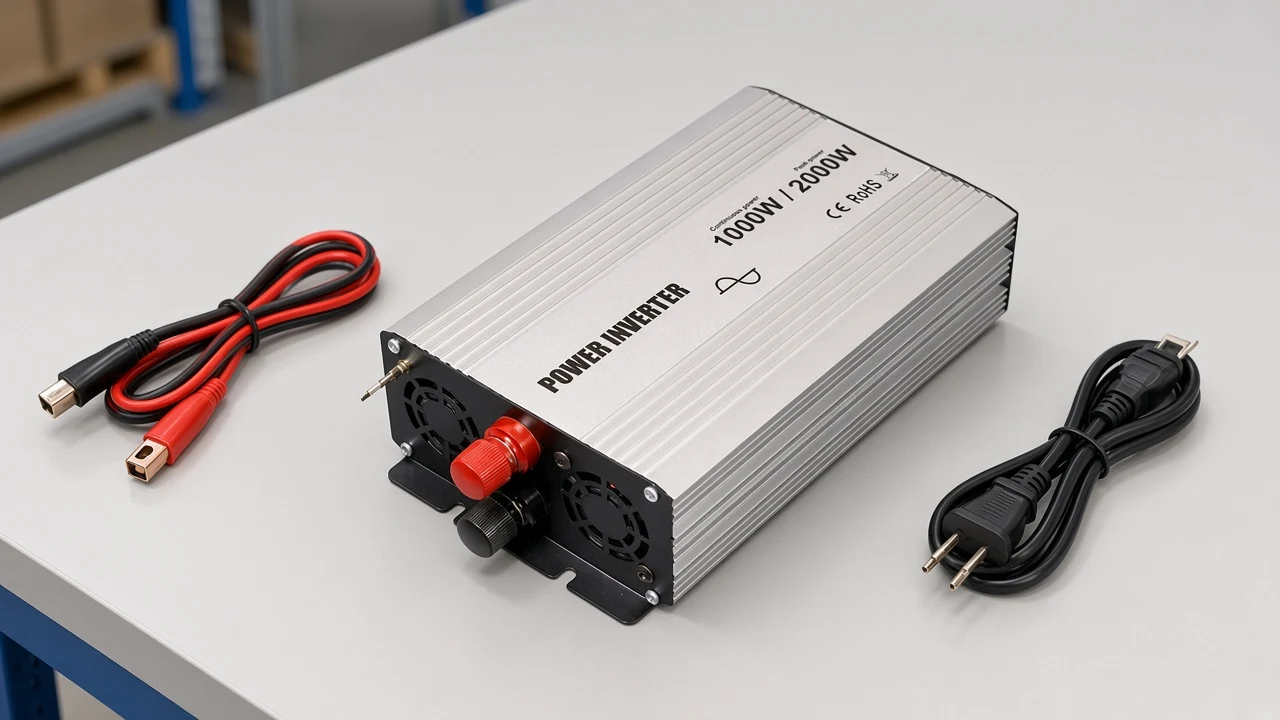
The phrase names one class. A power inverter is the device class that changes direct current into alternating current for an AC load.
Cambridge records the ordinary noun as an electronic device that changes direct current to alternating current, including a power inverter tied to a car battery. A rectifier is the opposite class, changing alternating current into direct current. Buyers who swap those two nouns will receive a box that faces the wrong way.
The device does not create the energy; the DC source supplies it. A battery, a DC bus, or another stored-DC supply can be that source. The class name still means the conversion device, not the battery and not the fuel tank that might recharge it later.
On a distributor sheet the same words show up as “inverter,” “power inverter,” and sometimes “DC AC device class” in a buyer’s own note. Those variants point at the same noun when the source is DC and the load plug is AC. They stop pointing at the same noun when the line also says charger, array, or generator.
| Words on the line | Class they name | Keep off this line |
|---|---|---|
| power inverter | DC source to AC load device | charger duty, array tracking, fuel generation |
| pure sine wave inverter | the same class plus a waveform label | a separate product family |
| rectifier | AC source to DC load device | this class |
| converter, in vehicle speech | shore AC feeding battery-side loads | this class |
A catalog photo of the chassis is enough to see the class boundary. One end is the DC connection. The other end is the AC outlet a household-style plug expects.
The internal switching story is a different page.
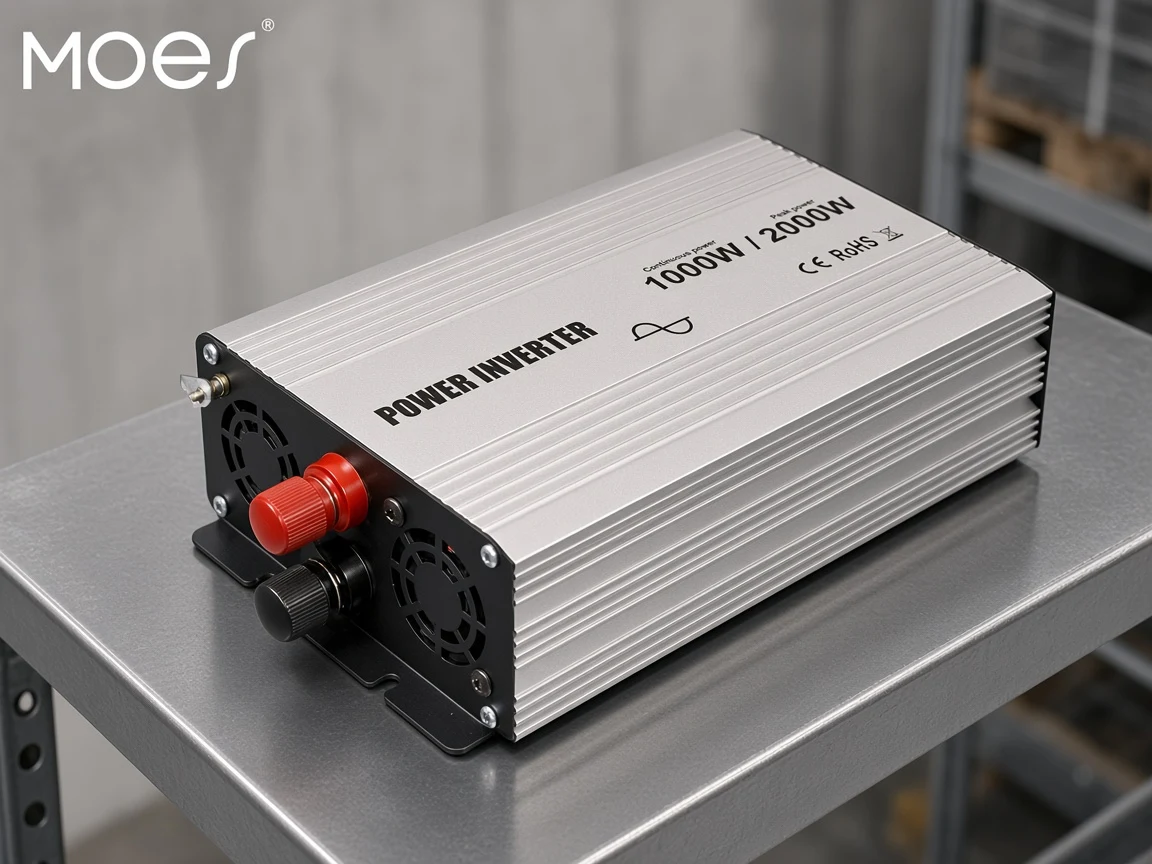
Write the class as a power inverter, then name the source and the load in ordinary words. A usable line says the source is a battery or another DC supply, the loads use AC plugs, and a charger is included only when the combined name is the one being bought.
Leave the waveform word for the printed label. If the nameplate says pure sine wave, the line can carry “pure sine wave inverter” after the class name. That label does not replace the class test.
A buyer who writes only a watt number, with no source and no load type, has not named the class yet.
Vehicle and marine upfits are the usual place this naming fails. The rig may already contain a converter that keeps lights and pumps alive from shore power. The missing box, when someone wants a kettle or a tool from the battery, is the power inverter.
The RFQ should use both nouns when both boxes are required, each on its own line.
Backup quotes fail the same way when “inverter” is used as a synonym for the whole cabinet. If the request is only the DC-to-AC class, say that. If the request is a packaged battery-and-charger appliance, use the UPS name instead of shortening it.
If the request is a fuel machine, say generator.
A short scene makes the line concrete. A distributor is quoting a service van. The electrician already has battery charging from the shop outlet and now wants two AC receptacles that work when the van is away from that outlet.
The line item is a power inverter. The converter stays on the charging line. The quote still has to name a wattage and a waveform later, on the unit that fits the loads.
Neighbor names change when the energy direction changes, when fuel makes the power, or when the box is built around a PV array. In vehicle and RV speech, a converter usually feeds battery-side loads from shore power, while a power inverter feeds AC plugs from the battery.
An inverter charger is a combined class: it can feed AC loads from DC and also charge the battery when an AC source is present. Buyers shorten that name to “inverter” and then argue about a missing charger.
Use the combined name when both jobs share one enclosure. Use the plain class name when the purchase is only AC from DC.
A UPS typically keeps the battery and the charger in the same appliance as the inversion stage. A generator makes power by burning fuel. An inverter generator is still a generator: the fuel engine is the source, and inverter electronics shape the output.
None of those three nouns should be collapsed into “power inverter” on a B2B line.
| Neighbor name | What the name actually buys | Where the line should go |
|---|---|---|
| rectifier | AC changed into DC | a conversion line of the opposite class |
| converter | shore AC feeding DC loads, in vehicle speech | its own line beside the inverter line |
| inverter charger | AC from DC, plus charging from an AC source | a combined-class line |
| UPS | battery, charger, and inversion packaged together | a backup-appliance line |
| generator | power made from fuel | a generation line |
| solar inverter | a PV-array class | the solar noun page |
| hybrid inverter | grid, battery, and array roles in one family | the hybrid noun page |
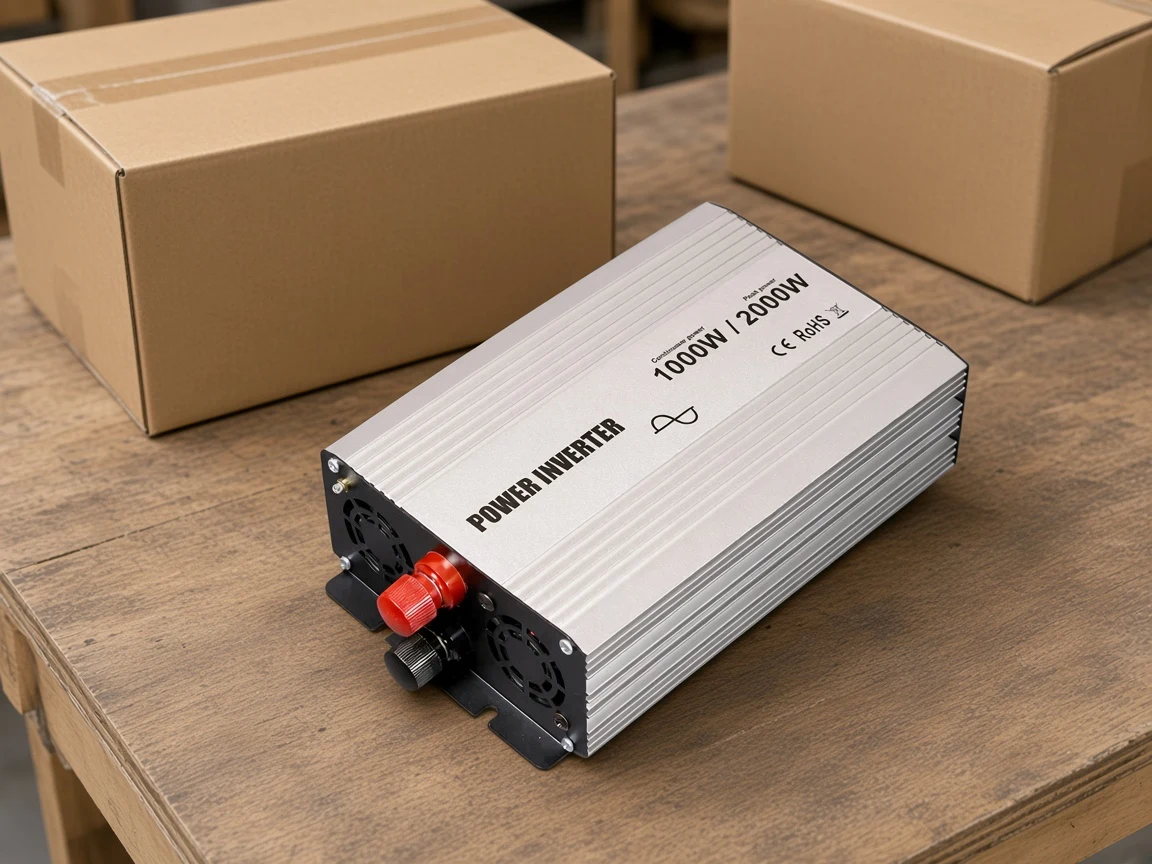
The cartons behind a single chassis are a useful picture of that split. The power inverter is one product. The other names are other boxes, even when a project buys several of them together.
Pure sine wave and modified sine wave are labels inside the power inverter class. They describe the AC shape the maker prints on the unit. They do not create a second noun, and they do not move the product into the solar family.
A buyer who needs the label can write it after the class name: pure sine wave inverter, or modified sine wave power inverter. The first words still have to pass the class test. The source is DC and the load is AC.
If those two facts are missing, the waveform adjective is floating on an unnamed box.
Sensitive electronics, some motor loads, and audio gear are the usual reason a buyer asks for the pure sine wave label. Basic resistive loads are the usual reason a modified label still shows up on a quote.
The naming rule ends there. A side-by-side of the two labels, with load examples worked as a comparison, belongs in the comparison article.
The same rule keeps surge talk and efficiency talk off this page. Those are printed fields on a specific unit once the class is already named. They are not part of the definition of the class.
A solar inverter is a photovoltaic balance-of-system class, with array-side jobs such as maximum power point tracking and anti-islanding. That is a different noun, even though both boxes can end at an AC connection.
A PV quote that says only “power inverter” is easy to misread as a battery-to-plug unit. The solar class is the one that belongs with the array. The plain power inverter class is the one that belongs with a DC source and AC loads when no array job is being bought.
The solar noun, including how it differs from a charge controller, is already written on what is a solar inverter.
A hybrid unit pulls grid, battery, and array roles into one family. That combined noun is what a hybrid inverter combines. Off-grid versus hybrid architecture is a comparison of its own and is not repeated here.
The working sequence for a battery-side power inverter, including where the DC source sits and how switching makes AC, is already on what a power inverter does with stored DC. This page only fixes the noun so that function page is not asked to do two jobs. The family hub for the solar side of the catalog is the solar inverter category.
The live example for this class is a pure sine wave power inverter, not a hybrid solar chassis. The category example is the pure sine wave power inverter listing.
Read that listing as a class label. The title prints pure sine wave power inverter. It shows the kind of product the noun points at.
It is not a laboratory report, and the longer application sentences on the product page are not part of the definition used here. Hybrid solar listings on the same site combine other roles and belong with the hybrid noun.
From the field: Van builders who already handle these units at work still ask whether a household plug on a DC source requires this class. If the plug is the ordinary AC kind, the class name is a power inverter.
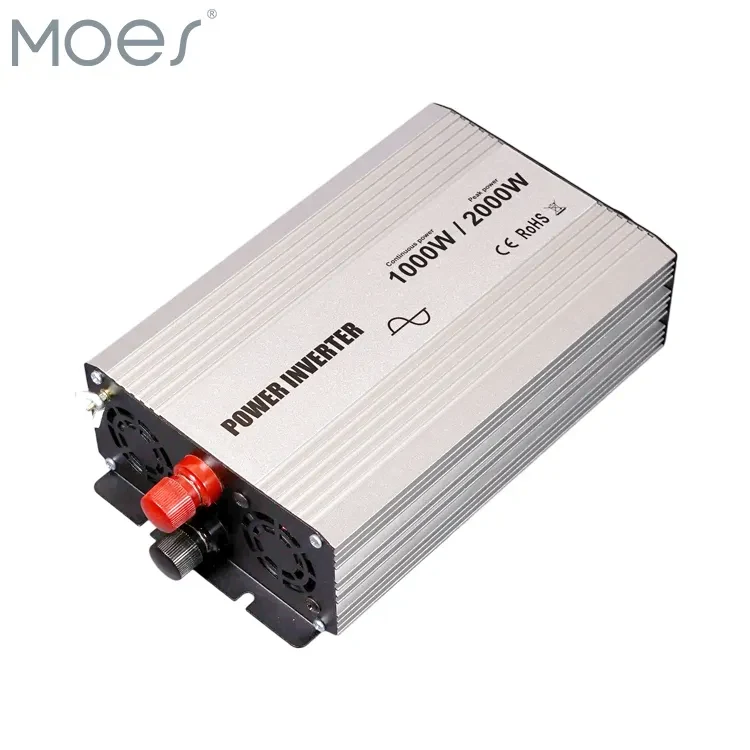
Use the listing when the line item matches the class: DC source, AC load, pure sine wave label, and no array-tracker or fuel-engine job hiding in the same noun. If the quote is actually a hybrid solar inverter, leave this listing and name the hybrid class instead.
The class needs a DC source. A battery is the usual source in vehicle and backup speech, which is why the two nouns get tied together. The battery is storage.
The power inverter is the separate device that feeds AC loads from that storage. A quote can name both, and it should not treat the battery as if the word inverter already included it.
No. In vehicle and RV language, a converter feeds DC equipment from shore AC. A power inverter feeds AC plugs from the battery.
A rig can own both boxes. The line item should use both names when both boxes are being bought, because one name will not bring the other box.
No. Inverter charger is the combined class. It still contains the power inverter job, and it also charges the battery when an AC source is present.
If the quote wants only the one-direction class, write power inverter and leave the charger word off. If both jobs are required in one enclosure, write the combined name.
No. A generator makes power from fuel. An inverter generator is a generator whose output stage uses inverter electronics.
The fuel machine is a different class from the DC-source to AC-load device this page names. Buying guides that place the two side by side are separating those nouns, not merging them.
The class name is not permission for every AC appliance on the shelf. The printed label still has to match the load the buyer will plug in, and a sensitive or motor load may need the pure sine wave words rather than a bare inverter word.
This page does not rank appliances. It only keeps the class name from being used as a blank check.
You need this class when the source on hand is DC and the load expects an AC plug. If every load already runs from that DC source, the class is optional. If the load is a PV array’s connection to AC, name the solar inverter class instead.
The household-plug test from van builders is the plain version of the same rule.




OTHER SMART DEVICES
Jun 13,2026
OTHER SMART DEVICES
Jun 12,2026
TUYA SMART HOME PRODUCTS
Jun 12,2026
 +86 137 3639 3028



