


by NOVA

Oct 06, 2026
Compare the topologies before you compare the boxes. A sound off-grid inverter vs hybrid inverter decision starts from whether the site must run as an islanded, battery-primary system with no grid export path as the default, or whether it needs grid + PV + battery interaction on a metered service. Ranking the two families as “better” or “worse” hides the project facts that actually decide the quote.
What follows locks that topology choice, maps power flow on each path, turns the choice into a decision matrix, lists the RFQ fields to collect, shows printed windows on one live MOES hybrid listing and one live off-grid listing, and names the mix-ups that send the wrong family into purchasing.
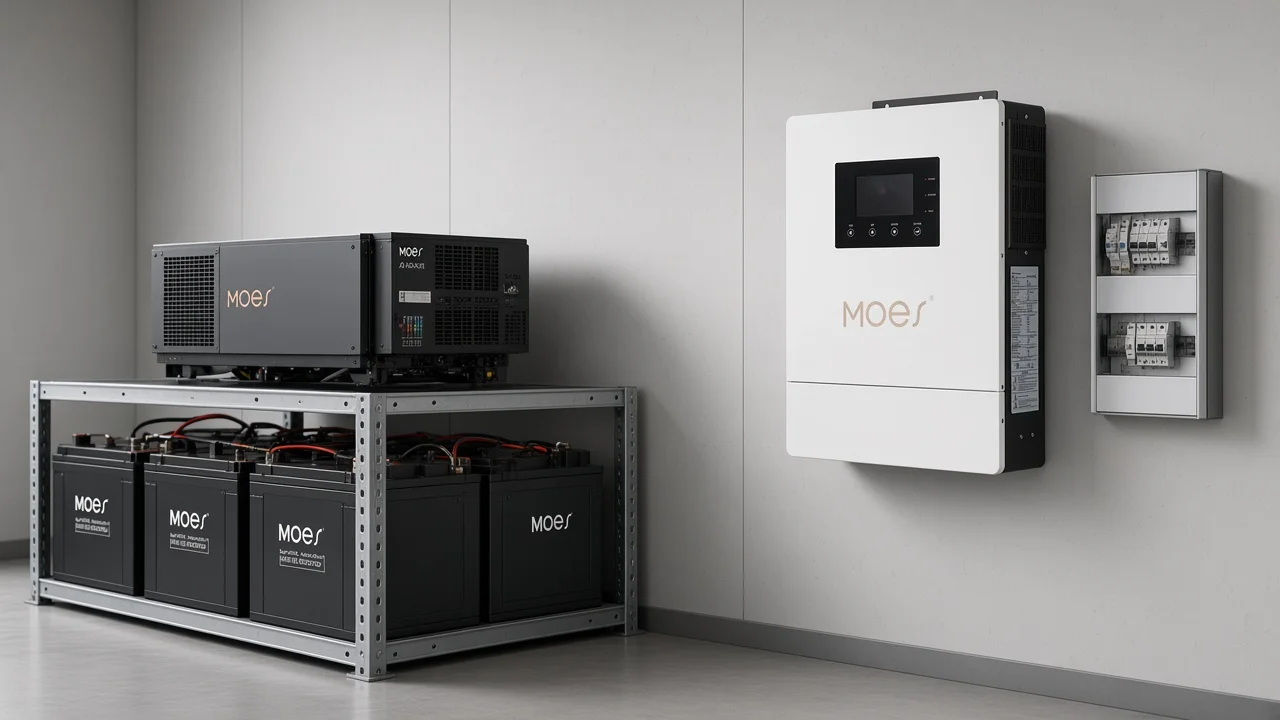
It decides which power path the site is buying, not which marketing label sounds stronger. Encyclopedia class language treats stand-alone / off-grid inverters as battery-primary units that normally do not interface with the utility for export, while hybrid inverters couple the PV array, battery storage, and utility grid in one unit aimed at self-consumption with storage.
That split is the whole job of this comparison. If the brief only needs on-grid versus off-grid without the hybrid path, use the live on-grid vs off-grid comparison instead of rewriting it here. If the brief only needs the hybrid noun clarified, use the live hybrid inverter clarification.
| Topology | Default power path | Grid export as default | What the quote must still lock |
|---|---|---|---|
| Off-grid / stand-alone | Battery-primary island; PV and storage serve local AC | No | Autonomy hours, battery voltage class, continuous and surge |
| Hybrid / grid-interactive | PV + battery + utility interaction | Not automatic — ask | Export or grid-in-only intent, battery class, continuous and surge |
Off-grid topology forms the local AC bus from storage (and usually from PV through a charger or built-in tracker). A DOE/EERE design note describes the stand-alone inverter as a voltage source that sets wave shape, amplitude, and frequency, and that must supply motor-start surges. There is no utility fill-in when the bank is short, so autonomy sizing belongs in the project file even when this article does not run the arithmetic.
Hybrid topology keeps a grid interaction path in the published class description. The same encyclopedia entry that defines intelligent hybrid inverters also notes that units able to supply selected loads during a utility outage are discussed together with anti-islanding protection. A Department of Energy explainer adds a design condition: solar-plus-battery systems rely on advanced inverters to operate without grid support during outages only if they are designed to do so.
Commercial comparison pages make the homeowner version of the same contrast: off-grid cannot export because there is no utility connection; hybrid can import, store, and sometimes export, depending on the unit and the interconnect agreement. Channel buyers still have to ask which of those behaviors the SKU actually supports.
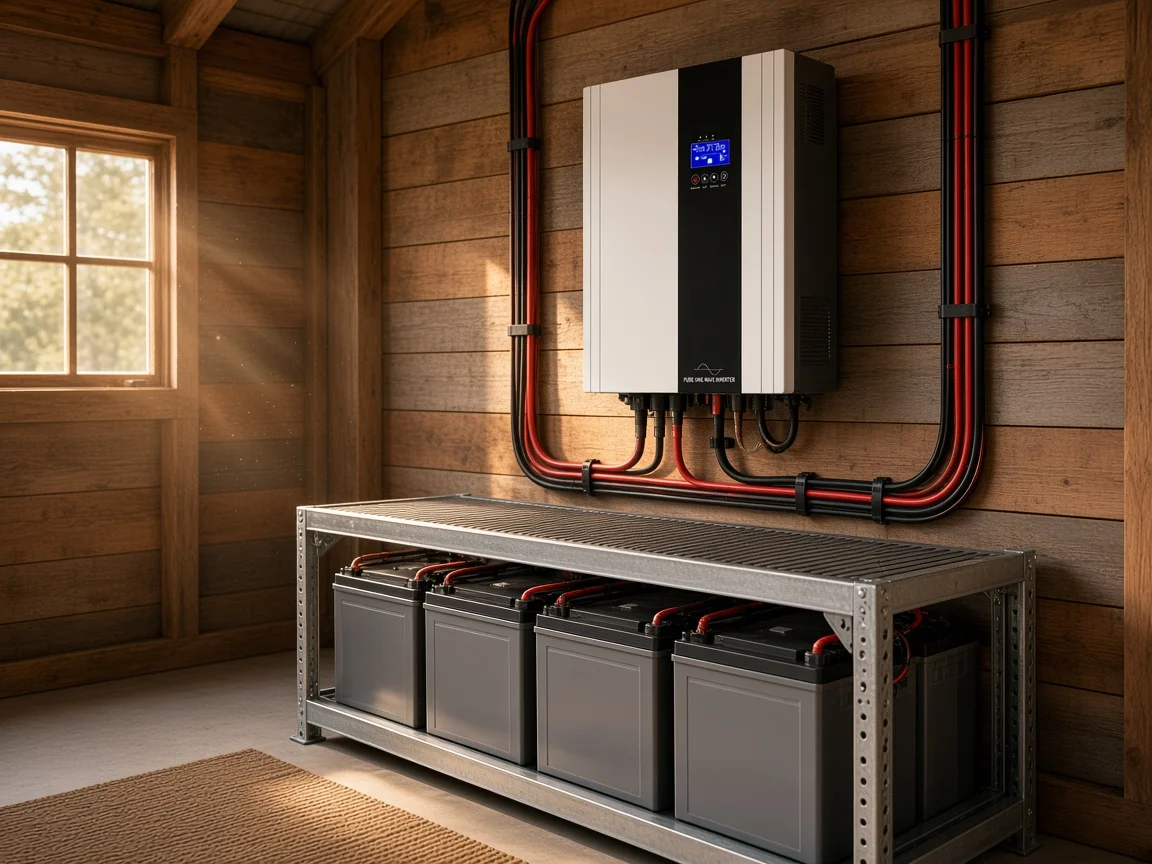
Let the site’s meter, export rules, and autonomy needs decide. Forum practitioners are blunt that “hybrid” and “off-grid” are not regulated labels, so the matrix below uses project facts instead of the product title string.
| Project fact | Points to off-grid path | Points to hybrid path | Why it moves the answer |
|---|---|---|---|
| No utility meter, or no plan to interconnect | Strong | Weak | Islanded battery-primary design matches the stand-alone class |
| Metered site that wants PV self-use plus backup | Weak | Strong | Grid + PV + battery interaction is the hybrid class job |
| Brief requires zero power out to the utility | Strong if truly islanded; or hybrid only if set/proven grid-in-only | Only if export can be locked off in writing | Community language: off-grid often means “absolutely 0 power flowing out” |
| Brief wants possible export / net metering later | Weak | Strong, if the chosen listing and utility allow it | Do not invent export capability from the word hybrid alone |
| Autonomy must cover cloudy days with no grid fill-in | Strong | Weak unless battery autonomy is fully designed | Off-grid has no utility safety net |
| Outage backup on a live grid service | Weak as primary story | Strong when the design supports island/backup | DOE: only if designed to run without grid support |
| Buyer pasted an on-grid vs off-grid article into this RFQ | Redirect to sibling | Redirect if hybrid is not in scope | Different comparison owner |
Important: Product titles that say both “hybrid” and “off-grid” in one string do not settle export intent. DIY Solar Forum replies treat the words as marketing labels and push buyers to ask whether any power is allowed out to the utility before the interconnect conversation starts. — source: DIY Solar Power Forum thread
Lock the fields that change the family, then the fields that change the SKU. Secondary terms such as hybrid solar inverter and off grid solar inverter only become quotable after these lines are filled.
A grid-interactive inverter brief that still says “zero export” needs that sentence in writing. A remote site brief that asks for “hybrid” because the word sounded advanced usually belongs on the off-grid path until a meter appears.
Use one example per side, and keep every figure on the page it came from. The hybrid category lives at Hybrid Inverter; the off-grid category lives at Off Grid Inverter.
| Printed field | Hybrid example (WiFi Smart Hybrid 4.2KW/6.2KW) | Off-grid example (low-frequency inverter/charger) |
|---|---|---|
| Power range | 4.2KW / 6.2KW | 1KW–12KW |
| DC / battery class | 48V | 12/24/48/96V |
| PV / MPPT | 60V–450V; built-in MPPT 80A/100A | Built-in MPPT 80A/100A (page bullet) |
| AC window | Single phase 176–253V; 50Hz/60Hz | Single phase 170–275V; 50Hz/60Hz |
| Waveform | Pure sine wave | Pure sine wave |
| Other printed notes | Operate without a battery; backup shift “in milliseconds” (qualitative) | Surge up to 300% peak; transfer less than 10ms; efficiency above 90% (this listing only) |
The hybrid listing’s own title also contains the words “Off-Grid.” That is why the RFQ export line exists: the title string is not the topology proof. The off-grid listing’s title likewise mixes “Hybrid” and “Off-Grid,” which is the same warning from the other direction.
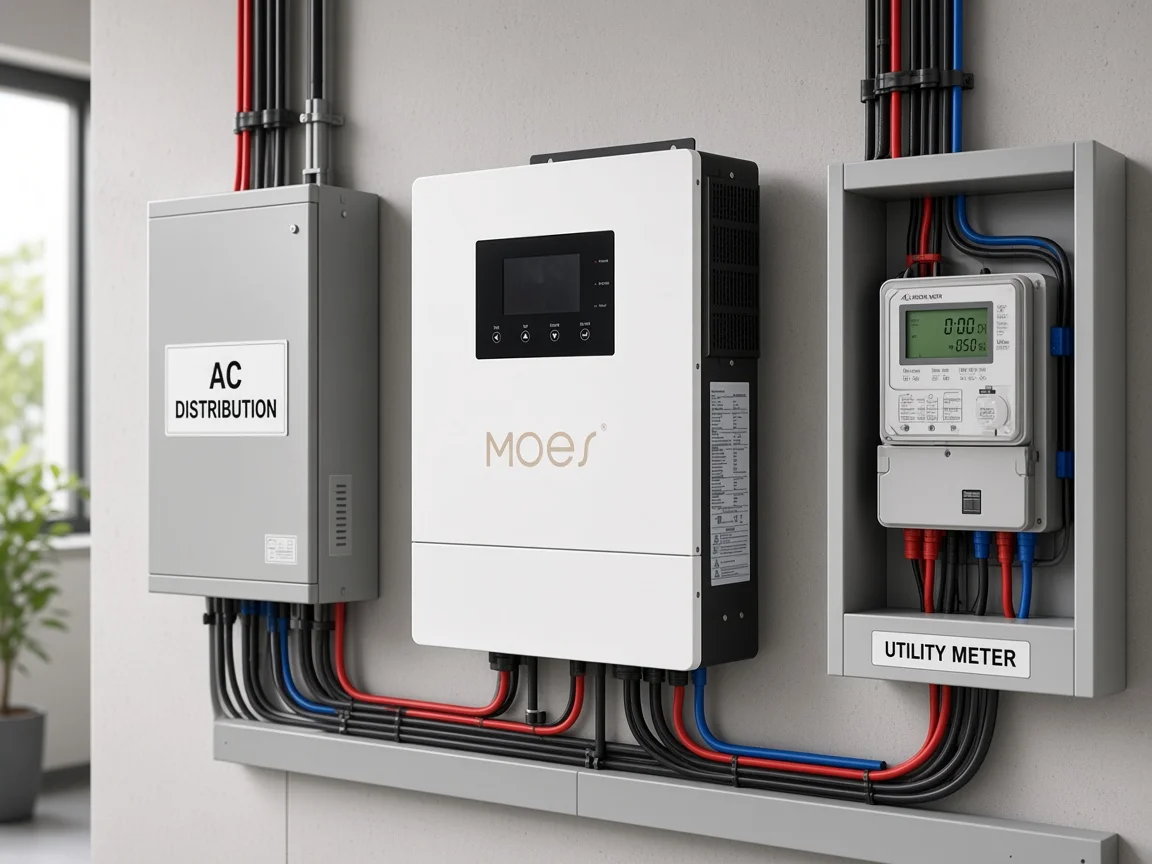
Most failures come from trusting the label instead of the path. Forum buyers ask why one all-in-one is marked off-grid and another hybrid, and experienced replies answer with export behavior and interconnect needs rather than with a beauty contest.
Common miss: quoting a hybrid family for a site with no meter because the title sounded more complete. If there is no utility interaction to buy, the islanded path is the honest match, and the bank must carry autonomy.
Common miss: treating “hybrid” as a promise of utility export. Community language says the word can mean grid parallel/export or merely taking grid power when PV and batteries cannot keep up. Ask which one the buyer needs.
Common miss: pasting the on-grid vs off-grid sibling into an off-grid vs hybrid RFQ. Those are adjacent but different jobs. Keep each live URL on its own question.
Common miss: copying transfer-time or efficiency language from one listing onto another. If a page does not print a figure, the quote does not invent it.
For a metered site that needs PV + battery + grid interaction, start from the live MOES WiFi Smart Hybrid Solar Inverter 4.2KW/6.2KW 48V listing and quote only its printed windows: 4.2KW/6.2KW, 48V, MPPT 60V–450V with 80A/100A, AC 176–253V, 50Hz/60Hz, pure sine wave, and the page’s own backup wording.
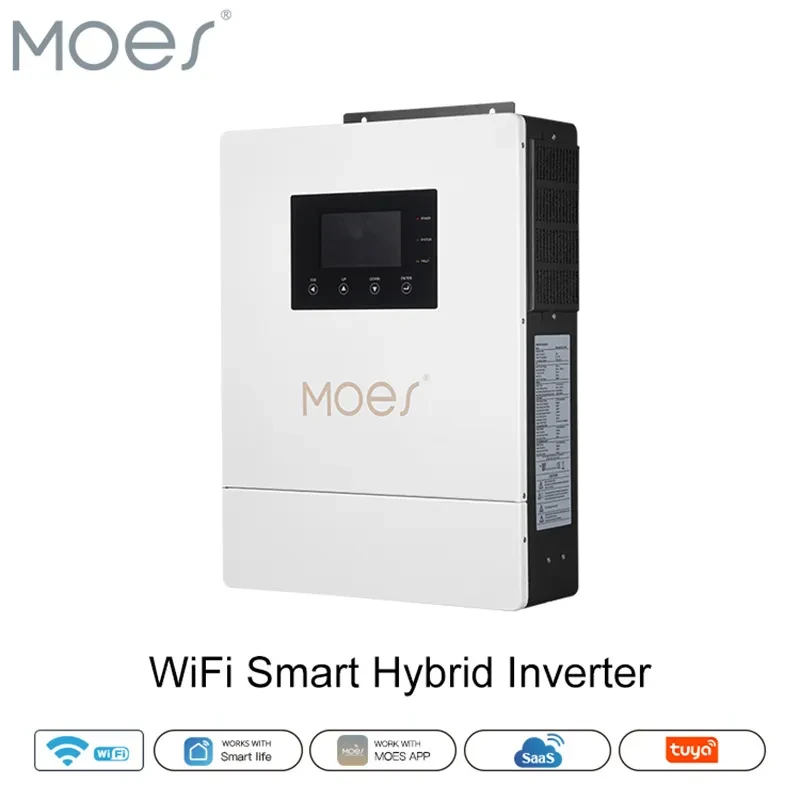
Keep the hybrid quote on that page’s own lines.
For an islanded or no-meter brief that needs an off-grid inverter/charger with wider battery voltage classes and printed surge language, start from the live low-frequency pure sine off-grid inverter/charger listing: 1KW–12KW, 12/24/48/96V, AC 170–275V, 50Hz/60Hz, surge up to 300% peak, and transfer “less than 10ms” only as that page prints it.
Neither recommendation invents certification listings, export warranties, or a price. When the brief is ready for a channel conversation, use Contact Us with the RFQ fields above filled in.
Off-grid RFQs assume an islanded, battery-primary path with no grid export as the default. Hybrid RFQs assume grid + PV + battery interaction and must still state whether any power may leave the site.
Only when battery and PV autonomy are designed for that duty, and only when the chosen unit’s published behavior supports running without grid support. A DOE explainer ties outage operation without grid support to design intent, not to the marketing word alone.
No. Forum practitioners treat “hybrid” as a marketing term that sometimes means export-capable grid parallel operation and sometimes means grid-assist charging only. Put export intent in the RFQ.
The hybrid example prints 48V DC. The off-grid inverter/charger example prints 12/24/48/96V. Do not transfer one listing’s class to the other.
The hybrid example’s application copy says backup mode shifts “in milliseconds” without a digit. The off-grid example prints “less than 10ms” switching. Neither line is rewritten here as a certification listing or a universal transfer-time warranty.
On-grid vs off-grid asks whether the inverter depends on a live utility reference versus running as a stand-alone island. Off-grid vs hybrid asks whether the battery-primary island path or the grid-interactive hybrid path is the right family. Keep the on-grid vs off-grid article for the first question.
Copy the continuous power range from the candidate page, then any surge or peak language that page prints. The hybrid example states 4.2KW/6.2KW. The off-grid example states 1KW–12KW and surge up to 300% peak on that listing.
On the live disadvantages checklist, not inside this topology comparison: disadvantages of hybrid inverter RFQ checklist.




OTHER SMART DEVICES
Jun 13,2026
OTHER SMART DEVICES
Jun 12,2026
TUYA SMART HOME PRODUCTS
Jun 12,2026
 +86 137 3639 3028



