


by NOVA

Oct 05, 2026
A power inverter takes a DC source — a battery, a vehicle electrical system, or other stored DC — and supplies alternating current that ordinary AC loads can use. That is the plain answer to what does a power inverter do before a chassis is priced.
The pages below stay on that battery-side job. They show where the DC source and the AC loads sit, how switching creates the AC, why waveform class is only one line on the quote, and which printed figures to copy before price.
Buyers who type what is a dc to ac power inverter are looking for this same chassis. A dc to ac power inverter is the everyday name for the box that stands between stored DC and wall-plug equipment.
A solar inverter’s job, turning a photovoltaic array into site or grid AC, lives on a different page: what does a solar inverter do. Load-watt arithmetic lives on the power inverter sizing checklist. The waveform matrix lives on the modified sine wave versus pure sine wave comparison.
The collection hub is solar inverter. Use it to browse families. Use this page to name the function.
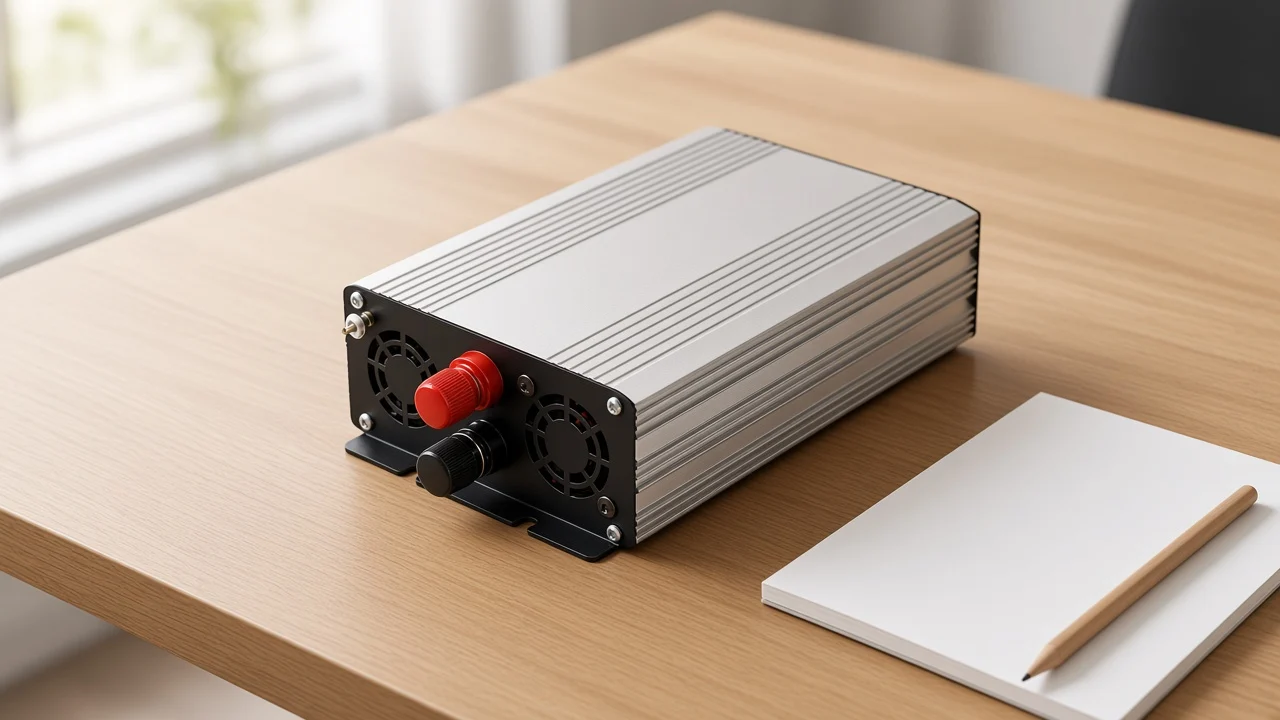
A battery-side power inverter changes direct current from a DC source into alternating current for AC loads. In professional terms, it is the power-electronic unit that runs the opposite direction from a rectifier. In plain language, it lets equipment built for a wall outlet run from a battery.
The energy still comes from the DC source. The inverter rearranges that energy into a form wall-plug loads accept. If the battery is empty, the outlets go quiet with it.
Channel mail often says “inverter” and then a watt guess. The useful first sentence is the conversion job, not the watt guess. Watts come later, and only as the page prints them.
A rectifier takes alternating current and produces direct current, which is what many chargers and power supplies do. Keep those two directions apart when a quote uses both words in one line.
Distributors meet this chassis when the source is a battery bank, a vehicle system, or other stored DC. The solar-function article owns the photovoltaic-array role. Pasting that PV paragraph onto a battery SKU answers a different question.
From the field: Van builders describe the mismatch in everyday words: a vehicle system produces direct current, house appliances expect alternating current, and the inverter takes the DC input, converts it to AC, and changes the voltage — VanLife community thread.
The DC source feeds the input terminals. AC loads sit on the output outlets or on the hardwired AC side. That layout is the whole function in one glance: stored DC in, usable AC out.
Independent walkthroughs show the same split on the hardware. One end carries the DC connections. The other end carries AC outlets.
Household equipment is built for the outlet side.
Van and RV comments often describe the same job as turning 12 V DC into 120 V AC for wall-plug loads when shore power is absent. Treat that sentence as user language about the direction of conversion. It is not a rating copied from a MOES label.
A second objection shows up in the same threads. People ask the inverter to refill the battery.
A plain inverter draws on the DC source to feed AC loads. Charging is the other direction, and it belongs to a charger or to an inverter/charger that the page actually describes as both.
Important: Leave the engine-run advice, cigarette-lighter watt caps, and runtime maths on the pages that measured them. This function page only needs the direction: DC source in, AC loads out.
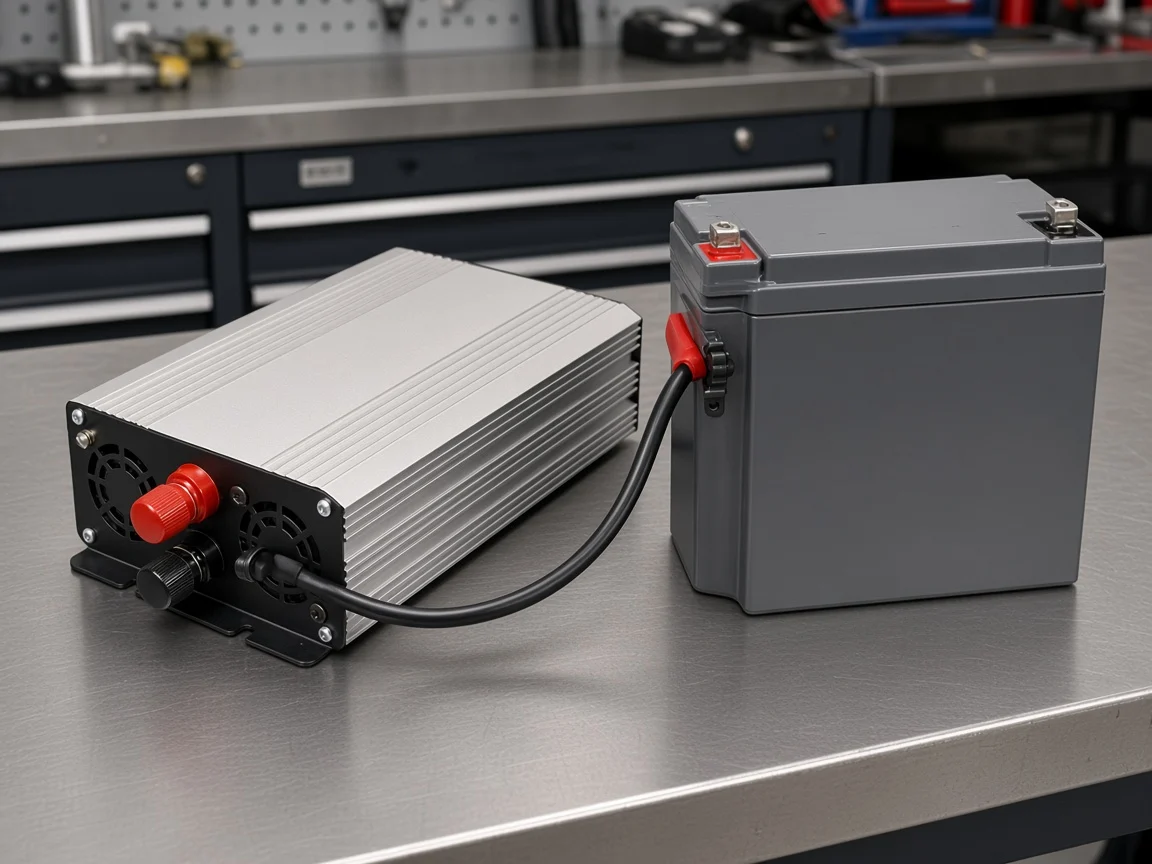
Lights and other native DC circuits can already run from the battery without this box. The inverter earns its place when the load wants a wall-plug AC supply. Name that load before you name a model.
Switches reverse the DC path so the output current alternates, then a transformer or boost stage raises the voltage toward the AC level the loads expect. That is the working picture behind the word “inverter.”
A teaching model flips a battery about fifty to sixty times a second. Electronic units do the flipping with semiconductor switches instead of hands. The result is alternating current at a chosen frequency.
Utility practice often lands on 50 Hz or 60 Hz, and a low-voltage battery still needs a step-up toward about 120 V or 230 V AC. Those figures describe common grid practice in explainers. They are not a substitute for the voltage lines printed on a specific listing.
A Physics Forums thread makes the same point in plain language: switching transistors turn DC into AC, and a transformer raises the voltage. Pulse-width modulation is how many designs soften a rough reversed wave toward a sine.
Frequency and voltage are design outcomes, so they have to be copied from the page in front of you. The switch diagram is optional for a channel quote.
Three-phase motor drives use a related inverse-conversion stage after a rectifier, and industrial columns sometimes answer “what does an inverter do” with speed control. That is a drive question. It is not the battery-to-outlet job on this page.
Waveform class names the shape of the AC the inverter produces. Square, modified sine, and pure sine are the classes buyers meet in glossaries and encyclopedias. Write the class on the quote, then stop.
Loads differ in how fussy they are about that shape. Resistive heaters are usually tolerant. Equipment with control boards is where the class starts to matter.
The side-by-side matrix, including which loads hum or run hot, already has its own article.
On a pure sine listing, the page’s own words are the class label. The MOES example below calls its output a high-frequency pure sine wave intended to resemble grid electricity.
That sentence locks the class for that URL. It does not score the listing against a modified-sine sibling.
If the quote only says “inverter,” the desk still has to ask which class. Leaving the class blank invites a later argument about sensitive loads. The comparison article is the place for that argument, not a second matrix here.
Four fields lock the role before anyone talks price. Copy continuous versus surge only when the page labels both. Copy waveform class, input voltage, and output voltage together with frequency as they are printed.
| Field | What it locks | How to copy it |
|---|---|---|
| Continuous versus surge | Sustained AC output versus a short peak | Use the line only when the datasheet names both. A title with two watt strings is not that line by itself. |
| Waveform class | Shape of the AC | Square, modified sine, or pure sine, using the page’s own words |
| Input voltage | DC source the chassis expects | The DC operating voltage string on the table |
| Output voltage and frequency | AC the loads must match | The AC voltage string and the 50/60 Hz string, as printed |
The listing title prints 1000W and 2000W, while the parameter table prints a power range of 300W ~ 6000W without a label for continuous versus surge. Ask for the datasheet row that names those two power classes before the title strings are treated as them.
Sizing worksheets that add appliance watts, then add a start-up margin, belong on the sizing checklist. Don Rowe-style watt tables in the search results are shopping aids. They are not the function definition.
PAA questions about battery runtime and “what will 1000 watts run” are energy and load questions. Answer them after the conversion job is clear, on the page built for load maths. A function quote that skips the four fields above is still incomplete.
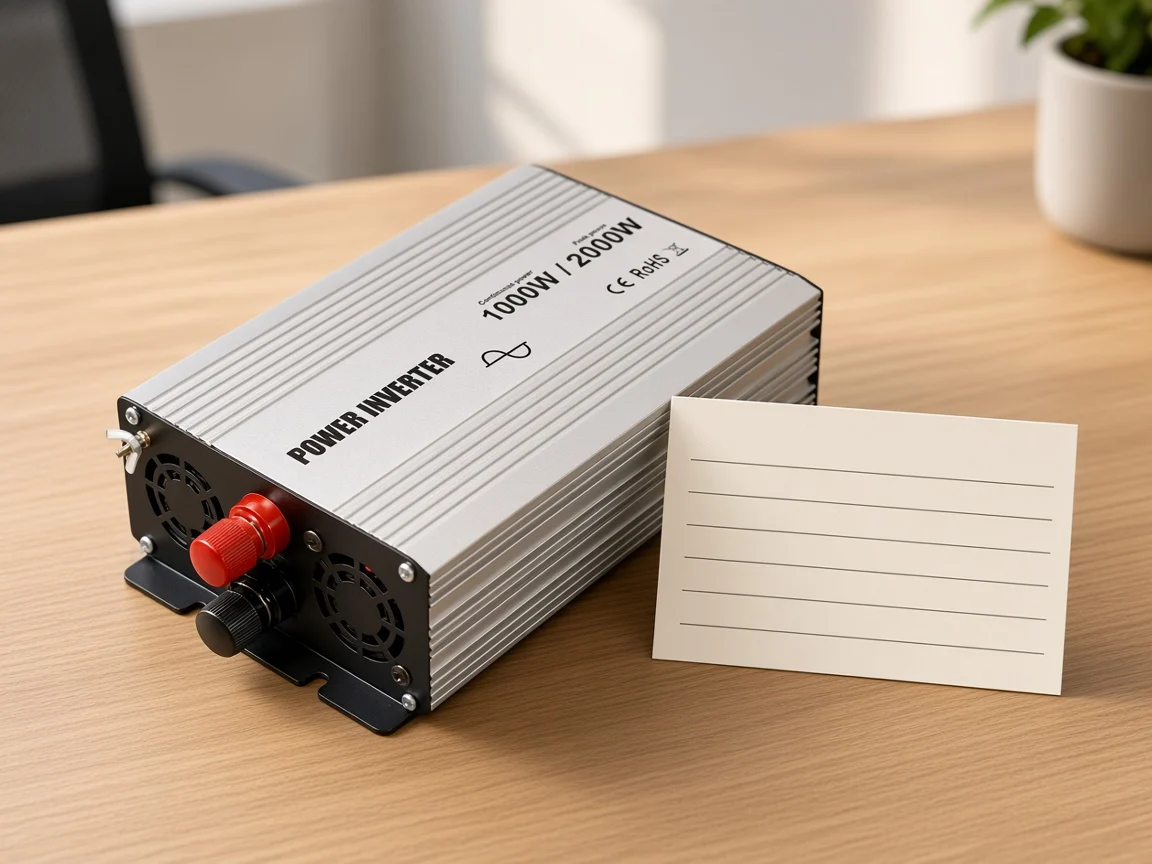
The live pure sine listing is the function example for a battery DC source feeding AC loads. Open the MOES pure sine power inverter after the printed lines below.
Its application line says the unit converts battery DC to AC for onboard electronics and appliances in EV and RV contexts. The same page also mentions solar and household appliances among other uses.
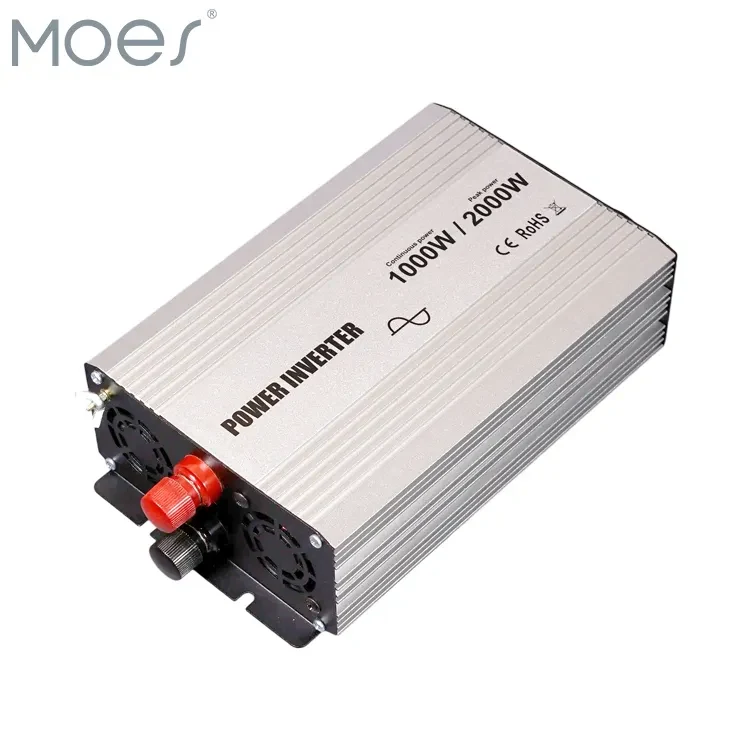
For this article the example is the battery-DC path, not a PV string interface. Read the solar-function page when the source is an array. Read this listing when the question is how a pure sine power inverter turns stored DC into AC.
That table prints DC operating voltage 12V/24V/48Vdc, output voltage 110V/120V/220V/240Vac, and operating frequency 50Hz/60Hz. The power-range cell on the same table is 300W ~ 6000W. None of those cells is captioned as continuous or surge.
| Printed line | Value on this listing |
|---|---|
| DC operating voltage | 12V/24V/48Vdc |
| Output voltage | 110V/120V/220V/240Vac |
| Operating frequency | 50Hz/60Hz |
| Range of power | 300W ~ 6000W |
| Waveform class | Pure sine wave, in the page description |
| Protection labels | Over current, over voltage, over temperature, overload, short circuit, low voltage |
The technical table does not print an efficiency percentage or a certification list. Protection names on the page are labels, not a test report. Quote desks that need a surge figure should request the row that states it.
The listing title includes RV and off-grid wording, and one bullet states the battery-DC conversion in EV and RV contexts. Repeat that bullet as the page’s own sentence. Do not widen it into a claim that every vehicle or every RV load is a fit.
Send the product URL, quantity, destination market, and the voltage lines you copied through Contact Us when the function example matches the quote. If the project is a PV array interface, start from the solar-function article and the hub instead.
It takes a DC source and supplies AC loads by converting direct current into alternating current.
No. The DC source provides the energy, and the inverter changes the form of that energy. An empty battery means quiet AC outlets.
A rectifier turns alternating current into direct current. A power inverter runs the other way, from a DC source toward AC loads.
The conversion idea is related, and the jobs are split on this site. A solar inverter’s page owns the photovoltaic-array role. This page owns battery and stored-DC sources.
The comparison page explains the matrix. The quote still has to name which class this chassis is, using the words printed on its page.
Copy input voltage, output voltage, frequency, and waveform class as printed. Copy continuous versus surge only when those two labels appear.
Use the power inverter sizing checklist for adding load watts. This page stops at the conversion job and the printed lines that lock it.
No. The example title carries two watt strings, and the table carries a power range, without naming which figure is continuous and which is surge. Ask for the labeled row.




OTHER SMART DEVICES
Jun 13,2026
OTHER SMART DEVICES
Jun 12,2026
TUYA SMART HOME PRODUCTS
Jun 12,2026
 +86 137 3639 3028



