


by NOVA

Oct 04, 2026
Document solar inverter installation cost as a list of project fields: labor and access, permits and inspection, electrical balance of system, mounting, AC interconnection, and commissioning.
Do not copy a national dollar total from a catalog. Hardware ratings still matter, but they are inputs to that install scope.
Array-to-inverter matching lives on the solar inverter sizing RFQ checklist. This page is for distributors and installer RFQ teams quoting the solar inverter category.
Installation cost is the work and paperwork around the inverter, not the hardware sticker sitting in a price book.
A solar inverter converts photovoltaic DC into AC for loads or export. US Department of Energy PV design education also notes that inverters are expected to need replacement at least once in the 25-year lifetime of a PV array. That replacement is its own project type, with its own labor and permit questions.
DOE soft-cost education treats permitting, financing, and installing as non-hardware. NREL’s bottom-up PV cost model keeps inverter hardware in one bucket and splits electrical BOS, structural BOS, fieldwork labor, office work, and permitting-inspection-interconnection into others. A distributor / installer RFQ that dumps those buckets into one “inverter cost” cell will invent a number the site cannot defend.
Public marketplace mix pages sometimes show illustrative shares for inverter hardware versus installation labor versus permitting and interconnection. Treat any such mix as an illustrative public-source range, not a MOES quote.
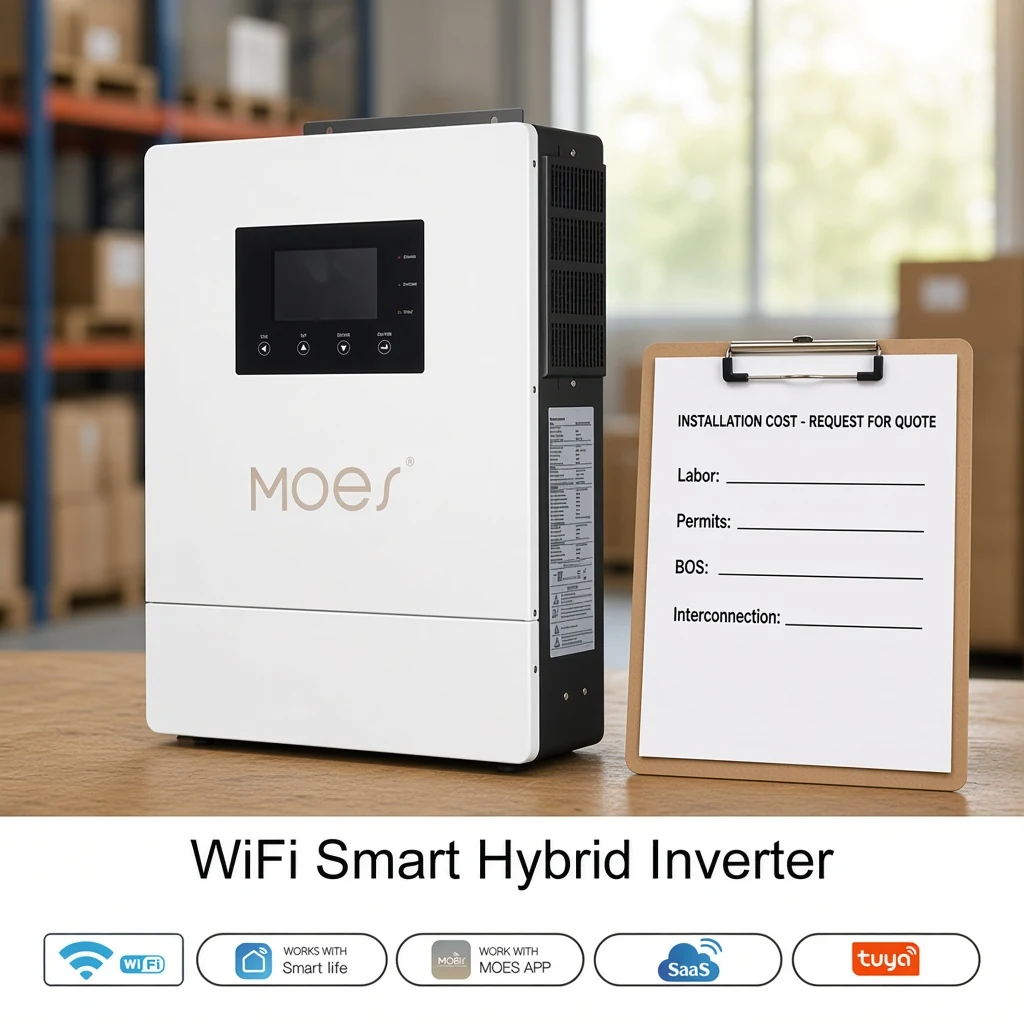
| Cost bucket | What the channel should collect | What not to paste |
|---|---|---|
| Inverter hardware | Model, kW class, DC/AC voltage as printed | A made-up USD/kW as if it were MOES list |
| Electrical labor | Access, existing raceway, crew constraints | A national hourly rate as the quote |
| PII | AHJ name, permit path, utility interconnection | A single “typical permit fee” for all markets |
| EBOS / mounting | Disconnects, conduit, enclosure location | Silent assumption that BOS is “included” |
| Commissioning | Monitoring setup, tests, handover pack | Treating app setup as unpaid leftover |
Inverter installation labor moves with access and leftover infrastructure, not with the catalog wattage alone. Electrical labor is still a line even when the carton is already on site.
Ask whether the unit mounts on an easy wall with conduit already landed, or whether the crew must open a roof, lift modules, or pull new raceway. Community threads on module-level swaps keep repeating the same point: slope, stacked rows, and drive time change the job even when the inverter part is cheap.
String / micro / hybrid topology is a labor input. A central wall unit is a different access problem than microinverters under an array.
Hybrid-plus-battery work adds DC landing and often a backup panel path. None of that is a reason to invent hours on this page.
Lock these fields before anyone “guesstimates” a day rate:
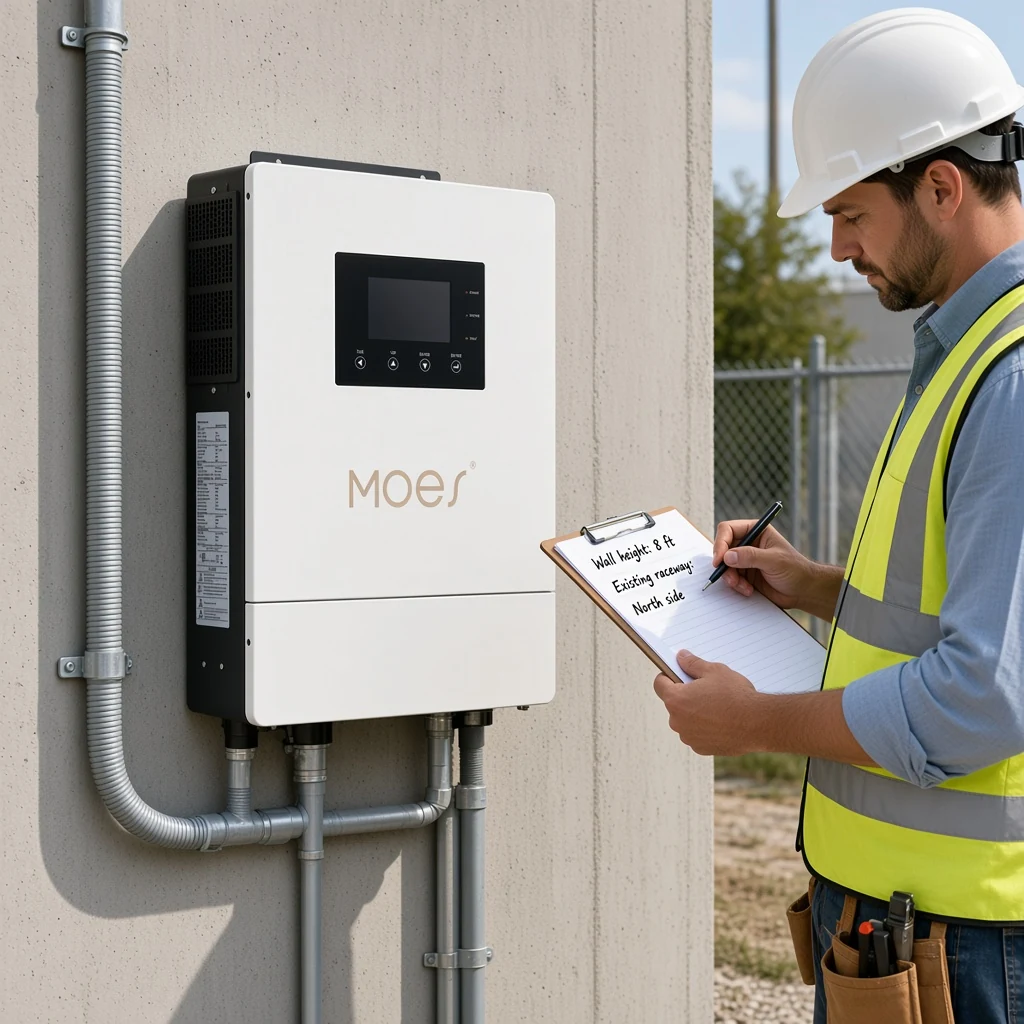
Name the authority having jurisdiction and the permit path; do not paste a national permit fee into the RFQ.
Permitting inspection interconnection is a process, not a round number.
DOE SolarAPP+ education describes automated review for standardized rooftop solar and solar-plus-storage. Complex jobs still go to manual review.
Paper desks and automated portals are different cycle times even when the inverter SKU is identical. Community boards such as Solar Panel Talk keep cost and incentive talk in a different forum from equipment specs.
From the field: Installer forums show permit stacks that look almost free in one county and multi-agency in another — DIY Solar Forum.
One DIY Solar Forum ground-mount thread in unincorporated Los Angeles County described building, battery, zoning, and plan charges adding up around $3,200, while another poster said an entire solar permit process was $35. Use those anecdotes only as proof that the AHJ field is mandatory.
Collect:
Electrical balance of system and the enclosure location are separate lines from the inverter carton.
NREL keeps electrical BOS and structural BOS apart from the inverter manufacturing bucket for a reason. Consumer install checklists still list mounting hardware, AC and DC wiring, disconnects, breakers, fuses, and conduit as cost items. Federal procurement education also tells buyers to confirm acceptable inverter locations and enclosures with the utility.
Balance of system fields to lock:
If the RFQ is silent on BOS, the installer will either pad the quote or omit protection the AHJ will fail.
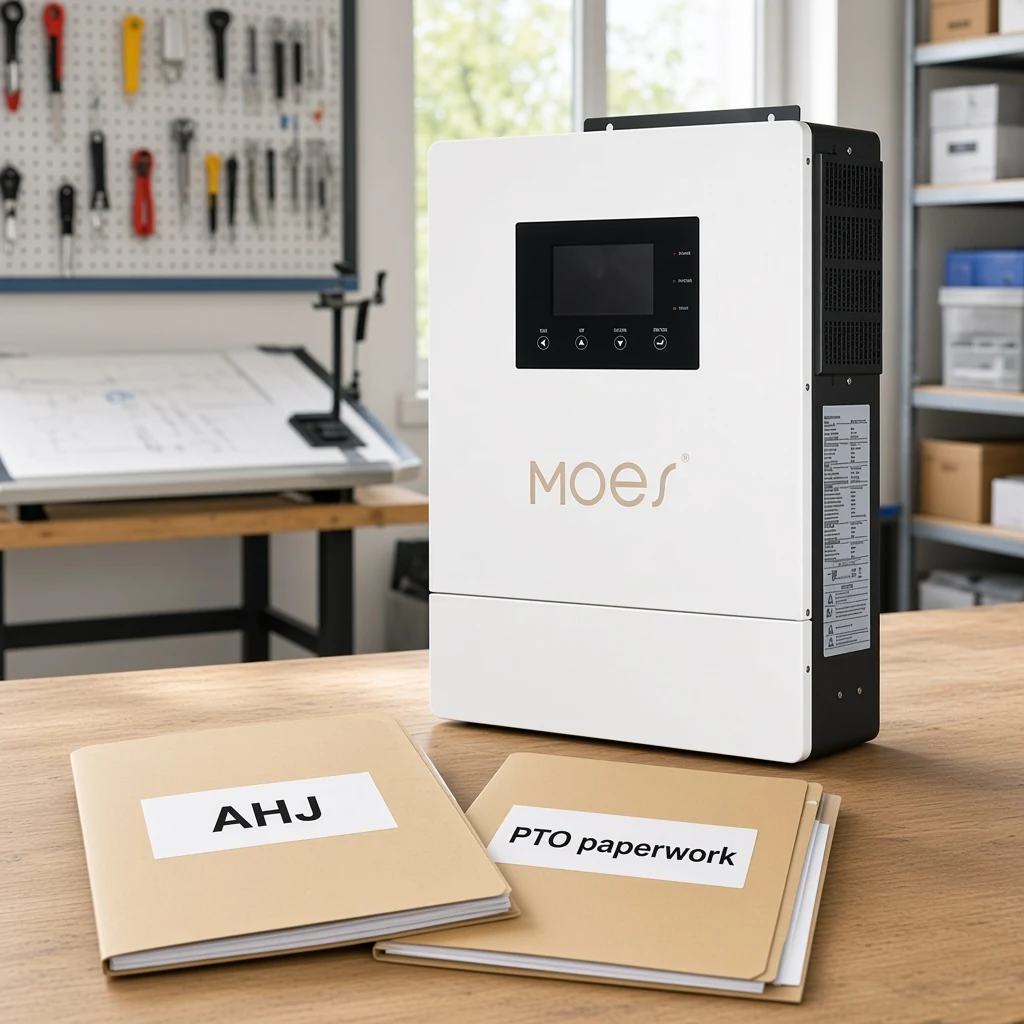
Grid-tied AC interconnection is an application plus permission to operate, not a hidden footnote on the hardware line.
Marketplace interconnection explainers describe two steps: file the utility application, then receive permission to operate after inspection. The visit typically looks at the inverter, the panel landing, and a meter change. Those pages also describe residential interconnection as often no extra fee up to a couple hundred dollars and frequently bundled—an illustrative public-source range, not a MOES interconnection price.
Off-grid jobs still need an AC landing plan. They skip utility PTO, not inspection or conductor work.
Solar interconnection permit fields:
Commercial jobs can trigger grid-upgrade cost that residential RFQs never see. Say so on the sheet instead of averaging it away.
A solar inverter replacement cost quote is not automatically a one-hour wall swap.
Like-for-like swap means the same AC/DC class, existing raceway, and no new interconnection. Reddit replacement threads show quotes jumping when the contractor also removes optimizers, re-strings, or brings an older array up to current rapid shutdown / code upgrade rules. A new interconnection agreement can reopen PTO even when the roof already has panels.
Important: If the replacement changes capacity, topology, or protection, treat it as a new electrical project for permit and utility purposes until the AHJ and utility say otherwise — Reddit replacement threads.
Mark the RFQ as exactly one of:
DOE’s replacement-once-per-array-life note is why channels should keep a replacement scope template on file. It is not a MOES lifetime warranty.
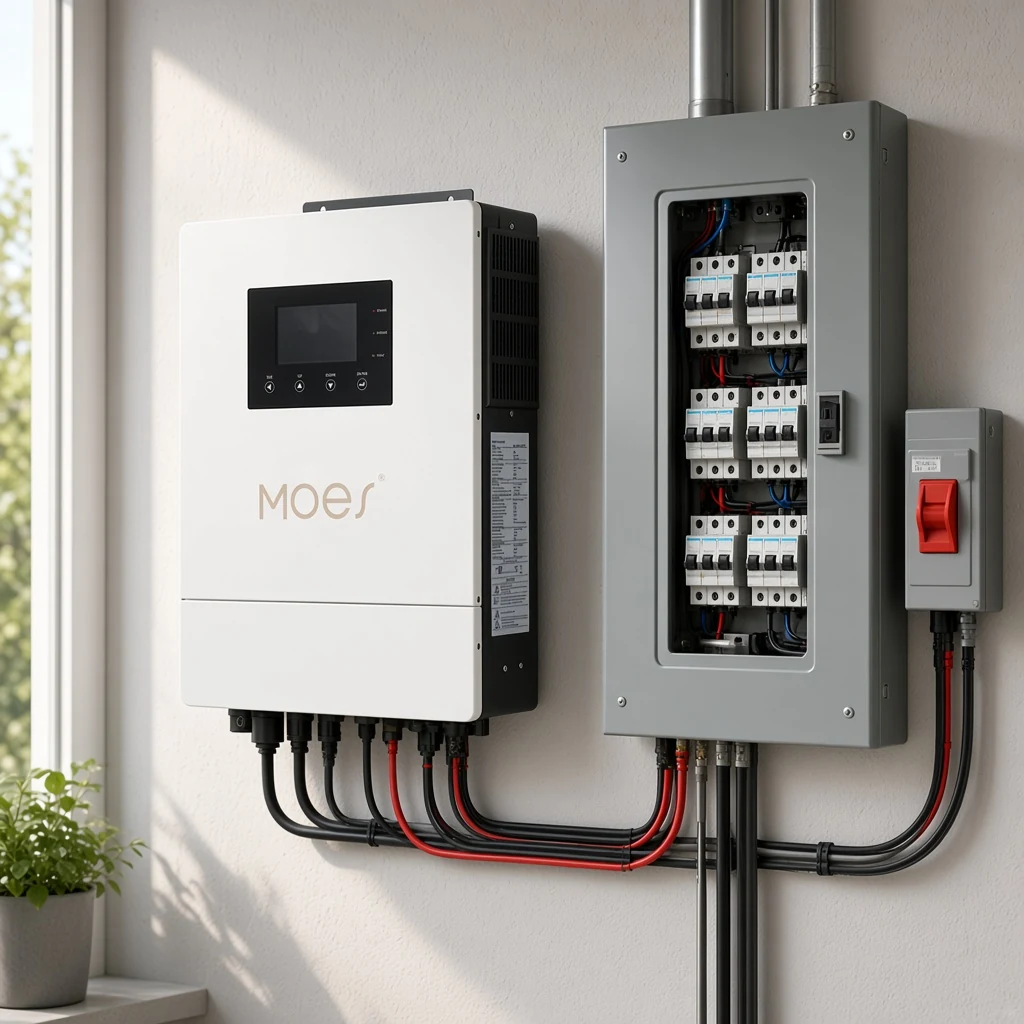
Commissioning is a paid close-out, including monitoring login, not a handshake after the last lug is torqued.
Community warranty-swap threads keep colliding with manufacturer apps that require an installer account. A WiFi hybrid that lists remote monitoring will need site registration even when the metal box is already on the wall. Federal PV procurement notes also point to documentation and commissioning tests (IEC 62446 is the cited grid-connected documentation frame for commercial/field systems).
Handover pack fields:
Copy the fields. Leave the currency cells blank until a local installer fills them.
| Field | Why it changes install cost | Channel note |
|---|---|---|
| Project type (new / swap / code upgrade) | Sets permit and PTO reopen risk | One value only |
| Topology (string / micro / hybrid) | Access and BOS count | Not a SKU sales pitch |
| Mount and access | Labor time and crew size | Photos beat adjectives |
| Existing raceway usable? | Truck-roll vs full pull | Yes/no + photo |
| AHJ and permit path | Soft-cost cycle time | Name the desk |
| Utility interconnection / PTO | Inspection and meter work | Grid-tied only |
| EBOS materials in/out | Disconnects, conduit, RSD | Do not hide in hardware |
| Panel upgrade in/out | Can dwarf the inverter visit | Separate yes/no |
| Storage in/out | Extra DC, ATS, battery permit | Hybrid jobs |
| Commissioning owner | App credentials and tests | Not “included somehow” |
| Hardware SKU after fields lock | Voltage/phase/monitoring inputs | Catalog is not the install total |
Do not start from a public USD/kW average and reverse-engineer these rows. The rows exist so a local quote can be honest.
After the install fields above are locked, printed ratings tell the channel what voltage, phase, and monitoring the landing must support. They are not an installed-price.
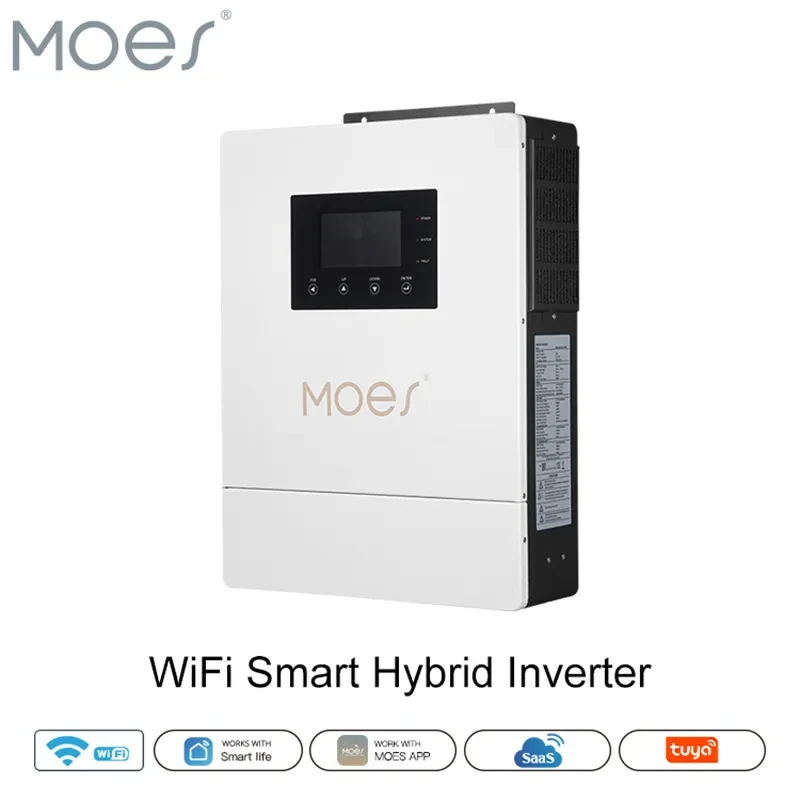
The live catalog example is the MOES WiFi Smart Hybrid Solar Inverter 4.2KW/6.2KW, the MOES WiFi hybrid 4.2/6.2 kW listing.
This hybrid listing prints a 4.2KW / 6.2KW power range on the live page. DC operating voltage is 48V on that page.
On the same listing, AC operating voltage reads single phase 176–253V. Frequency support covers 50Hz/60Hz.
Built-in MPPT solar controller is listed as 80A/100A. MPPT voltage range is 60V–450V.
The same SKU bullets list pure sine wave, WiFi monitor, multi-protection, and battery-optional operation.
The solar inverter hub currently publishes hybrid and off-grid listings. On Grid Inverter has zero published products, so do not brief an on-grid SKU from that hub.
Those printed windows change enclosure class, single-phase landing, 50/60 Hz jumper, and WiFi commissioning. They still do not tell you the AHJ fee. Send quantity, destination market, and the filled RFQ table through Contact Us.
Only if the quote says so. Hardware catalog, electrical labor, PII, BOS, and commissioning are different buckets in DOE/NREL-style cost models. Ask for a split.
Like-for-like wall swaps reuse raceway. Quotes jump when the job adds rewiring, optimizer removal, rapid shutdown, or a new interconnection.
AHJ name, permit path (automated vs manual), inspection owner, utility name, export mode, and who files PTO. Fees stay local.
Yes. Storage adds DC landing, often a backup panel or ATS path, and sometimes a separate battery permit. Hybrid pages that allow operation without a battery still need a yes/no on whether storage is in this visit.
No. Public marketplace or homeowner ranges are illustrative public-source ranges. Fill local labor and PII against the field table.
For the WiFi hybrid example: 4.2KW/6.2KW class, 48V DC, single-phase 176–253V, 50Hz/60Hz, MPPT 60V–450V, and WiFi monitoring. Not an installed USD figure.
Only when the RFQ says the panel is in scope. Energy-education pages treat service upgrades as a separate few-thousand-dollar class of work. Keep a yes/no field.
Sizing locks array DC against inverter AC windows. This page locks the install-cost inputs around that unit. Use the sizing checklist for the maths; use this RFQ for labor, permits, and interconnection.




OTHER SMART DEVICES
Jun 13,2026
OTHER SMART DEVICES
Jun 12,2026
TUYA SMART HOME PRODUCTS
Jun 12,2026
 +86 137 3639 3028



