

by NOVA

Oct 18, 2026
A zigbee gas sensor reports a combustible or natural-gas leak and joins a Zigbee network, usually through a hub.
On a distributor desk those four words get pasted onto a smoke alarm, a carbon monoxide plug, and a motor that closes a pipe. The leak reporter stays here. The other three jobs have their own pages.
The live match is model ZSS-QY-GL. Copy the gas type, Zigbee 3.0, and the gateway note. Leave alarm math off the email.
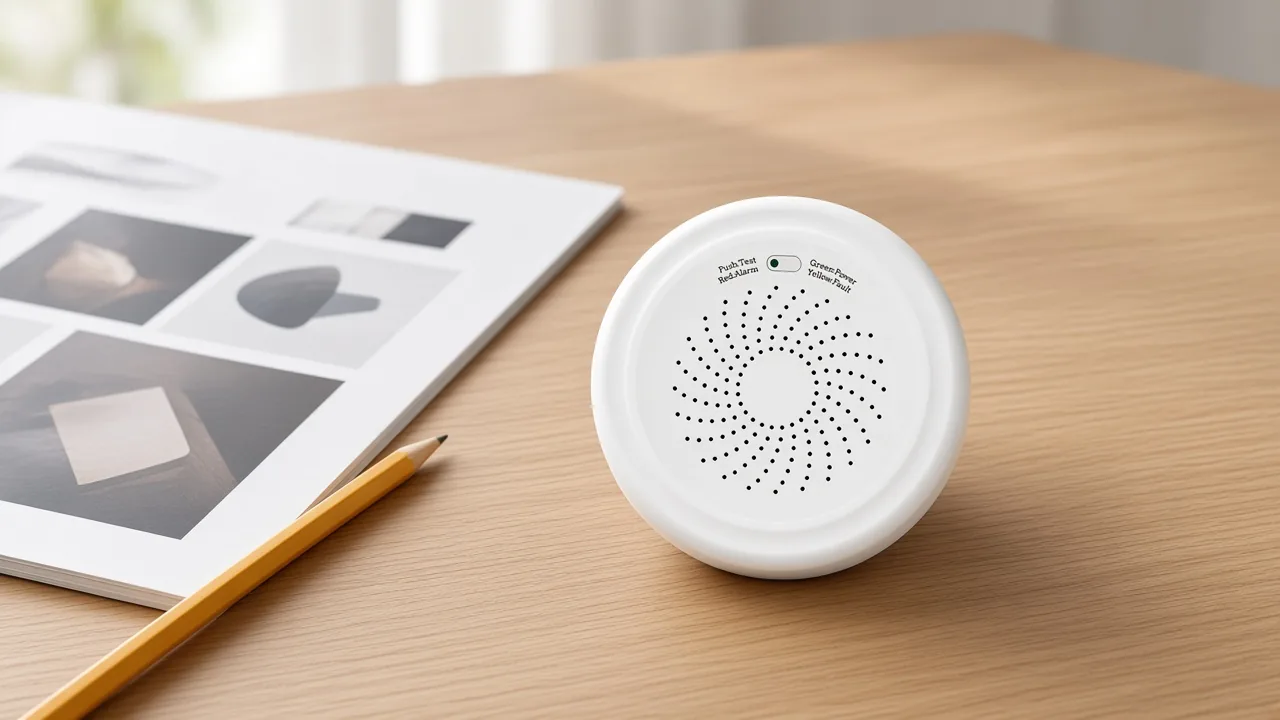
It reports a combustible or natural-gas leak onto a Zigbee network.
A zigbee gas leak detector is that same object with the leak named in the phrase. Buyers still shorten it to “gas sensor,” and the short form is where quotes go wrong.
Search for the phrase often opens on a gas meter. One thread asked for a Zigbee gas sensor, then explained the job was watching an analog heating-fuel meter. A reply split the words: a meter counts fuel used, and a sensor is about the air.
That split belongs in the first reply. A contact on a meter magnet can count pulses. It does not tell you the kitchen is filling with fuel.
The combustible gas sensor class is the leak class. Retail pages in the same results use that name for kitchen heads that alarm when fuel gas is in the room.
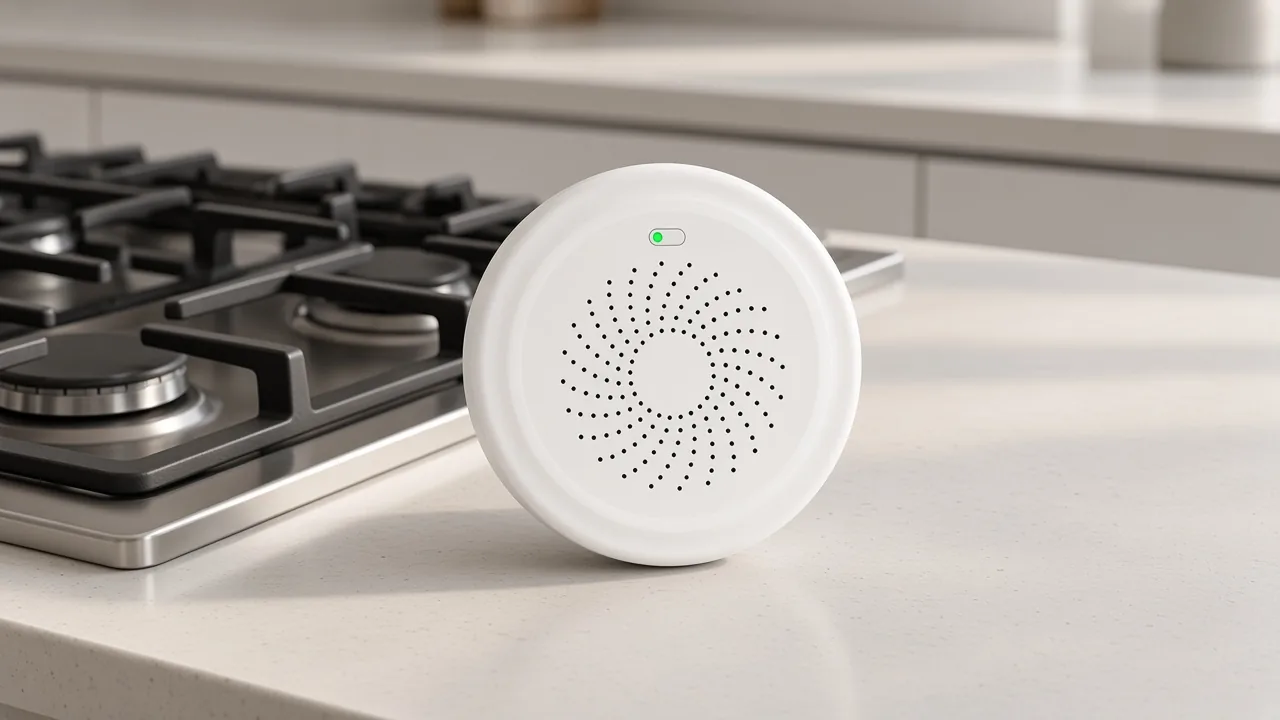
On this catalog the printed hazard is natural gas. A natural gas detector in that sentence is the ZSS-QY-GL head, not a general air-quality box and not a carbon monoxide plug.
The radio joins a Zigbee network through the hub that network already uses.
Zigbee is a full-stack mesh meant to live inside a Zigbee platform. A battery puck or a plug-in head still has to join something that speaks that mesh.
On the gas page, linkage to other hardware runs through the gateway. Window openers, exhaust fans, and smart curtains are the examples printed there. Those links exist after the gateway is in the project.
A phone alert is a second path. Community and retail pages keep saying the local sound can happen in the room while the app message waits on the network. Treat the sounder and the app as two routes.
From the field: A Hubitat owner wrote that the driver comes up as device until the matching gas-detector driver is chosen and Configure is clicked. Another comment on the same thread says natural gas rises and LP sinks. — https://community.hubitat.com/t/heiman-zigbee-gas-detector-help/146888
Installers on that thread were talking about other brands. The comment still shows why a quote should name the hub family before it promises an app tile.
A combustible head on an independent Zigbee record exposes a binary gas state, plus simple status bits.
A Heiman combustible gas sensor on Zigbee2MQTT exposes a binary gas state. That record is class evidence. It is not the cluster list for ZSS-QY-GL.
Carbon monoxide is a poison from incomplete burning, not the fuel leak itself.
Carbon monoxide is a colorless, odorless, poisonous gas that comes from incomplete burning of fuels, including natural gas. People can breathe it without the rotten-egg smell that utilities add to the fuel.
Utilities odorize distribution gas with mercaptan, which smells like rotten eggs. If that smell is already in the room, AGA tells people to leave, avoid sparks, and call from outside. A sensor quote does not replace that response.
A combo title is common in shopping results. One result even sells a ZigBee carbon monoxide unit under a gas-leak label.
The expanded “what detects gas” panel on the same search split catalytic combustible sensing from electrochemical toxic-gas sensing. Those are different jobs even when a housing tries to do both.
Model S02-CO-EU is a plug-in carbon monoxide display, and that page does not print Zigbee. It monitors carbon monoxide together with temperature and humidity. Send carbon monoxide mail to the MOES carbon monoxide detector.
The parallel clarification slug for that detector was not published when this page was written. The product page is the live record.
The valve closes a pipe. The sensor only reports the leak.
Model WV-QY-WH closes a water or gas pipe, and the Zigbee bundle still needs a gateway. The Wi-Fi bundle is a different sentence on that page, with its own water sensor in the box. Neither sentence is a gas-leak head.
A hub user can bolt an automatic shutoff onto a sensor trip. That is two devices: the reporter and the closer.
Quoting only the motor leaves the room without a leak report. Quoting only the head leaves the pipe open.
Read the closer on the water sensor shut off valve page. Pipe size, supply, and which radio bundle is in the carton live there.
This catalog has no live smoke SKU, and the gas head is a leak reporter rather than a smoke chamber.
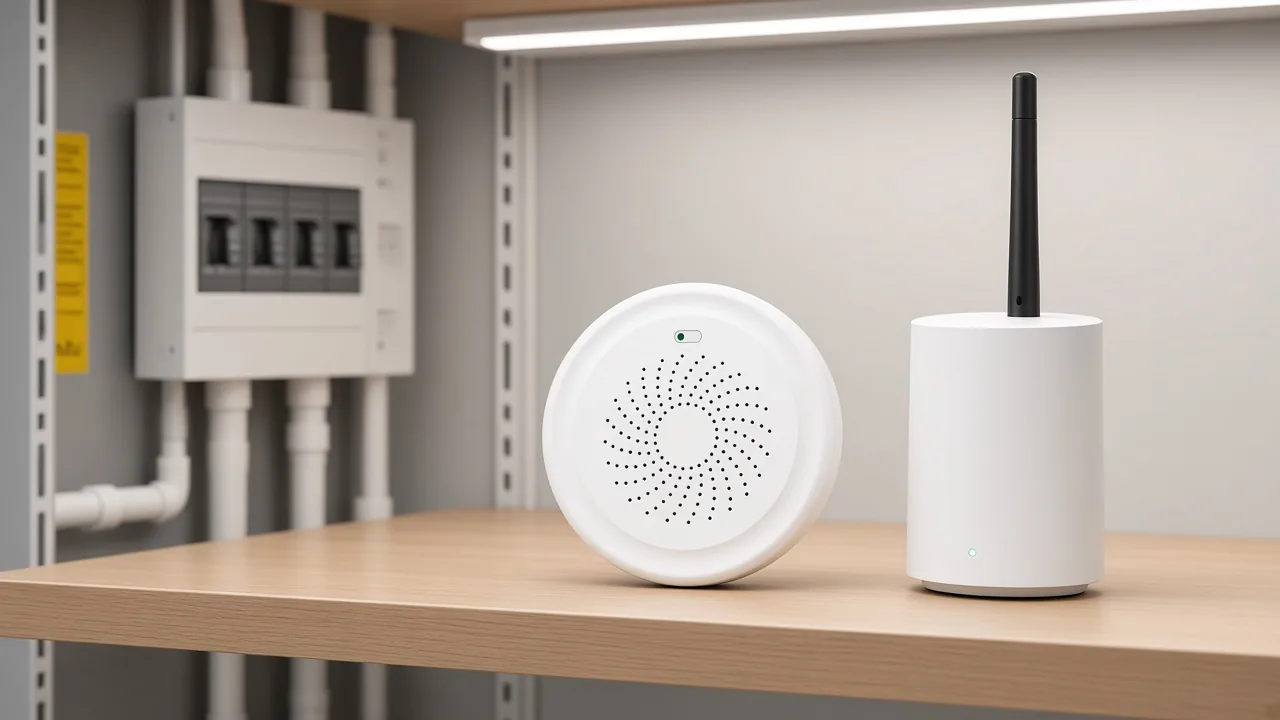
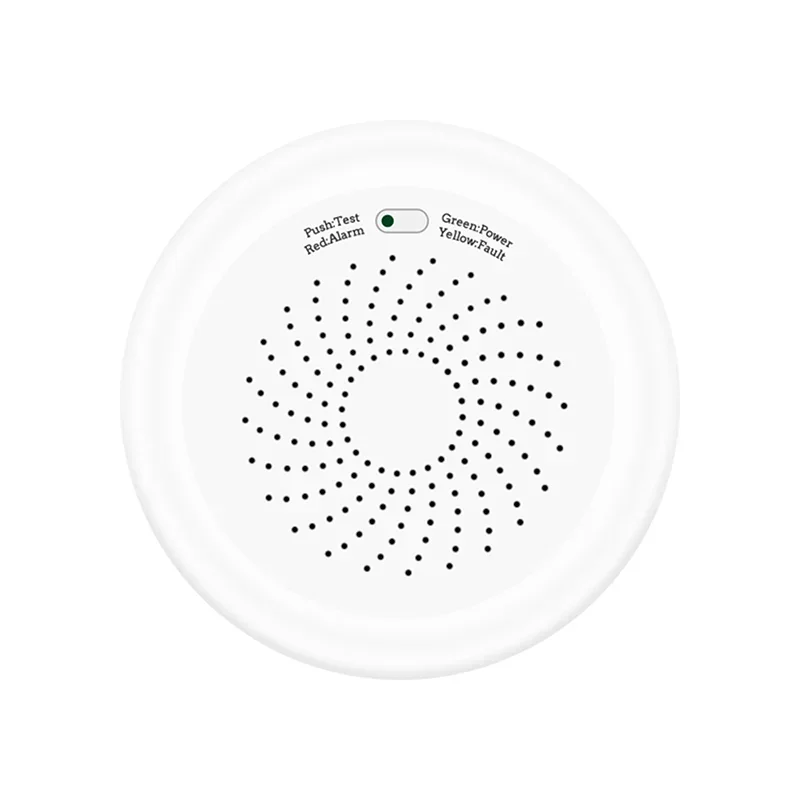
A round white face with test, alarm, power, and fault marks looks like several safety products in a photo. The gas page talks about natural gas. It does not talk about smoke particles.
Retail collections put a ZigBee smoke detector in the same grid as the combustible head and the CO plug. A buyer who screenshots that grid will ask for all three under one line. Answer with the hazard, then the model.
The smoke noun is already handled in smart home smoke detector. That page records the empty smoke search and points gas, carbon monoxide, and the valve apart. Use it once, when the email says smoke.
One custom hub driver has been known to raise a gas trip under a smoke event name. If a log says smoke and the hardware is a gas head, read the model before you change the quote.
Copy natural gas, Zigbee 3.0, and gateway linkage.
Model ZSS-QY-GL is the published gas-leak sensor, and the page names natural gas. The description calls it a combustible gas alarm that senses natural gas, then a sound and light alarm, then gateway linkage.
The wireless protocol cell reads Zigbee 3.0. Write it that way. Do not upgrade the cell to a newer Zigbee generation, and do not add a Wi-Fi radio the table does not show.
The page also prints alarm thresholds, a concentration tolerance, a sound-pressure cell, temperature, and the supply. Those cells stay on the product page for a buyer who opens it. They stay out of the channel sentence, because a sheet copies them wrong the moment the page is edited.
| Object | What it does | Radio the live record prints | Where the quote goes |
|---|---|---|---|
| ZSS-QY-GL gas head | Reports a natural-gas leak and alarms in the room | Zigbee 3.0, gateway for linkage | Gas product page |
| S02-CO-EU | Watches carbon monoxide, temperature, and humidity | No Zigbee line on the fetched page | Carbon monoxide product page |
| WV-QY-WH | Closes a water or gas pipe | Wi-Fi bundle or Zigbee gateway bundle | Shutoff-valve article |
| Smoke alarm | Would report smoke | No live smoke SKU to cite | Smoke clarification article |
Natural gas is lighter than air, so a leak rises. The vehicle-fuel note from the Alternative Fuels Data Center uses that fact for enclosed spaces.
A Hubitat comment makes the practical pair: high for natural gas, low for propane. The MOES page names natural gas, so the high placement is the one that matches the printed hazard. Propane is a different fuel and needs its own confirmation.
If the smell is present, people leave before they debate mounting height. The sensor is a project line. It is not the evacuation step.
Send natural-gas Zigbee requests to the gas page and leave the other hazards on their own links.
Start with the hazard word in the email. Natural gas, carbon monoxide, smoke, and “close the pipe” are four lines. “Smart” in front of detector does not merge them.
Then ask whether a Zigbee gateway is already in the building. If it is missing, the linkage examples on the gas page have nowhere to land.
The head can still be the leak reporter the page describes. The app story waits.
These heads sit with the rest of the safety hardware under other smart devices. The keyword file once pointed the phrase at a modules hub.
The product breadcrumb does not. Follow the breadcrumb when you attach the line to a catalog.
| Enquiry | Copy into the reply | Leave off the line |
|---|---|---|
| Zigbee gas sensor, kitchen, natural gas | ZSS-QY-GL, natural gas, Zigbee 3.0, gateway | Smoke, carbon monoxide, valve size |
| Plug-in display, carbon monoxide | S02-CO-EU | Any Zigbee claim |
| Close the gas pipe | WV-QY-WH, pipe size, Wi-Fi or Zigbee bundle | Calling the motor a gas sensor |
| Ceiling smoke, bedrooms | No smoke SKU | The gas head as a substitute |
The fit is the MOES gas leak smart sensor, model ZSS-QY-GL, while that page stays published.
Use it when the buyer can confirm natural gas and a Zigbee gateway for any linkage they want. Set it aside when the buyer wants carbon monoxide, smoke, or a pipe that closes by itself.
Open the product page before the line ships. If a later edit changes the gas name or the protocol cell, the quote follows the page.
The gas page ties linkage to the gateway. Without that gateway, the network examples (window openers, fans, curtains) have no Zigbee path. Ask which hub family the project already runs before you promise an app alert.
Not on these two pages. ZSS-QY-GL names natural gas and Zigbee 3.0. S02-CO-EU names carbon monoxide, temperature, and humidity, and the fetched table has no Zigbee cell.
Shopping titles that glue the hazards together are a different listing.
No. A meter contact counts fuel moving through the meter. A leak head watches the air for combustible gas.
The Reddit thread that used “Zigbee gas sensor” for a Honeywell meter was a consumption project.
A catalog search for smoke on this site did not return a live smoke SKU. The smoke clarification page is the place to say that. The gas head stays a natural-gas alarm.
Copy three things: natural gas, Zigbee 3.0, and gateway linkage, plus the model ZSS-QY-GL. Open the product page for any threshold, sound, temperature, or supply cell, and copy those only from the page in front of you.
No. WV-QY-WH is the motor on the pipe. It can close water or gas after a signal, and the Zigbee version needs its gateway.
It does not sense the air.
Natural gas rises, so the matching height is high in the room, near the appliances the project cares about. Propane sinks, and this page does not rename ZSS-QY-GL into a propane head. If people already smell gas, they leave and call from outside.


OTHER SMART DEVICES
Jun 13,2026
OTHER SMART DEVICES
Jun 12,2026
TUYA SMART HOME PRODUCTS
Jun 12,2026
 +86 137 3639 3028