

by NOVA

Oct 19, 2026
A wall socket dimmer switch changes the brightness of a hardwired light from the wall plate. It is the control on the wall, not a knob that screws into a lamp holder and not a cord box that sits between a plug and an outlet.
Buyers hit this phrase when a lighting line is still unnamed. The job is to match a live wall page, leave the Zigbee dimmer class on its own article, and keep a fan-speed percent off the light line.
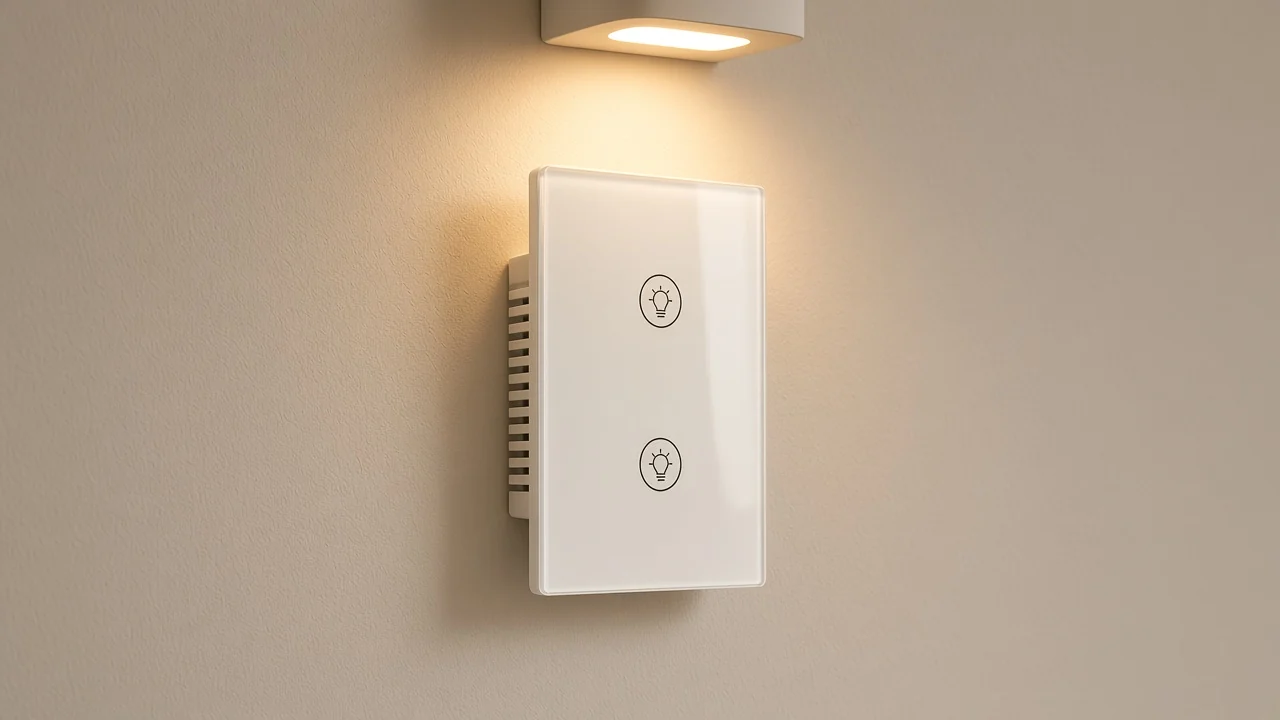
The wall plate is there so someone in the room can set the light level without opening a lamp. A plain on-off switch only opens and closes the circuit. This control also holds the lamp somewhere between off and full, which is why a quote that says “switch” is still incomplete.
Office guidance treats manual dimming as the usual answer when one room needs more than one light level through the day. A simple wall-box dimmer takes the place of the wall switch: line in, dimmed load out, lamp hardwired at the other end.
That picture matches the two published wall pages on the smart switch pillar. Both are touch plates for lights, not portable gadgets.
A distributor meeting makes the split concrete. The sample room has a ceiling light on a wall plate and a table lamp on a plug.
Only the ceiling light belongs on the wall-dimmer line. The table lamp stays a separate accessory unless the buyer asks for a plug-in lamp dimmer by name.
Search results for this phrase often show a dimmer built into a lamp holder, or a small box that the lamp cord plugs into. A plug-in lamp dimmer lets a table or floor lamp change brightness with no work in the wall.
A lamp-holder version replaces the socket on the lamp itself. Both travel with the lamp. Neither replaces the plate beside the door.
Grand Brass sells that cord path in plain language: the dimmer plugs into the outlet, and the lamp plugs into the dimmer. Retail aisles then mix those cords with real wall plates, which is how a purchase order picks up the wrong object.
If the line item says wall socket dimmer switch, ask whether the light is hardwired. A yes means a wall plate. A no means the plug-in lamp dimmer, and it should be named that way on the order.
From the field: Hubitat users say a wall dimmer should not feed a general receptacle, because the next plug may not be a lamp. Wall outlet dimmer thread
The safe split is the one the search overview also draws. Hardwired lights get a wall dimmer switch. Portable lamps get a plug-in control.
A switched outlet that only feeds lamps is still an outlet story, and it is not automatically this product.
Two published wall pages carry this noun today. One prints Wi-Fi and RF together. The other prints Wi-Fi, gang choices, and a line that no hub is required.
A third published dimmer is a compact module that sits behind a separate rocker. That module is not a wall plate, so its ratings stay off this quote.
| Printed line | Wi-Fi and RF wall page | Wi-Fi multi-gang wall page |
|---|---|---|
| What the page calls it | Wi-Fi smart dimmer switch | Wi-Fi smart dimmer switch |
| Radio | Wi-Fi and RF | Wi-Fi |
| Neutral wire | Required, as printed | Required, as printed |
| Light span | Full percent span printed | Full percent span printed |
| Gang | Single plate with multi-control wording | One, two, or three gangs printed |
| Hub | Not the line to copy | Page says no hub is required |
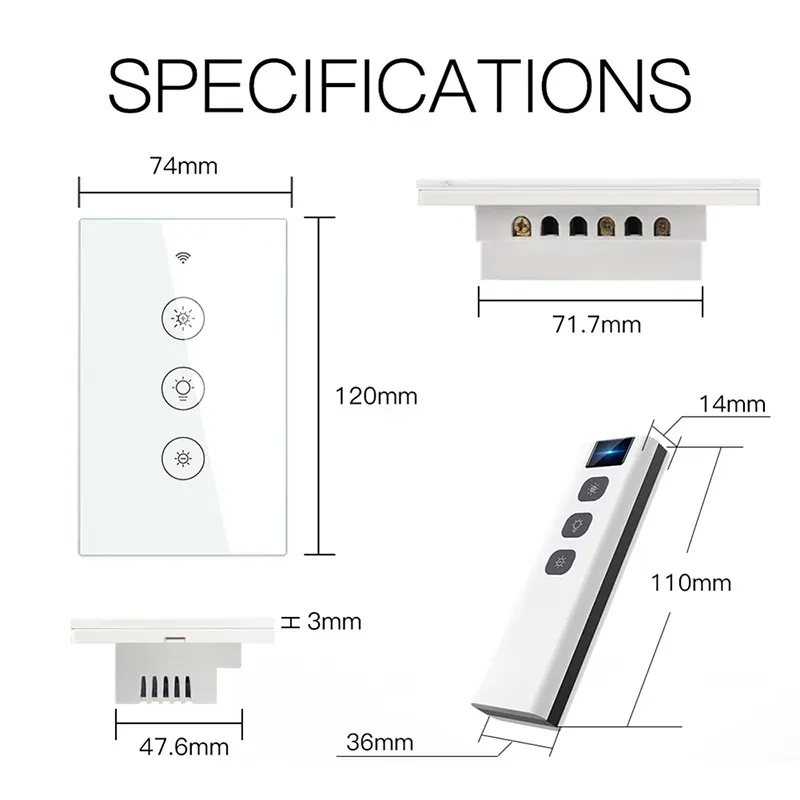
Open the Wi-Fi and RF wall dimmer when the order needs a wall plate that also lists an RF handset path. The page prints models WRS-USD and WRS-EUD, a voltage band, a current limit, and watt lines beside those model letters.
Copy those figures from the page into the quote. Do not smooth them into one global number.
Open the Wi-Fi multi-gang wall dimmer when the plate must be one, two, or three gangs and the radio line is Wi-Fi only. Models on that page are WS-USD and WS-EUD.
The load block splits incandescent from LED and CFL, and the voltage band is not the same string as the RF page. A buyer who pastes the RF watt line onto the multi-gang plate will overstate one carton and understate the other.
Both pages print app control, voice control, and a neutral-wire sentence. Both print a percent span for the light.
Those shared sentences still do not make the pages interchangeable. The radio line is the first fork.
A Zigbee dimmer is a dimming class of its own. The live module and the Star Ring wall plate in that class print Zigbee, and they are already explained there. This page leaves their load lines in that article, and it does not rename those plates as Wi-Fi.
The mix-up is easy because both classes change light level and both can be a wall plate. Radio is the fence.
If the sample the buyer is holding says Zigbee on the carton, send the quote to that article. If the sample says Wi-Fi, or Wi-Fi and RF, it stays here. A project that needs both radios needs two lines, not one blended title.
The generic wall-switch noun sits one step further back. What a smart switch is covers the on-off plate before anyone asks for brightness.
Use it when the inquiry never mentions dimming. Use this page when brightness is the point.
Some wall controls print a percent that has nothing to do with a lamp. On the smart switch for a ceiling fan, the percent speed line belongs to fan speed on the longer fan-and-light page.
It sits in the same feature block as voice control. It is not a light-level span, and it should not be copied onto a dimmer quote as if it were.
Read the noun beside the number before you reuse it. A light page that prints a percent is talking about brightness.
A fan page that prints a percent in a speed sentence is talking about the motor. The words around the figure decide which line of the quote receives it.
A usable quote for this product carries four kinds of facts, and only when the chosen page prints them.
| Quote field | Copy rule |
|---|---|
| Radio | Wi-Fi, RF, or both, using the words on that page |
| Neutral wire | Only the sentence that page prints |
| Light span | The percent span, only if that page prints one |
| Load | Minimum or maximum only from the lines that page prints |
| Gang | Only when the page offers more than one plate width |
Leave blank any cell the page does not print. The RF page’s current limit is not a guess for the multi-gang page.
Watt lines on the multi-gang page stay off the RF page. The hidden module behind a rocker has its own watt lines, and those lines are for a module quote.
People invent a neutral sentence when the page is silent. Both of these wall pages print that a neutral wire is required.
Put that sentence on the quote for those two URLs. It is not a house rule for every dimmer the brand has ever sold, and it is not a reason to skip reading the next page.
The receptacle question from the search page belongs in the notes, not in the watt cell. If the buyer wants a dimmer on a general outlet, stop and restate the object.
Community threads treat that layout as the wrong product. Offer the wall plate for a hardwired light, or a plug-in lamp dimmer for a portable lamp.
Do not quietly relabel an outlet as a wall socket dimmer switch.
Pick the page the way a warehouse would pick a carton. Need a wall plate with Wi-Fi and an RF path, including the handset note on the drawing?
Use the Wi-Fi and RF wall dimmer. Need one, two, or three gangs, Wi-Fi only, and a printed “no hub” line?
Use the Wi-Fi multi-gang wall dimmer. Need Zigbee on the label?
Leave this page and use the Zigbee article. Need fan speed?
Leave this page and use the fan article, and keep that percent labeled as speed.
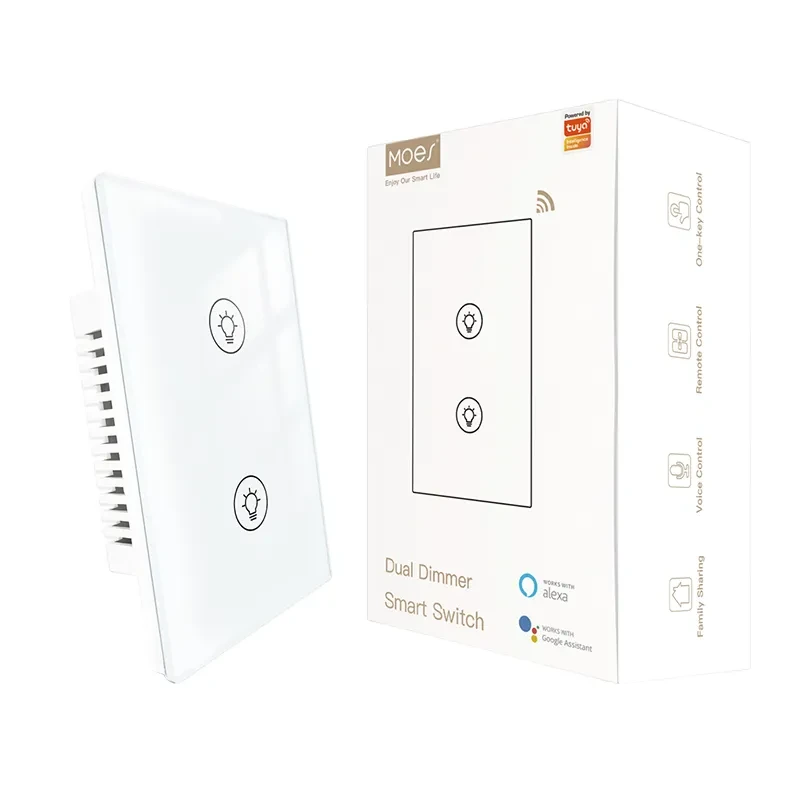
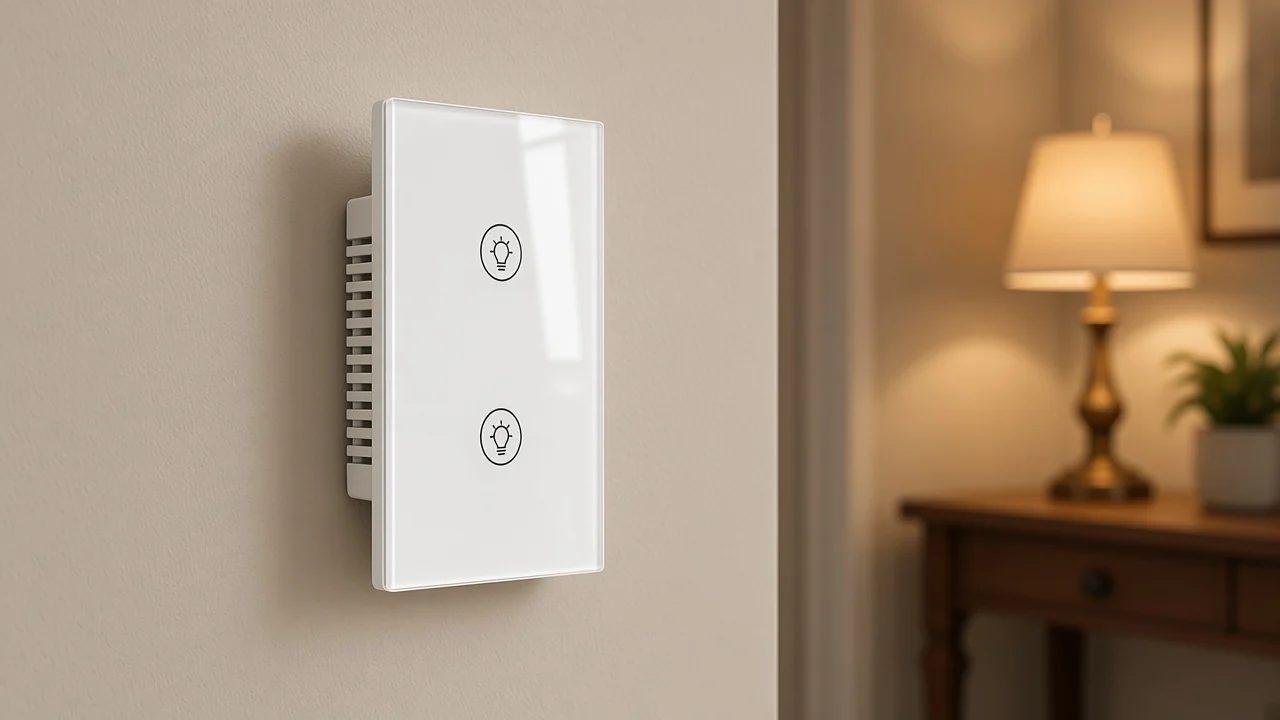
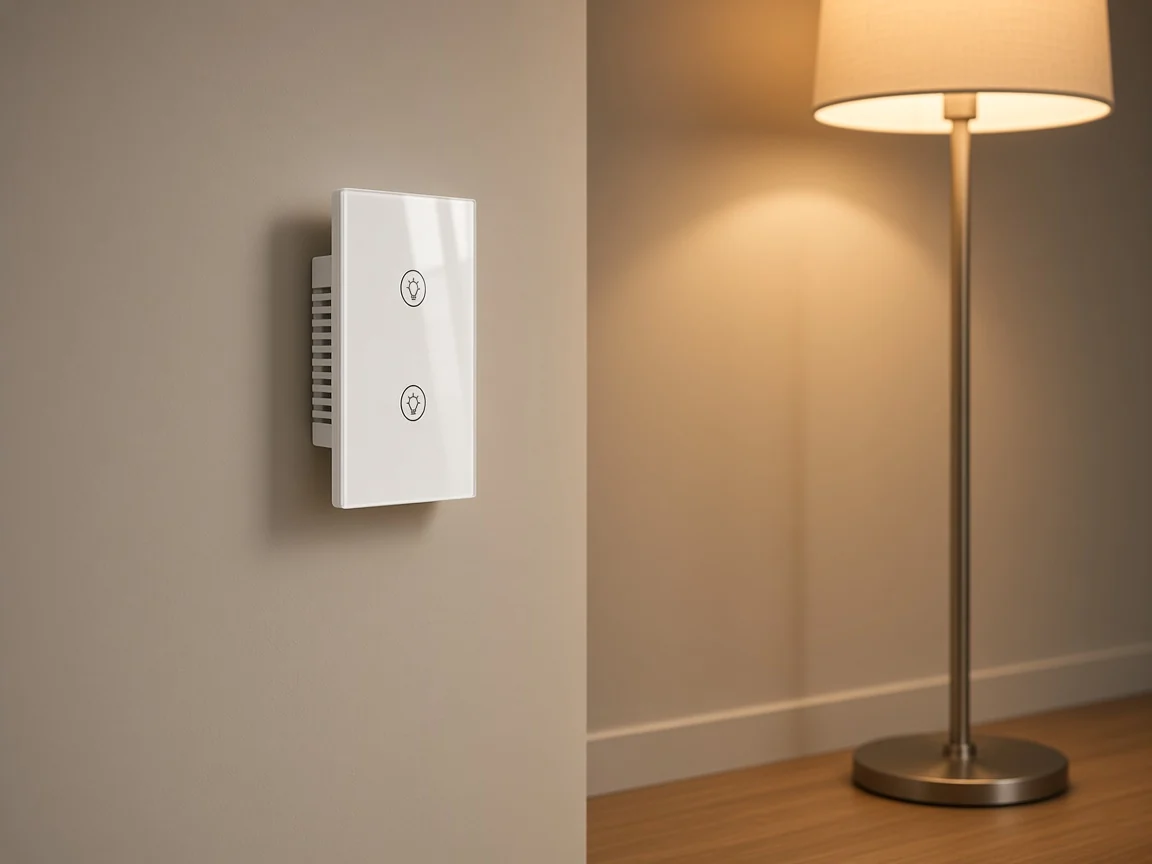
The plate in the photo is the multi-gang Wi-Fi product: a glass wall control with a light button on each gang, sold as a dimmer rather than a simple on-off switch. The drawing beside the hallway scene is the other carton, the one that adds the RF handset.
Show the buyer the picture that matches the radio line. A lamp glowing in the same room is not evidence that the plate dims every plug in that room.
Before the file goes out, read the live page once more and copy the voltage band, the load lines, and the radio exactly. Pages change. A quote that freezes an old watt line will not match the carton that ships.
A general receptacle is the wrong load for this wall plate. The search overview and the open community threads both treat a dimmed outlet as a place where the next plug might be an appliance. Use the wall plate for a hardwired light.
Yes. It is a real product, and the search page is full of them.
It plugs in between the outlet and a lamp, or it replaces the lamp holder. Name it as a plug-in lamp dimmer so the warehouse does not pull a wall plate.
A switch that feeds an outlet is still feeding an outlet. People do dim lamps that happen to be plugged in, and the threads argue about the risk. This wall page is for a hardwired light on a dimmer plate, not for converting every switched outlet.
A dimmable lamp can sit in an ordinary holder and still run at full output. Brightness control comes from the dimmer, the plug-in unit, or electronics in the lamp. A regular socket does not by itself become a wall socket dimmer switch.
No. That article owns the Zigbee module and the Star Ring Zigbee plate.
These Wi-Fi and RF wall pages stay here. Link the Zigbee piece when the carton says Zigbee, and stop there.
No. On that article the percent speed line is fan speed, printed on the longer fan-and-light page.
Keep it on the fan quote. A light percent belongs only on a page that is talking about brightness.


OTHER SMART DEVICES
Jun 13,2026
OTHER SMART DEVICES
Jun 12,2026
TUYA SMART HOME PRODUCTS
Jun 12,2026
 +86 137 3639 3028