by NOVA

Oct 14, 2026
An off grid solar inverter supplies alternating current for local loads from a battery, and from photovoltaic input only when that input is printed on the product page, on a site that has no utility interconnection.
A stand-alone power system uses that AC at the building or vehicle. The notes below separate a battery-only off grid inverter from a low frequency solar inverter that also prints a charge stage, then point at the three pages on the live collection.
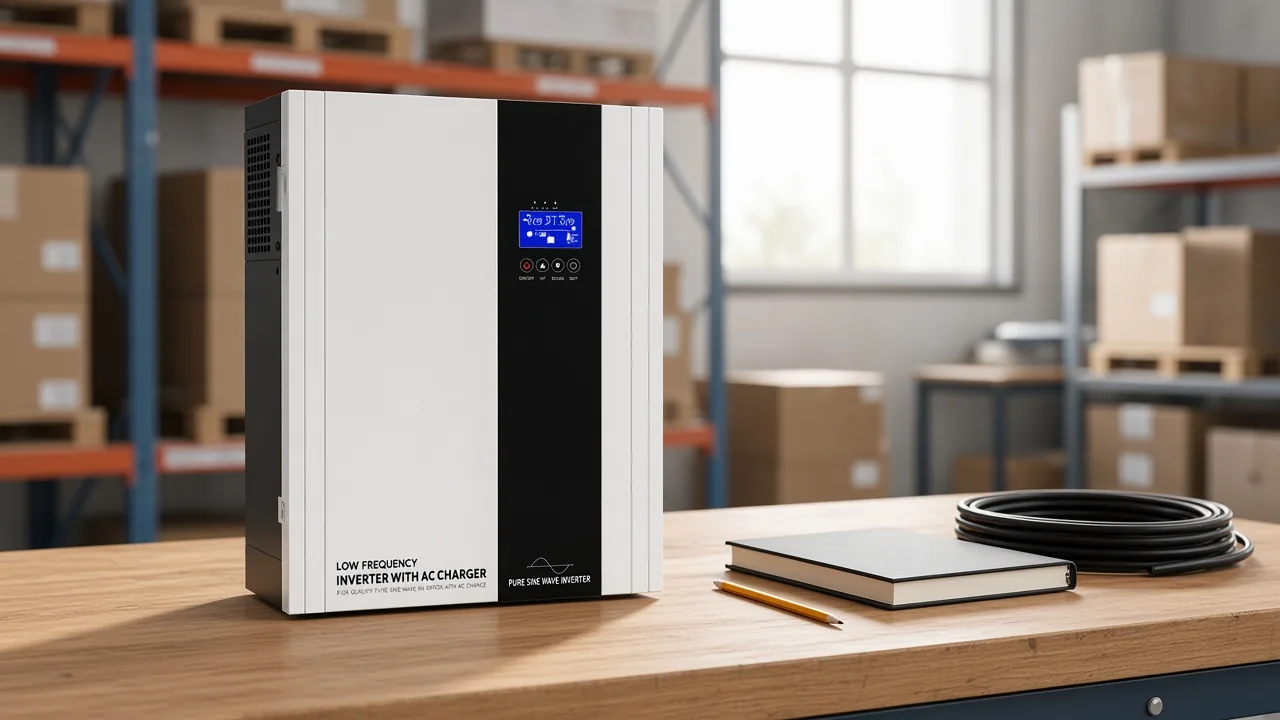
It supplies household-style AC from stored DC when the site is not tied to the utility.
The Department of Energy describes an inverter as the stage that turns direct current from photovoltaic modules into alternating current for appliances. In a stand-alone layout, that job still holds, with one practical difference: there is no utility waveform to follow.
VeraSol’s component guideline calls this arrangement a stand-alone power system and places a battery inverter on the AC loads.
Buyers sometimes meet the same hardware under a hybrid label because a chassis can accept mains as an input. That naming fight is already set out in the off-grid inverter versus hybrid inverter comparison. The class on this page is the one whose job is local AC without an interconnection agreement.
The generic DC-to-AC noun, including units that never see a solar array, is covered in what a power inverter names.
The battery bank is the DC source the inverter turns into AC for the loads.
Panels make DC while the sun is up. At night the loads still want AC.
Lighting Global’s public-facility note is blunt about AC-coupled layouts: a photovoltaic inverter that expects an outside AC source will not run until a battery-based inverter forms that source. The battery is the reservoir between daylight and the evening load.
A plain power stage does not, by itself, decide how the array is charged. Some pages on this collection stop at the battery-to-AC step. One page prints a charge controller in the same chassis.
How the DC becomes a sine or a stepped wave is the subject of how battery DC becomes AC.
From the field: Installers on a public solar forum treat modified waveform as a motor problem: fridges, fans, and pumps run hotter and draw more than they do on a sine source. A separate reply about a 12 V replacement put the current worry in one line: 12 Volt is over 200 Amperes to get to 2500 Watts. That line is a buyer objection, not a rating from the collection.
Pure sine wave and modified sine wave are different promises about the shape of the AC, not different answers about the utility.
On the off-grid inverter collection, two pages print pure sine wave and one prints modified sine wave. The modified sine page says the output suits resistive loads such as lights and heaters, and that harmonic content makes it a poor match for sensitive electronics.
A quote that names a fridge, a pump, or a laptop should start on a pure sine page. A quote that names only heaters and lamps can stay on the modified page if the buyer accepts that limit.
Waveform does not tell you whether the chassis can charge from panels. Both sine classes appear in this collection, and only one of them prints an MPPT solar controller.
A hybrid inverter is a different product noun: it is built to combine utility, storage, and solar roles. That definition sits in what a hybrid inverter combines.
Rated power, battery voltage, waveform, and PV input belong on the request, and PV input belongs there only when a page prints it.
The page title names 1000W and 2000W at 12V, while the table covers a wider set. The pure sine battery-inverter table prints DC operating voltage 12V/24V/48Vdc, output voltage 110V/120V/220V/240Vac, frequency 50Hz/60Hz, and power from 300W ~ 6000W. The modified sine page prints the same 12V/24V/48Vdc input, 110V/120V/220V/240Vac output, 50Hz/60Hz, and 300W ~ 6000W range.
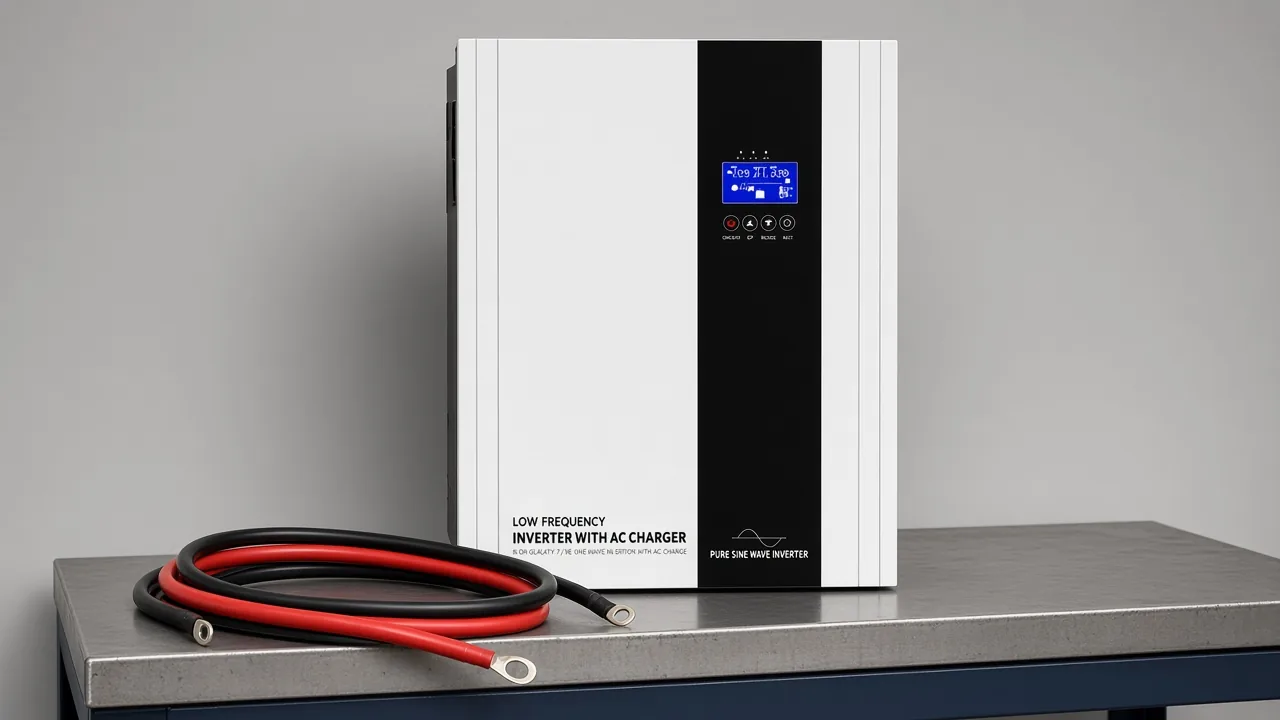
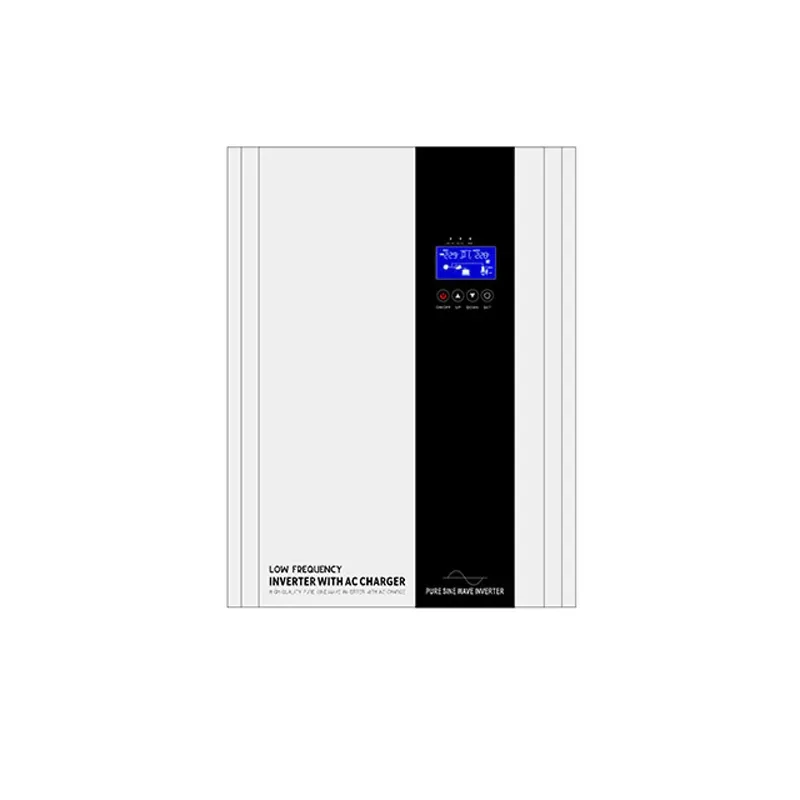
The low-frequency page prints battery voltage 12/24/48/96V and power from 1KW-12KW. It also prints an MPPT solar controller rated 80A/100A and efficiency above 90%.
AC on that page is single phase 170-275V at 50Hz/60Hz. Application copy on that page prints surge up to 300% of rated power, MPPT tracking of 99%, transfer in less than 10ms, and operation from -20°C to 55°C.
Those last four figures belong to that one application block. They are not a class rule for the battery-only pages, which do not print them.
Mains priority is named there as an input mode beside battery priority, energy saving, and unattended mode. The block does not print export to a utility.
| Live page | Waveform printed | Battery voltage printed | PV input printed | Power range printed |
|---|---|---|---|---|
| Pure sine battery inverter | pure sine wave | 12V/24V/48Vdc | not printed | 300W ~ 6000W |
| Modified sine battery inverter | modified sine wave | 12V/24V/48Vdc | not printed | 300W ~ 6000W |
| Low-frequency inverter/charger | pure sine wave | 12/24/48/96V | MPPT 80A/100A | 1KW-12KW |
| Request field | Ask it when | Where it is printed |
|---|---|---|
| Rated power | Every quote | Title or power-range row on the chosen page |
| Battery voltage | Every quote | DC operating voltage row |
| Waveform class | Every quote | Pure sine or modified sine in the page copy |
| PV input | Only if the page prints a controller current | MPPT 80A/100A on the inverter/charger page |
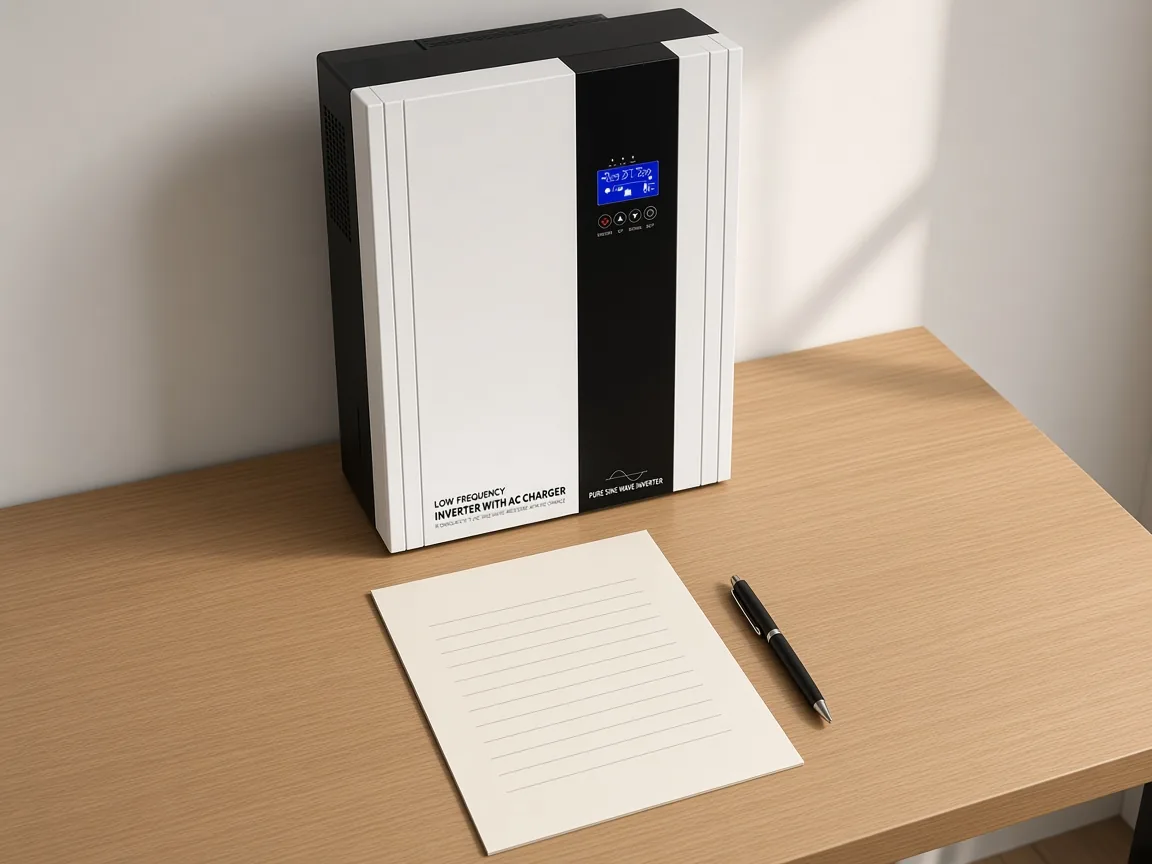
The collection currently lists three product pages, and only the inverter/charger page prints a photovoltaic controller.
The 1000W 2000W pure sine inverter is the high-frequency pure sine page. Its application text describes an off-grid system as independent of the main grid, with panels, a charge controller, an inverter, and batteries as separate pieces. The table itself does not print a PV voltage window, so a buyer who needs the controller current has to look elsewhere.
The modified sine off-grid inverter shares the wide voltage table and aims the copy at resistive loads and vehicle use. It is the page to open when the load list is heaters, lamps, and simple tools, and when the buyer has already accepted the waveform limit from the forum objection above.
The on-grid category on this site returned no product cards when it was checked on 14 October 2026. A quote that needs a utility-interactive inverter cannot be filled by inventing a model from that empty category. If the site does have a utility line and the buyer needs both storage and interconnection, the hybrid clarification and the comparison article are the neighboring reads, not a fourth SKU imagined here.
The low-frequency pure sine inverter/charger is the collection page that prints both a battery-voltage list and an MPPT current.
Open the low frequency solar inverter charger when the cabin quote needs panels and a battery on one chassis, pure sine loads, and a battery voltage inside 12/24/48/96V. The inquiry on that page should carry the power target and the battery voltage the project actually uses. If the array current or the open-circuit voltage is not on the page, leave those fields off the claim and ask the supplier against the printed 80A/100A controller note only.
Choose the pure sine battery inverter instead when the charge controller is already a separate line item. Choose the modified sine page when the load list stays with resistive gear. Neither of those pages prints the MPPT current, the 170-275V AC window, or the temperature span.
Yes, when the design is stand-alone: a battery inverter forms the AC and the loads never rely on a utility interconnection. A photovoltaic inverter that is built only to follow a utility still needs some AC source, which in the Lighting Global description is the battery inverter itself.
The three live pages describe batteries as part of the off-grid system. None of them prints a battery-free operating mode, so a no-battery quote is outside what these pages show.
Storage has to cover the night and cloudy hours, and the waveform has to match motors and electronics. Forum readers single out modified waveform for extra heat in motors, and they single out low battery voltage for heavy cable current.
No. On these tables the DC operating voltage and the AC output voltage are separate rows. A 48 V battery row can still be paired with a 110 V or 220 V AC row, because those are printed as ranges on the page, not as one locked pair.
At a few thousand watts, a 12 V bank pushes very high current through the cables. The public comment quoted above is the short version of that argument. Higher battery voltages on the same pages exist so the current can fall for a similar AC load.
The on-grid category was empty of product cards on the day this article was prepared. Off-grid quotes should stay on the three pages named above.
No. Pure sine describes the AC shape. Off-grid describes the lack of a utility interconnection.
This collection includes both a pure sine page and a modified sine page.



OTHER SMART DEVICES
Jun 13,2026
OTHER SMART DEVICES
Jun 12,2026
TUYA SMART HOME PRODUCTS
Jun 12,2026
 +86 137 3639 3028