by NOVA

Oct 13, 2026
A zigbee presence sensor reports that a room is occupied while someone is still there, and it joins a Zigbee network, usually through a hub.
The sensing method stays on the line that listing prints. The radio word is a separate cell, and the two do not substitute for each other.
Three published MOES human-presence listings carry this class. Each one prints its own power, band, and mount, so a quote row copies one page at a time.
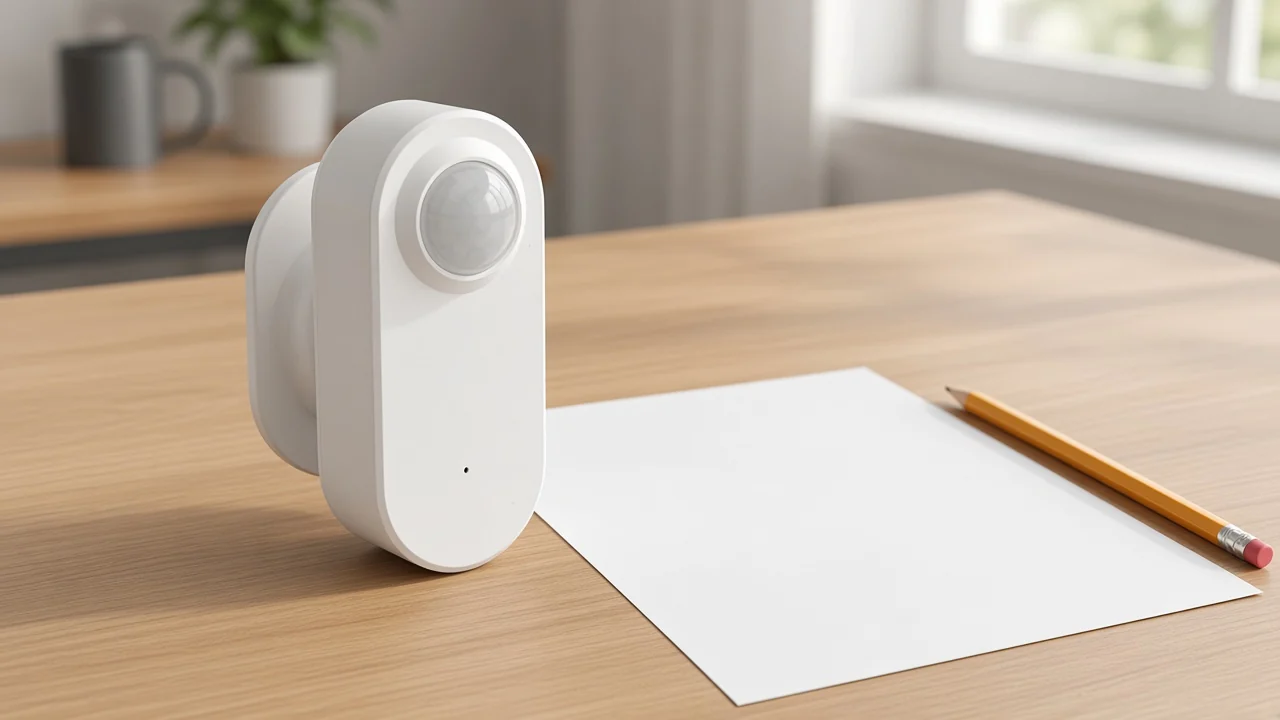
A Zigbee presence sensor tells the network that a person is still in the space, then sends that occupied or clear state over Zigbee.
Procurement readers meet the phrase on a line item under other smart devices. The object is a room sensor, not a switch and not a lock. The useful report is “someone is here,” including a person who has stopped walking and sat down to read, type, or rest.
Wikipedia describes Zigbee as a low-power mesh and states that every network has one coordinator. That coordinator fact is the network half of the class. The occupied-state report is the sensing half.
A buyer who only writes “Zigbee” on the row has named the radio and skipped the job the sensor is there to do.
A reading-room request shows the split cleanly. The distributor needs the lights to stay available while a person sits. A walk-by pulse would expire.
The presence class is the line that is meant to hold. The Other Smart Devices collection is where these listings sit beside the rest of the assortment.
The sensing method and the Zigbee radio are two quote lines, and each one has to be copied from the same listing.
Radar, in the ordinary engineering sense, transmits a radio wave and reads what reflects back. An mmWave radar does that job in a millimetre-wave band when the page actually prints that band.
Texas Instruments lists an FMCW mmWave chip for presence and motion detection as a sensing device. That chip page describes the sensing device. The Zigbee join is the other line: one line is how the room is observed, and the other is how the message travels.
Zigbee is the message path. A Wi-Fi sensor can watch a room with radar and never join a Zigbee network. A Zigbee contact or button can join the network and never watch a seated person.
The class name only fits when both halves are true: an occupied or still-present report, and a Zigbee join.
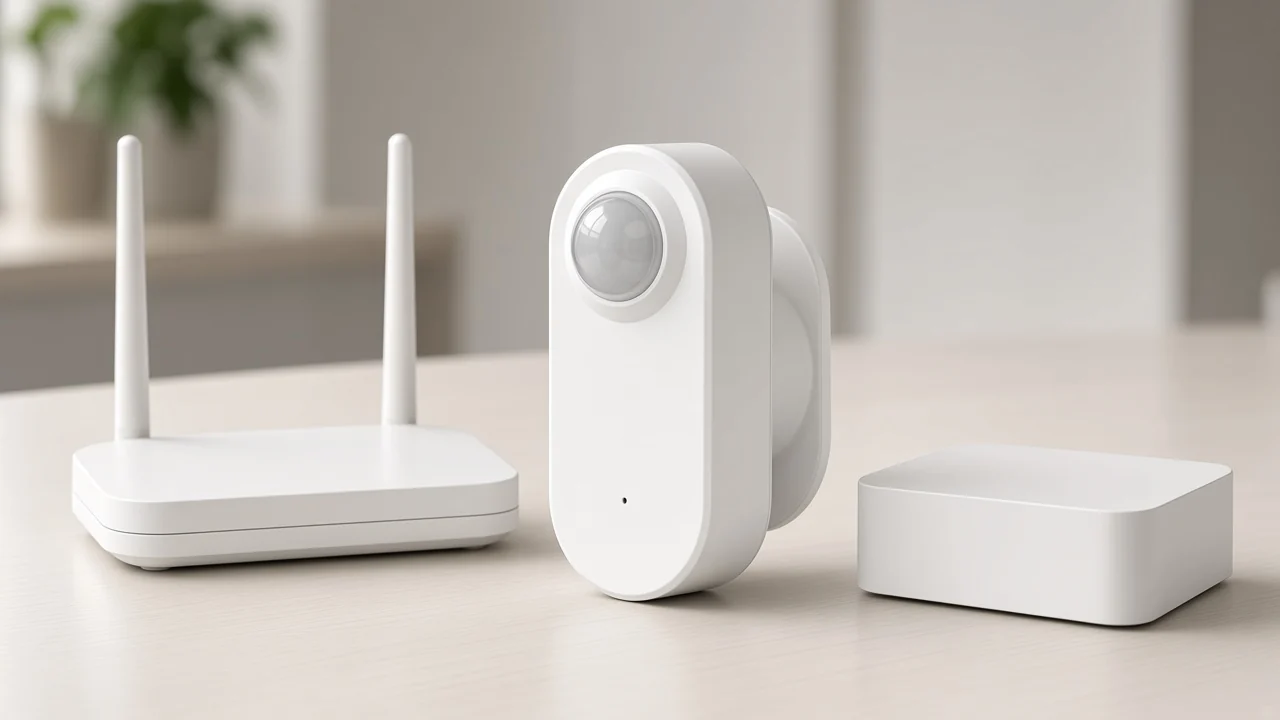
On a worksheet the radio cell is the word the page prints: Zigbee3.0, Zigbee, or ZigBee on the three live listings below. If a different listing prints Wi-Fi, that row is a Wi-Fi presence sensor. Calling it a zigbee presence sensor would invent a radio the carton does not show.
| Quote line | What belongs in the cell | Where it comes from |
|---|---|---|
| Occupied report | Still-present or human presence, including a person who is not walking | The class, then the verbs that page prints |
| Sensing method | Radar, millimetre-wave, microwave, or PIR-plus-radar | The frequency or method cell on that same page |
| Radio | Zigbee3.0, Zigbee, or ZigBee, or a Wi-Fi line if that is what is printed | The wireless or protocol cell |
| Network path | Coordinator for the protocol, and a hub sentence only where the page prints one | Wikipedia’s coordinator fact, plus the ceiling listing’s gateway sentence |
The still-person hold is the reason this class exists: the room stays occupied after walking stops.
A PIR motion sensor watches for a change and goes quiet once that change stops. The walk-by path, including how a heat change becomes a pulse, is already set out in how a motion sensor works.
A hallway you cross can live on that motion page. A chair you sit in is where a presence report earns its place.
An independent room guide puts the same cut in buyer language. PIR is a strong notice that someone walked in. It is a weak hold for someone who then sits still.
An mmwave presence sensor is the stronger hold for that seated state, because the radar is watching smaller movement than a walk across the lens. The same guide is plain about the limit: the sensor does not identify who is there, and a clear room is not a command to lock a door.
From the field: On Hubitat, a buyer added a Tuya mmWave unit to turn lights on for a person who was sitting still (Hubitat rules thread). The device showed up as motion. The light came on at the door, then went off after the person sat down, while the sensor was still reporting presence without movement.
Fans, curtains, and a thin wall can hold the opposite mistake. Radar reflections do not stop at a plasterboard line, so a person in the next room, or a spinning fan, can keep the state occupied after the intended room is empty.
The practical response on a quote is a tuning note: mount, range, and a clear delay long enough that a normal pause does not look like an empty room. That note is a project comment. It is not a bench result for any MOES listing.
The three live listings are all Zigbee human-presence pages, and they do not print the same power, band, or mount.
ZSS-HP05-A prints a 24 GHz millimeter-wave radar line beside PIR, Zigbee3.0, and two AAA cells.
The same page prints stationary detection of 0 to 600 cm and moving detection of 0 to 1000 cm.
That battery listing is the hybrid row: radar plus PIR, wireless, with an illuminance cell and a history note on the page. It does not print a hub sentence.
Those centimetre cells stay on this model. The other two pages keep their own distance cells.
ZSS-QY-HP prints ceiling installation, Zigbee, AC 100 V to 250 V, and a microwave line at 5.8 GHz.
That ceiling page prints a detect distance of 0 to 9 m, with 7 m as the default.
The description on that page talks about human presence, static state, micro-motion, and movement, and it says a Tuya ZigBee gateway is required. The specification table is the band cell, and a title that says mmWave does not replace that table.
Lux, sensitivity, hold time, and latency on that page stay on that page.
ZSS-LP-HP02 prints ZigBee, a radar line from 24 GHz to 24.25 GHz, and a 5 V supply at 1 A.
The page also prints a wired supply, a magnetic base or a wall mount, and a light-sensitivity cell of its own. It does not print a ceiling height, and it does not print a hub sentence.
The band cell on this page stays on this page. It still does not license the ceiling model’s metres or the battery model’s centimetres.
| Model | Radio as printed | Sensing line as printed | Power and mount as printed |
|---|---|---|---|
| ZSS-HP05-A | Zigbee3.0 | 24 GHz radar combined with PIR | DC 3.3 V, two AAA cells, wireless |
| ZSS-QY-HP | Zigbee | Microwave at 5.8 GHz; description also says mmWave radar | AC 100 V to 250 V, ceiling |
| ZSS-LP-HP02 | ZigBee | Radar from 24 GHz to 24.25 GHz | 5 V at 1 A, magnetic or wall |
None of these three pages prints Matter. A Matter claim would be an extra protocol the cartons do not show. Illuminance numbers stay inside the table’s source pages and are not averaged into one class figure.
A Zigbee presence sensor joins a Zigbee network, and that network has one Zigbee coordinator.
The protocol fact and the carton fact are easy to tangle. Wikipedia’s coordinator sentence covers every Zigbee network. It does not by itself add a hub sentence to a product page that left the sentence off.
The ceiling listing is the one that prints the practical box: a Tuya ZigBee gateway is required, and the page recommends that hub for compatibility. That sentence is a Zigbee hub line for ZSS-QY-HP. Paste it only onto the quote row for that ceiling model.
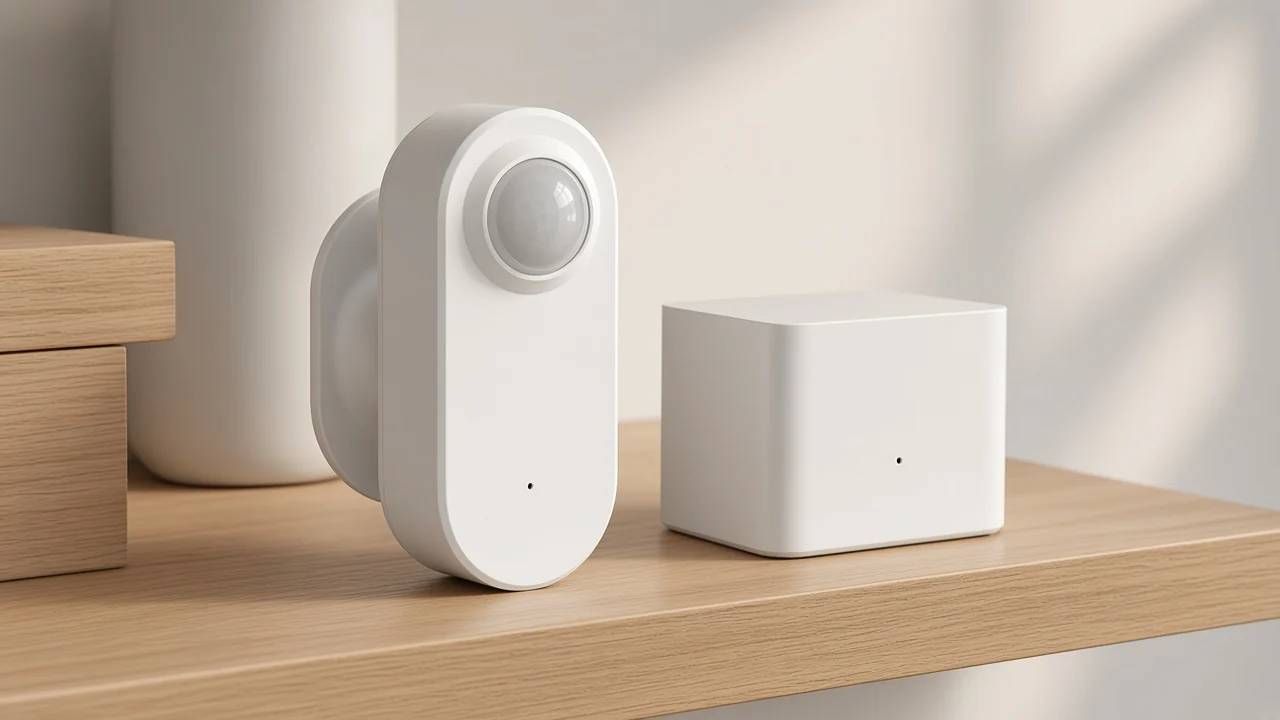
For the battery listing and the wired listing, the honest quote cell is the radio word they print, plus a coordinator question for the project: which Zigbee network will this sensor join? The answer might be a hub already on the job. The answer is not invented from the ceiling page.
People Also Ask on the live query treated Zigbee and Wi-Fi as different joins, with Zigbee described as needing a hub or gateway. That matches the protocol. It still does not overwrite a product page.
Once the sensor has joined, some platforms rename the state. The field note above is the example: the hardware was reporting a seated person, and the rule was watching a motion attribute that went inactive.
The quote can mention that the occupied state has to remain visible in the platform the project actually uses. It should not promise a button layout.
This sheet is the Zigbee human-presence class. Door contacts and water sensors are neighboring jobs with their own pages.
A full map of sensor classes, including which family sits on which channel line, is the types of smart home sensors article. Open that when the question is “what kinds of sensors exist.” Stay here when the question is what a Zigbee presence sensor reports and which printed lines belong on its quote.
No door-contact model is among the three listings above. A magnet on a door reports open or closed. It does not report a seated person.
A small white case does not turn a door magnet into one of these radar pages. If the request says “door sensor,” it leaves this page.
Water on a floor is a different sensing job again. Probe, rope, and shutoff behavior belong to how a water sensor works.
A presence listing that mentions home security in its marketing copy is still a people-in-the-room device. Leak physics stays on the water page, which should not be asked to explain radar bands.
The installer comparison between PIR and mmWave already lives on its own MOES article. This page does not rebuild that matrix. It keeps the noun, the three cartons, and the quote lines.
For a still-room quote that needs the printed millimetre-wave line and Zigbee3.0 on the same page, the matching listing is ZSS-HP05-A.
That page is the battery hybrid: millimetre-wave radar together with PIR, Zigbee3.0, and the centimetre cells quoted above. It fits a seat or a desk where the buyer wants the still-person hold and can accept a battery unit whose page does not print a hub sentence.
The project still needs a Zigbee network with a coordinator. The carton itself does not name the box.
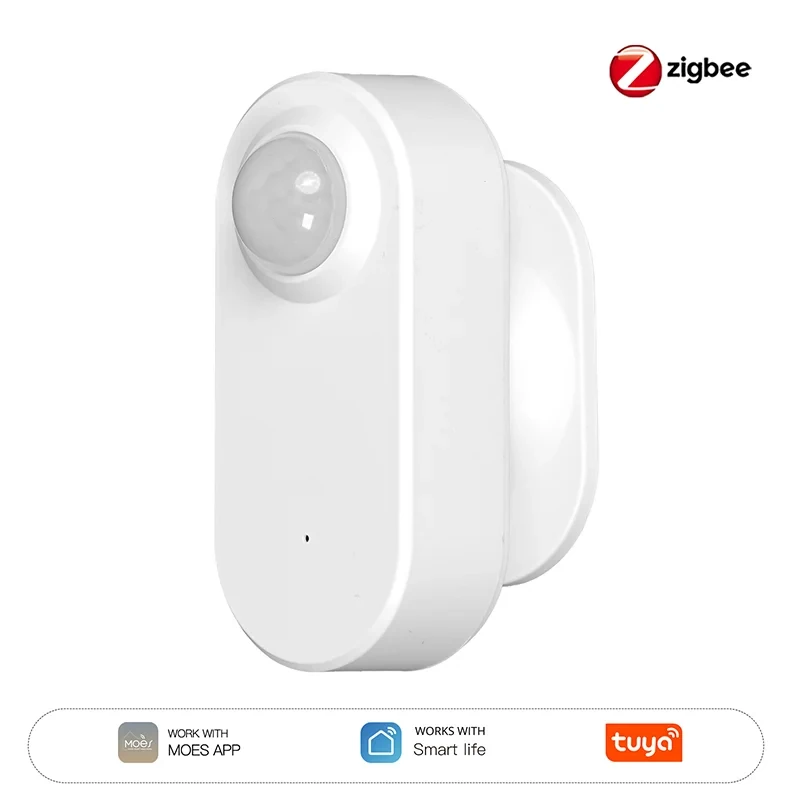
Choose the ceiling listing when the job is a mains-powered ceiling mount and the gateway sentence must be on the page. Read its microwave cell before you write the battery model’s band on that row.
Choose the wired listing when the job is a powered radar sensor with a magnetic or wall base and the band cell that page prints. Leave the hub cell blank on that row unless the project’s network notes supply it from somewhere other than this carton.
The product photo for the battery hybrid is the ZSS-HP05-A Zigbee presence sensor. The ceiling page is the ZSS-QY-HP detector. The wired page is the ZSS-LP-HP02 sensor.
Copy range, lux, and band only from the page you link.
Every Zigbee network has one coordinator, so the sensor needs a network that already has that role. Only the ceiling listing prints a Tuya ZigBee gateway as required. The battery page and the wired page print the radio word and leave the box unnamed.
No. Zigbee and Wi-Fi are different joins. These three listings print Zigbee, Zigbee3.0, or ZigBee.
A listing that prints Wi-Fi is a different radio row even if it also watches for a person.
Radar can reflect through thin, non-metal walls, so a person next door or a moving fan can hold the occupied state. Treat range and aim as something the project tunes, and keep the wall switch usable if the sensor stays occupied for the wrong reason.
The sensor can be reporting a seated person while the automation watches a motion attribute that has already gone inactive. The Hubitat thread showed that split: presence was on, movement was not, and the light turned off.
No. Millimetre-wave on these pages is the gigahertz cell the battery and wired listings print. The ceiling listing’s specification table prints a lower microwave band even where the title says mmWave.
Quote the table when the band is the question.
Occupancy is not identity. A clear room is not proof that everyone left, and an occupied room is not a named person. Keep locks and alarm arming on an explicit security action.
Some platforms file the Zigbee device under a motion attribute even when the hardware also exposes a still or present state. The rule has to watch the state that stays active while the person sits, which on that Hubitat driver was the presence attribute rather than the motion flag alone.

OTHER SMART DEVICES
Jun 13,2026
OTHER SMART DEVICES
Jun 12,2026
TUYA SMART HOME PRODUCTS
Jun 12,2026
 +86 137 3639 3028