

by NOVA

Aug 13, 2026
A wireless switch commercial retrofit should begin with a controlled deployment brief, not a promise about coverage or a named product’s fit. The team needs a record of zones, control roles, stakeholders, wireless-context questions, evidence requests, handover expectations, and owners.

First-party MOES media illustrates a commercial switch-review context. It does not show or approve a wireless deployment configuration.
Important: “Wireless” does not confirm protocol, range, coverage, pairing, electrical ratings, certification, or installation fit. Review current offered-model documents and project conditions before any deployment decision. Connectivity Standards Alliance
Commercial retrofits involve more than a device request. A buyer may have multiple zones, different local-control expectations, several stakeholders, and a handover requirement that needs an owner.
The brief turns those variables into reviewable questions. It prevents a broad wireless preference from being treated as an untested statement about a specific location.
Map the intended deployment before comparing product paths.
| Deployment field | Team should record | Review owner |
|---|---|---|
| Zone map | Areas, room roles, and priority zones | Project lead |
| Control role | Local users, operating intent, and escalation questions | Facilities representative |
| Stakeholders | Installer, buyer, facilities contact, and technical reviewer | Project lead |
| Existing condition | Available drawings, photos, labels, and unknowns | Installer |
| Handover record | Open items and the person who accepts final records | Facilities representative |

First-party MOES media is used as a deployment-review illustration; it does not establish control coverage, wiring, or system performance.
Zone information should make clear what is known and what remains to be confirmed. The team can then avoid treating similar rooms as automatically identical from a control or installation perspective.
Keep the wireless question separate from the commercial control question. Record the intended ecosystem wording, current network or gateway context, zone count, commissioning questions, restrictions on access, and the documents requested for review.
Those details are inputs, not evidence that a particular protocol or model will work at the site. For sample-review preparation, see the smart wall switch sampling guide. For a protocol comparison, see the WiFi and Zigbee smart switch guide without assuming that either article confirms a deployment result.
Send one RFQ deployment record rather than isolated device names.
| RFQ deployment input | Team should provide or request | Send with inquiry |
|---|---|---|
| Zone and role record | Zone map, user roles, and priority areas | Yes |
| Existing-condition evidence | Drawings, photos, labels, and unresolved observations | Yes |
| Wireless context | Ecosystem wording, gateway questions, access constraints, and open items | Yes |
| Model evidence | Current datasheet, manual, labels, and market-information questions | Yes |
| Handover owner | Person responsible for technical and commercial closure | Yes |
The inquiry can use the buyer’s wireless vocabulary, while exact model and deployment claims remain subject to current documentation and qualified review.
With the brief in place, the MOES smart switch category is a bounded starting point for a category discussion. It is the recommendation here because it avoids naming a site-fit SKU before the deployment evidence has been reviewed.
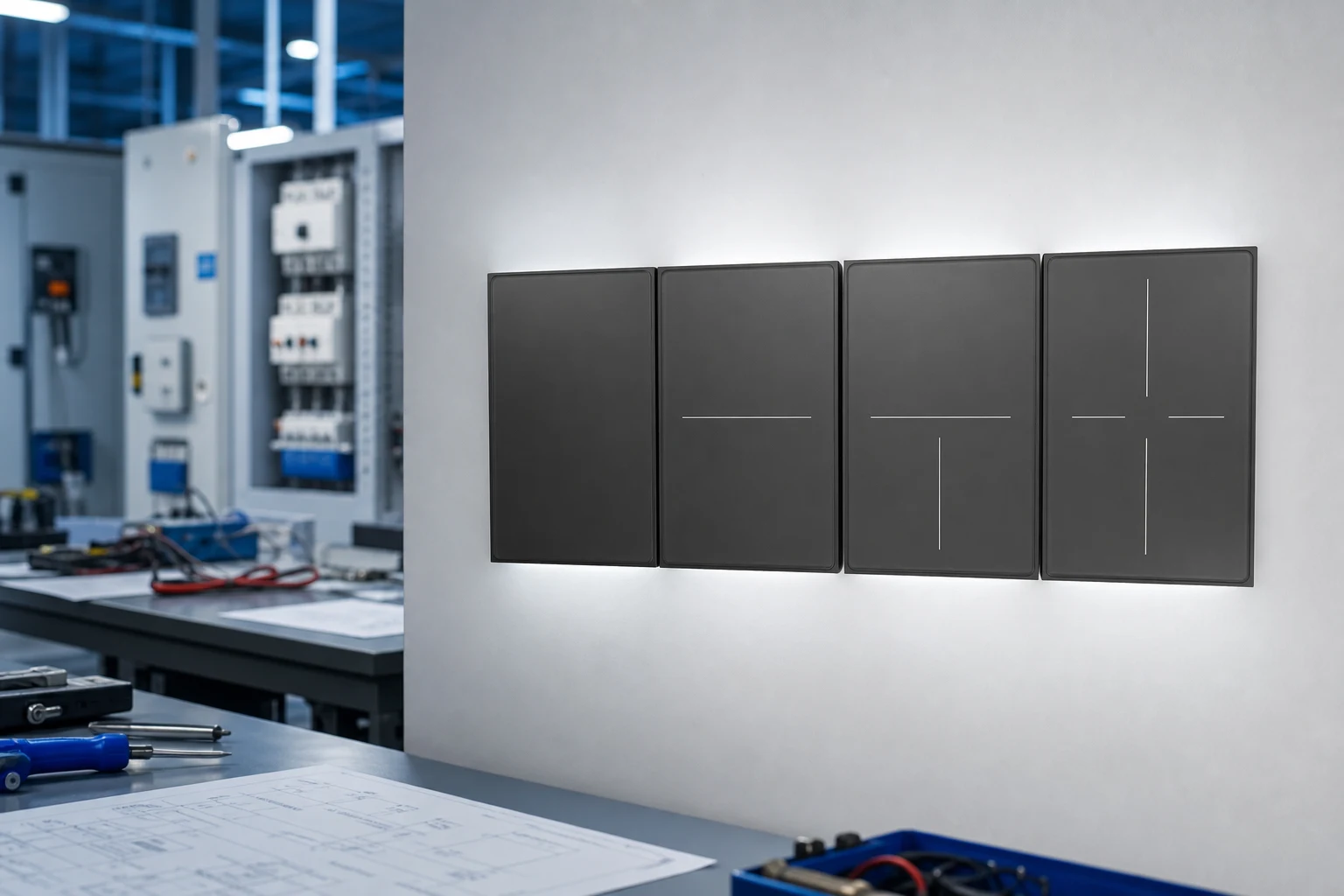
First-party MOES media supports category-level inquiry context. Confirm the exact model, documents, and deployment conditions separately.
Before a final comparison, assign an owner to every open item. Route the deployment brief through MOES Contact Us or the OEM/ODM inquiry page with:
This process supports a commercial discussion without converting a deployment concept into an unsupported coverage or installation promise.
It should contain zone roles, stakeholder contacts, existing-condition evidence, wireless-context questions, requested model documents, open items, and handover ownership.
No. Coverage and performance depend on the exact offered model, protocol, site conditions, commissioning context, and current documents.
Record areas, local-control roles, priority zones, user expectations, access constraints, and the person who confirms the final deployment record.
Include available drawings, photos, labels, ecosystem wording, gateway questions, current model-document requests, and unresolved conditions.
No. A category page provides navigation. It does not replace a model-specific review or project approval.
The buyer should identify a technical reviewer and a commercial or facilities handover owner before a final deployment decision is made.


OTHER SMART DEVICES
Jun 13,2026
OTHER SMART DEVICES
Jun 12,2026
TUYA SMART HOME PRODUCTS
Jun 12,2026
 +86 137 3639 3028