


by NOVA

Sep 21, 2026
A what is a hybrid inverter question is answered by the job, not by the watt guess in the email: the unit inverts photovoltaic DC into AC and also charges and discharges a battery, and published class descriptions usually include a utility-grid connection as well.
A PV-only grid-tied inverter stops at making AC for the grid. A battery-only power inverter makes AC from storage and does not, by itself, manage a photovoltaic array.
This page stays on that definition and on the four facts a quote still has to name. Downsides, a full on-grid versus off-grid matrix, efficiency percentages, sizing arithmetic, charge-controller roles, and waveform class each have their own live page.
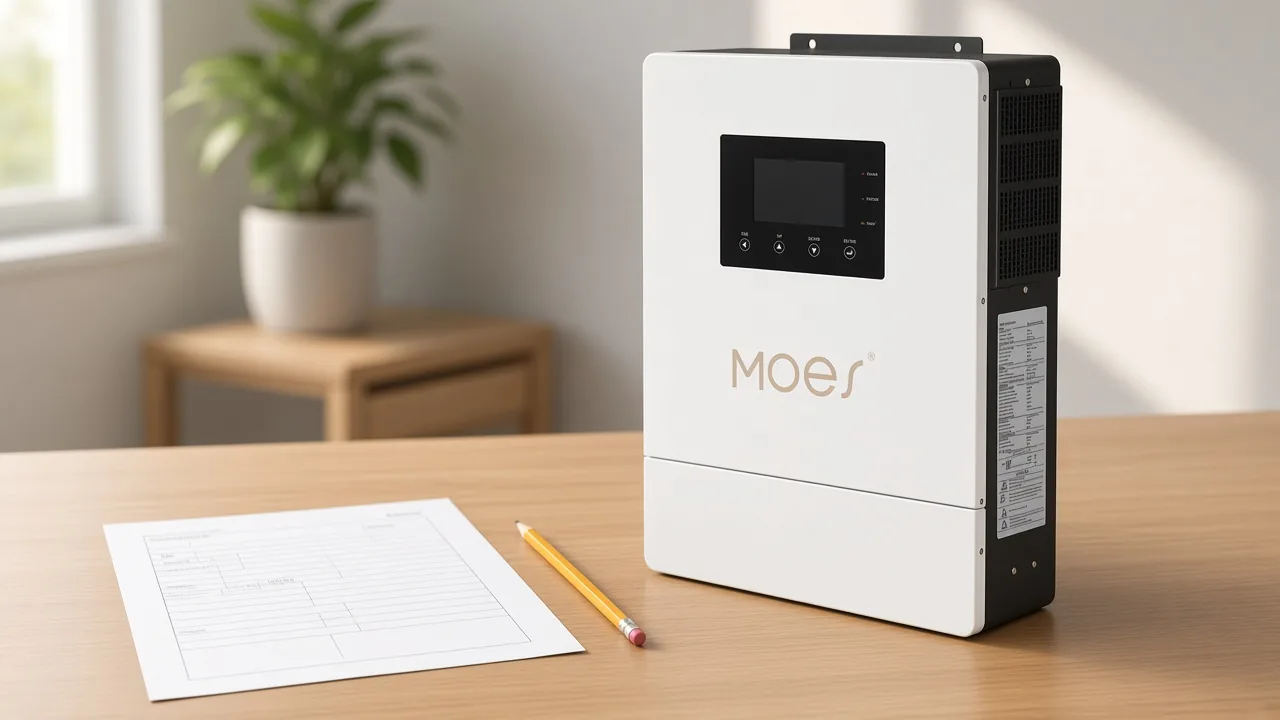
A hybrid inverter is one box that couples a photovoltaic array, battery charge and discharge, and, in the usual class description, the utility grid. In plain words, panels, a battery, and the grid role are managed together instead of as three unrelated appliances.
The U.S. Energy Information Administration describes the basic inverter job as converting DC electricity from PV panels into AC electricity. A hybrid solar inverter keeps that conversion and adds the battery path that a PV-only box does not have.
Seller pages use the same picture. One manufacturer explainer says the device combines a regular solar inverter and a battery inverter, and that it can turn grid AC back into DC to fill the battery. An encyclopedia entry says intelligent hybrid inverters manage the photovoltaic array, battery storage, and the utility grid on the same unit, for grid-tie, stand-alone, or backup use aimed at self-consumption with storage.
The wider definition of a solar inverter, as DC-to-AC for loads or the grid, is already on the live what a solar inverter is page. This article starts where that page stops: the battery path and the grid role that the word hybrid adds.
A grid-tie inverter converts direct current into alternating current suitable for injecting into an electrical power grid. That sentence, from the grid-tie class description, does not include charging a battery or running loads after the grid has gone away.
A commercial storage guide puts the blackout picture bluntly: a standard solar inverter converts PV DC to AC and stops when the grid goes down. Backup is what appears only after a battery charge and discharge path and grid coordination are added.
So a quote that says “grid-tied hybrid” is already two ideas. Grid-tied names the AC destination.
Hybrid names the battery path. Leaving either idea off the email leaves the SKU ambiguous.
Distributors hit this when a house is already on utility power and someone adds “and a battery later” in the same sentence. The PV-only box can be the right buy if export is the whole job. It is the wrong buy if the email also expects the lights to stay on in an outage.
A battery inverter, in the plain explainer sense, converts DC stored in the battery into AC for loads. It does not, by that description, track a photovoltaic array or decide whether midday surplus should charge, export, or both.
People still say “power inverter” for that battery-only box, especially in vehicle and backup kits. A hybrid listing is a different object once the page also claims a solar charger. If the email only says power inverter, ask which of those two objects they mean before anyone types a price.
| Job | Hybrid inverter | PV-only grid-tied inverter | Battery-only power inverter |
|---|---|---|---|
| Inputs the class description names | PV and a battery, usually with a grid connection | PV DC | Battery DC |
| Output the class description names | AC for loads, plus a grid role only when the listing states one | AC aimed at the grid | AC from the battery |
| Blackout picture in class descriptions | Backup only when the listing and the battery support it | Shuts down with the grid | Runs until the battery is done |
Watt maths for a battery-only box belong on the live power inverter sizing checklist. This table is only the job split.
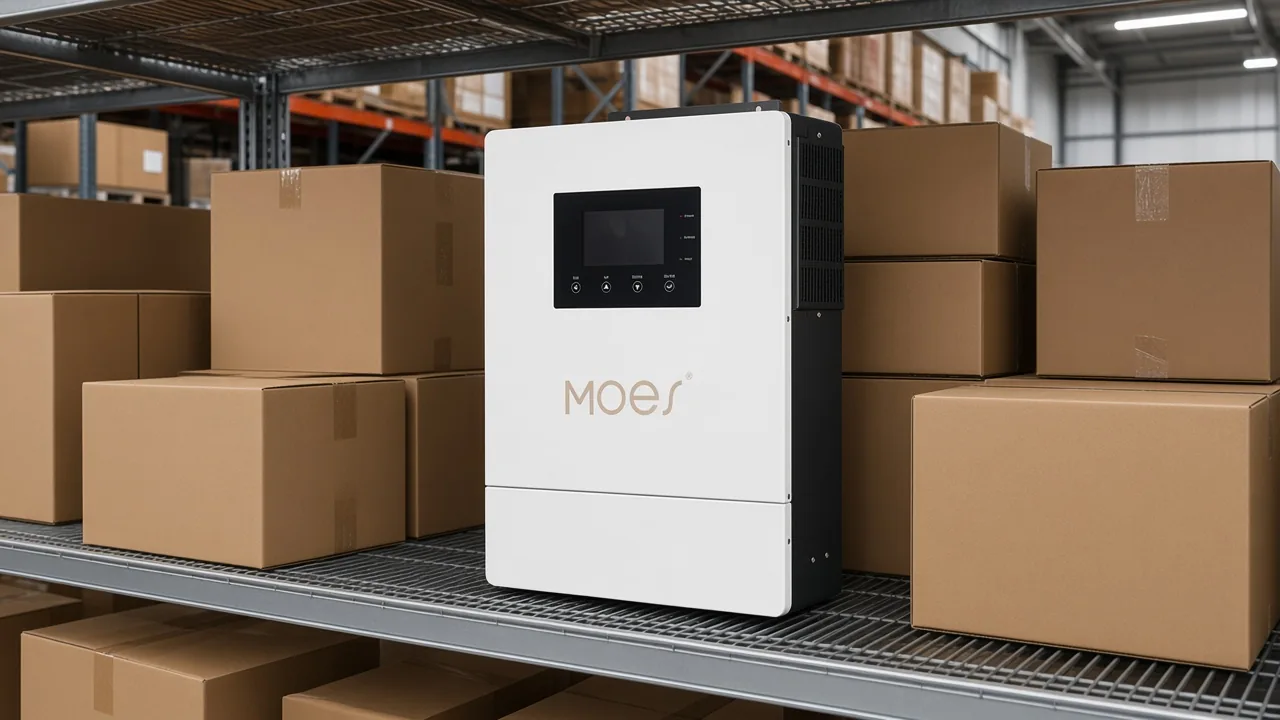
Battery voltage is a listing fact, not a synonym of the word hybrid. The MOES WiFi Smart Hybrid listing states a DC operating voltage of 48V.
Another bank voltage is a different conversation, even if the email still says hybrid. The quote either matches the voltage printed above or it is quoting something else.
The same page also says the unit can operate without a battery. That bullet matters.
A buyer who hears “hybrid” and assumes a battery must already be in the crate is ahead of the listing. A buyer who wants backup in an outage still needs a battery even if the inverter can start without one.
Forum readers argue this from the other direction. Some treat hybrid as “keeps the loads up whenever the grid drops, for as long as the battery lasts.” Others think the word only means PV power can be turned into AC for the house or the grid. Those are not the same purchase.
The PV window is the voltage and current the solar input will accept. The MPPT voltage range on that page is 60V-450V.
The page states a built-in MPPT solar controller of 80A/100A. Strings that sit outside that voltage span, or that ask for more current than those amp lines, are not “close enough” because the email said hybrid.
How that solar input differs from a separate charge controller is already compared on the live solar inverter versus charge controller page. Here the only point is that this hybrid listing prints its own MPPT lines, and the quote should copy those lines instead of a generic PV story.
Percent-point arguments about conversion live on the solar inverter efficiency comparison. This listing does not print an efficiency figure, so none is added here.
Grid role is the part buyers collapse into one adjective. Backup during an outage assumes a grid that is normally present and can fail.
A site with no grid at all never had that fallback. Export assumes the listing is allowed to push power out.
A title that says off-grid does not, by itself, prove export. A class article that praises export does not rewrite this listing.
From the field: On a public solar forum, one buyer wanted a hybrid unit to sync with the grid and then ride through a blackout on the battery, while another reply said grid-tied gear goes down in a blackout, and a third reader thought hybrid only meant making AC from PV for the house or the grid — source: SolarDIY thread, not a lab test.
The encyclopedia ties outage supply to anti-islanding protection: inverters that energize selected loads while the utility is down are described as needing that protection so they do not feed a dead line. That is a class statement, not a certificate claim for the MOES unit.
The listing’s own AC lines are narrower than the debate. That same listing states an AC operating voltage of single phase 176-253V. The operating frequency on that page is 50Hz/60Hz.
The description also names AC charger priority and acceptable input voltage as LCD settings. It does not print the word generator as its own labeled port. A quote that needs a generator input has to say so, instead of borrowing that port from a different brand’s brochure.
Read the page tension before you smooth it. The product title includes Off-Grid.
The bullet list says it can operate without a battery. The application copy also talks about charging at off-peak rates and discharging at peak pricing.
It also says the unit shifts to backup mode in milliseconds, without a digit on that timing. Those sentences are all on one URL, so the quote should pick which of them the project actually needs.
A full on-grid versus off-grid decision matrix is already published as the on-grid and off-grid solar inverter comparison. Use that when the buyer is choosing architectures. Use this page when they still need the definition.
| Quote lock | What this listing prints | What the noun leaves open |
|---|---|---|
| Battery voltage | DC operating voltage 48V | Any other bank voltage |
| PV window | MPPT 60V-450V and 80A/100A | Any other string window |
| AC side | Single phase 176-253V at 50Hz/60Hz | A generator port, which this page does not name |
| Power name | 4.2kW/6.2kW on one listing | Treating the two figures as two proven continuous ratings beyond the printed range line |
| Grid words on the same page | Title says Off-Grid; application copy also says backup and off-peak shifting | Assuming export, whole-home backup, or a no-grid site without picking one |
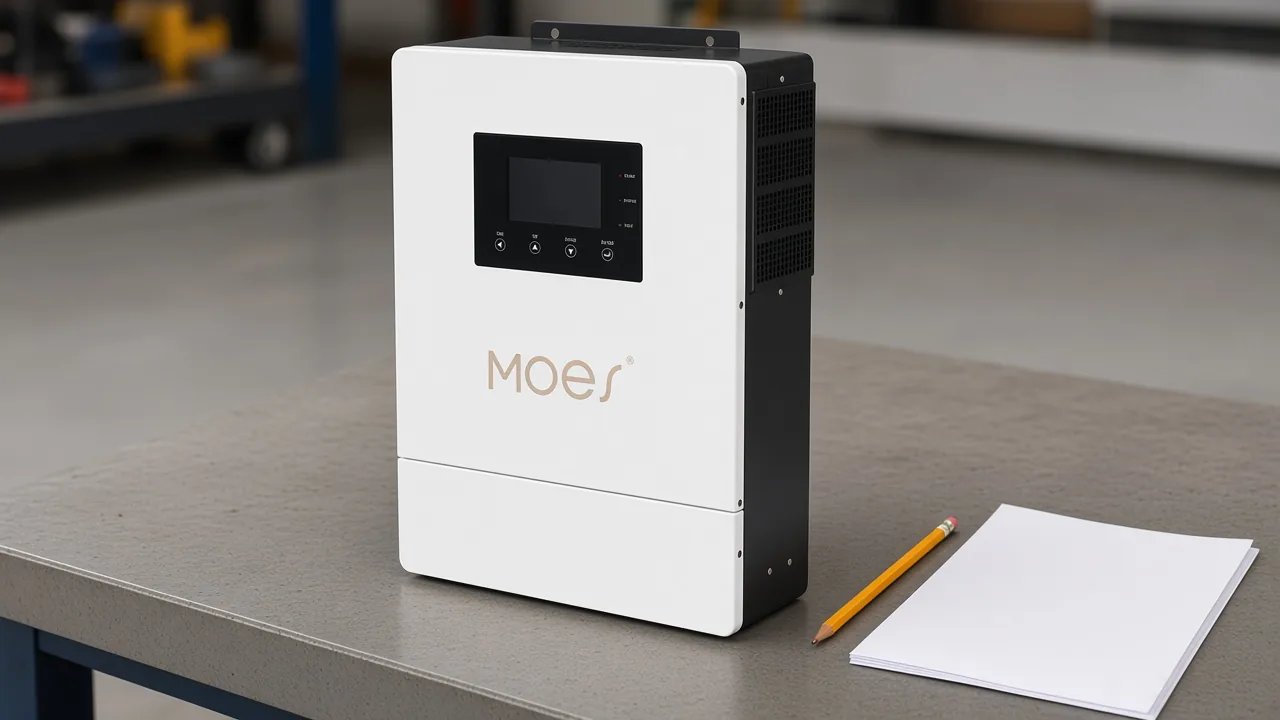
The live match for this definition on MOES is the MOES WiFi Smart Hybrid listing. The page calls the NVESS series a multifunctional inverter/charger combining an inverter, a solar charger, and a battery charger, with uninterruptible power supply support in the description.
The listed power range is 4.2kW/6.2kW. Copy that range line. Do not split it into two unstated continuous ratings, and do not paste another brand’s surge figure beside it.
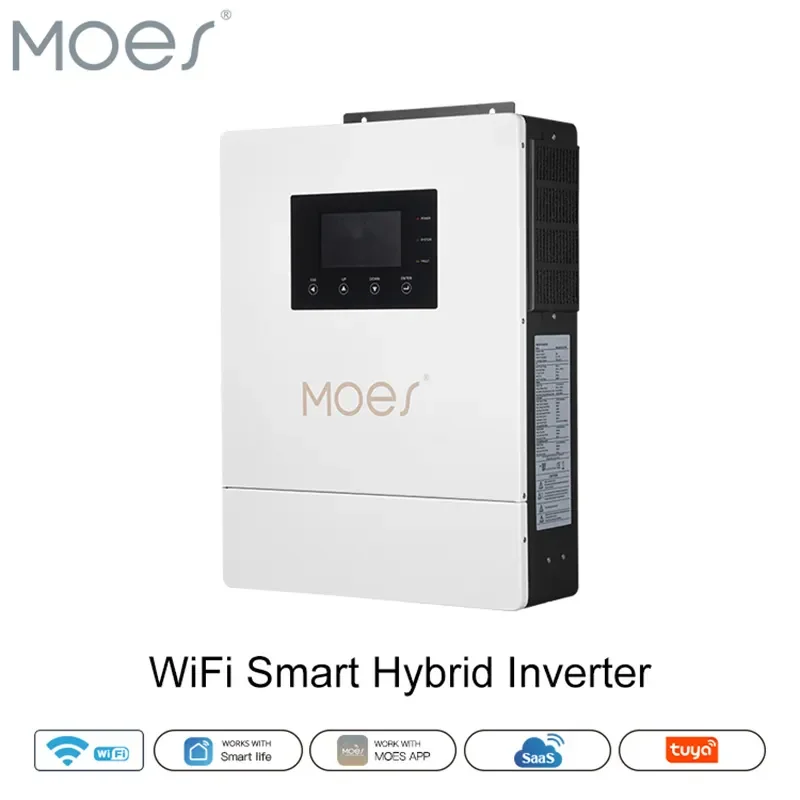
Other lines on that same page, already used above, stay listing-specific: the DC voltage, the AC window, the frequency pair, and the MPPT span and controller current.
The bullets also say pure sine wave, WiFi monitor, and multi-protection. Waveform class, modified versus pure, is compared on the live modified sine wave versus pure sine wave article.
This page only reports that the listing prints pure sine wave.
Browse the family from the hybrid inverter category and the broader solar inverter category when the project is a different voltage or a PV-only box. Those hubs list products. They do not replace the four locks above.
This MOES listing prints “operate without a battery.” That bullet is about this page, not about every hybrid chassis. Outage backup still needs a battery even if the inverter can power up before one is connected.
No. Class articles often describe grid charging or export. This listing’s title says Off-Grid and does not print an export rating.
Ask which grid role the project wants, then read the AC lines and the title together.
No. Backup assumes a grid that can fail and a way to leave that grid when it does. A site that never has utility power is a different design, even if both emails say hybrid.
Forum readers mix three pictures: a unit that dies with the grid, a unit that keeps loads up from the battery, and a unit that only turns PV into AC for the house or for export. The email should say which picture is being bought.
Hybrid names the combination of jobs. It does not name the string voltages this chassis will accept. This listing’s MPPT lines are the ones to copy; another hybrid chassis can print a different span.
Keep the definition here: what the box combines, and which facts the quote must name. Trade-offs, failure modes, and the RFQ checklist for downsides are already on the live hybrid inverter disadvantages checklist.




OTHER SMART DEVICES
Jun 13,2026
OTHER SMART DEVICES
Jun 12,2026
TUYA SMART HOME PRODUCTS
Jun 12,2026
 +86 137 3639 3028



