by NOVA

Oct 14, 2026
A 3 way smart switch lets one lighting load be turned on or off from two wall locations. The quote needs the line box, the load box, the second-control name printed on the page you buy, and the radio that page names.
The smart switch pillar holds the wall-control families. This page stays on a lamp shared by two locations. A noun definition lives on what a smart switch is.
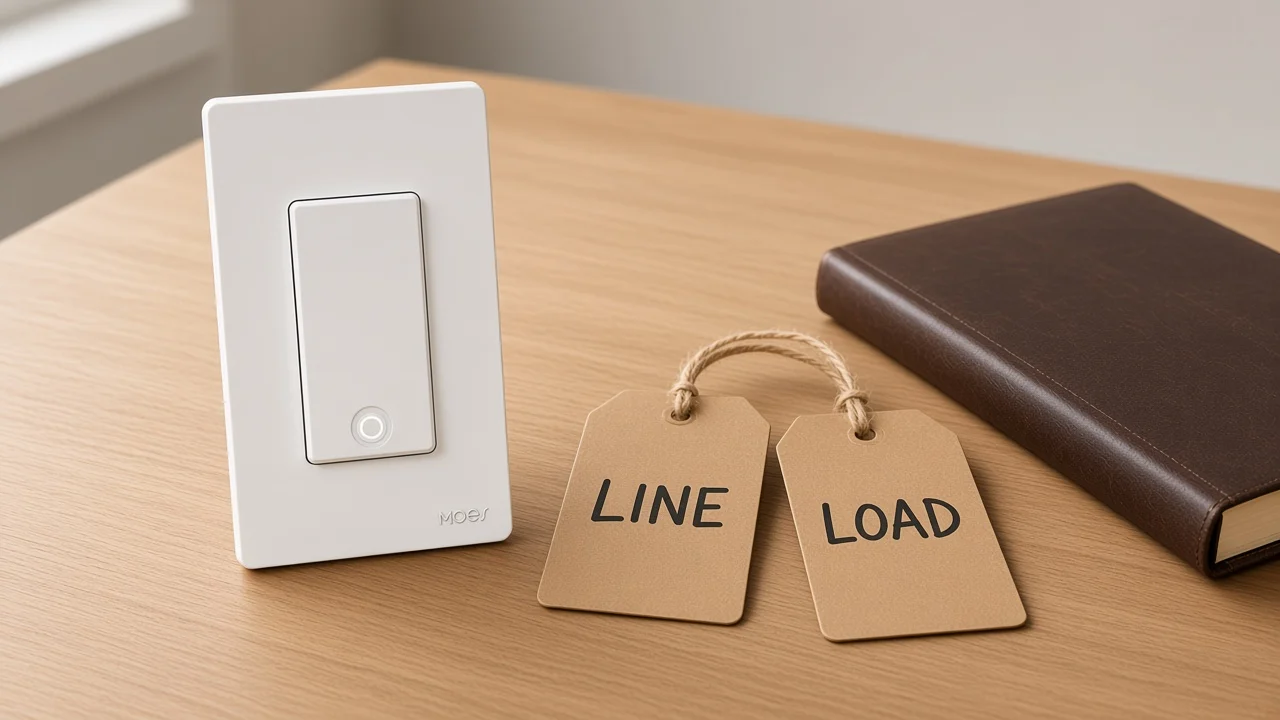
Two handles and one lamp are a single arrangement, not two unrelated controls. Halls and stairs are the usual places buyers meet that arrangement.
A mechanical pair uses a traveler between the boxes so either handle can change the lamp. A smart arrangement may keep a signaling conductor, keep a mechanical remote, add a wireless remote, or link two smart switches in an app. Those carts are different even when the hallway looks the same.
Picture a landing with a plate at the bottom of the stairs and another at the bedroom door. Both plates have always changed the same ceiling lamp. The buyer’s job is to say which plate still has continuous power, which plate faces the lamp cable, and whether the second plate will stay mechanical, become a companion switch, or be a second smart switch linked in the app.
The live install sheet already freezes photos, kit type, and pairing ownership: 3-way smart switch install project inputs. Use that sheet when the crew is labeling screws. Use this page when the cart must match the words printed on a MOES wall page.
On the MOES wall pages read for this quote, a 2/3-way circuit means more than one switch for one light, and the method named is multi-control association. That phrase is the thing to copy onto the order.
| Printed page | What 2/3-way means there | Second control as printed | Radio and neutral as printed |
|---|---|---|---|
| Zigbee wall switch | Multiple switches, one light, via the app | Only one gang on a switch can be linked | Zigbee, hub required; neutral option or single-live, no capacitor |
| Star Ring Wi-Fi push button | One light from two locations, or a single pole | Replace one traditional 3-way switch, or both; association is also described | Wi-Fi, no hub on the page; neutral needed |
| Ceiling-fan light switch | Association for one ceiling fan | Other smart switches in the app | Wi-Fi and RF; neutral required in the switch boxes |
The fan row is a different load. The ceiling-fan smart switch clarification owns fan-and-light split. A lamp-only hall should not inherit that page’s motor language.
A companion switch is a second device that signals a primary. The primary is the device that actually switches the load. Tutorials on wired companions say the companion is not useful by itself.
Other brands also sell a mechanical remote, meaning the old 3-way stays, or a wireless remote that never lands on a traveler. A MOES page that prints multi-control association is describing a link between smart switches, which is a third wording. Write the wording from the listing in the quote so the warehouse does not substitute a companion kit the page never names.
A distributor who stocks several wall families will see the same hallway photo attached to three different requests. One request wants the original mechanical switch left in place. Another wants a matched second device.
A third wants two smart plates that follow each other in the app. The printed page decides which of those three requests it can fill. The hallway photo alone does not.
From the field: On a stair with a switch at each end, the remaining mechanical switch turned the lamp off and then could not turn it on, because that handle removed power from the new smart device. People on that thread said the brand in the box needed its aux switch. — Hubitat stair thread
Line is the box where power arrives and stays available. Load is the conductor that runs to the lamp. A traveler is the run between the two boxes on a mechanical pair.
Jacket color does not assign those roles, so the quote should name the boxes from a test, not from memory of red and black.
Published how-to pages disagree about which box should hold the smart primary. One puts it on the line side. Another puts the primary at the load end and lets the companion signal back.
Because those stories conflict, the MOES quote records the measured line box and load box, then follows the association note on the page being purchased.
That measurement is also why a leftover mechanical handle can be the wrong second device. If it still switches the feed, the smart device loses power and the far location can only turn the lamp off.
A grounded conductor is the neutral return that lets switch electronics stay powered while the lamp is off. Code education on visible 3-way and 4-way switches says only one of those locations must have that conductor when the whole area can be seen from the switches. A legal pair can therefore have a neutral in one box and none in the other.
The Star Ring page prints that a neutral is needed. The Zigbee wall page prints a neutral option and a single-live version, and it says the latest version needs no capacitor.
Copy the sentence that matches the photos on the page you order. If the measured boxes have no neutral, the no-neutral wire smart switch inputs are the place to continue, rather than forcing the Star Ring line.
The radio is a line on the same listing, not a property of the words “3-way.” Star Ring prints Wi-Fi and says pairing needs no hub. The Zigbee wall page prints Zigbee and says a Tuya Zigbee hub is required for normal use.
The ceiling-fan page prints Wi-Fi and an RF remote. Mixing those radios because they share a 2/3-way circuit label puts the wrong gateway, or no gateway, on the pick ticket.
The Zigbee wall listing prints working voltage AC 100-250V, 50/60Hz, and a total current of 10A. Those figures stay on that listing. They are not a rating for the Star Ring switch and not a rating for the fan control.
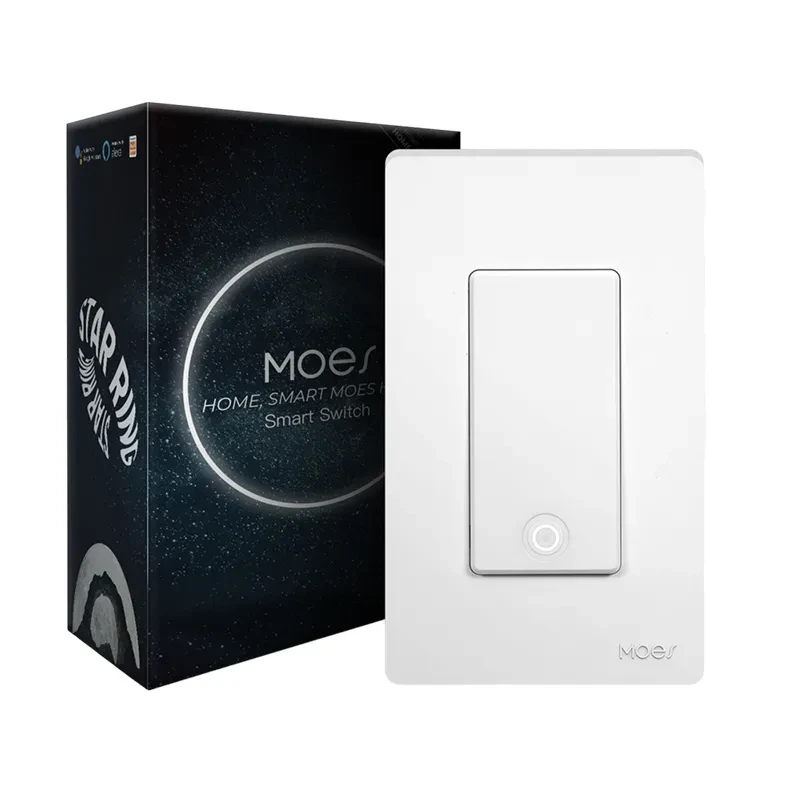
When both boxes already show a neutral and the load is a lamp, the printed match is the Star Ring 3-way/single-pole Wi-Fi switch. The page says you can replace one traditional 3-way switch, or replace both, to control one light from two locations, and it also allows a single-pole circuit.
The Star Ring listing prints model WS-SR-US-T, input power 100~245V AC 50/60Hz, and a max current of 10A. Association is described there as another way to control one light. A ceiling fan, a motion sensor, or a box with no neutral is outside that shortlist.
| Quote field | Write this | Leave it blank when |
|---|---|---|
| Line box | Which location keeps continuous power | The tester has not separated it from the load |
| Load box | Which location faces the lamp | Only a cable color was guessed |
| Second control | Companion, kept mechanical switch, remote, or multi-control association, copied from the listing | The page never names that method |
| 2/3-way print | The sentence on the page, including any one-gang link limit | A generic “3-way kit” was assumed |
| Neutral | Needed, optional, or single-live, as printed | The boxes were not opened |
| Radio | Wi-Fi, RF, or Zigbee, plus hub or no hub as printed | Protocol was copied from a different family |
For a hub-based cart with a printed single-live option, stay on the Zigbee wall page and its one-gang association note. Motion-sensor mounting stays on the 3-way motion sensor switch installation page. Channel questions on the Star Ring cart can go through contact.
The Star Ring page says yes: replace one traditional 3-way switch, or replace both, for one light at two locations. Other brands require a matched companion and reject a leftover mechanical switch. Copy the sentence from the page on the purchase order.
Not on the MOES wall pages read here. Those pages describe multi-control association in the app. A traveler still matters when you are mapping the existing mechanical pair, and the install sheet is where that map is stored.
The lamp can turn off from the far handle and then refuse to turn on, because the smart device lost power. That showed up on a stair where a mechanical switch stayed in the circuit without the aux device that brand required.
The Zigbee wall page reviewed here says a Tuya Zigbee hub is required for normal use, including when 2/3-way control is done by association. The Star Ring Wi-Fi page says pairing needs no hub. The hub follows the radio, not the hallway.
That page is about a ceiling fan and its light, with speed control and an RF remote, even though it also prints a 2/3-way association line. A lamp-only hall does not need the fan side of that control.
The published motion-sensor installation page covers that sensor job. This clarification does not repeat sensor mounting, occupancy modes, or a wiring diagram for a PIR.

OTHER SMART DEVICES
Jun 13,2026
OTHER SMART DEVICES
Jun 12,2026
TUYA SMART HOME PRODUCTS
Jun 12,2026
 +86 137 3639 3028