

by NOVA

Oct 27, 2026
A 2 gang zigbee switch module no neutral search is three quote decisions packed into one string, rather than one printed model name on this catalog. The channel still has to name form factor, what “2 gang” means on the chosen page, and whether that page actually prints no-neutral wiring. The page sits on the Smart Switch path and points to sibling sheets for deep RFQ detail instead of rewriting them.
It is a search cluster that mixes channel count, a hidden zigbee switch module, and a missing-neutral box—short of proof that one SKU title already bundles all three words.
Competitor shopping pages often sell dual-channel minis that already print “2-gang” and “no neutral” together. A distributor quote cannot treat that SERP habit as a MOES title match.
The useful cut is operational. Ask whether the buyer wants a finished plate people touch, or a part that disappears behind a plate they already like.
Then ask whether “2 gang” means two loads in one housing or a multi-position faceplate. Those are different carts even when the radio family is Zigbee.
Only after those two answers should the sheet ask whether the chosen page prints no-neutral or single-live language. Wiring stays its own field on the quote, separate from the module label.
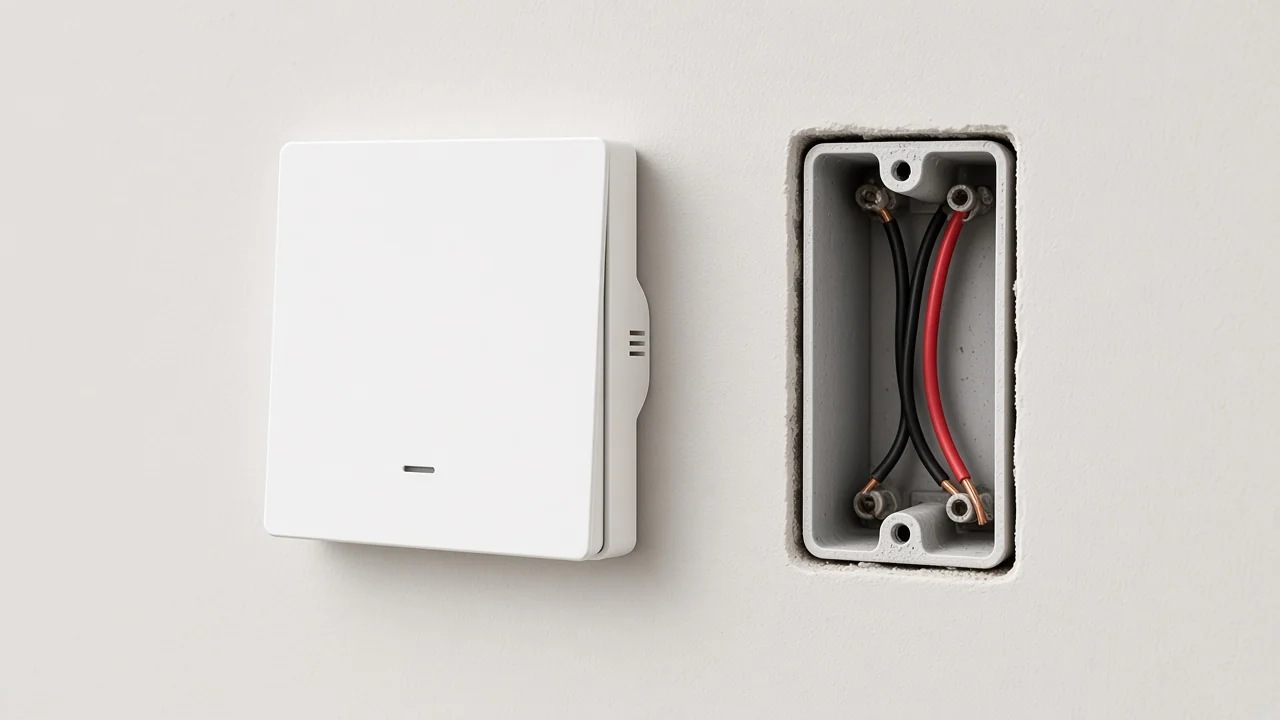
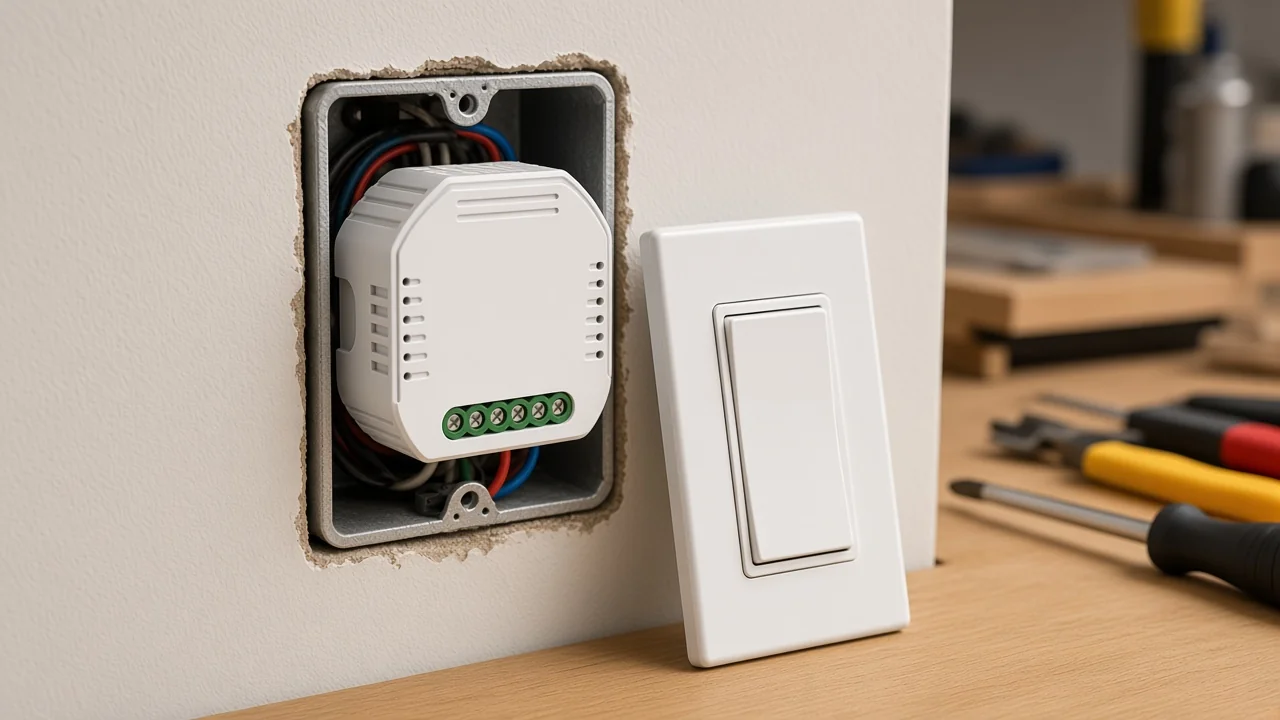
A hidden switch module stays in the box; a wall faceplate smart switch is the plate people touch. Independent module guides describe switch modules as parts installed behind existing switches, which is a different object from a finished faceplate.
A smart wall switch is the control class buyers see on the wall. The hidden class is the radio-plus-relay or dimmer that should stay out of sight.
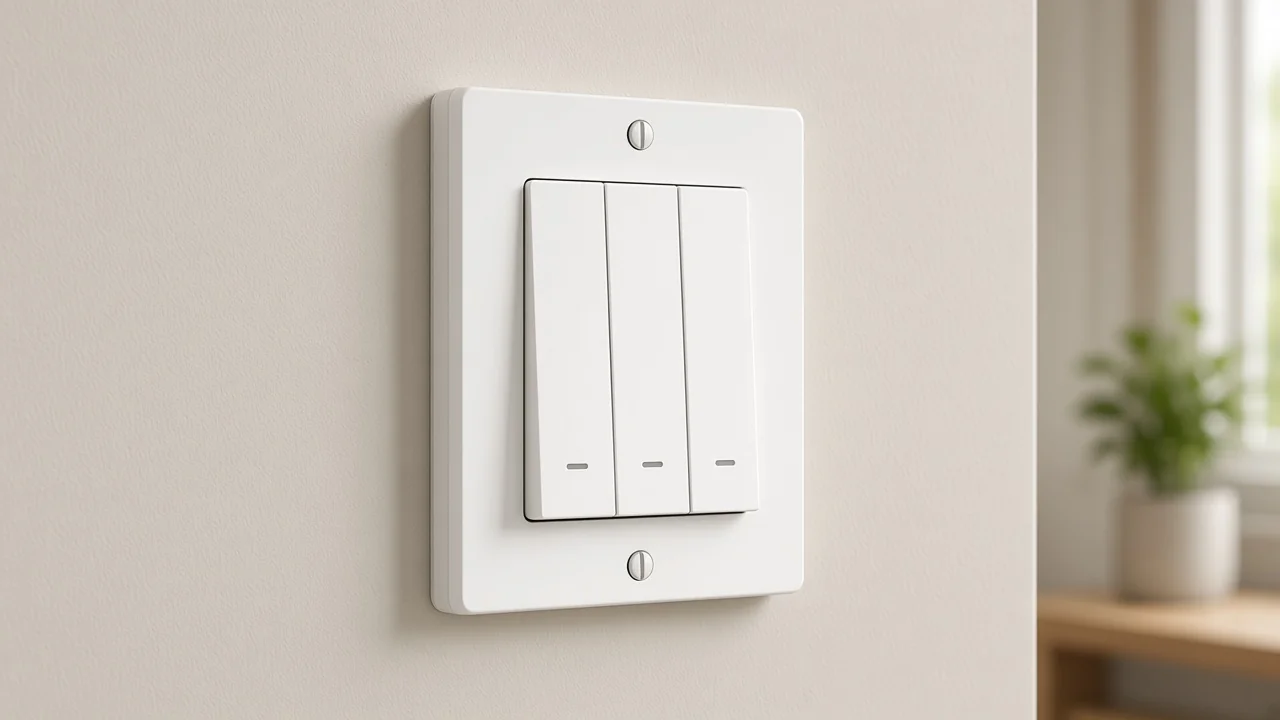
Live MOES evidence follows the same split. The dual-wiring Zigbee wall light switch page is titled as a wall light switch with Neutral Wire or No Neutral Wire options. That is faceplate language.
The ZigBee 3.0 smart dimmer switch relay module page tells buyers to hide the part in a wall switch box beside a traditional switch. That is module language, and it belongs with the Zigbee relay module clarification rather than with a finished plate story.
From the field: Public Hubitat threads on no-neutral Zigbee minis warn that some housings need a deep back box and that listing marks still matter to installers before a part goes into a wall. Treat box depth and listing needs as quote notes ahead of shipping. Source: Hubitat ZBMINI-L discussion.
If the project must keep a decorative rocker look, the sheet should name a hidden module path and the mechanical switch that remains. If the project wants a new finished plate, the sheet should name gang count and the wiring words printed on that wall page.
2 gang / 2 channel on the RFQ must copy the page’s own meaning—two channels in one module, or a multi-gang faceplate—instead of a guess borrowed from another brand’s mini.
On competitor module docs, “2-gang” often means two independent load channels in one hidden housing. That is a channel count.
On a wall faceplate, gang usually means how many positions the plate presents. A multi-gang Zigbee wall page that prints 1–4 gang is talking about plate positions and printed current per gang, aside from any no-neutral mini-module story.
The live dual-wiring wall page also limits multi-control association: only one gang per switch can be linked when multiple switches control one light. If the hallway job needs that association story, write the limit on the sheet instead of assuming every gang is free to link.
Leave the gang cell blank only when the chosen page never prints a gang or channel count. Skip inventing “2 gang” onto a dimmer module page that talks in watts and 1-way or 2-way notes instead.
No neutral / single live is a measured box condition and a printed product line—separate from the bare word “module.” Older switch-leg drops often leave only hot and switched-hot at the wall while the neutral stays at the fixture.
Community threads also remind buyers that some no-neutral controls still draw a small standby path through the lamp. That is why load class belongs on the sheet beside the wiring checkbox.
For the full field list—class filter, unused-gang notes, bypass ownership rules, and forbidden invented kits—use the live no neutral wire smart switch project-inputs sheet once. Here the only freeze is local: does the chosen page print no-neutral or single-live language?
| Quote cut | Wall faceplate path | Hidden module path |
|---|---|---|
| What the buyer holds | Finished plate people touch | Radio plus relay or dimmer in the box |
| Live MOES example | Dual-wiring Zigbee wall light switch (Neutral or No Neutral) | MS-105Z dimmer relay module |
| No-neutral language | Printed on the dual-wiring wall pages | Absent from the live MS-105Z page reviewed |
| Extra sheet | Gang / association notes from the wall page | Box depth, reset-switch notes, watt ceiling |
If the page prints Neutral Wire Required, stop selling it as a no-neutral answer. If the page is silent on neutral, leave competitor mini marketing off the MOES line.
App control on these Zigbee lighting pages needs the Zigbee hub / gateway the listing names; the switch or module leaves that coordinator as its own line. Zigbee protocol is a low-power mesh family that typically joins through a coordinator, so the gateway belongs in the system plan before cartons ship.
The dual-wiring wall page states a Tuya Zigbee hub is required for normal use. The dimmer module page says the same idea in its own words: a special Tuya ZigBee 3.0 hub must already be connected.
A wireless deployment guide from NIST still starts with objectives and environment before device selection. On a lighting quote, that means freezing hub family beside form factor and wiring instead of discovering the gap after cartons land.
Voice assistants named on a product page ride through that hub and app path. They still leave the hub row on the BOM.
Stock the pair when the channel wants scenes and remote control. A carton of wall switches or modules with no hub leaves the join step with nowhere to land.
No live MOES title equals the exact search string; the catalog prints wall dual-wiring switches, a hidden dimmer module, and neutral-titled multi-gang plates as separate classes.
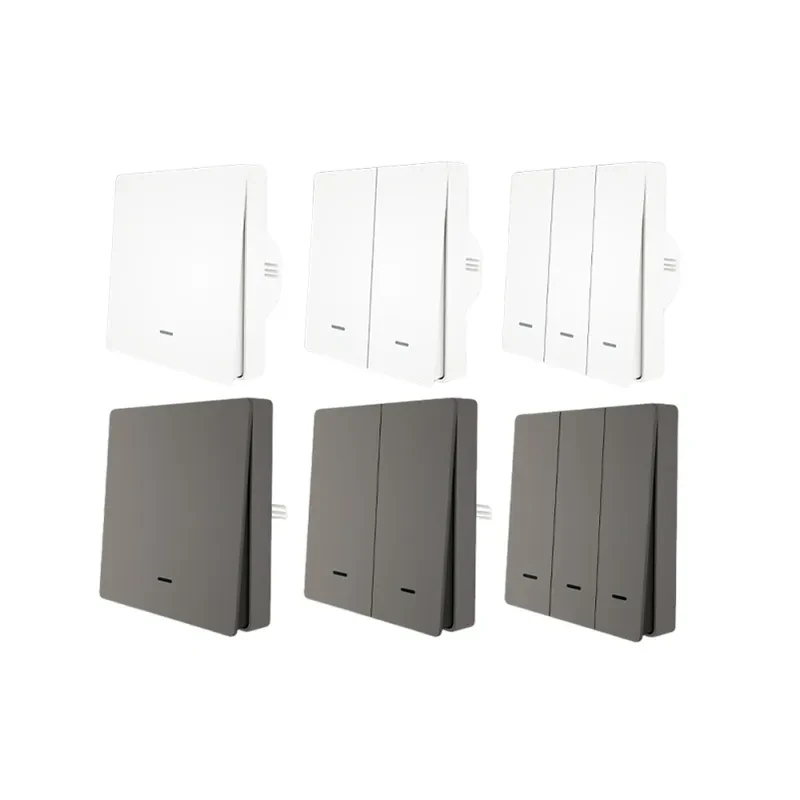
The dual-wiring Zigbee wall light switch page prints Neutral Wire or No Neutral Wire, 2/3 Way, Total 10A, and LED/CFL inductive load 3-120W. It also says the latest version removes the need for a capacitor. That is the honest wall evidence when the job needs printed no-neutral language on a faceplate.
The crystal-glass Zigbee wall touch page sits in the same dual-wiring wall family. Use it only when the finish and printed wiring match the project; glass cosmetics alone never prove a hidden module.
The 1–4 gang Zigbee wall switch title prints Neutral Wire with outgoing ground and neutral conductors. Max current on that page is 10A per gang and 10A total. That page is a gang-count example with printed neutral conductors.
The MS-105Z dimmer module page is the hidden Zigbee dimmer evidence: Product Type Smart Dimmer Module, Voltage 90-250V AC at 50 and 60 hertz, Max. Power 75W at 110V and 150W at 220V. It leaves no-neutral out of the live title and specs reviewed here.
Star Ring ZigBee smart dimmer switch pages remain wall dimmer faceplates. Keep them out of a “module no neutral” cart unless a future page print changes.
Match the job to a printed class: dual-wiring wall faceplate when no-neutral language and a finished plate are required; hidden dimmer module when the plate must stay mechanical and the page’s watt ceiling fits.
For a finished-plate retrofit that truly lacks a wall neutral, start from the live MOES dual-wiring wall switch (1544) on the MOES Zigbee wall light switch with neutral or no-neutral wiring page. Copy the dual-wiring note, the hub line, the 10A total line, and the LED/CFL 3-120W band onto the quote.
For a keep-the-plate job, open the MS-105Z ZigBee dimmer module only as a hidden-module candidate. Record the watt ceiling and hub requirement. Relabel it as no-neutral only after a live page prints that wording.
| RFQ field | What to freeze before PO |
|---|---|
| Form factor | Wall faceplate or hidden module |
| 2 gang meaning | Two channels vs multi-gang plate, as printed |
| Wiring class | Neutral, no-neutral / single live, or page silent |
| Hub line | Tuya Zigbee hub required when the page says so |
| Load words | Amp or watt lines copied from the same page |
| Listing / box notes | Depth, association limits, reset-switch notes as printed |
Skip Matter claims, efficiency percentages, C-wire, surge ratings, and capacitor DIY kits on either path. If the sheet needs the longer no-neutral checklist, return to Post 3070 instead of stretching the clarification into an install manual.
No. Live titles split wall dual-wiring switches, hidden dimmer modules, and neutral-titled multi-gang plates. Treat the search string as three decisions rather than one SKU name.
No. A module sits in the box behind a plate. A wall smart switch is the finished control people touch.
Copy the listing. It may mean two load channels in one module or a multi-gang faceplate. Keep those meanings separate on the RFQ.
The dual-wiring Zigbee wall light switch page prints Neutral Wire or No Neutral Wire. Crystal-glass dual-wiring wall pages sit in the same family when their print matches.
No. The live MS-105Z page reviewed here leaves no-neutral unprinted. Quote it as a hidden dimmer module with its own watt and hub lines.
Yes when the product page says a Tuya Zigbee hub is required. Put that hub on the BOM before the carton ships.
Use the no-neutral-wire smart-switch project-inputs article for the longer sheet. The local job here is form factor and catalog honesty around the search string.
No. That page title prints Neutral Wire. Use it for gang-count and neutral-conductor language instead of a no-neutral substitute.


OTHER SMART DEVICES
Jun 13,2026
OTHER SMART DEVICES
Jun 12,2026
TUYA SMART HOME PRODUCTS
Jun 12,2026
 +86 137 3639 3028