


by NOVA

Sep 28, 2026
Compare matter vs zigbee as a layer choice for the channel / distributor buyer: Matter is the shared IP language that can ride Wi-Fi or Thread, while Zigbee is a full-stack mesh that usually needs a zigbee hub. Lock layer versus radio, hub versus Matter controller, bridging, certification claims, and commissioning before you lock brands.
This page gives the layer frame, a decision matrix, those RFQ fields, and live MOES SKU evidence for each path. It does not rewrite the Matter versus Thread job split or the Zigbee versus Thread hub-versus-border-router comparison. Browse modules on the Smart Modules pillar.
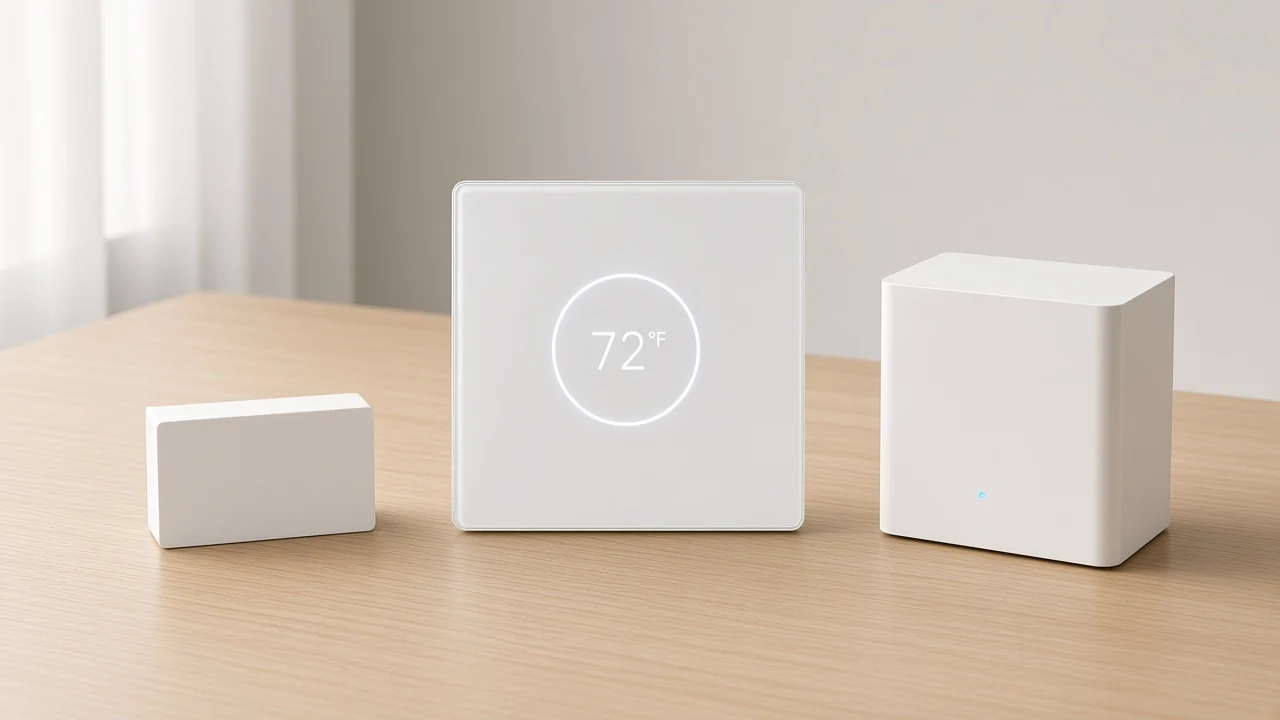
Matter owns the IP application language and data model; Zigbee owns a full stack that includes both the mesh and its own application language.
The Connectivity Standards Alliance presents Matter as an IP-based connectivity protocol. Its first specification release runs on Wi-Fi and Thread network layers and uses Bluetooth Low Energy for commissioning.
The same alliance presents Zigbee as a complete IoT solution from the mesh network to the universal language devices share. That is why a Matter logo on a carton is not a radio SKU, and a ZigBee 3.0 line is not automatically a Matter fabric.
If you only need the definition of each name, read what is Matter and what is Zigbee. The buying decision here is which layer you are quoting.
Zigbee is not part of the Matter specification, so a Zigbee endpoint does not start speaking Matter after a sticker change. Treat coexistence as a kit design problem, not as a firmware slogan.
It changes which always-on box you stock, which radio you name under the language, and whether a bridge line belongs on the quote.
On a Zigbee path, channel kits usually ship endpoints plus a zigbee hub / coordinator that forms the mesh and bridges traffic toward IP apps.
On a Matter path, the language box is a Matter controller. The radio is a second line: matter over wifi uses an access point you already quote, while Matter over Thread still needs a Thread border router — a job owned by the Matter-versus-Thread page, not this one.
A distributor quoting climate and lighting together often ends up with two kits in one warehouse: a Matter-over-Wi-Fi thermostat that talks to Apple Home or Alexa, and a Zigbee dimmer module that will not join until a Tuya ZigBee hub is on the same list.
If the RFQ only says “Matter or Zigbee?” and never names the transport or the box, the assortment is not locked.
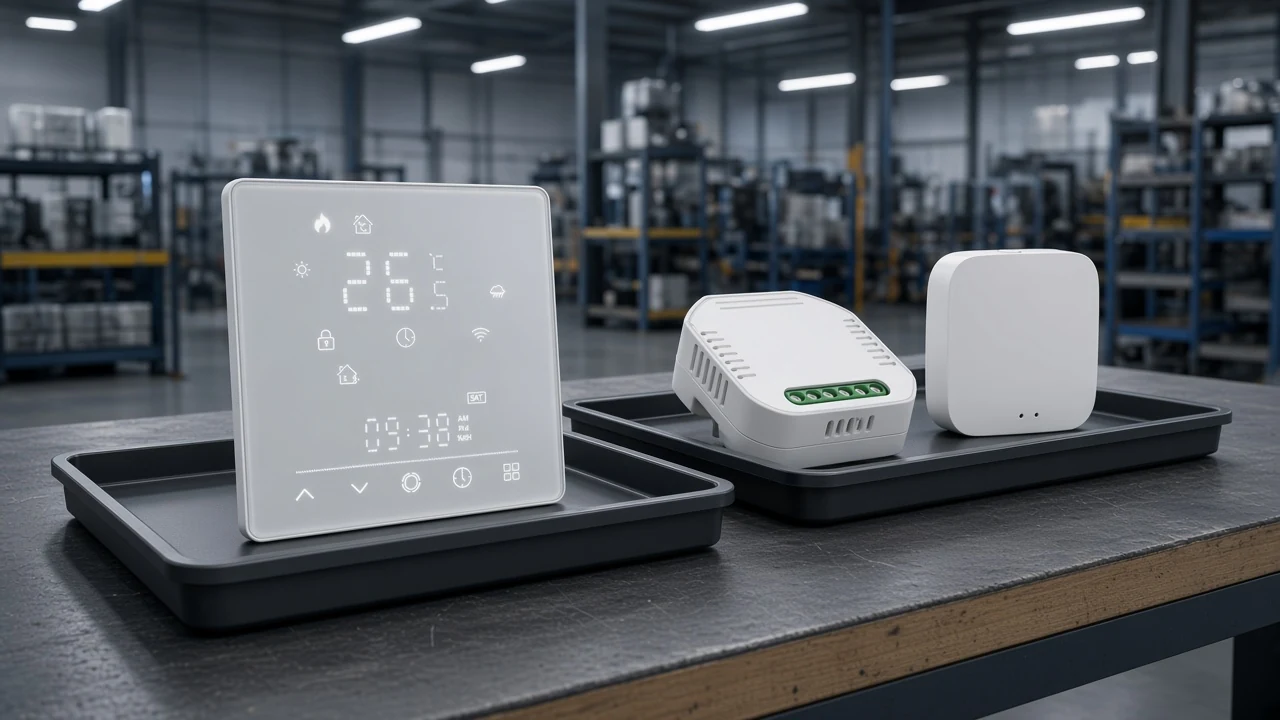
Use this matrix to scan layer, radio, logistics box, bridging, certification wording, and commissioning before you argue about brand preference.
| Decision field | Matter interoperability path | Zigbee full-stack hub path |
|---|---|---|
| What you are buying | IP application language and shared data model | Full-stack mesh plus Zigbee application language |
| Radio / transport | Named separately: Wi-Fi, Ethernet, or Thread | Zigbee mesh radio (commonly 2.4 GHz class) |
| Typical logistics SKU | Matter controller; plus AP or Thread border router as the transport requires | Zigbee hub / coordinator stocked with endpoints |
| Cross-ecosystem reach | Built as a multi-admin language over IP | Strong inside Zigbee; other ecosystems usually need a Matter bridge |
| How the other stack appears | Zigbee endpoints appear only if a bridge re-exposes them | Matter endpoints do not join the Zigbee mesh as native peers |
| Commissioning labour | Matter commissioning, including BLE on the first-release story | Hub-first pairing into the Zigbee network |
| Certification language on the quote | Write Matter plus the named transport; do not invent a radio | Write ZigBee 3.0 (or the page protocol); do not invent Matter marks |
Scan the matrix top to bottom on every mixed lighting-and-climate quote. Thread transport details stay on the Matter-versus-Thread page; Wi-Fi access-point load stays on the Zigbee versus Wi-Fi page.
They decide the quote whenever the always-on box is missing, or when one enclosure is asked to play both language roles without being specified.
On Zigbee quotes, the hub is not a decorative accessory. Live MOES Zigbee module copy states that a Tuya ZigBee 3.0 hub is required and connected before app and voice control start.
If the distributor ships dimmer modules without a matching hub line, the installer finds the gap on site. The hub also needs continuous power and, on the MOES wireless gateway copy, must work in the 2.4 GHz Wi-Fi band for its own uplink.
On Matter quotes, the Matter controller is the language box. Community integrators still treat Wi-Fi transport as an access-point job and Thread transport as a border-router job — so a logo on the carton does not replace either line.
From the field: First-time Matter setups often feel like extra software until someone names the transport. Matter can use Wi-Fi, Thread, or Bluetooth as a medium; a Thread job needs a Thread border router, while a Wi-Fi job already has the access-point equivalent. — source: Home Assistant Community, “My first Matter devices — do I really need all this software?”
A Wi-Fi gateway SKU is a different object again. If the quote is really asking what that box is, use what is a Wi-Fi gateway and keep this page on Matter language versus Zigbee stack.
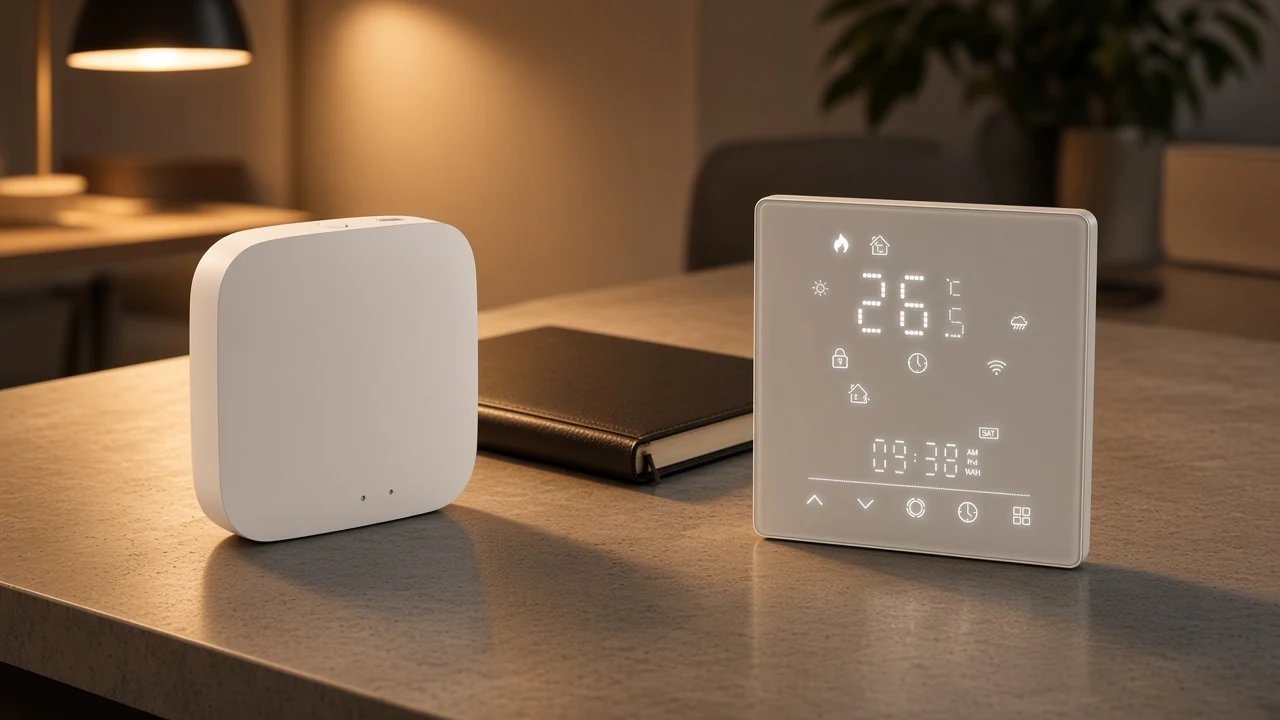
Five fields are enough to stop most Matter-versus-Zigbee quote churn: layer versus radio, hub versus Matter controller, bridging, certification claims, and commissioning.
| RFQ field | What to write on the quote | Why it matters |
|---|---|---|
| Layer versus radio | Matter language or Zigbee full stack; then name the radio | Stops a Matter logo from being treated as a Zigbee radio swap |
| Hub versus Matter controller | Zigbee hub SKU count or Matter controller role and count | Always-on box must match the language on the endpoints |
| Bridging | Required / not required; which hub exposes Zigbee as Matter | Zigbee does not talk Matter natively |
| Certification claims | Matter + named transport, or ZigBee 3.0 as the live page states | Prevents invented Matter marks on Zigbee-only SKUs |
| Commissioning | Matter BLE/QR flow or Zigbee hub-first pairing hours | Prices installer labour before brand discounts |
Store clerks and Reddit threads keep mixing the names: Matter is not “the new Zigbee,” and matter over wifi does not take load off Wi-Fi. Write the radio under the language before you add a Thread border router or a Zigbee coordinator.
If a packing list says “Matter,” ask whether the Wi-Fi transport is enough or whether Thread is in scope. The Alliance’s first Matter release lists Wi-Fi and Thread as the network layers and Bluetooth Low Energy as the commissioning radio, so the language line still needs a named transport.
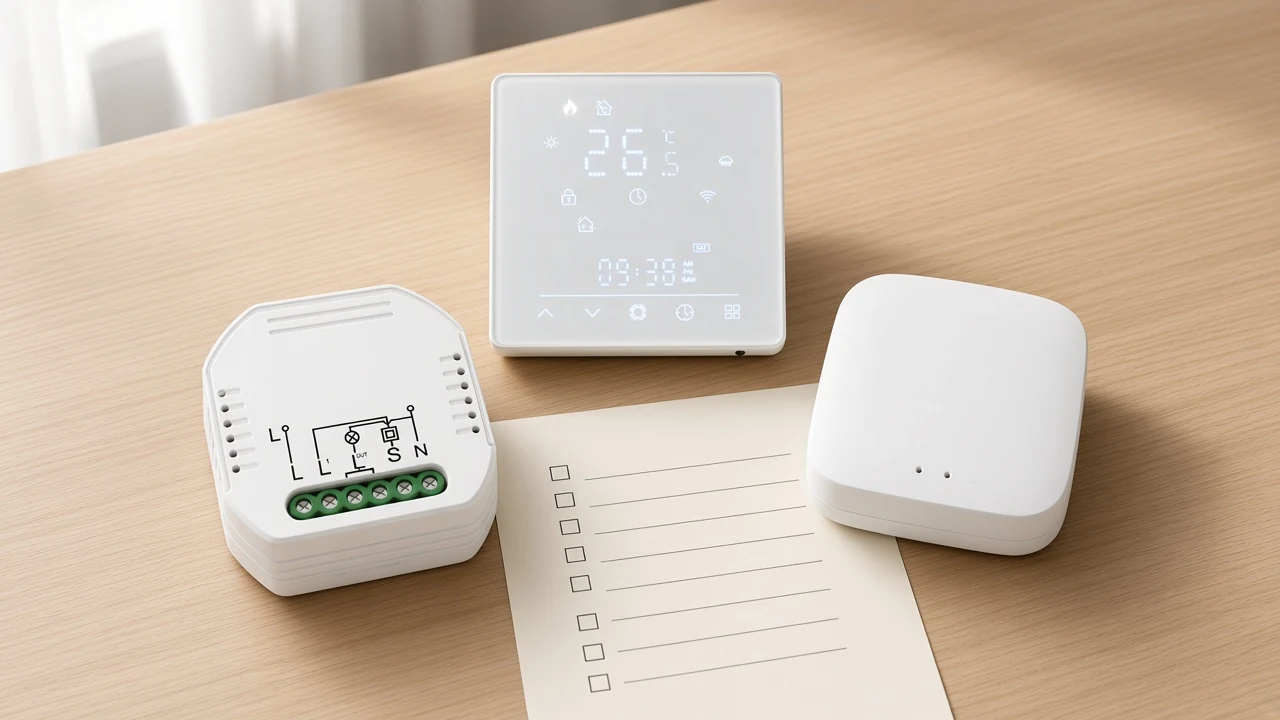
Bound each path to live MOES listings that already name the protocol — and do not invent Matter marks on Zigbee-only hardware.
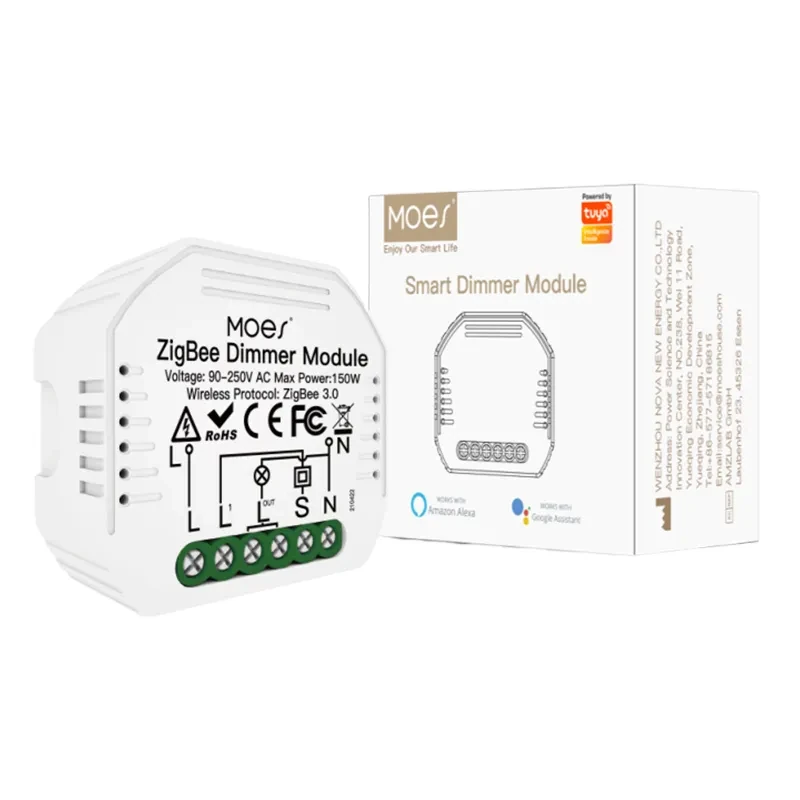
MS-105Z is sold as the MOES Tuya ZigBee 3.0 dimmer relay module.
That listing requires a special Tuya ZigBee 3.0 hub to be connected, and it says the module plus a ZigBee gateway can form a home LAN when the wider network is weak or missing.
MS-105Z’s published table lists Voltage 90-250V AC 50/60Hz, Max. Power 75W at 110V / 150W at 220V, size 52×47×18 mm, IP20, Frequency Band 2.400-2.483GHz, and Maximum Radio Transmit Power <+20dBm, and it notes a reset-switch fit.
ZHUB-W is the wireless ZigBee gateway companion: a must for ZigBee products, limited to Tuya ZigBee 3.0 smart products.
ZHUB-W’s table lists Electrical Parameters 5V 2A, Micro USB DC5V charging, Wireless Protocol ZigBee 802.15.4, Frequency Band 2.412-2.484GHz, and Maximum Radio Transmit Power <+20dBm, plus a note that the hub uplink must sit on 2.4 GHz Wi-Fi.
Treat ZHUB-W as the Zigbee hub line for that kit — not as a Matter controller and not as a Thread border router.
For a bounded Matter path, the MOES Tuya Matter WiFi Smart Thermostat (MWHT-S02-GA/GB/GC) is listed as a Matter WiFi Smart Thermostat.
The page names APP remote control through MOES, Apple Home, and Alexa, plus voice with Alexa, Google Home, and Homekit, and it calls the glass unit a matter thermostat.
Published table values on that page include Current Load 5A for water heating and gas boiler and 16A for electric heating, Accuracy ±1°C, Set Temp. Range 5-35°C, and Power Consumption <1.5W.
Treat those figures as that SKU’s page facts. The thermostat listing does not publish a Thread radio, a dBm figure, or a Matter certificate number, so none of those claims belong on the quote.
No. Matter is a compatibility language over IP transports; Zigbee remains a full-stack mesh the same alliance still maintains. Keep working Zigbee kits on the list unless the RFQ actually asks to change layer and radio.
Not as a native Matter node. A hub must re-expose the Zigbee endpoint as a Matter device, and advanced brand-app features often stay behind the original coordinator.
No. A Matter controller speaks the Matter fabric; a zigbee hub / coordinator forms the Zigbee mesh. One physical box can ship both radios only when the live spec sheet says so — never assume it from a logo.
No. Matter can ride Wi-Fi, Ethernet, or Thread. A Matter-over-Wi-Fi thermostat still uses Wi-Fi transport; Thread is a separate radio decision.
Plan a hub line whenever the endpoint page says a hub is required. MS-105Z’s live copy states that a Tuya ZigBee 3.0 hub must be connected, so a module-only quote is incomplete for that SKU.
Zigbee-path examples are MS-105Z and ZHUB-W. The Matter-path example used here is the MWHT-S02 Matter Wi-Fi thermostat. Neither Zigbee page claims Matter or Thread in the evidence used here.
Not as a default. Homey’s public FAQ and the CSA layer split both treat replacement as optional. Add Matter where the job needs multi-ecosystem language; keep Zigbee where the mesh catalog and hub kit already work.




OTHER SMART DEVICES
Jun 13,2026
OTHER SMART DEVICES
Jun 12,2026
TUYA SMART HOME PRODUCTS
Jun 12,2026
 +86 137 3639 3028



