


by NOVA

Oct 07, 2026
Types of power inverters are the class labels a channel writes before a SKU exists: waveform, DC input voltage, and whether the box only inverts or also charges the battery.
A wattage line still leaves those labels open. The noun, the job the device does, the waveform head-to-head, the pure-sine definition, the solar class list, and the wattage checklist already have their own pages.
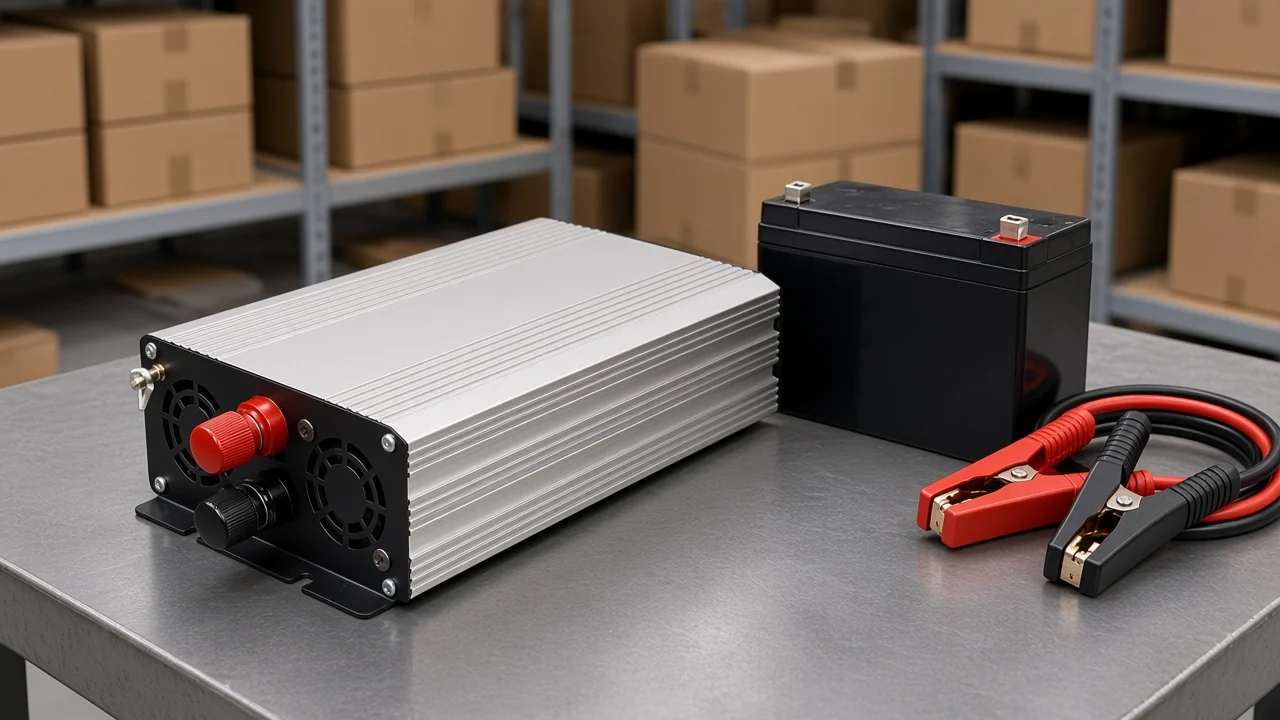
A dealer message that says only “2000 watt inverter” can still mean three different boxes. One is a stepped waveform for lights and heaters. Another is a sine-wave unit on a vehicle battery.
A third also charges that battery when shore power returns.
This page is the sorting step. What a power inverter is names the device. What a power inverter does with stored DC follows the energy from the source to the load.
Class labels come before either of those pages gets a model number.
A request that names only watts has not chosen among the different types of power inverters a catalog actually stocks.
Picture a coordinator pasting a customer line into a supplier thread: lights, a fridge, and a laptop, from a battery in a work van. The wattage might be enough for a later sheet. The class is still blank.
Waveform decides which of those loads the channel is willing to promise. Battery voltage decides which bank the inverter is built to sit on. Charger duty decides whether shore power is supposed to refill that bank through the same box.
Power inverter types in a wholesale list often share a housing photo and a wattage badge. The badge is not the class. Two housings can look alike while one makes a stepped wave and the other is sold as pure sine.
Treating them as interchangeable is how a resistive-load order gets shipped to a customer who wanted quiet motors.
Write the class in the same note as the customer’s loads. Then open a product page. The page should confirm the label you already wrote, rather than inventing the label from a title that leads with watts.
Square wave, modified sine wave, and pure sine wave are the three output names channels actually print on a power inverter.
A square wave is the simplest shape: the output sits at one level, then the opposite level. Textbooks treat it as a limited class for simple resistive loads. It is uncommon on current wholesale sheets because so many appliances expect something closer to mains power.
A modified sine wave is the stepped shape Wikipedia describes: zero, a positive peak, zero again, a negative peak, then zero. Sellers also print quasi-sine wave for that same stepped idea. The words sound like a sine wave that was edited.
Electrical Academia calls that naming unhelpful and describes the shape as a square wave with a pause between the positive and negative parts. Resistive lights and heaters are the loads the MOES modified-sine page itself talks about. Motors, timers, and speed controls are the loads the textbook flags as unhappy: extra noise, extra heat, or a control circuit that will not behave.
A pure sine wave is the label manufacturers use when the output is meant to look like utility power rather than a few thick steps. The pure sine wave power inverter page for buyers stays on that one label. The head-to-head between modified and pure, load by load, stays on the waveform comparison.
Channel sheets stop after that waveform column. The load-by-load duel lives on the comparison page.
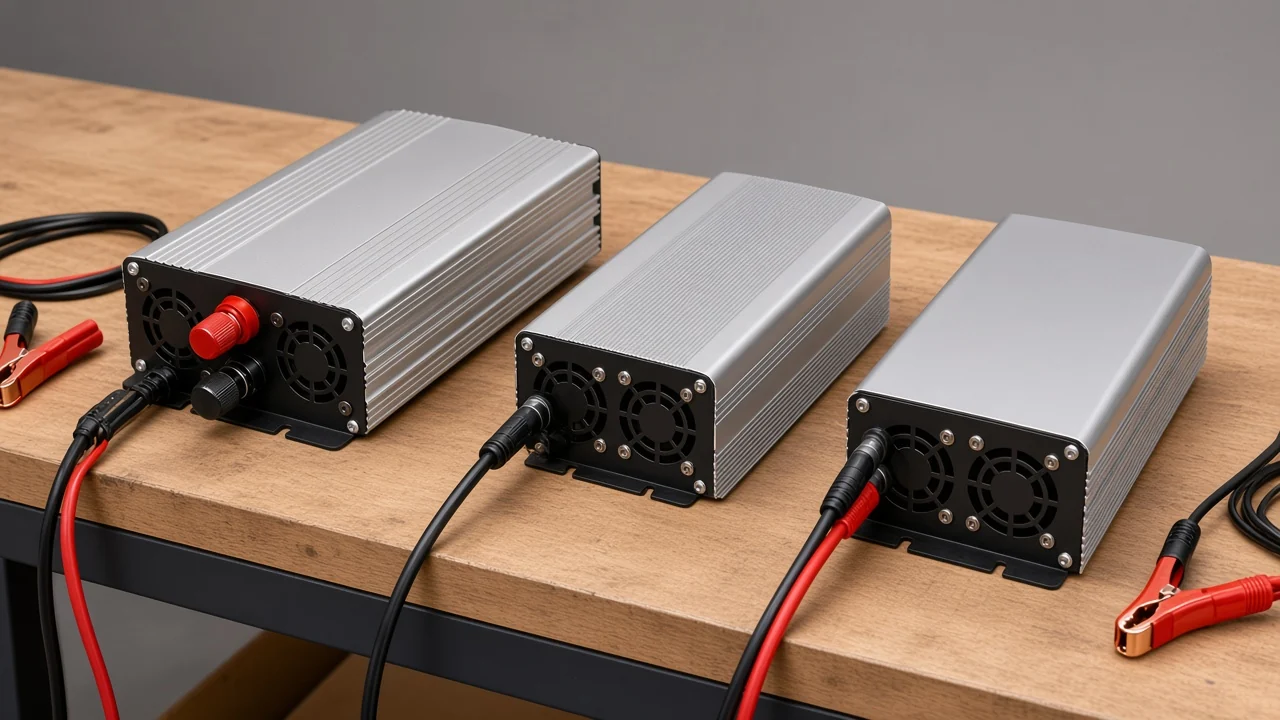
Separate one engineering phrase from those channel labels. A voltage-source inverter is the power-electronics name for a unit whose input behaves like a stiff DC voltage, as opposed to a current-source design used in some industrial drives. Catalog buyers almost never order “VSI” as a SKU.
They order a waveform and a battery voltage. NREL’s utility-inverter work splits control another way, into current control and voltage control, with a sine reference compared to a triangular carrier. That is how a sine-like output is built.
It is not a fourth line on a dealer form.
If the customer’s list includes a motor, a microwave, or a charger that has failed on a cheap inverter before, write pure sine in the waveform field before you talk about price. If the list is lamps and a heater, the modified-sine class is the page the MOES application text points to. Leave the long load-by-load argument on the comparison article.
The DC input voltage class has to be the voltage of the battery bank, or the inverter and the bank are not the same circuit.
Wikipedia gives 12 V DC as an example input for smaller consumer and commercial inverters that run from a rechargeable 12 V battery.
Both live MOES class pages print DC operating voltage 12V/24V/48Vdc, output voltage 110V/120V/220V/240Vac, operating frequency 50Hz/60Hz, and a power range of 300W to 6000W.
The pure-sine page title says 1000W 2000W and 12V, while the printed table lists a wider family range.
Read the title and the table as two layers. The title is how that one page introduces a pure-sine class example. The table is the voltage, frequency, and power span printed on both the pure-sine page and the modified-sine page.
A coordinator who copies only the title can miss that the same class pages also print higher DC classes. A coordinator who copies only the wide table can miss that the title is calling out a vehicle-style example.
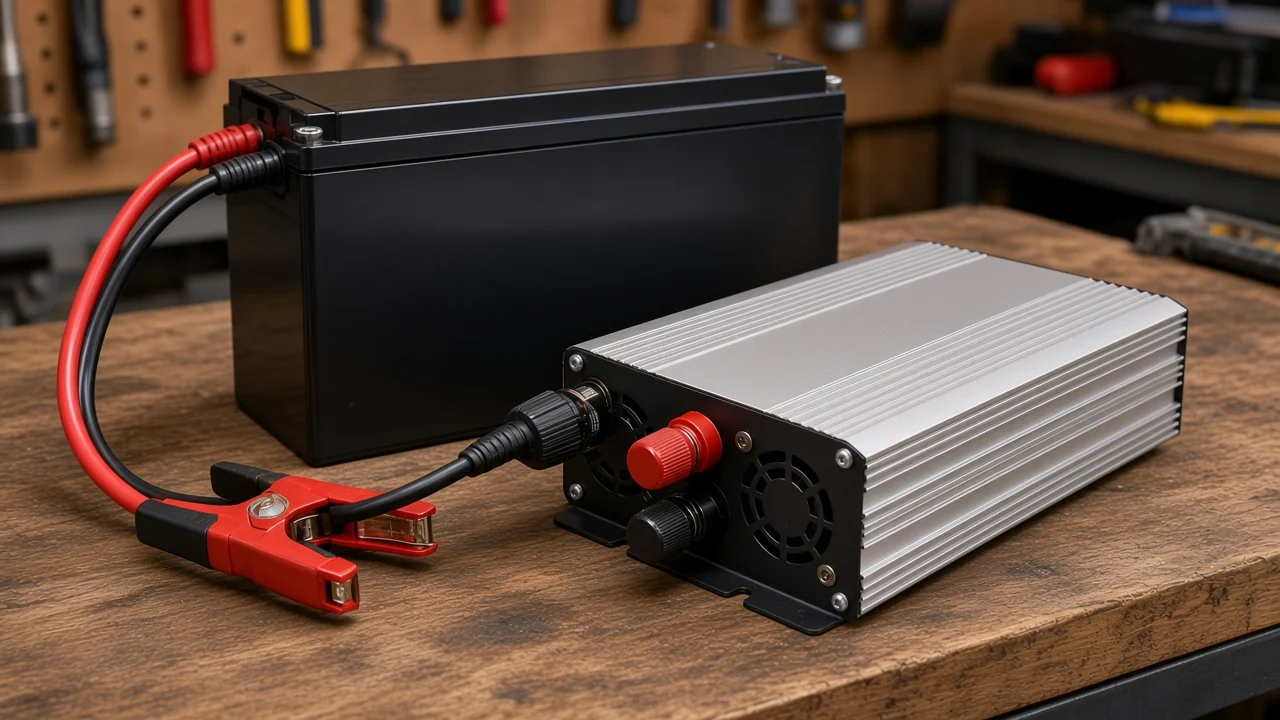
A van bank and a stacked stationary bank are different classes even when the AC loads look similar. The inverter built for the low-voltage bank draws much heavier current for the same AC load, which is why cable talk shows up early. That cable math, and the wattage the loads add up to, belongs on the sizing checklist.
This page only insists that the voltage class be written before that checklist starts.
Output voltage and frequency are class fields too, because a unit built for one mains region will not quietly become another. The MOES tables print both common AC ranges and both common line frequencies on the same class pages. Write the region’s AC voltage and frequency next to the DC class so the factory is not guessing from a wattage.
An inverter-charger still makes AC from the battery, and it can charge that battery when generator or grid AC is connected. A standalone power inverter only does the first job.
On a DIY Solar Forum thread, buyers were mixing charge-verter, inverter-charger, and all-in-one as if they were one shopping word. The clearest reply splits them by function. A charge-only unit takes AC and makes DC for the battery.
An inverter-charger makes AC from the battery and, with shore or generator AC present, can charge the battery too. An all-in-one does that and also takes a solar charge-controller input.
From the field: A Solar Panels Forum buyer, after tool chargers failed on a modified-sine unit, wrote that nobody had said a mod sine wave was no good for charging battery packs. Source: Inverter keeps shutting off
That split changes the wiring story. An invert-only unit needs a separate charger if the bank must refill from shore power, and it needs two sets of heavy DC cables if both boxes sit on the same bank. An inverter-charger puts both jobs in one enclosure.
Owners who prefer separate boxes say a failure then takes only one job with it. Owners who prefer the combined box say the installation has fewer large cables. Either preference is a class choice.
It is not a wattage choice.
RV threads say the same thing in plainer words: the inverter runs AC loads when shore power is absent, and it does not refill the battery by itself. If the customer’s day includes a campsite pedestal or a generator inlet, ask whether that AC source should charge through this unit. If nobody has an AC source, an inverter-charger’s charge function is idle weight.
On-grid, off-grid, and hybrid solar classes are sorted on the solar inverter classification guide. This page keeps power inverter classes: a DC source that is already a battery or a vehicle system, feeding AC loads.
The MOES breadcrumb still files the pure-sine and modified-sine power inverter categories under the solar inverter pillar, then under off-grid. The pure-sine category list also shows a low-frequency hybrid solar inverter/charger. The folder is shared.
The class name is not. A hybrid solar unit is in the solar taxonomy because its job includes the PV side. A battery power inverter can sit in an off-grid van and never see a panel.
When a request says “solar inverter” and the loads are panels, string voltage, and grid connection, stop and use the solar guide. When a request says “power inverter” and the source is a battery, stay here and write waveform, DC input voltage, and charger duty. Writing both names on one line without that split is how a PV hybrid and a van inverter get quoted as the same SKU.
NREL’s grid-connected PV work describes inverter current that is close to a sine wave after filtering. That is a solar-plant discussion. It explains why a sine-wave word shows up in both catalogs.
It does not merge the catalogs.
Each class axis adds a field, and the wattage sheet does not replace any of them.
| Class axis | Field the channel writes | What that field changes |
|---|---|---|
| Waveform | Square, modified sine, or pure sine | Which loads the channel will promise |
| DC input voltage | The bank voltage the inverter is built for | Whether the battery and the inverter are the same circuit |
| Output AC | The mains voltage and line frequency | Which region’s appliances the outlet matches |
| Charger duty | Invert only, or inverter-charger | Whether shore or generator AC should refill the bank |
| Solar boundary | Power inverter class, or solar plant class | Which guide and which catalog folder come next |
The waveform column can be filled with the load language the sources actually use.
| Waveform label | Load language the sources support | Page a channel opens next |
|---|---|---|
| Square wave | Simple resistive loads, and little else on modern sheets | Usually no current MOES power-inverter class page |
| Modified sine wave | Resistive lights and heaters; some motors only with noise | The modified-sine class page |
| Pure sine wave | Electronics and motors the channel wants to run without that noise | The pure-sine class page |
A motor on the load list moves the waveform field before it moves the wattage field. The textbook warning is about heat, noise, and controls, not about a bigger number on the same stepped waveform. A laptop brick is a weaker signal: many switch-mode supplies run on a stepped wave, and a transformer-based supply may buzz.
If the channel cannot tell which supply is in the box, pure sine is the class that avoids the guess.
Charger duty is the next field when the site has shore power or a generator. Write “invert only” or “inverter-charger” in words. “Backup power” is too vague, because it can mean either box.
The pure-sine class page is the match when the request names sine-wave output or when motors and electronics should stay off a stepped wave.
Open the pure sine wave power inverter when the request names a pure sine class, or when the loads include motors and electronics the channel does not want on a stepped wave.
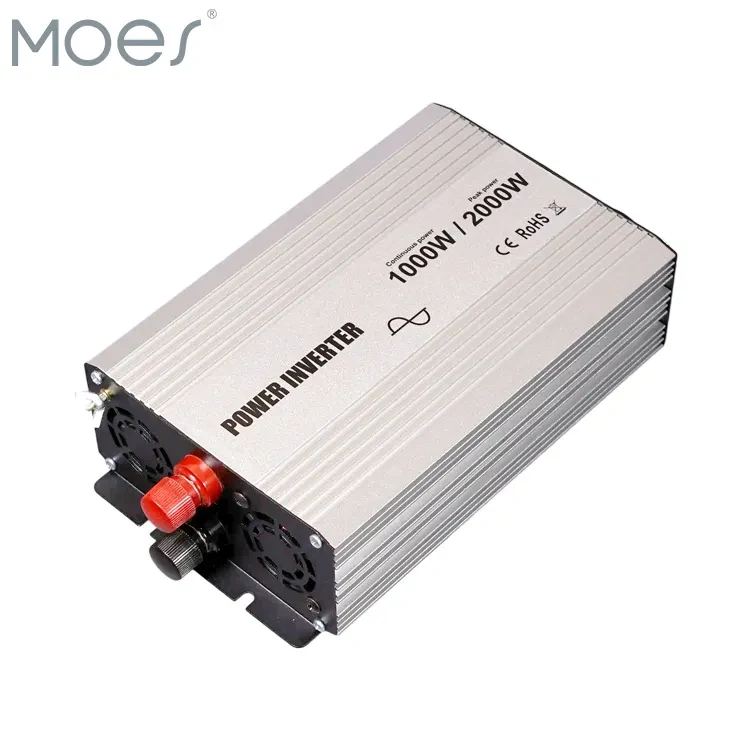
That page is a class example, printed as a high-frequency pure sine wave unit for off-grid and vehicle-style use. Its title highlights a vehicle-style wattage pair. Its table prints the same DC classes, AC voltages, line frequencies, and power span as the modified-sine page.
Use the table as the printed span and the title as the way that page introduces itself. Protections are named on the page as over-current, over-voltage, over-temperature, overload, short-circuit, and low-voltage. Those names are labels, not test curves.
Open the modified sine wave power inverter when the request itself says modified sine, and the loads match the page’s own application text: resistive lights, heaters, and basic appliances, with inductive loads only where noise is acceptable. Sensitive electronics are the mismatch that page already states.
Leave this pair alone when the request is a solar plant: panel-side voltage, grid connection, or a hybrid that must take PV input. That request belongs on the solar classification guide and the solar inverter pillar, even if a hybrid charger is filed near these power inverters in the off-grid folder.
The enquiry path is the product page that matches the class you wrote. Send the waveform, the DC input voltage, the AC voltage and frequency, and invert-only versus inverter-charger with that note. Wattage and runtime stay on the sizing checklist after the class is stable.
Square wave, modified sine wave, and pure sine wave. Quasi-sine is an alias dealers use for the stepped, modified class, not a fourth catalog line.
In channel language, yes. Both names point at a stepped waveform rather than a smooth sine. The textbook preference is to hear “modified square wave” in that name so nobody expects utility smoothness.
Yes. The invert job is AC from the battery for the loads. Charging is the extra job, and it waits until generator or grid AC is connected.
With no AC source, the charge half sits idle.
No. The DC input class and the bank have to be the same voltage. A higher or lower bank is a different class, and the fix is a different inverter or a reconfigured bank, not a longer cable.
The stepped wave has fast edges and a pause that a smooth sine does not. Motors can run hotter and noisier. Timers and electronic speed controls can misbehave.
A charger built around a mains transformer can buzz and heat. Many switch-mode bricks still run, which is why the trouble shows up on some loads and not others.
When the source to be specified is the PV array, the grid connection, or a hybrid that must accept solar input. On-grid, off-grid, and hybrid plant classes are that other guide. A battery-to-AC power inverter stays here.
Waveform. Write pure sine before you add watts. A larger modified-sine unit does not turn a stepped wave into the shape motors and many controls expect.




OTHER SMART DEVICES
Jun 13,2026
OTHER SMART DEVICES
Jun 12,2026
TUYA SMART HOME PRODUCTS
Jun 12,2026
 +86 137 3639 3028



