

by NOVA

Oct 16, 2026
A power inverter for home takes a battery bank or another DC source and feeds a house AC load at the voltage and power already printed on the listing.
The noun for that box sits on what is a power inverter.
The conversion path sits on how a power inverter works.
Which photovoltaic catalog class to open sits on solar inverter for home.
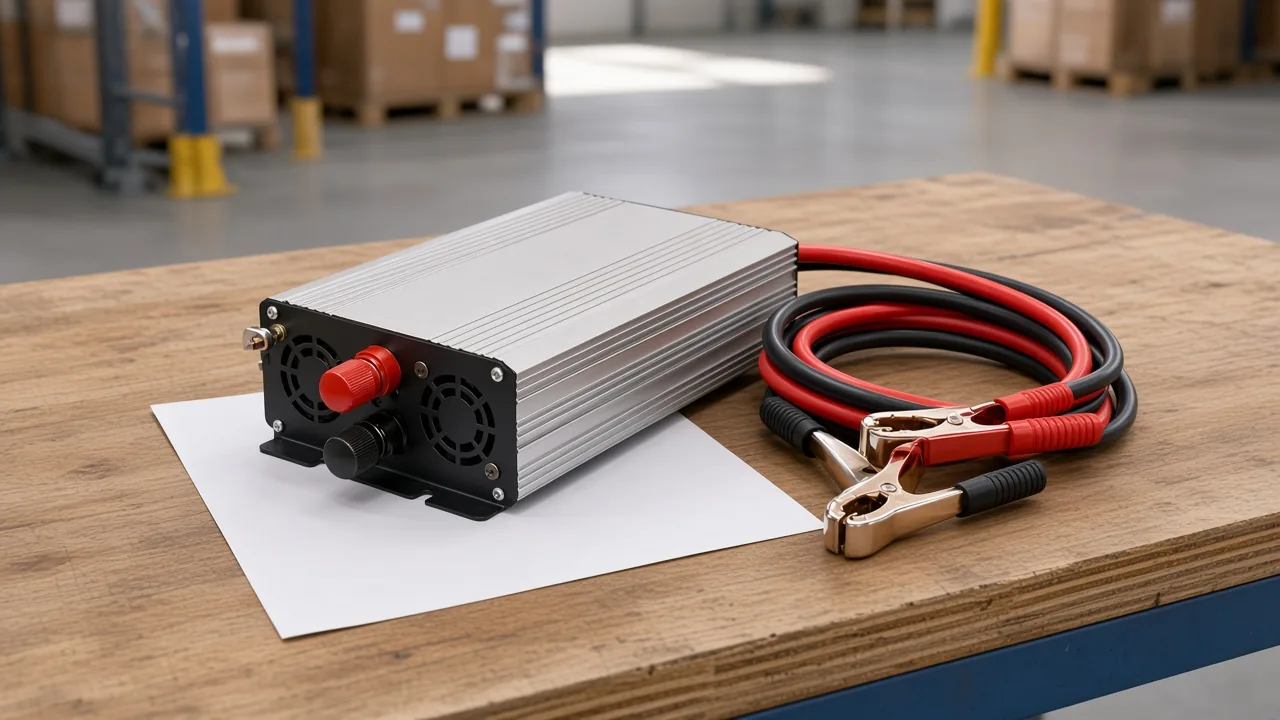
The house file names the battery bank first, because that bank is the energy the inverter will hand to the outlets.
A solar inverter hub also publishes hybrid and off-grid chargers. Those pages answer a different question: which catalog class already has a live listing.
Here the job is narrower. Someone has DC in a battery, or in another DC source, and wants ordinary AC for a fridge, lights, or a pump.
The inverter changes the form of that electricity. The battery supplies the energy.
A distributor quoting a cabin can write the battery voltage on the first line of the email and the house outlet voltage on the second.
A weekend cabin and a small shop share that order. The cables already on the battery decide the input before anyone debates waveform.
A buyer who opens with a roof layout still needs this page only when the load is fed from the battery after the array has been chosen elsewhere.
From the field: On a home-outage thread, one owner wrote that people install battery backups and inverters even when solar is unavailable, and keep the bank charged from the grid until the outage (another power outage). The house quote on this catalog uses the same order: battery first, then the AC the pump or the fridge actually wants.
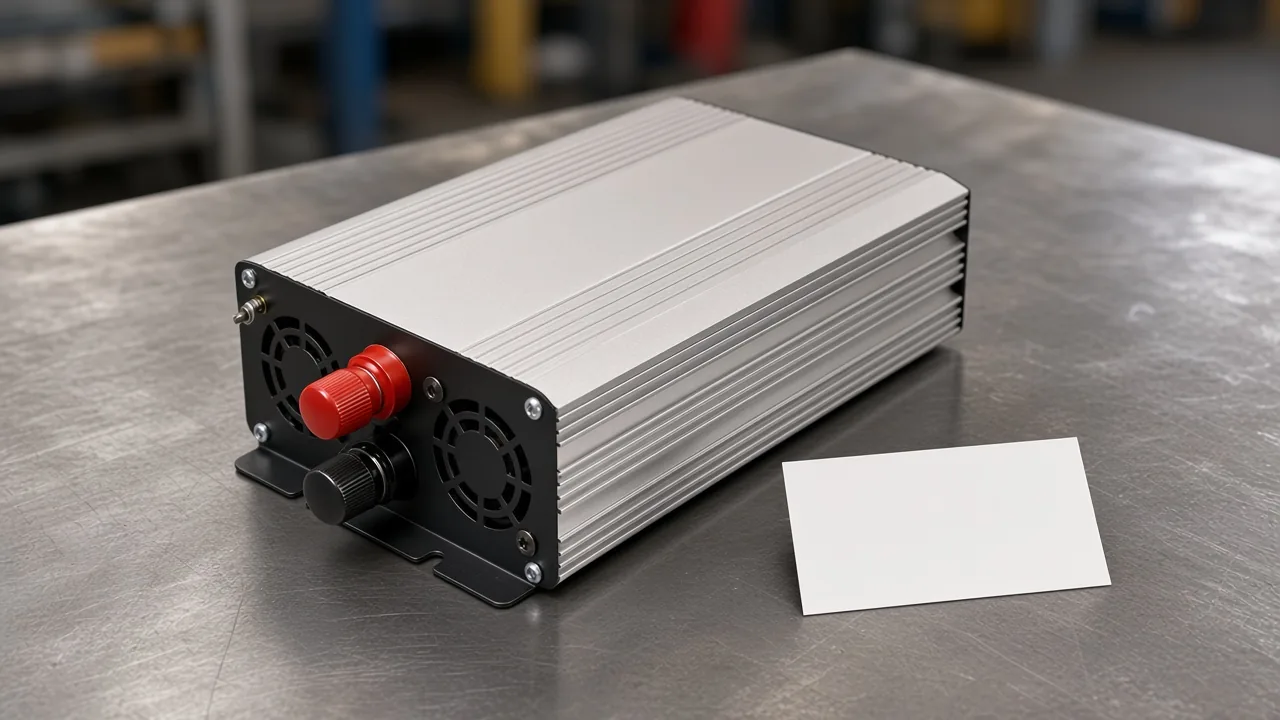
Smaller consumer inverters are often built around 12 V DC.
Home energy systems commonly use 24 V, 36 V, or 48 V DC.
A photovoltaic source is often 200 to 400 V DC.
That last band is why a roof string and a battery bank are different inputs even when both are called DC.
On the live power-inverter pages, the input line is labeled DC operating voltage.
A 24 V cabin bank matches the 24 V step inside that printed line.
A buyer holding a 48 V rack matches the 48 V step on the same line.
The page does the matching. The email only has to repeat the step that fits the bank already purchased.
Line targets in that public description are usually 50 or 60 hertz and 120 or 240 VAC.
A 120 V outlet conversation and a 220 V export conversation can both land on the same listing, because the output line prints more than one AC voltage.
The hertz line is the same idea. The house grid is 50 Hz or 60 Hz, and the listing already prints both.
The listing title and the technical table are both printed, and a house quote keeps them together.
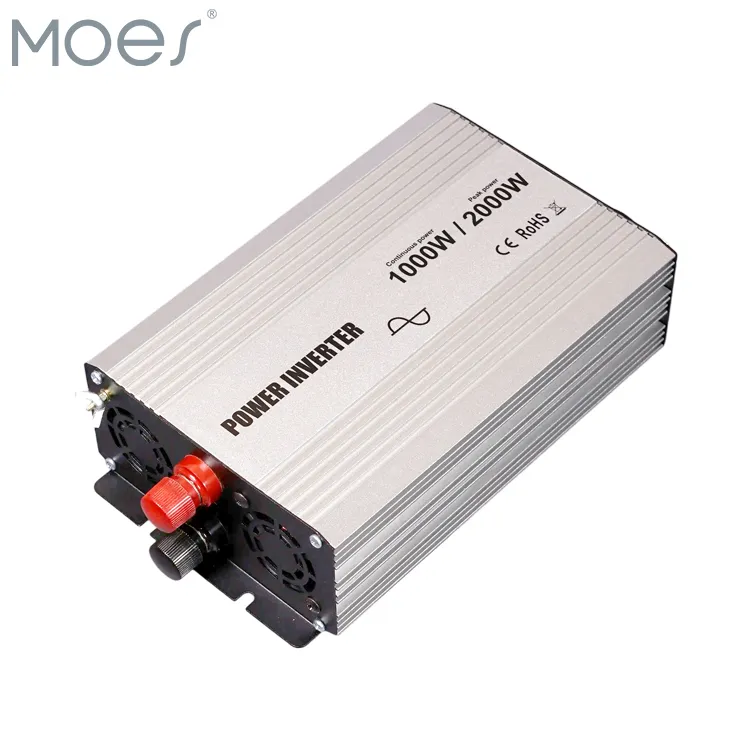
The pure-sine title prints 1000W 2000W 12V.
The technical table on that same page prints a wider set.
Both technical tables print DC operating voltage 12V/24V/48Vdc.
Both technical tables print output voltage 110V/120V/220V/240Vac.
Both technical tables print operating frequency 50Hz/60Hz.
Both technical tables print a power range of 300W ~ 6000W.
Keep the title and the table in the same quote. Dropping the title makes the page look like any watt from 300 W upward was a separate SKU. Dropping the table makes a 24 V or 48 V bank look unpublished.
| Printed place | What the house file keeps |
|---|---|
| Pure-sine title | 1000W 2000W 12V |
| Both technical tables | 12V/24V/48Vdc, 110V/120V/220V/240Vac, 50Hz/60Hz, 300W ~ 6000W |
| Modified-sine title | Off Grid Car Inverter |
| Modified-sine application | Resistive loads, with sensitive electronics called a poor fit |
The photo on the pure-sine page is the chassis in the product gallery. It does not reprint the table. The quote still carries both the title string and the four table rows.
Shopping articles often collapse this into one whole-home watt figure. That figure is their worksheet. It is absent from these two tables, so it stays out of the email.
The pure sine wave page describes high-frequency units for AC that should resemble grid electricity.
Its own text names household appliances, including motors in fridges and air conditioners, and sensitive electronics such as televisions and computers.
The modified sine wave page uses another application paragraph on a matching table.
It names resistive loads: incandescent lights, heaters, and basic appliances.
It also says the waveform is a poor fit for sensitive electronics, and it gives medical devices and laptops as examples.
A house file that must run a laptop or a television follows the pure-sine description.
A house file that must run lamps and a heater can follow the modified-sine description and still copy the same voltage rows.
The waveform choice is that printed split. It is a load story, and the volts stay shared.
A television and a laptop sit with the pure-sine description. A heater and an incandescent lamp sit with the modified-sine description.
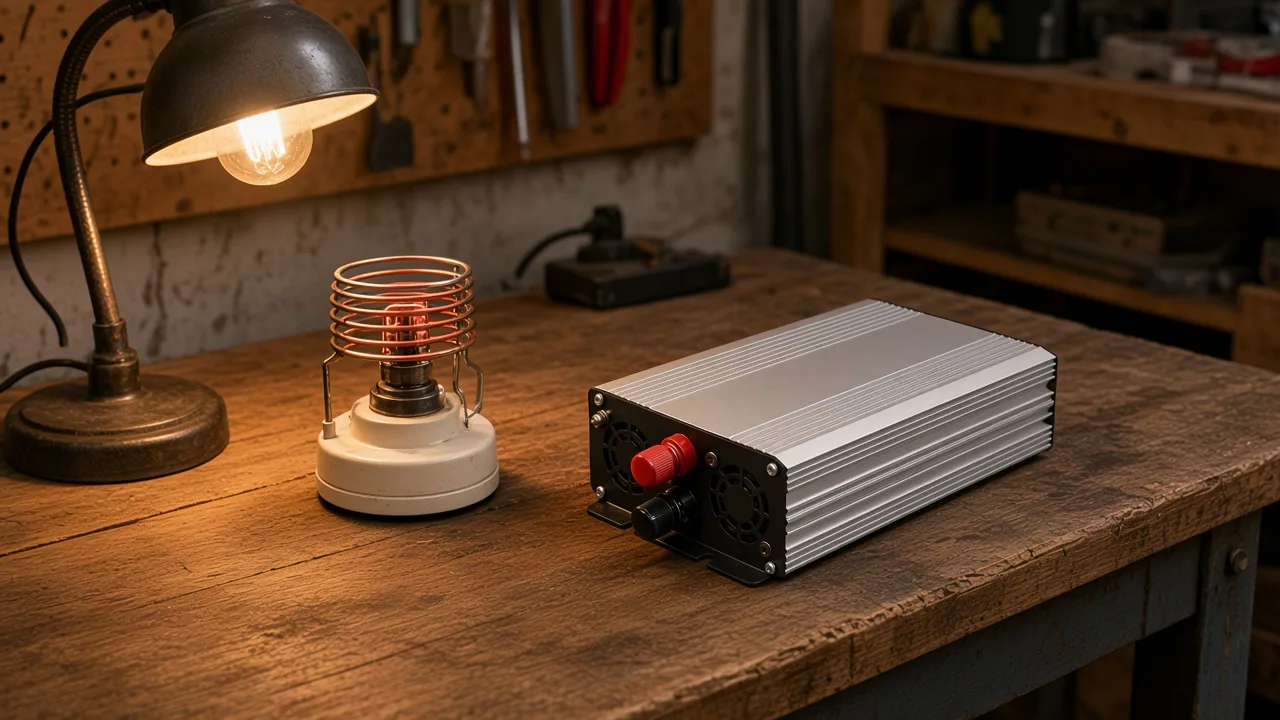
The modified-sine title reads as an off-grid car inverter.
The application paragraph under that title talks about RVs, boats, tools, pumps, and emergency lighting, and about resistive loads in a house-style backup.
A cigarette-lighter plug is a vehicle outlet story. The table under the title is still 12V/24V/48Vdc in and house AC out.
A house quote uses the table and the resistive-load paragraph.
The car words stay visible so a buyer who searched for a dashboard plug can see they opened a catalog title, then can decide whether the battery bank in the building matches the DC line.
An RV park outlet and a cabin subpanel can share the same chassis family. The quote says which battery and which AC voltage, so the two jobs stay apart in the file.
Hybrid versus off-grid is the class decision on the solar inverter for home article linked above.
That page is where a buyer sees the one live hybrid listing and the off-grid collection, including these two power-inverter children and a low-frequency charger.
This article leaves that class map in place.
A battery-only house load can still be quoted from the pure-sine or modified-sine URL when the printed DC line matches the bank.
A job that also needs a PV input note, a charger stage, or the hybrid collection belongs on that other article before anyone returns here.
The hub itself prints the title string 1000W 2000W 12V because the title contains it, and the hub adds no efficiency percentage of its own.
Watt arithmetic for a list of appliances lives on the power inverter sizing checklist.
Bring the load list there. Bring the printed range back here.
Four lines close a house quote for this class.
| Field | Printed line to copy |
|---|---|
| Battery input | DC operating voltage 12V/24V/48Vdc |
| House outlet | Output voltage 110V/120V/220V/240Vac |
| Grid frequency | 50Hz/60Hz |
| Power range | 300W ~ 6000W, kept beside the 1000W 2000W 12V title when the pure-sine URL is used |
For household electronics, attach the pure sine wave power inverter.
State the battery voltage you will actually land on, the AC voltage the house uses, and whether the load is the electronics case or the resistive case.
The resistive case can point at the modified sine wave power inverter and should repeat that page’s warning on laptops and medical devices.
Send the URL and those four lines through contact.
The quote that leaves the building carries the URL, the battery voltage, and the AC voltage the outlets already use.
A battery bank can feed the inverter without panels. Solar is one way to recharge that bank, and the class on this page is still the DC-to-house-AC step.
The title string is 1000W 2000W 12V, and the table still prints 12V/24V/48Vdc on the same page.
The output voltage line prints 110V/120V/220V/240Vac, so a 220 V house uses that line.
The car wording is the modified-sine title. The house product, for this quote, is the battery-to-AC table under it, plus the resistive-load paragraph.
Appliance-by-appliance watts belong on the power inverter sizing checklist. This page stops at the range the two tables print.
The modified-sine application text calls sensitive electronics, including laptops, a poor fit.
The battery or other DC source supplies the energy. The inverter changes that energy into AC for the house AC load.


OTHER SMART DEVICES
Jun 13,2026
OTHER SMART DEVICES
Jun 12,2026
TUYA SMART HOME PRODUCTS
Jun 12,2026
 +86 137 3639 3028