


by NOVA

Sep 25, 2026
Compare zigbee vs thread as a protocol assortment choice for the channel / distributor buyer: a Zigbee full-stack mesh that usually needs a hub, versus a Thread IP-addressable low-power mesh that bridges through a Thread border router (TBR) and is often paired with Matter at the application layer. Use hub versus border-router logistics, sleepy-sensor share, Matter pairing assumptions, and commissioning labour as the RFQ fields before you lock brands.
This page gives the protocol frame, a decision matrix, those RFQ fields, and live MOES Zigbee SKU evidence. It does not rewrite the Zigbee versus Wi-Fi radio/AP comparison or the Matter versus Thread layer comparison. Browse modules on the Smart Modules pillar.
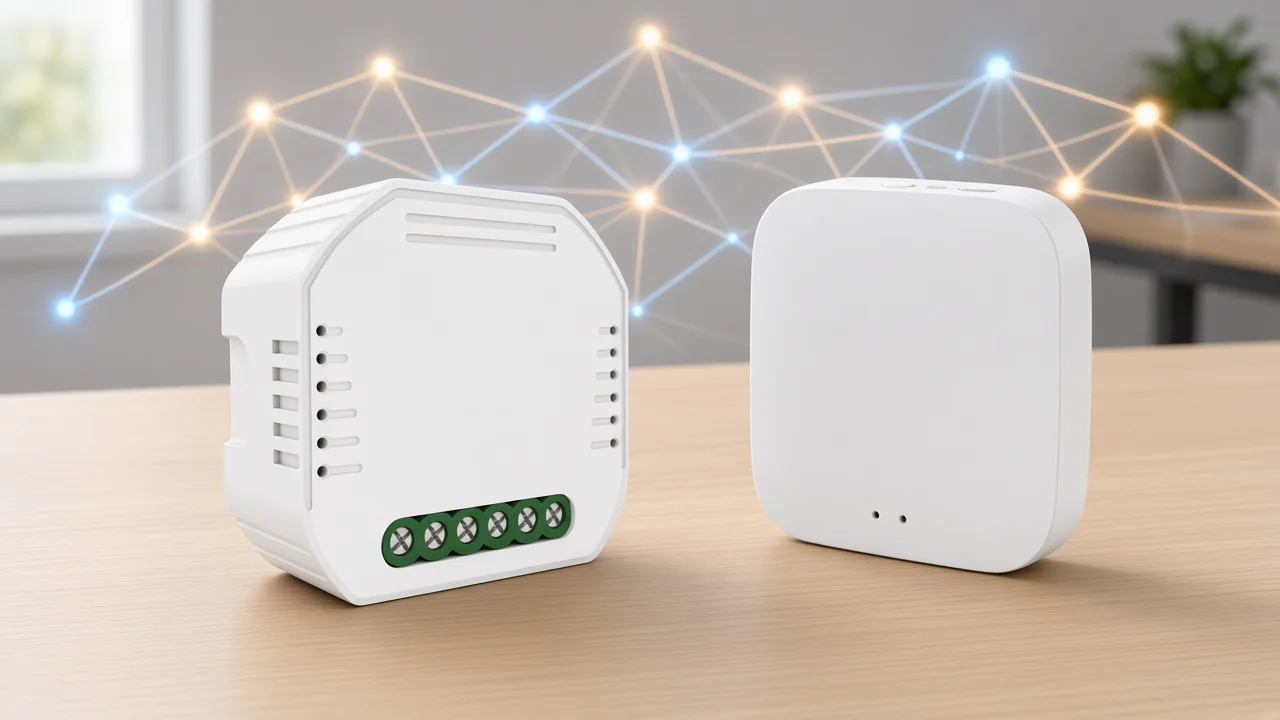
It changes which always-on logistics SKU you must stock, how endpoints attach to the rest of the LAN, and which pairing assumptions belong on the RFQ.
On the Zigbee path, channel kits usually ship low-power endpoints plus a hub or gateway that forms the network and bridges traffic toward IP apps.
On the Thread path, endpoints join an IPv6 mesh and reach Wi-Fi or Ethernet networks through one or more Thread border routers. Both families commonly ride IEEE 802.15.4-class radios in the 2.4 GHz band, so the assortment decision is about the upper stack and the logistics box, not “who owns 2.4 GHz.”
For distributors and installers quoting smart modules, the first kit line is either “Zigbee endpoints + Zigbee hub” or “Thread endpoints + border router.” When the job also asks for Matter, add Matter controller assumptions as a separate line — especially for matter over thread transport jobs.
Zigbee presents a full-stack low-power mesh that includes an application language devices share; Thread presents an IP mesh that stays application-layer agnostic and often carries Matter as a separate language.
Zigbee is built so certified Zigbee devices can speak a common IoT language across the mesh. Thread is built so devices get an IPv6 path — including IPv6 / 6LoWPAN addressing on the mesh — and can integrate with larger IP networks without treating the mesh as a proprietary island.
Because Thread does not itself define a single application language, ecosystems often pair it with Matter. That pairing is a second decision, not proof that every Thread radio is a Matter device.
Texas Instruments’ public Zigbee-versus-Thread technical note makes the same split concrete for engineers: both protocols can share 802.15.4-class hardware, Thread leans on IPv6 for natural attachment to existing IP networks, and Zigbee carries a fuller stack including its own application layers.
For channel buyers, the practical translation is simple. If the quote sells Zigbee modules, plan a Zigbee hub line.
If the quote sells Thread endpoints that must reach the rest of the LAN, plan border-router coverage. If the packing list also says Matter, treat that as an application-layer assumption and read the Matter-versus-Thread layer page.
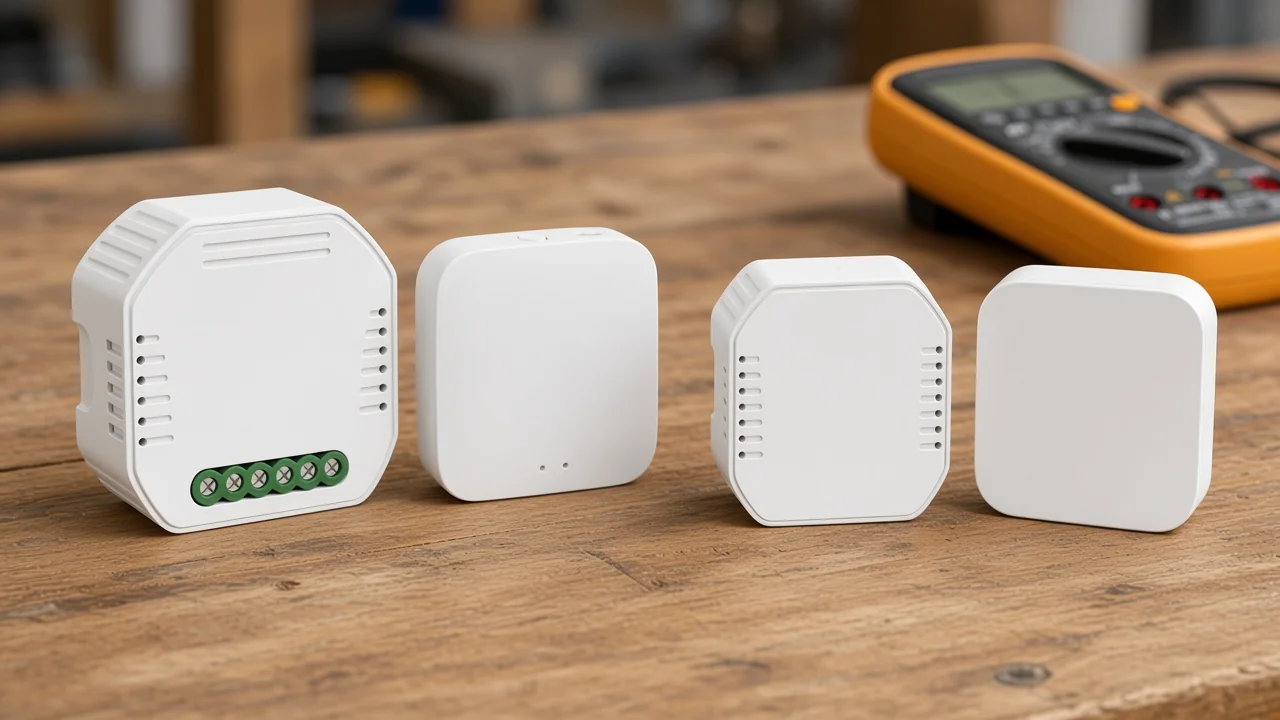
Use this matrix to scan attachment, logistics, Matter assumptions, sleepy endpoints, and commissioning before you argue about brand preference.
| Decision field | Zigbee hub path | Thread border-router path |
|---|---|---|
| What the mesh is | Full-stack low-power mesh with Zigbee application language | IPv6 low-power mesh; application layer chosen separately |
| How devices reach the wider LAN | Through a Zigbee hub / coordinator / gateway | Through one or more Thread border routers onto Wi-Fi/Ethernet IP |
| Typical logistics SKU | Zigbee hub line stocked with endpoints | Dedicated or multi-role Thread border router (TBR), not only a speaker that gets unplugged |
| Matter pairing assumptions | Often reached later via bridges or dual-radio strategies — do not invent Matter on a Zigbee-only page | Matter may ride Thread as a transport; still a separate RFQ line |
| Sleepy / battery endpoints | Strong fit for low-power mesh sensors and switches | Also designed for low power; still needs stable border-router coverage |
| Commissioning labour | Hub-first pairing into the Zigbee network | Border-router readiness plus any Matter commissioning flow the job names |
| Native talk to the other mesh | No — Zigbee and Thread are different stacks | No — plan a bridge or dual-radio strategy if both must coexist |
Scan the matrix top to bottom on every multi-room quote. If the buyer only asked “Zigbee or Thread?” and never answered hub versus border-router coverage, the assortment is not locked yet.
They decide the quote whenever the always-on box is missing, underspecified, or treated as optional decoration.
On Zigbee quotes, the hub is not a nice-to-have accessory. Live MOES Zigbee module pages state that a Tuya ZigBee hub is required for the endpoint to join intelligent control.
If the distributor ships dimmer modules without a matching hub line, the installer discovers the gap on site. The hub itself also needs continuous power and, on the MOES wireless gateway page, must work in the 2.4 GHz Wi-Fi band for its own uplink.
On Thread quotes, the Thread border router (TBR) is the equivalent logistics object: it bridges the Thread mesh to adjacent IP networks such as Wi-Fi or Ethernet.
Community integrators repeatedly treat a Thread border router as a service distinct from a Matter controller. They look for dedicated border-router hardware when the only available box is a display or speaker that may be powered down.
If that single border router goes offline, Thread devices can become unreachable until another border router takes the role.
Important: Do not let a Thread quote depend on one consumer display that staff unplug at night. Write redundant border-router coverage into the RFQ the same way you would refuse a Zigbee quote with zero hubs. — source: Thread Group Border Router role; Home Assistant Thread border-router logistics threads.
Architecture and warehouse placement of “hub versus Wi-Fi” kits live on the smart home hub versus Wi-Fi page. This section only locks the protocol logistics consequence for Zigbee versus Thread.
Five fields are enough to stop most Zigbee-versus-Thread quote churn: mesh topology, hub or border-router logistics, sleepy-sensor share, Matter pairing assumptions, and commissioning labour.
| RFQ field | What to write on the quote | Why it matters |
|---|---|---|
| Mesh topology | Zigbee full-stack mesh or Thread IP mesh (not “wireless”) | Prevents Wi-Fi AP kits from sneaking into the wrong line |
| Hub / border-router logistics | Zigbee hub SKU count and placement or Thread border-router count, power, and redundancy | Always-on box decides whether endpoints stay reachable |
| Sleepy-sensor share | Percent of battery endpoints and expected wake behaviour | Both meshes favour low power; the logistics box still must stay up |
| Matter pairing assumptions | Matter required / not required; if required, which transport (Thread vs Wi-Fi) and which controller role | Matter is not Thread; logo language is not a radio SKU |
| Commissioning labour | Zigbee hub-first pairing steps or Thread + optional Matter commissioning steps, including BLE commissioning where Matter is named | Prices the installer hour before brand discounts |
Tip: If a packing list says “Matter,” ask whether the transport is Thread or Wi-Fi before you add a border router. Matter’s public first-release story names Wi-Fi and Thread as network layers and Bluetooth Low Energy for commissioning — that is an application-layer assumption, not automatic Thread stock. — source: Connectivity Standards Alliance Matter solution page.
Keep Zigbee definition questions on what is Zigbee and Matter definition questions on what is Matter. This RFQ block only prevents the wrong logistics box from landing on a Zigbee-versus-Thread assortment.
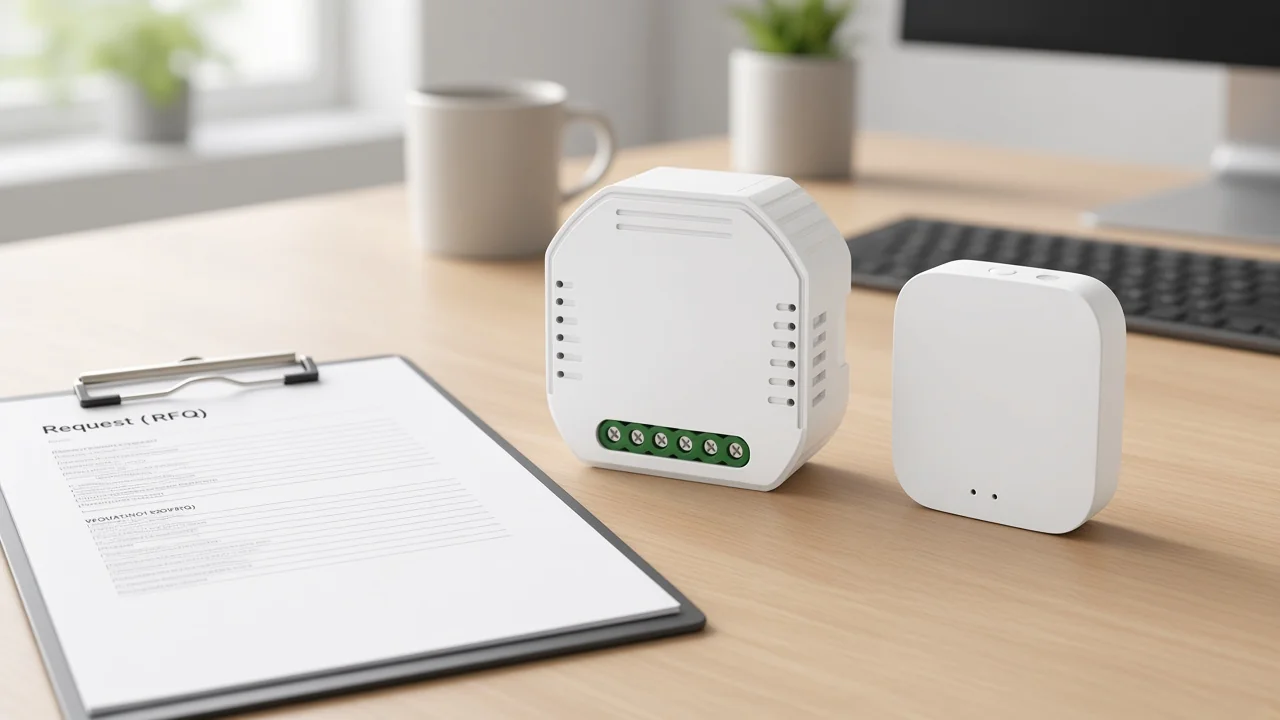
For the Zigbee path today, bound the example to live MOES pages that already state ZigBee 3.0 and hub requirements — and do not invent Thread or Matter certifications that those pages never claim.
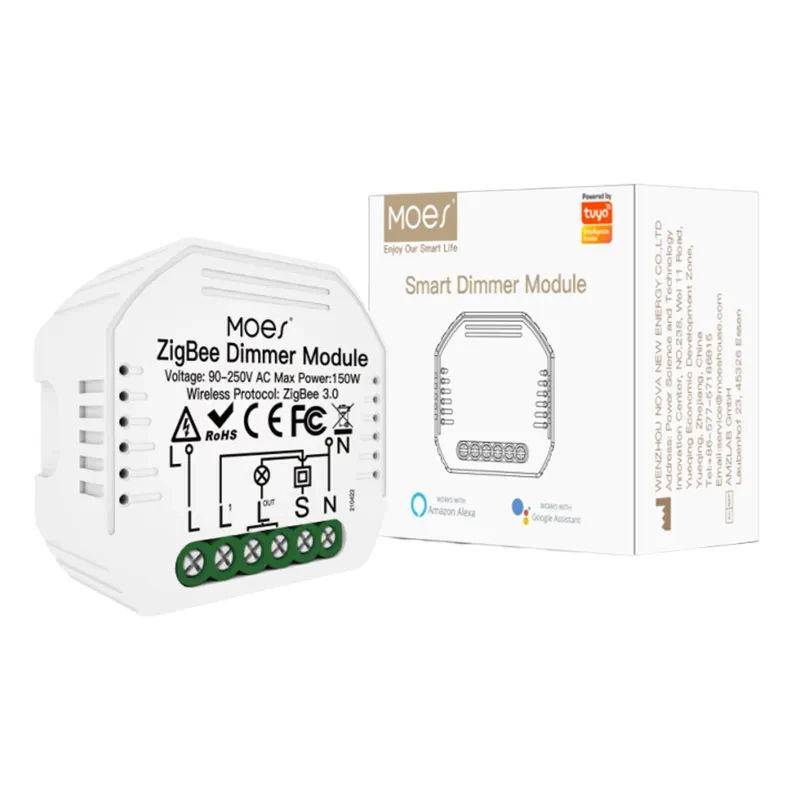
The MOES Tuya ZigBee 3.0 Smart Dimmer Switch Relay Module (MS-105Z) is a smart dimmer module with Wireless Protocol ZigBee 3.0.
The page states that a special Tuya ZigBee 3.0 hub is required and connected, and that the module can combine with a ZigBee gateway to form a home LAN when the wider network is weak or absent.
Published electrical and RF table values on that page include Voltage 90-250V AC 50/60Hz, Max. Power 75W at 110V / 150W at 220V, dimensions 52×47×18 mm, IP20, Frequency Band 2.400-2.483GHz, and Maximum Radio Transmit Power <+20dBm. The page also notes the module suits reset switches.
Treat those figures as that SKU’s page facts, not as a universal building code.
For hub logistics on the same Zigbee path, the MOES Tuya ZigBee Wireless Smart Gateway Hub (ZHUB-W) is described as a must for ZigBee products and as compatible with Tuya ZigBee 3.0 smart products.
Page parameters include Electrical Parameters 5V 2A, Micro USB DC5V charge type, Wireless Protocol ZigBee 802.15.4, Frequency Band 2.412-2.484GHz, and Maximum Radio Transmit Power <+20dBm, with an explicit note that the Zigbee hub must work in the 2.4 GHz Wi-Fi frequency band.
That makes ZHUB-W a Zigbee hub companion example — not a Thread border router and not a Matter controller.
If a buyer asks for Thread or Matter-certified MOES endpoints on this comparison, stop and re-scope the RFQ against live catalog pages. This article does not claim Thread or Matter certification for MS-105Z or ZHUB-W.
Plan a Zigbee hub line whenever the endpoint page says a hub is required. MS-105Z’s live page states that a Tuya ZigBee 3.0 hub must be connected, so a module-only quote is incomplete for that SKU.
It is the always-on role that bridges a Thread mesh to adjacent IP networks such as Wi-Fi or Ethernet. Write count, power, placement, and redundancy the same way you would write Zigbee hub coverage — do not assume a phone or a sporadically powered speaker is enough.
No. Thread is the IP mesh transport; Matter is an application/interoperability layer that can ride Thread or Wi-Fi. Keep the layer comparison on the Matter-versus-Thread page and keep this page on Zigbee versus Thread protocol assortment.
Not as native peers on one shared stack. If a project must mix both, plan a bridge, a dual-radio strategy, or separate meshes with a clear controller story — do not promise silent interoperability.
Both Zigbee and Thread are built for low-power mesh endpoints, so battery sensors rarely decide the protocol by themselves. Decide hub versus border-router coverage first, then confirm the sleepy-sensor share and wake behaviour on the RFQ.
Not as a blanket swap. Zigbee remains a mature full-stack catalog with deep device availability; Thread grows where IP mesh and Matter transport matter. Many channel kits will stay hybrid for years — that is normal assortment design, not a failure of either standard.
Live Zigbee-path examples are MS-105Z (ZigBee 3.0 dimmer module, hub required) and ZHUB-W (Tuya ZigBee 3.0 wireless gateway hub). Neither page claims Thread or Matter certification in the evidence used here.




OTHER SMART DEVICES
Jun 13,2026
OTHER SMART DEVICES
Jun 12,2026
TUYA SMART HOME PRODUCTS
Jun 12,2026
 +86 137 3639 3028



