


by NOVA

Sep 28, 2026
A what is a smart home hub question on a channel RFQ is asking for a quote object: hardware (sometimes software) that joins devices on a home-automation network and steers communications so an app can reach them.
Lock the job on the carton—coordinator, controller, or gateway / bridge—before you lock a model. Then decide one hub per mesh versus a multi-mode hub, and whether a hub SKU belongs at all versus a Wi-Fi-direct device path. Downstream radio, power, pairing ownership, and spare policy close last.
These hubs sit with other Tuya smart-home parts under Tuya Smart Home Products and the Smart Modules catalog. Architecture logistics and the “wifi gateway” noun stay on their own pages.
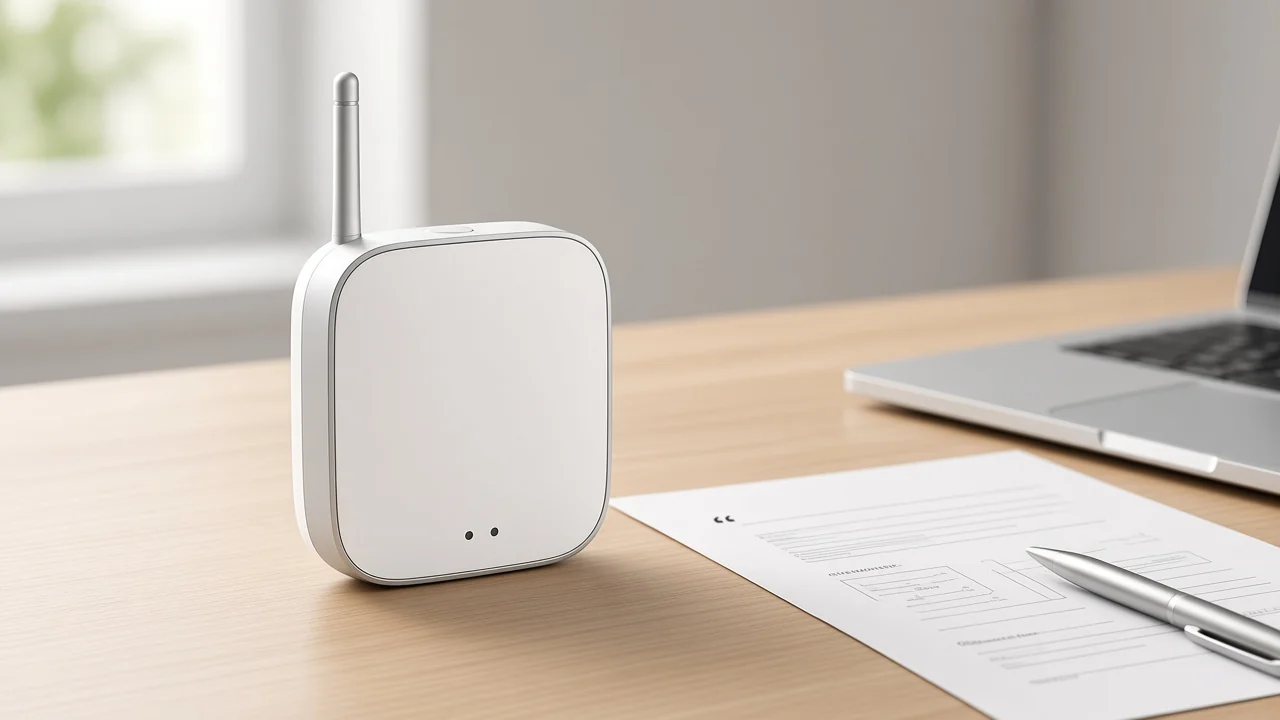
Price the hub as the line for a central box—or a software appliance—that connects devices and controls communications among them.
That is the smart home hub definition buyers should write on the RFQ, not “any speaker that says smart.” Catalogs also print smart hub, smart home controller, and smart gateway on the same class of carton.
Homes ship with one hub, several hubs, or none. Several hubs are legitimate when you intended several networks. They are a mistake when sales stacked boxes hoping for one stronger mesh.
If the buyer only needed a smart home hub definition for a connected-home essay, send them to the live what is a smart home page once. The priced-object job stays here.
The same plastic can hold three jobs. Spell the job; the marketing noun will not do it for you.
| Job | What it does on the quote | Typical channel mistake |
|---|---|---|
| Coordinator | Forms and manages one mesh (one coordinator per Zigbee network) | Endpoints with no coordinator family |
| Controller | Pairing, app, reset, and group-control surface | Quoting a radio dongle with nobody owning commissioning |
| Gateway / bridge | Joins that mesh to another network type (usually IP/Wi-Fi) | Treating a Wi-Fi router as the translator |
What is a hub for smart home purchasing, in practice? It is usually a coordinator plus a controller, with gateway / bridge language when the catalog wants to stress the hop onto Wi-Fi.
Independent Zigbee explainers put the coordinator rule in one line: one coordinator per network. A consumer “hub” often bundles that coordinator with an app. “Gateway” or “bridge” language stresses the link into Wi-Fi, Ethernet, or another platform.
Manufacturers swap those words, so the RFQ still has to name the job. A Wi-Fi router never fills the coordinator job, and a speaker can act as a controller for Wi-Fi gadgets while still lacking the radio your endpoints use.
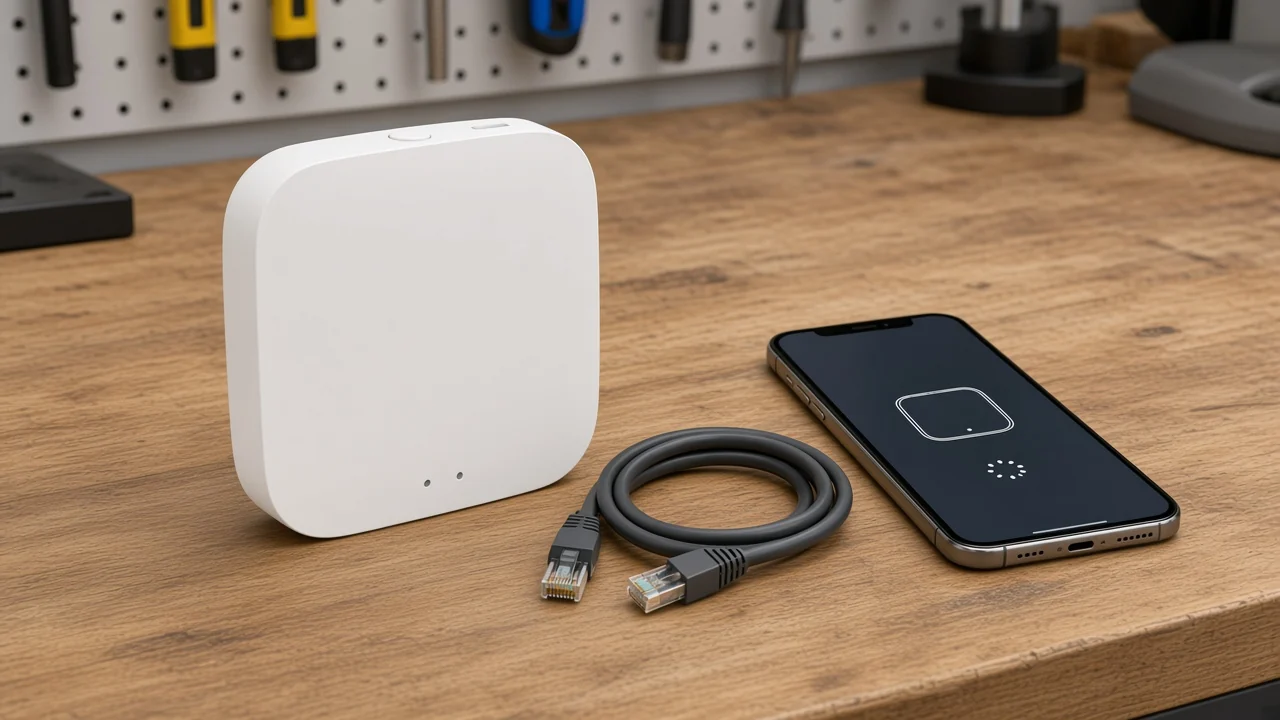
One Zigbee mesh takes one coordinator. A second Zigbee “hub” is a second network unless you re-flash it as a router or you meant two meshes.
Installers ask this every month: two coordinators do not glue into one mesh. Powered endpoints extend the same network; another coordinator starts a new one.
A multi-mode hub is a different decision. It is one SKU whose page prints several radio stacks—for example Wi-Fi 2.4 GHz plus ZigBee plus BLE and Mesh on the wired multi-mode gateway. Quote only the radios that page prints.
A ZigBee-only wireless hub leaves Bluetooth mesh uncovered. A Bluetooth mesh gateway leaves ZigBee 3.0 endpoints uncovered. If the RFQ needs both families in one carton, open the multi-mode page and copy its list.
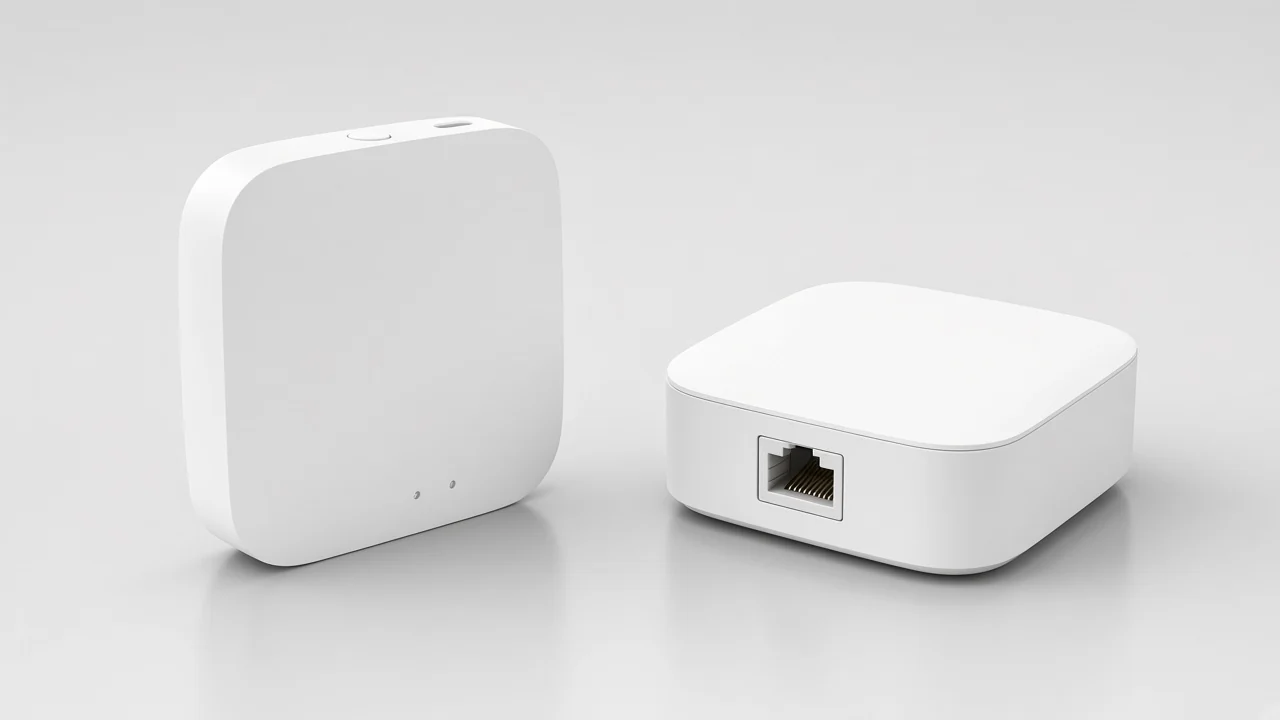
A hub SKU belongs on the BOM when the assortment uses radios an ordinary Wi-Fi router cannot speak.
Zigbee endpoints are the usual case. Community buyers say it plainly: those devices cannot join Wi-Fi by themselves, so you need a hub between the mesh and the phone. Bluetooth mesh assortments follow the same pattern when the catalog names a Bluetooth gateway.
A Wi-Fi-direct device is the exception. If every switch and dimmer joins 2.4 GHz Wi-Fi as a client, you usually omit a separate hub line. Star Feather Wi-Fi switches can stay on that quote without a hub SKU because the radio path does not need a bridge.
Important: Two Zigbee hubs make two networks, so coverage work uses powered routers on the same coordinator. — source: Zigbee hub-vs-coordinator explainers + r/homeassistant “strictly one coordinator per network”
A mixed carton still prices the Zigbee half with a matching hub family. The Wi-Fi half can skip that line.
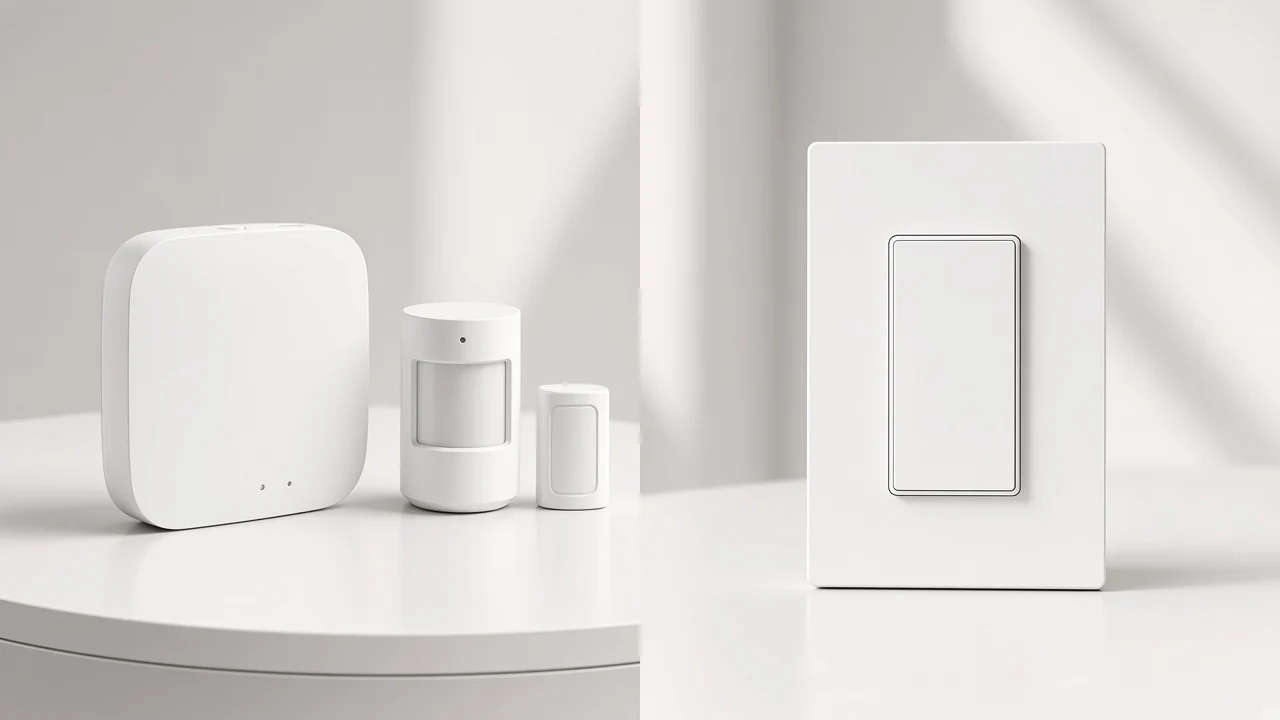
Close these four fields before you print a firm hub price.
| RFQ field | What to lock | Why quotes bounce |
|---|---|---|
| Downstream radio | ZigBee 3.0 family, Bluetooth mesh, or the multi-mode list as printed | Endpoints and hub come from different radio families |
| Power | Input the hub page states (for example Micro USB DC 5V at 5V 2A) | Demo kits ship with the wrong adapter |
| Pairing ownership | Who runs app add, reset, and group control after delivery | Channel and installer argue over commissioning |
| Spare policy | Whether a replacement hub sits in the van or the warehouse bin | The live hub is a single point of failure |
Spare policy here is who stocks the extra hub. Pairing ownership is who presses the buttons after delivery.
Those fields keep the hub line honest. Protocol matrices and scenes live elsewhere.
The page owns the smart-home-hub quote object: roles, one-mesh versus multi-mode, BOM presence, and the four RFQ fields above.
The live smart home hub vs WiFi comparison owns architecture and logistics: which network carries devices, BOM density, commissioning labour, and stocking. Use it once when the buyer is choosing a path rather than a label.
The live what is wifi gateway page owns the gateway noun: ISP residential CPE versus a smart-home gateway SKU. Use it once when the RFQ says “wifi gateway” and sales might quote a modem-router.
Connected-home wording stays on what is a smart home. Rules and scenes stay on what is smart home automation.
Radio choice stays on Zigbee vs WiFi and Zigbee vs Thread. The Zigbee protocol baseline stays on what is Zigbee.
When the quote needs a Tuya ZigBee 3.0 wireless hub as the bridge and control center for matching ZigBee endpoints, point at the live ZHUB-W ZigBee wireless smart gateway hub.
ZHUB-W prints a Tuya ZigBee 3.0-only bridge and control-center role, a 2.4 GHz Wi-Fi join note, Micro USB DC 5V at 5V 2A, Wireless Protocol ZigBee 802.15.4, and Frequency Band 2.412–2.484 GHz. Copy those printed lines; leave Matter and Thread off this SKU.
If the RFQ names Bluetooth mesh concentration instead, open the Bluetooth mesh gateway and copy only its printed Wi-Fi plus Bluetooth mesh parameters and Max Node value of 128. If the RFQ names a wired multi-mode hub, open the wired multi-mode gateway and lock the printed Wi-Fi 2.4 GHz, ZigBee, BLE, and Mesh list with the 5V 1A electrical line.
Star Feather Wi-Fi switches are not the primary recommendation here. Mention them only when the assortment is Wi-Fi-direct and the hub SKU is intentionally absent.
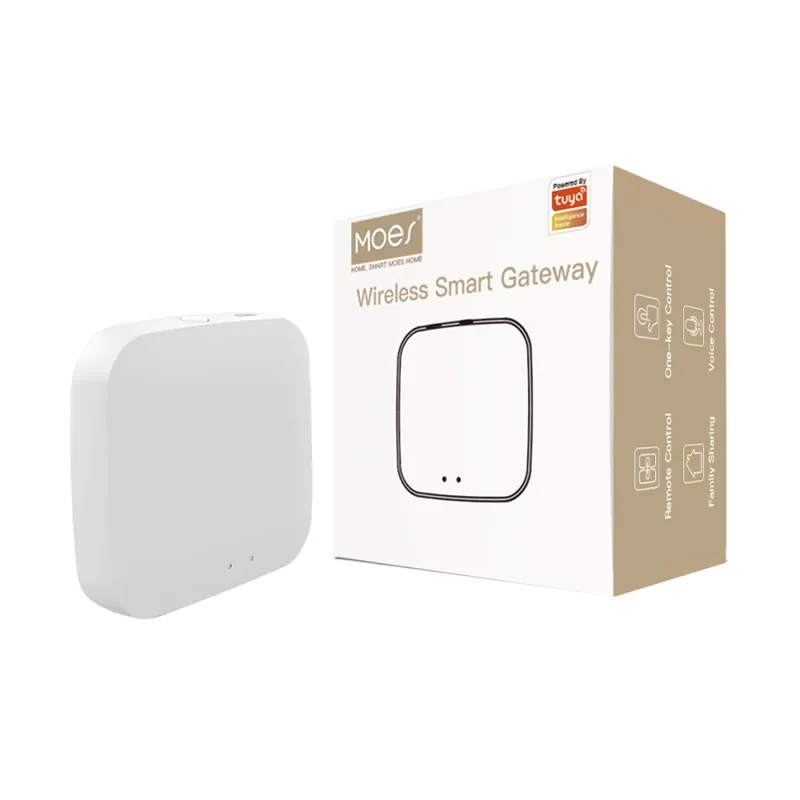
It is the priced box or software that joins devices and a control path—often a coordinator plus a controller, sometimes labeled a gateway / bridge.
It forms or joins a radio network, translates or concentrates traffic toward IP/Wi-Fi, and hosts pairing and group control. It does not replace the scenes article.
Usually no separate hub SKU. A Wi-Fi-direct device joins the SSID itself. Add a hub when non-Wi-Fi radios enter the carton.
Not automatically. A router joins Wi-Fi clients, while the wifi-gateway noun page splits ISP CPE from a smart-home gateway SKU.
Only when the live product page states both stacks. A ZigBee-only hub page does not authorize Bluetooth mesh endpoints.
One coordinator. Extra hubs are extra networks unless you intended that or you converted hardware to a router.
Downstream radio, power input, pairing ownership, and spare policy.
No. That comparison covers architecture and logistics. This page defines the hub quote object.




OTHER SMART DEVICES
Jun 13,2026
OTHER SMART DEVICES
Jun 12,2026
TUYA SMART HOME PRODUCTS
Jun 12,2026
 +86 137 3639 3028



